
REVIEW · GUIDED
Guided Car Tour in Geyongju with a Local Guide
Four hours is enough to feel Gyeongju.
This guided car tour packs the biggest Silla-era highlights into one smooth morning, using an air-conditioned eco electric car and a local guide who shares personal context as you move between sites.
I like two things most: first, the door-to-door convenience means you spend less time figuring out transport and more time looking at what matters. Second, the route connects major UNESCO stops with the calmer scenic spots (like Bomun Lake and Woljeonggyo Stepping Stones), then caps it with Gyeongju National Museum so the stories actually stick. One consideration is communication: the guide may not speak English fluently, so you’ll want a translation app ready and be comfortable asking simple questions.
In This Review
- Key things to know before you go
- How the small-group car format makes Gyeongju easier
- Pickup, drop-off, and translation: the real comfort factor
- Stop 1: Bulguksa Temple, UNESCO scale with a guided lens
- Stop 2: Seokguram Cave Temple, why it pairs so well
- Stop 3: Bomun Lake, a lighter breather in the middle
- Stop 4: Woljeonggyo Stepping Stones, an old bridge stop that feels human
- Stop 5: Gyeongju National Museum, turning sights into understanding
- Price and value: is $70.70 worth it?
- Who this tour fits best (and who should pass)
- My practical tips so you enjoy every stop
- Should you book this Gyeongju car tour?
- FAQ
- How long is the guided car tour in Gyeongju?
- What is the price per person?
- Which stops are included?
- Is pickup offered, and where does the tour start?
- How many people can be on the tour?
- Do I need to speak English or Korean?
- What happens if the weather is bad or I need to cancel?
Key things to know before you go
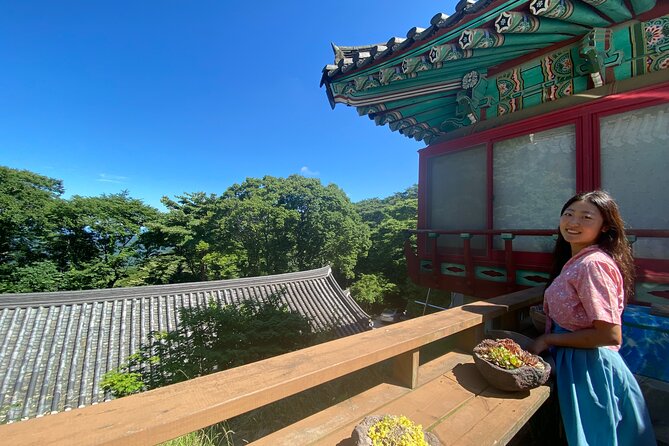
- Eco electric car with air conditioning, so the comfort stays high even when the day gets warm
- Tiny group size, with a maximum of 3 travelers, which makes it easier to set the pace
- Free admission listed for each main stop on the route (temple and museum stops are included in the plan)
- UNESCO-focused route with Bulguksa Temple and Seokguram Cave Temple back-to-back
- Scenic break points at Bomun Lake and Woljeonggyo Stepping Stones between temple visits
- Translation-friendly guidance using apps like Google Translate, and guides such as Sang Jong or Mr. Lee are used to international guests
More days where a guide does the work in Gyeongju
How the small-group car format makes Gyeongju easier
Gyeongju can feel like a big open-air history quiz, and the hardest part is often logistics. This tour solves that with a car-based flow, plus a start time set for a relaxed half-day (10:00 am, about 4 hours total). You get a focused route without the stress of hopping between buses, taxis, and walking.
The group stays very small, capped at 3 travelers, which changes the whole vibe. With fewer people, the guide can slow down when you want photos, speed up when you are confident, and adjust the order if something on the day needs flexibility. Several guides on this route, including Sang Jong and Mr. Lee, are experienced at hosting international guests, so you are not stuck in a rigid script.
The air-conditioned electric car is another practical win. Temples and museum halls often mean you are outside or walking between points, and it is nice when the ride between stops is cool and comfortable. This matters more than it sounds if you are visiting in warmer months, or if you land in town ready to see things right away.
Pickup, drop-off, and translation: the real comfort factor
The meeting setup is designed to reduce friction. Pickup is offered, and you start from a defined area in Gyeongju (Noseo-dong is listed), then you end back in Gyeongju where you want. In plain terms, you should expect less wandering at the start and less negotiating at the finish.
Now, the big thing to know is the language situation. Multiple experiences describe the guide using a translation app, often Google Translate, to communicate smoothly. This is not a deal-breaker, but you should approach it like a conversation with a technology tool. The payoff is that you can still ask questions and get answers, just not in fluent English the way you might expect from an English-first guide.
If you want this to go smoothly, plan for it:
- Have your translation app installed before you arrive.
- Be ready with simple questions like where to look, what a structure is called, or what happened in this era.
- Use short requests, like photo stop please, or explain that symbol.
The best part is that the guide does not treat translation as a limitation. The flow stays friendly and lively, and the tour still feels personal rather than robotic. Guides on this route have been described as thoughtful, attentive, and willing to adjust the pace to match your energy.
Stop 1: Bulguksa Temple, UNESCO scale with a guided lens
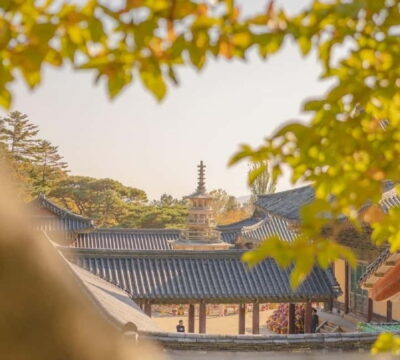
Bulguksa Temple is one of the headliners in Gyeongju, and it makes a strong first stop because you can build context quickly. On this tour, you get about 1 hour here, with admission listed as free for the stop. That hour is not meant to replace a full self-guided day, but it is enough to get oriented and start recognizing major features.
What makes Bulguksa stand out is how planned it feels. Even if you are not an expert, the layout and craftsmanship are obvious when you slow down and look. A guide helps most here, because they can point out what to notice and explain why these details matter in Silla-era Buddhist life.
What I’d do with your hour:
- Focus on the main temple approach and the most prominent architectural elements first.
- Save a few minutes for quiet watching, because Bulguksa has that calm, monumental feeling that reads differently the longer you stay.
- Ask the guide one targeted question early, then let the answer guide the rest of your walk.
A common theme in feedback about this tour is that the guide uses personal stories, not just dates. That approach makes Bulguksa feel less like a checklist item and more like a lived place that mattered to real people.
Stop 2: Seokguram Cave Temple, why it pairs so well
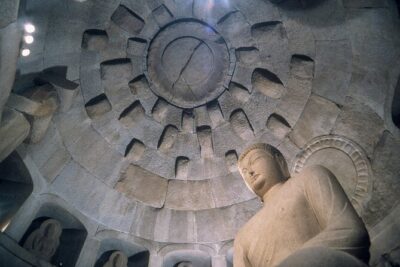
Seokguram is visited with Bulguksa for good reason. It is another UNESCO World Heritage Site, and doing them back-to-back keeps the overall story tight. You get about 1 hour here as well, with admission listed as free.
Seokguram’s cave setting is the whole point. The site’s atmosphere changes how you look at it. Indoors or semi-enclosed spaces naturally slow your pace. And the structures and carving details tend to reward patience, even during a time-boxed tour.
With only an hour, you should aim for this strategy:
- Arrive ready to walk slowly and look at fewer things more carefully.
- If the guide is explaining symbolism or history, ask them to repeat the part you care about most.
- Take photos when permitted, but leave room for a moment where you just see it without the camera.
This stop is often named as a highlight, including by people who felt the rest of the tour moved at a great pace. If you only have a half-day in Gyeongju, Seokguram is the kind of place where a good guide can help you “get it” fast.
- Gyeongju: Private Car Tour with a Licensed Tour Guide
★ 5.0 · 85 reviews - Full day Private Gyeongju UNESCO Heritage Tour : a glimpse into Silla
★ 5.0 · 60 reviews - Guided Car Tour in Geyongju with a Local Guide
★ 5.0 · 38 reviews - Gyeongju: Private Car Charter Taxi Tour
★ 5.0 · 37 reviews - Private World Heritage Gyeongju Taxi Tour
★ 5.0 · 12 reviews
Stop 3: Bomun Lake, a lighter breather in the middle
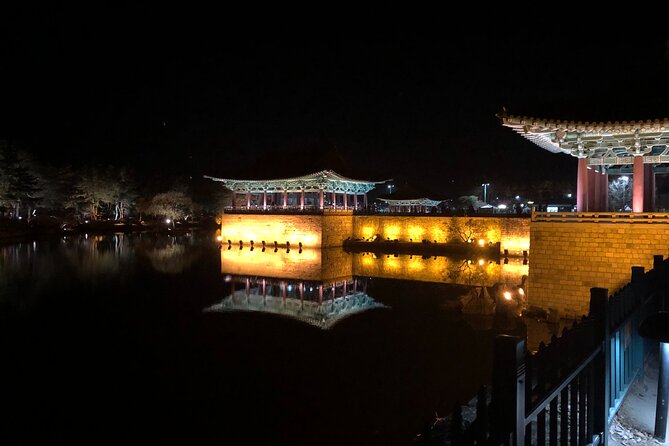
After temples, it’s smart to switch gears. Bomun Lake is a picturesque artificial lake in Gyeongju, and it acts like a reset button. The tour schedule gives you about 30 minutes here, and admission is listed as free.
This is where you stop being purely in “heritage mode” and start being in “Gyeongju mode.” Bomun Lake has an easygoing scenic quality, and it gives you a chance to spread out your attention. If temple visits start to blend together, Bomun Lake makes the day feel balanced again.
I like this midpoint because it prevents the tour from feeling like you are sprinting from one interior to the next. You can step back, take photos, and recharge. Also, if the day is crowded, the lake area often feels more manageable than the core temple zones.
Stop 4: Woljeonggyo Stepping Stones, an old bridge stop that feels human
Next up is Woljeonggyo Stepping Stones, also referred to as Woljeong Bridge or Weoljeong Bridge. This is another 30-minute stop with free admission listed.
This one matters because it is not only scenic. The bridge holds cultural and architectural importance as one of the oldest surviving bridges in South Korea. That combination makes the stop more than just a photo moment.
One practical tip: this is the kind of stop where your guide’s “what to look for” guidance can help. Ask how old it is in the context of the city, and listen for the connection between how the bridge supported daily life and how Gyeongju was structured historically.
Also, the schedule has been described as flexible on the day, including swaps between lake and bridge based on where people were staying. If you already have a plan to walk by Bomun Lake near your hotel, it can be worth asking the guide whether you want to prioritize Woljeonggyo instead.
Stop 5: Gyeongju National Museum, turning sights into understanding
You finish with Gyeongju National Museum, also listed as free admission for the museum stop. You’ll have about 1 hour here.
A museum hour can feel too short, but in this tour it works because the collection, with over 160,000 artifacts, is your “unlock the story” moment. When you have seen Bulguksa and Seokguram first, the museum becomes less abstract. You start recognizing what you just learned and why the architecture and carving styles connect to the Silla Kingdom era (57 BC to 935 AD).
If you want maximum payoff in just an hour:
- Pick a few central galleries, then commit to them.
- Look for the types of objects that connect directly to Buddhist temple life and the major Silla themes the guide mentioned earlier.
- Ask your guide for one key takeaway before you leave the museum, then use that takeaway on your way out.
Finishing here also gives you a satisfying “close the loop” feeling. You stop being a tourist passing through big names, and you start walking away with mental anchors.
Price and value: is $70.70 worth it?
At $70.70 per person for about 4 hours, the price lands in the “good value if you want convenience” zone. Here’s why.
First, you are paying for more than a ride. You get a local guide from Gyeongju area, plus the structure of moving between major sites efficiently. That matters because Gyeongju’s main attractions are not always easy to link quickly on your own.
Second, the comfort factor is real. The tour uses an electric car with air conditioning, and with only a half-day on the clock, that keeps your energy for walking and looking.
Third, the small-group cap at 3 travelers means the tour doesn’t feel like a mass transport experience. That is often what makes the difference between a “seen it” trip and a “I understand it” trip.
Finally, admission for each stop is listed as free in the tour plan. Even if you end up spending a little extra for snacks or transit beyond the car, you avoid the sticker shock that can come from stacking multiple ticketed attractions.
So the honest tradeoff: you are not buying a slow, all-day deep study. You are buying a smart half-day sweep with guidance that helps you absorb more than you would on your own.
Who this tour fits best (and who should pass)
This tour fits you if:
- You have only a half-day in Gyeongju and want the biggest hits.
- You like UNESCO sites but want someone to point out what to notice.
- You value convenience, especially door-to-door pickup and a comfortable ride between stops.
- You are okay using a translation app to chat and ask questions.
It might be less ideal if:
- You want long stays at each stop, with no time pressure at all.
- You expect fully fluent English throughout, without any reliance on translation tools.
- You prefer to plan your own route and linger wherever you want for hours.
That said, many people described the communication as working very well using translation apps, including during busy holiday traffic like Chuseok. The key is your mindset. Treat it like a guided conversation, not a formal lecture, and you’ll get more out of the day.
My practical tips so you enjoy every stop
Plan for a translation-first day. Install and test your app before you go. Google Translate came up often, and Papago was recommended as well. If you want smoother dialogue, keep your questions simple and specific.
Dress and timing matter. You are visiting temples and a museum in the same 4-hour window, so bring comfortable shoes for walking and time in and around outdoor areas. If weather is questionable, remember the tour requires good weather. If it gets canceled due to poor weather, you can usually choose a different date or get a full refund.
Use the guide for photos, not just facts. Several experiences note that guides take nice commemorative photos. If you want that service, ask early and be clear on what you want.
Finally, ask for a post-tour list. Some guides provide suggestions for what to see after the tour, which helps you keep momentum on the rest of your Gyeongju day.
Should you book this Gyeongju car tour?
Book it if you want an efficient, comfortable way to hit Bulguksa, Seokguram, Bomun Lake, Woljeonggyo, and the National Museum in one half-day, with a local guide who can explain the meaning behind what you are seeing. The price makes sense when you factor in small-group size, door-to-door convenience, and the fact that the plan lists free admission for each stop.
Skip it only if you hate any language workaround or you want a slower pace with long time at every site. For everyone else, this is the kind of tour that helps you turn a short visit into real understanding, without turning your day into a transportation puzzle.
FAQ
How long is the guided car tour in Gyeongju?
The tour lasts about 4 hours.
What is the price per person?
The price is $70.70 per person.
Which stops are included?
The tour stops include Bulguksa Temple, Seokguram, Bomun Lake, Woljeonggyo Stepping Stones, and Gyeongju National Museum.
Is pickup offered, and where does the tour start?
Pickup is offered. The start location is Noseo-dong, Gyeongju-si, Gyeongsangbuk-do, South Korea, with a 10:00 am start time. The tour ends in Gyeongju and the end location is listed as anywhere guests want.
How many people can be on the tour?
The tour has a maximum of 3 travelers.
Do I need to speak English or Korean?
You do not need to speak English, because the guide can communicate using a translation app.
What happens if the weather is bad or I need to cancel?
The tour requires good weather. If it is canceled due to poor weather, you will be offered a different date or a full refund. You can also cancel for a full refund up to 24 hours in advance of the experience start time.
Let a Guide Run the Day
Keep Browsing Gyeongju
More Gyeongju Write-Ups
Fresh on the Gyeongju pile
- From Busan: Busan & Gyeongju One Day Tour★ 5.0 · 5 reviews
- Busan: 7 Highlights Gyeongju City One Day Tour★ 4.9 · 10 reviews
- Private World Heritage Gyeongju Taxi Tour★ 5.0 · 12 reviews
- Gyeongju: Private Car Charter Taxi Tour★ 5.0 · 37 reviews
- Guided Car Tour in Geyongju with a Local Guide★ 5.0 · 38 reviews
- Full day Private Gyeongju UNESCO Heritage Tour : a glimpse into Silla★ 5.0 · 60 reviews
Guided you might have missed.
 ★ 4.8Busan: Gyeongju Guided Day Trip to Three Kingdoms CapitalFrom $521,925 reviews
 ★ 4.8From Busan: Gyeongju UNESCO World Heritage Guided Day TourFrom $521,250 reviews
 ★ 5.0Busan Private Tour with licensed tour guide + private vehicleFrom $1691,143 reviews
 ★ 4.9Seoul: Night Market Food Tour with Local GuideFrom $73943 reviews
 ★ 5.0DMZ Guided Tour with Suspension Bridge / Gondola from SeoulFrom $35876 reviews
 ★ 5.0Gyeongju UNESCO World Heritage Guided Day Tour from BusanFrom $57660 reviews
 ★ 5.0Downtown Seoul Guided Food & Market Tour with 8+ Local TastingsFrom $98580 reviews
 ★ 4.9Seoul: DMZ Guided Tour with Suspension Bridge and GondolaFrom $48553 reviews