
REVIEW · BUSAN TOURS
Busan: 7 Highlights Gyeongju City One Day Tour
Gyeongju in one tight day.
This Busan-to-Gyeongju one-day tour turns the city into a living timeline, from Silla sites like Daereungwon and Cheomseongdae to Joseon-era hanoks in Gyochon Traditional Village. I really like how the day is organized around the biggest photo moments (bridge views, pagodas, street food, and wooden-bridge shots), and I also like that you get an English-speaking guide plus round transfers with admissions handled. The main catch is that it is a packed schedule, and it is not ideal if you have mobility limits or heart concerns, since it is not wheelchair friendly and you need to keep up on foot.
If you want a low-stress way to see a lot of Gyeongju without planning transport and timing yourself, this tour makes sense. The route also swaps in Ulsan Daewangam Suspension Bridge starting Sep 15, 2025, so you can trade one coastal stop for another without changing the overall rhythm of the day. Just don’t go in expecting free time to wander for hours, because the value here comes from hitting seven core sights efficiently.
In This Review
- Key highlights at a glance
- Why a Busan-to-Gyeongju one-day trip works
- Transportation and timing: fitting seven stops into one day
- Ulsan Daewangam Suspension Bridge: sea-and-rock views on arrival
- Bulguksa and the stone pagodas: the Korea-you-see-on-coins moment
- Hwangnidan-gil and 십원빵: the easy culture break
- Daereungwon tumuli: Silla tomb complex and why it matters
- Cheomseongdae: the oldest astronomical observatory energy
- Gyochon Traditional Village and the Choi clan story
- Woljeonggyo Bridge: a Unified Silla bridge rebuilt in 2018
- Guide quality that actually helps (and even assists with photos)
- Price and what $47 gets you in real value
- What could trip you up on this tour
- Should you book this Busan to Gyeongju day tour?
- FAQ
- Is pickup and drop-off included?
- What does the tour cost?
- What is included in the price?
- Are meals and drinks included?
- Which Gyeongju sites are visited?
- Is Daereungwon admission included?
- What happens if I’m late to the meeting point?
- Are pets allowed?
- Is the tour suitable for wheelchair users?
- Which bridge do you visit from Sep 15, 2025?
Key highlights at a glance
- Seven top Gyeongju stops in one day, including Bulguksa, Cheomseongdae, and Woljeonggyo
- Busan start and return to Haeundae Station and Seomyeon Station, so you do not fight logistics
- Photo-friendly route, with specific guidance on where to stand for the best views
- Hwangnidan-gil + 10 won bread (십원빵) for an easy, tasty break
- Silla and Joseon contrast, from tumuli and pagodas to hanok lanes
- Guide support for groups, including help with taking pictures
Other Busan days worth comparing
Why a Busan-to-Gyeongju one-day trip works
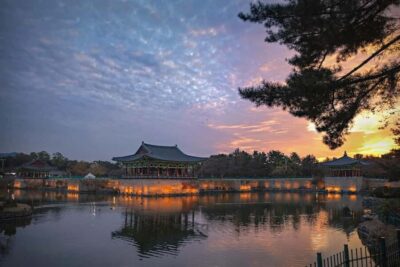
Gyeongju is often described as a roofless museum, and that idea is real once you start moving. You do not need to hunt for one special museum. Instead, the city itself holds layers of Silla and Joseon culture in temples, tombs, streets, and traditional neighborhoods.
The smart part of this tour is the structure. You start in Busan, you get transported with round transfers, and you spend your time at places that are already the key “must-see” anchors. For a lot of visitors, that means you can actually enjoy the stops instead of losing half the day figuring out buses and timing.
And yes, it is a full day, but the pacing is built around variety. You get seaside scenery on a suspension bridge, monumental temple stonework at Bulguksa, street atmosphere at Hwangnidan-gil, and then calmer photo moments at Cheomseongdae and Woljeonggyo.
Transportation and timing: fitting seven stops into one day
This is a day tour from Busan with morning pickup and a return to the meeting area later. Exact pickup points can vary based on the option you book, but the end of the experience is tied back to the Busan stations listed in the details.
A few practical notes matter here. First, you are asked to arrive 5 to 10 minutes early because latecomers or no-shows cannot be refunded. Second, the itinerary can shift due to traffic and weather, which is normal for a long day with multiple walking stops.
If you prefer a slow, wandering pace, this route might feel like a whistle-stop. If you prefer efficiency with a guide keeping the day flowing, you will probably love it.
Ulsan Daewangam Suspension Bridge: sea-and-rock views on arrival
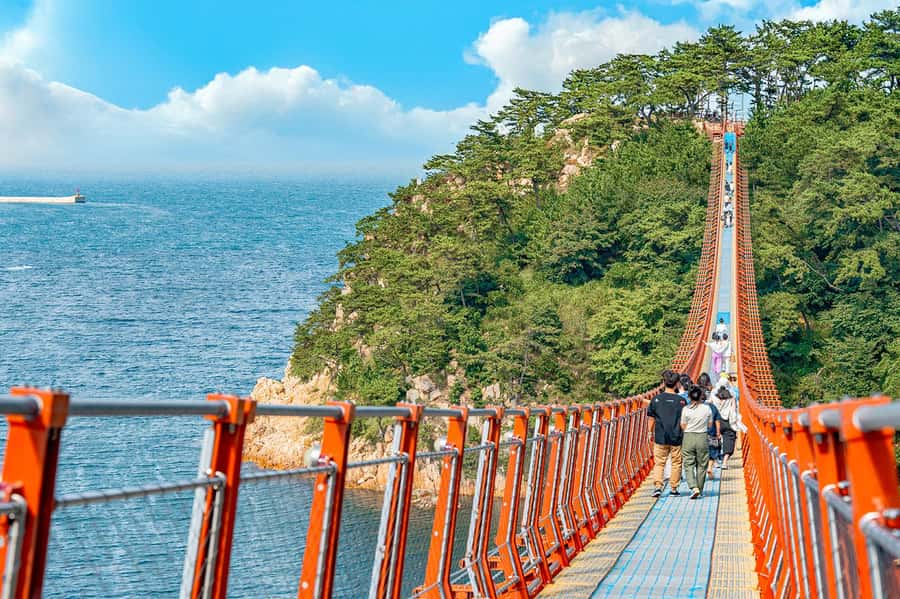
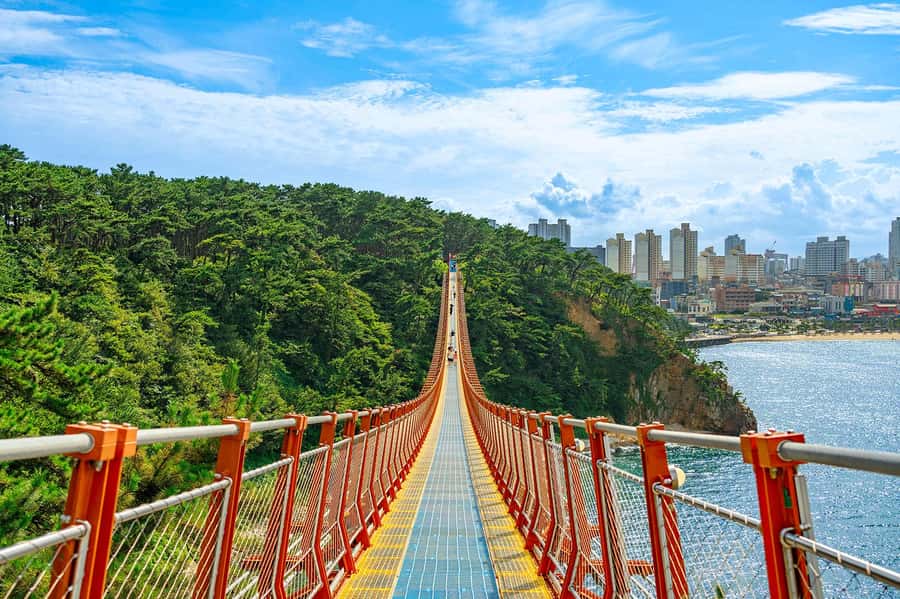
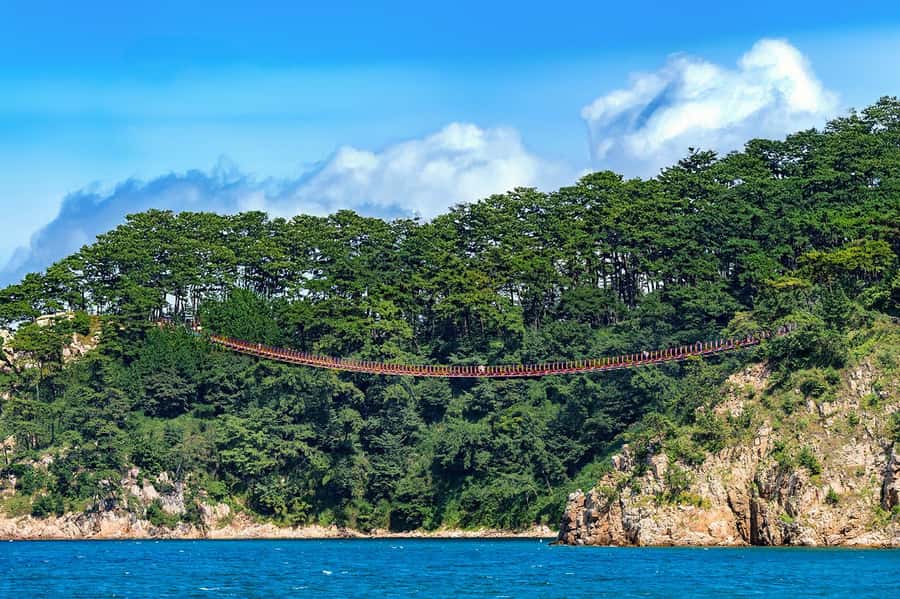
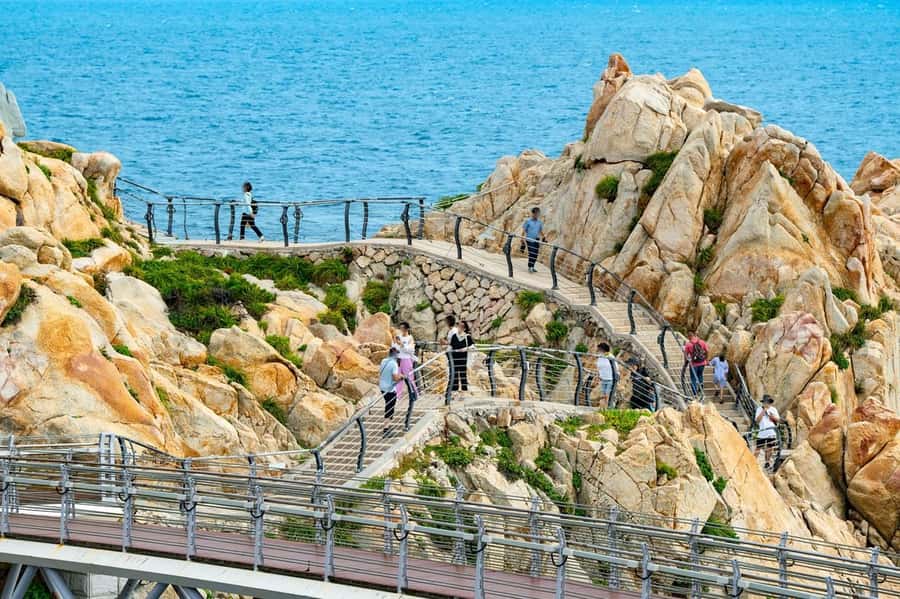
Before you dive into Gyeongju’s history, you start with an outdoors visual hit. The tour heads to Ulsan Daewangam Suspension Bridge (from Sep 15, 2025), described as a thrilling bridge experience surrounded by rocks and sea.
This stop does two useful things for your day. It gives you a break from riding, and it also helps you reset your eyes after the drive. Plus, suspension bridges are naturally photogenic, so it is a good moment to practice your “main shot” angle before the day turns into dense sightseeing.
If you are sensitive to heights or wind, take that into account. Suspension bridges can feel exposed, and there is no information here suggesting alternate routes or opt-outs for that part.
Bulguksa and the stone pagodas: the Korea-you-see-on-coins moment
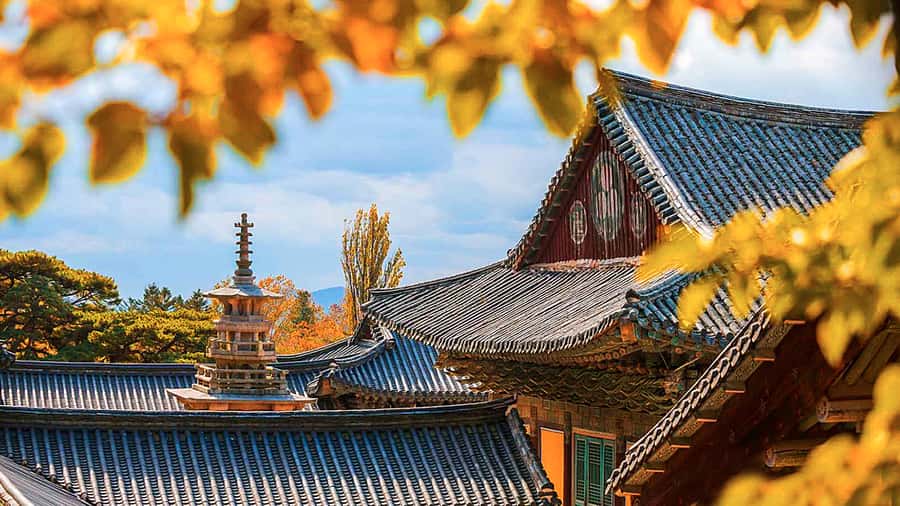
Next comes Bulguksa, a Buddhist temple on Tohamsan. This is the kind of stop that makes history feel concrete, because the sights are monumental and specific, not abstract.
What I’d plan to focus on at Bulguksa is the Dabotap and Seokgatap stone pagodas. The tour notes that Dabotap is on the 10 won coin, which is a fun way to connect what you see on the ground to what you’ve already held in your pocket.
The temple is also highlighted for having six National Treasures, so you are not just walking through scenery. You are seeing a cluster of nationally protected artistic and religious features, all in one place. For photographers, Bulguksa is one of those sites where different angles change the whole look, especially when stone textures and layered structures come into view.
One consideration: temple visits often mean uneven pathways and stairs. This tour is not listed as wheelchair friendly, and it is not marked as suitable for heart problems, so keep your physical comfort in mind.
More Silla history around Gyeongju
- Gyeongju UNESCO sites Private tour with licensed tour guide
★ 5.0 · 275 reviews - Private Gyeongju Tour – Explore Gyeongju UNESCO Sites
★ 5.0 · 272 reviews - Gyeongju UNESCO World Heritage Sites and History Full-Day Tour with Lunch
★ 5.0 · 104 reviews - Gyeongju: UNESCO Heritage Tour Including Bulguksa Temple
★ 4.8 · 104 reviews - Gyeongju: Private Car Tour with a Licensed Tour Guide
★ 5.0 · 85 reviews
Hwangnidan-gil and 십원빵: the easy culture break
After the temple scale, the tour shifts to a more casual feel at Hwangnidan-gil. This is presented as a pedestrian-only street with trendy shops and restaurants, which makes it a change of pace without leaving Gyeongju behind.
The big reason to care here is the snack stop. The tour calls out 10 won bread (십원빵) as a can’t-miss option at Hwangnidan-gil. It is a simple, low-effort way to experience local food culture during a packed schedule.
Think of this segment as your “reset and refuel” moment. You can take photos of the street vibe, shop briefly if you want, and get a quick bite so you are ready for the more solemn sites later.
Daereungwon tumuli: Silla tomb complex and why it matters
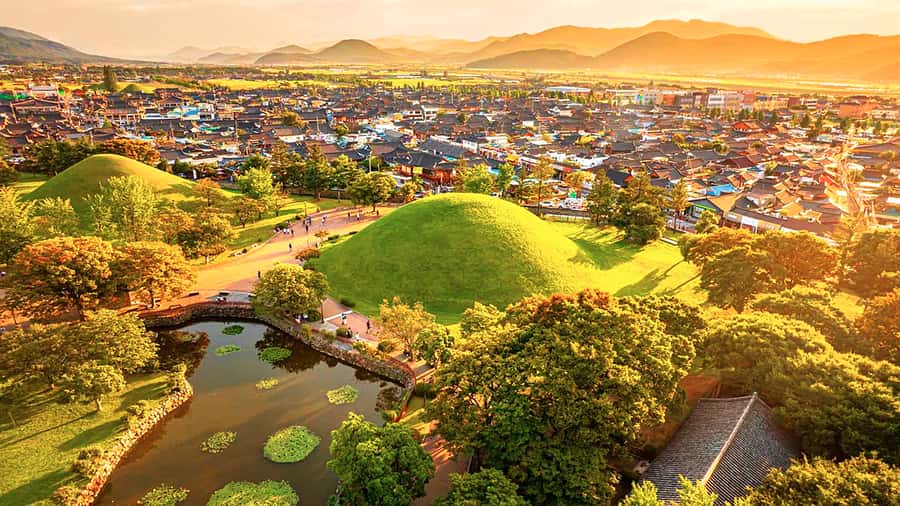
Right next door in spirit, but very different in tone, is Daereungwon. This is a Silla-era tumuli complex with 23 tombs for kings, queens, and nobles. The tour explains why these tumuli are believed to have survived so well: their sturdy construction made it harder for plunderers to access them.
From a visitor standpoint, that preservation detail is the point. When relics survive, you get a clearer sense of the people and power structures that built the Silla era. The tour also notes that some relics are designated as National Treasures, which supports why this site is so significant.
Important practical note: admission to Daereungwon Tomb Complex is not included. So when you budget, treat that as a likely add-on cost. The good news is that you will already be seeing the full “Silla on the ground” picture across multiple stops, so you are not paying extra just to tick off one random place.
Cheomseongdae: the oldest astronomical observatory energy
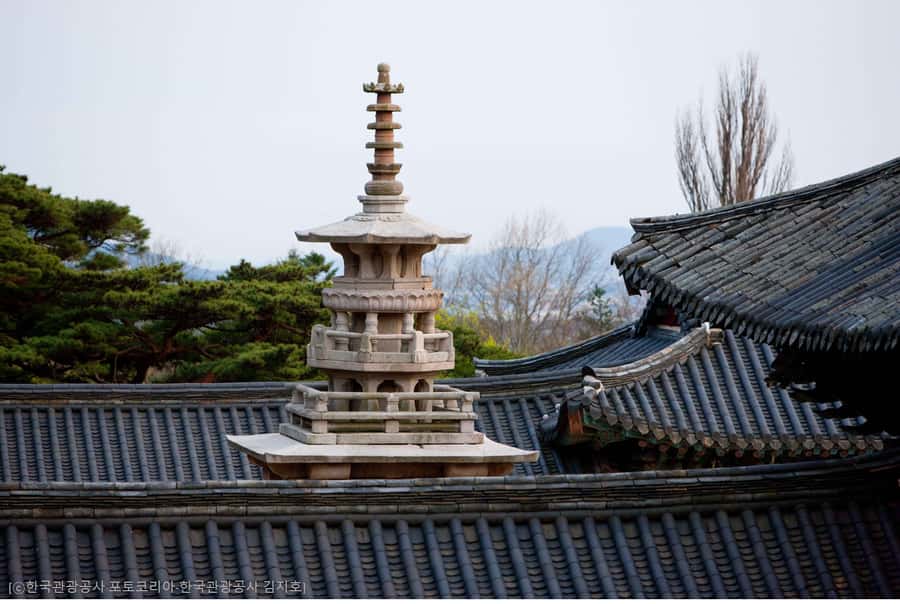
Then you move to Cheomseongdae, described as the oldest astronomical observatory in Asia. Even if you do not go deep into the astronomy details, this is still a compelling stop because you are looking at a purpose-built structure tied to how past societies tracked time and the sky.
It also works well as a pacing break. Compared with walking among temple buildings or tomb grounds, Cheomseongdae tends to feel more contained, so it is easier to appreciate the form and take photos without constantly shifting between many smaller areas.
If you like historical “why it was built” explanations, this is a good place for your guide to point out what makes the structure special. The tour format includes an English-speaking guide/driver, so you should be able to get clear context here.
Gyochon Traditional Village and the Choi clan story
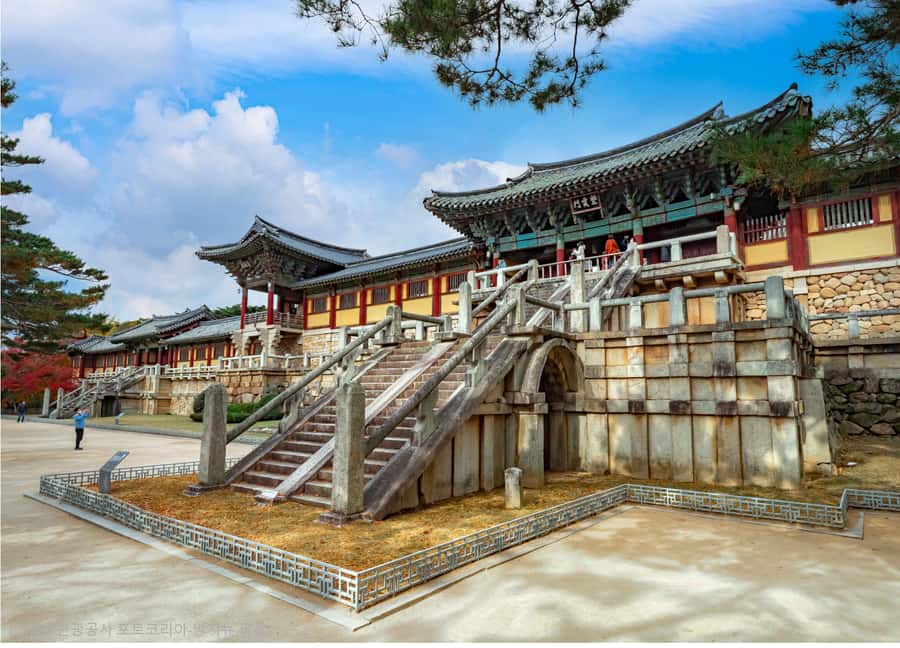
For a strong culture contrast, the tour heads to Gyochon Traditional Village, focused on Joseon Dynasty (조선시대) hanok houses. The tour specifically highlights the traditional homes connected to the Gyeongju Choi clan, described as a wealthy, aristocratic family known as the Rich Choi Family. Over twelve generations, about 400 years, they were among the richest landowners in the region.
That family detail is worth paying attention to because it changes how you read the village. Instead of viewing hanoks as just pretty buildings, you get a sense of social history: who lived where, and why the neighborhood layout mattered.
You also get a food and craft angle here. The tour notes Gyeongju Gyo-dong Beopju, a traditional Korean rice wine, brewed and sold in the village. If you like the idea of tasting or learning about regional products, this stop gives you something practical to experience beyond photos.
As with most hanok neighborhoods, expect walking on uneven ground and stairs between houses. This tour is not wheelchair friendly, so if that is a concern for you, it is best to treat Gyochon as a “comfortable walking needed” stop.
Woljeonggyo Bridge: a Unified Silla bridge rebuilt in 2018
Endgame scenery matters, and the tour closes with Woljeonggyo, described as the largest wooden bridge in Korea after its rebuild in 2018.
The background helps you appreciate what you are seeing. The bridge was built during the Unified Silla period (AD 676 to 935), it later burned down during the Joseon Dynasty, and it was rebuilt in 2018. That timeline gives the bridge emotional weight. It is not only a photo object, it is a story about loss and rebuilding.
It is also close enough to the village area that the day feels unified. You go from Joseon hanoks to a restored Unified Silla bridge and finish with a calmer, scenic moment.
One review detail you should care about: someone specifically called out Woljeonggyo Bridge with lights on as breathtaking. So if the timing lines up during your date, it is smart to bring your best camera settings and be ready for night-style ambiance.
Guide quality that actually helps (and even assists with photos)
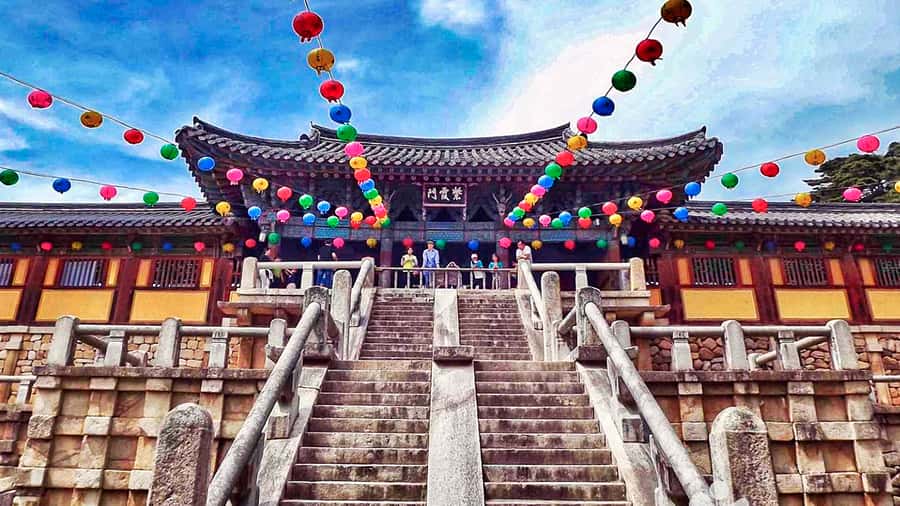
The biggest pattern in the reviews is simple: the guide makes a difference. Multiple comments praise the guide as friendly, clear in explanations, and good at keeping participants comfortable.
English fluency shows up again and again, and one review specifically mentions a guide named Leo giving lots of information and being open-minded toward the group. Another review highlights that the guide could handle multiple languages well, which can matter when your group has mixed nationalities.
What I love as a concept is the practical photo help. One review points out that the guide helped identify the best photo spots and even assisted with taking pictures. For many people, that is the difference between leaving with a few decent shots and leaving with a complete set that actually tells the story of the day.
Price and what $47 gets you in real value
At about $47 per person, the tour is positioned as a value move for people staying in Busan. Here is what is included: an English-speaking tour guide/driver, round transfers between destinations, and admission to attractions.
What is not included is where you should pay attention. The big exclusions listed are meals and beverages, and admission to Daereungwon Tomb Complex. Also note that hotel pick-up and drop-off is not included, so you are using the stated meeting points.
So is it “cheap”? That depends on what you would otherwise spend on transport and ticket lines. But the structure here is cost-efficient for a one-day hit. You are paying for planning and logistics so you can spend your brain on history and photos instead of schedules.
Also, the tour operates with round transfers out of Busan, which usually costs real time and money on your own. When you’re trying to cover seven sites in one day, buying that convenience is often the best deal.
What could trip you up on this tour
The first practical issue is physical. The tour is not suitable for wheelchair users and it is not suitable for people with heart problems. That matters because you are visiting multiple historic sites where you might face stairs, walking paths, and crowds.
Second, it is not a food tour. Meals and beverages are not included, and that can affect your energy. Plan to grab something at Hwangnidan-gil or bring a simple snack buffer if you know you get hungry during long sightseeing.
Third, not everything is included admission-wise. Daereungwon Tomb Complex admission is not included, so you will likely pay an additional fee at that stop.
Finally, itinerary adjustments are possible due to traffic and weather, and the tour explicitly notes the bridge substitution from Sep 15, 2025. That is normal, but it is still worth keeping flexibility in your schedule.
Should you book this Busan to Gyeongju day tour?
Book it if you want a guided, efficient way to see Gyeongju highlights in one day, and you like history that you can photograph: Bulguksa pagodas, Cheomseongdae, tumuli at Daereungwon, hanoks in Gyochon, and the wooden-bridge finish at Woljeonggyo.
Skip it or choose a lighter option if you need lots of downtime, if long walking is a problem, or if you have health concerns that make extended sightseeing risky. Also, if you hate paying extra for one major admission (Daereungwon), factor that in before you commit.
If your priority is value plus a strong itinerary, this one-day route is built for exactly that. You leave with a coherent “Silla to Joseon” storyline, a handful of easy food moments like 십원빵, and photos that look like you actually planned the day.
FAQ
Is pickup and drop-off included?
Round transfers between destinations are included, but hotel pick-up and drop-off is not included. The tour starts and ends back at the meeting point, which varies depending on the option booked.
What does the tour cost?
The price is listed as $47 per person.
What is included in the price?
The tour includes an English-speaking tour guide/driver, round transfers between destinations, and admission to the attractions listed as included.
Are meals and drinks included?
No. Meals and beverages are not included.
Which Gyeongju sites are visited?
The tour visits seven popular sites: Bulguksa, Hwangnidan-gil, Daereungwon, Cheomseongdae, Gyochon Traditional Village, and Woljeonggyo, plus a bridge stop at Ulsan Daewangam Suspension Bridge.
Is Daereungwon admission included?
No. Admission to Daereungwon Tomb Complex is not included.
What happens if I’m late to the meeting point?
You should arrive at least 5 to 10 minutes before departure. Latecomers or no-shows cannot be refunded.
Are pets allowed?
No pets are allowed on the tour.
Is the tour suitable for wheelchair users?
No. The tour is not suitable for wheelchair users.
Which bridge do you visit from Sep 15, 2025?
From Sep 15, 2025, the tour visits Ulsan Daewangam Suspension Bridge instead of Seokguram Grotto.
More Gyeongju Write-Ups
More Gyeongju, More Silla
Still in Busan? More Here
Fresh on the Gyeongju pile
- From Busan: Busan & Gyeongju One Day Tour★ 5.0 · 5 reviews
- Busan: 7 Highlights Gyeongju City One Day Tour★ 4.9 · 10 reviews
- Private World Heritage Gyeongju Taxi Tour★ 5.0 · 12 reviews
- Gyeongju: Private Car Charter Taxi Tour★ 5.0 · 37 reviews
- Guided Car Tour in Geyongju with a Local Guide★ 5.0 · 38 reviews
- Full day Private Gyeongju UNESCO Heritage Tour : a glimpse into Silla★ 5.0 · 60 reviews
Busan Tours you might have missed.
 ★ 4.8Busan: Gyeongju Guided Day Trip to Three Kingdoms CapitalFrom $521,925 reviews
 ★ 5.0Small Group Full Day Busan Tour (Max 6 Pax)From $991,464 reviews
 ★ 4.8From Busan: Gyeongju UNESCO World Heritage Guided Day TourFrom $521,250 reviews
 ★ 5.0Busan Private Tour with licensed tour guide + private vehicleFrom $1691,143 reviews
 ★ 4.7Busan: Coastal Treasures Beach Train, Culture Village & MoreFrom $51832 reviews
 ★ 4.5Busan’s Cultural Wonders with Beach Train & Gamcheon Village etcFrom $47663 reviews
 ★ 5.0Gyeongju UNESCO World Heritage Guided Day Tour from BusanFrom $57660 reviews
 ★ 5.0Private Busan Tour -Explore Cultural Landmarks with a Local GuideFrom $169552 reviews
Where this tour also appears