
REVIEW · MARKETS
Downtown Seoul Guided Food & Market Tour with 8+ Local Tastings
Seoul food can feel like a maze. This tour turns it into a simple plan, with 8+ local tastings plus lunch, while guiding you through classic sights like Gyeongbokgung Palace and Bukchon Hanok Village.
I really like the small group size, just 10 people (max 12), because it keeps things moving and makes questions easy. I also like that the tastings are specific, from mung bean pancakes with sweet onions to mandu dumplings and kimbap, not vague snack stops. One possible drawback to keep in mind: the menu includes sweets and tea moments, and some dietary needs may not be fully covered unless you ask first.
If you want a quick, practical way to sample Seoul’s food scene without guessing where to go, this tour is built for you. If you are trying to hit only savory, meat-forward street food, be aware the lineup can lean broader, including dessert-like bites and rice cake treats.
In This Review
- Quick hits to know before you eat
- Why this Seoul food tour feels like a local game plan
- The taste list: what you actually eat in 3 hours
- Jongno meeting point, mobile ticket, and the walking reality
- Stop 1: N Seoul Tower for first views, then straight to food mode
- Gyeongbokgung Palace area: why royalty matters to food
- Namdaemun market next to the Great South Gate
- Bukchon Hanok Village: old houses, new tastes
- Back toward palace gates and palace grounds
- Kimbap, cream bread, and that grilled rice cake with tea
- Insadong finale: a hidden teahouse finish near Anguk Station
- Price and value check for $98
- Guide style matters here, and reviews back it up
- Who should book this Seoul tour, and who should think twice
- Should you book this Seoul guided food and market tour?
- FAQ
- How long is the Seoul downtown food and market tour?
- Where do I meet and where does the tour end?
- What food tastings are included?
- Is lunch included?
- How many people are in the group?
- Do you offer hotel pick-up or drop-off?
- Can I request dietary accommodations?
- What is the cancellation policy?
Quick hits to know before you eat
- Small-group pace: just 10 people, with a max of 12, plus you end near Anguk Station in Insadong
- Named tastings: mung bean pancake, mandu, tteokbokki (slightly spicy), kimbap, grilled rice cake, and a secret dish
- Big landmarks, food-first context: N Seoul Tower area, Gyeongbokgung Palace, Namdaemun market, Bukchon Hanok Village
- Lunch included: you do not just nibble, you get a real meal in the mix
- Guide quality shows up in reviews: guides like Alex, Jae, Youla, and Ji Yoon get praised for staying organized and sharing history
- Comfort matters: wear walking shoes, because this is a walking tour
More eating and drinking in Seoul
Why this Seoul food tour feels like a local game plan
Seoul has world-famous food. The tricky part is knowing what to try first, and how to fit it into a short visit.
This tour keeps the plan tight and readable. You meet in Jongno-gu (214 Jong-ro) and spend about 3 hours on foot with a guide, sampling through major areas tied to Korean food culture. Along the way you pass big-name sights like Gyeongbokgung Palace and Bukchon Hanok Village, but the spotlight stays on what you eat and why people eat it.
The “value” here is not just the price tag. It is the structure. With 8+ local tastings and lunch included, you are buying time you would otherwise spend researching stalls, translating menus, and trying to coordinate where everything is.
The taste list: what you actually eat in 3 hours
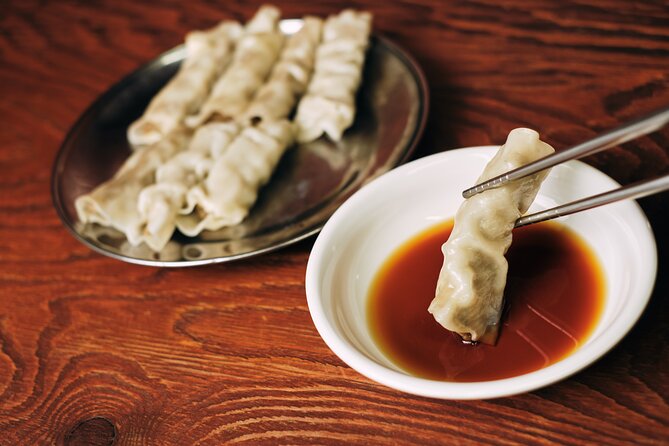
If you like tours that come with specifics, you will probably like this one. The included lineup is clearly laid out, and it hits several classic Korean flavors and formats.
Here are the tastings that are part of the experience:
- Nukdujan mung bean pancake paired with sweet onions
- Mandu (Korean dumplings) plus tteokbokki (noted as slightly spicy)
- Minced fish fillets paired with a bit of fish soup
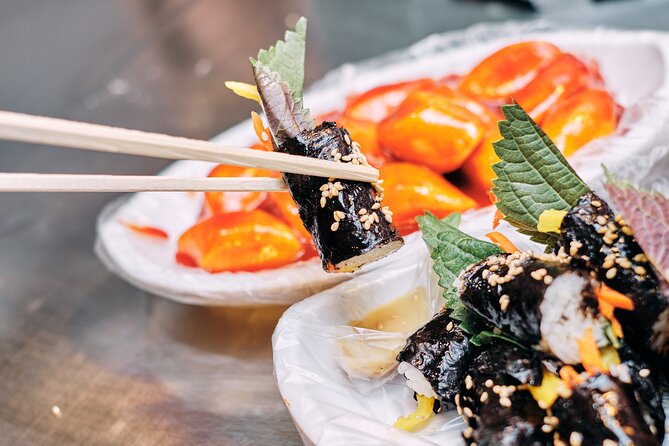
- Freshly prepared kimbap
- Sweet and salty cream bread
- Korean honey snack, which includes grilled rice cake with traditional tea
- Plus a Secret Dish that is not listed in detail
Lunch is included, and the tour is designed as a balanced food-and-walk experience. From the reviews, a few additional items pop up depending on the day and guide, like mentions of a traditional wine pairing and different savory bites such as beef tartare or fish broth. The core included list above is what you can plan around.
Practical tip: come hungry, but do not panic-fill up at the very first stall. One review points out that the market can be overwhelming and you will want room to keep tasting as the route unfolds.
Jongno meeting point, mobile ticket, and the walking reality
This is not a bus-and-hat tour. It is a guided walking route that starts at 214 Jong-ro, Jongno District and ends in Insa-dong, about 100 meters from Anguk Station (Line 3, orange line).
A couple logistics things matter for your comfort:
- There is no hotel pickup or drop-off, so you need to get yourself to the start point.
- They strongly advise comfortable walking shoes, which makes sense because you are moving between food stops and landmark areas.
- The group is capped at 12. That is small enough to keep the experience personal, but still structured enough that you do not feel lost.
Also, you get a mobile ticket, so you can keep things simple on your phone.
Stop 1: N Seoul Tower for first views, then straight to food mode
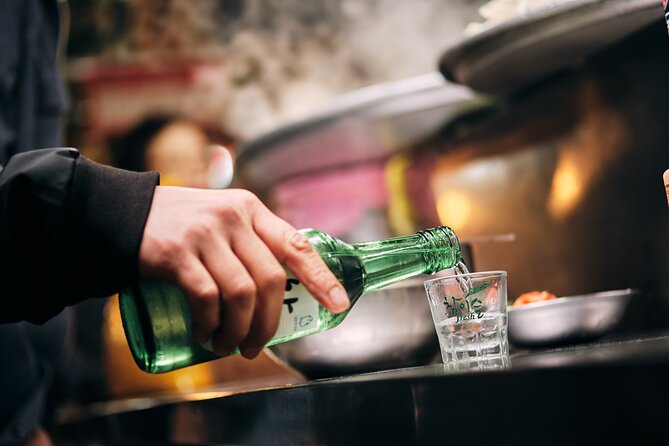
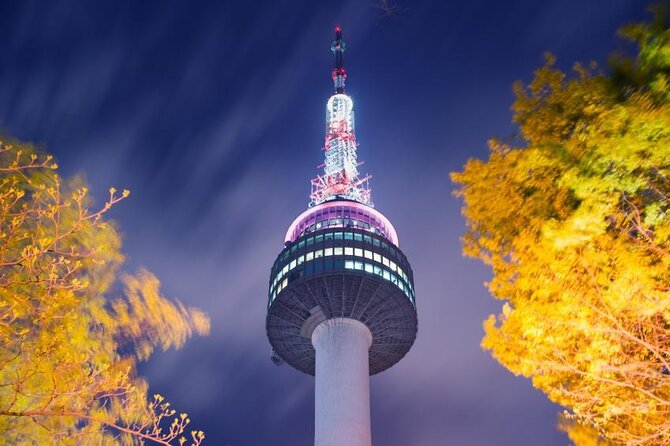
The tour begins at N Seoul Tower, also known as YTN Seoul Tower, located on Namsan Mountain in central Seoul.
Even if you are not there for a full tower visit, this is a smart “start point” because it orients you fast. It also sets the mood. Seoul is not flat and grid-like. It is layered on hills, neighborhoods, and viewpoints, and you feel that as you transition into lower streets.
What to expect here:
- A landmark moment early, before the tastings start.
- An easy way to learn how the guide will connect food choices to the places you are walking through.
If you get motion sick or hate uphill walking, plan for gentle pacing. The route overall is designed as a half-day walk, but some areas in central Seoul do involve hills.
Other food bookings in Seoul
- Seoul Night Palace & Market Food Tour with Vehicle
★ 5.0 · 275 reviews - Seoul Fun Food Tour: 12 different food tastings
★ 5.0 · 266 reviews - The Award-Winning PRIVATE Food Tour of Seoul: The 10 Tastings
★ 4.5 · 128 reviews - Afternoon E-bike tour and “Happy Hour” food and drinks
★ 5.0 · 46 reviews - Mangwon Market Food tour By Locals; Cheap Eats to Fancy Feast
★ 5.0 · 38 reviews
Gyeongbokgung Palace area: why royalty matters to food
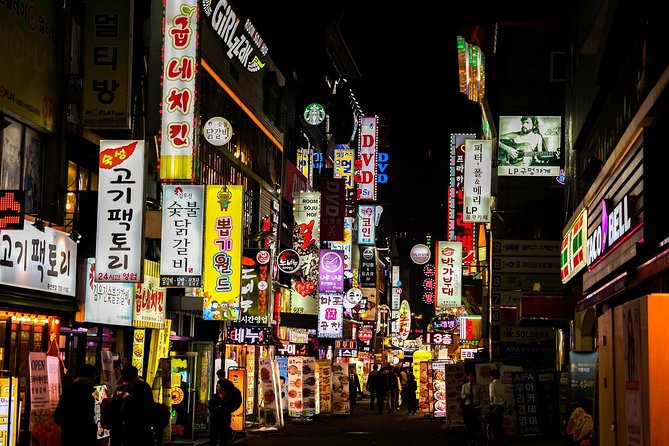
Next you move into the Joseon dynasty royal palace zone, the major palace built in 1395, located in northern Seoul. That is your big historical anchor for the day.
Then the route also includes the main and largest gate of Gyeongbokgung Palace, known as Gwanghwamun Gate. This matters because it grounds the story. Korean food is not only about street stalls. It is also about court culture, seasonal cooking, and how neighborhoods formed around power and daily life.
What you will get out of this stop, food-wise:
- Context for why certain dishes became common or stayed prestigious
- A sense of place before you hit the market
A caution: if you come in with only one goal, like fried chicken or BBQ, you might feel a little pulled toward history. The good news is the tour keeps history as a tool for understanding the food stops later, not as a lecture that hijacks your appetite.
Namdaemun market next to the Great South Gate
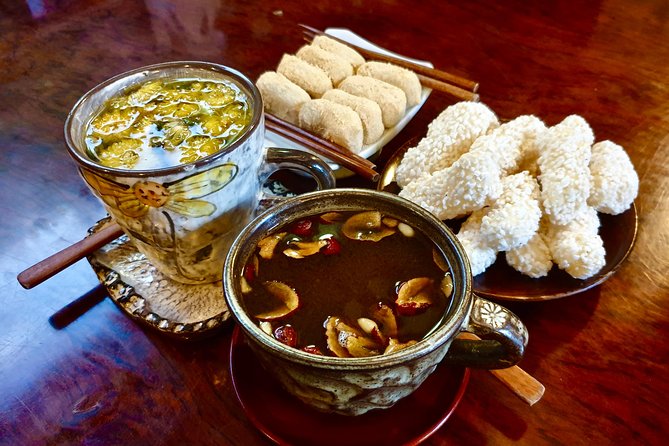
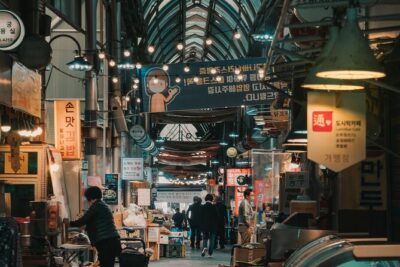
Then comes the part most food lovers are waiting for. You head to a large traditional market next to Namdaemun, the Great South Gate. This is described as the oldest and largest market in Korea.
Markets are where you learn the real Seoul skill: reading the scene without overthinking. You see how stalls stack flavors, how people order, and what gets repeated night after night.
What makes this stop valuable is the guided method. Instead of drifting stall to stall, you move with purpose and you know you will cover multiple tastings, not just one meal that happens to look good.
From the included tastings, this is where things like:
- Mung bean pancake
- Mandu
- Tteokbokki (slightly spicy)
- Other market bites and the “secret dish”
tend to fit naturally.
Practical advice from the experience vibe: there is a lot happening. If you are the type who wants to take photos at every second, build in a little restraint. Your guide will pace the route so you can actually taste everything.
Bukchon Hanok Village: old houses, new tastes
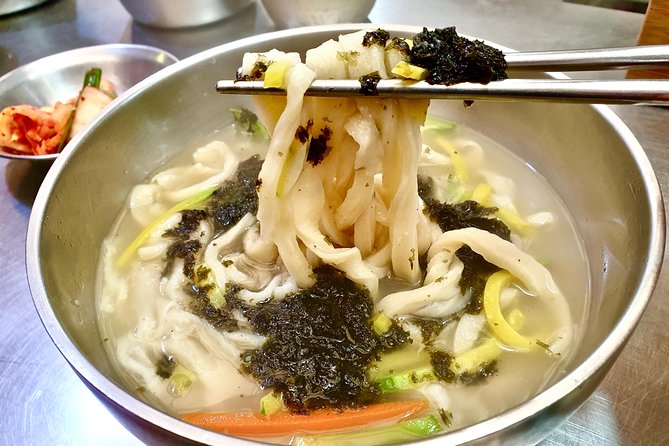
After the market, the tour walks toward Bukchon Hanok Village, a traditional Korean village on a hill, located between Gyeongbok Palace, Changdeok Palace, and Jongmyo Royal Shrine.
This is one of those stops that is more than scenery. You feel how Seoul’s heritage neighborhoods sit close to modern life. That is the point. The tour uses the geography to explain how food culture travels with people.
What to expect:
- A slower, more “look up and notice” walk after the market energy
- Food context that fits the neighborhood feel
This is also a good moment for your stomach to reset slightly. After tasting multiple street foods, you get a calmer pace and then head toward the next palace-linked area and tea-house finish.
Back toward palace gates and palace grounds
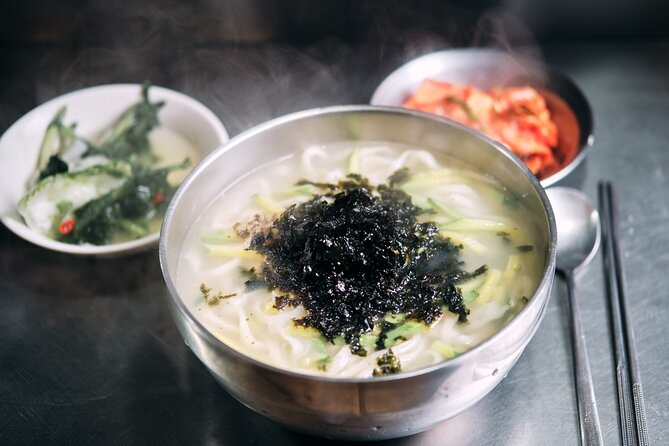
The itinerary also includes:
- Gyeongbokgung Palace gate stop (the main and largest gate)
- A palace built by Joseon kings, set within a large park in Jongno-gu, described as one of the Five Grand Palaces
Even when you are not focused on architecture, these stops help you understand how Seoul organizes itself. Food markets are not isolated. They connect to the movement of people, to commerce, and to daily routines shaped by where people lived and what areas mattered.
Drawback to consider here: if you want a purely food-only route with no landmark walking, this tour might feel slightly heavier on seeing sights. The route is still food-focused, but it does ask you to take in palace and village moments along with tastings.
Kimbap, cream bread, and that grilled rice cake with tea
By the time you hit the later tastings, you are moving from street snacks to more “meal-like” textures.
The included lineup includes:
- Kimbap, freshly prepared (comfort food energy, easy to eat on the move)
- Sweet and salty cream bread, a pocketable contrast to savory bites
- Korean honey snack featuring grilled rice cake paired with traditional tea
This is where the tour shows its balance. Korea has a deep dessert and snack culture, and the guide choices make that part of the story, not an afterthought. If you are someone who usually ignores dessert, you may be surprised by how much these bites add flavor variety, not just sugar.
From the reviews, one of the standout favorites is the fried mungbean cake and the mungbean pancake style bite, plus the tea-house ending. Several guides also earn praise for taking their time and explaining what you are eating, which is often the difference between eating a snack and understanding why it exists.
Insadong finale: a hidden teahouse finish near Anguk Station
The tour ends in Insa-dong at a hidden teahouse, about 100 meters from Anguk Station on Line 3.
Teahouse endings work well for food tours because they do two things:
- They give you a warm-down moment after walking and tasting.
- They let the flavors settle so you remember what each stop actually tasted like.
The included menu already points to tea pairing with the grilled rice cake snack, so the teahouse ending feels like a natural wrap, not a random stop.
If you want to keep exploring afterward, Insa-dong is an easy area to wander. The nice part is you will end already oriented to the neighborhood, rather than finishing somewhere far from transit.
Price and value check for $98
At $98 per person for about 3 hours, the math comes down to this: are you getting enough food and enough guidance to justify not doing it on your own?
Here is what you are paying for, in practical terms:
- Small group (about 10 people, max 12), which means less chaos when you are tasting at stalls
- 8+ local tastings plus lunch included
- Access to areas that can be hard to navigate when you do not read Korean, especially when you are moving through markets
- Guides who are repeatedly praised for being organized and patient, with history and food explanations that make the eating feel smarter
One review did criticize the tour as expensive compared to other food tours and felt the variety leaned toward sweets. That is a fair consideration. If you prefer a tour packed with only savory classics like BBQ or noodles, you might need to weigh this against other food tour styles.
But if you want a mix of market snacks, dumplings, rice cake tea time, and a route that combines food with the neighborhoods behind it, $98 is not just a ticket. It is buying a guided path that keeps your short visit from turning into guesswork.
Guide style matters here, and reviews back it up
One theme in the feedback is that the guide makes the experience feel smooth. Multiple names show up in praise, including Alex, Jae, Youla, and Ji Yoon.
The guide strengths that come up again and again:
- Patience and clear communication in English
- Organization, with stops that feel planned rather than rushed
- Cultural context, so you understand the dish name and how it fits Korean daily life
- Practical travel tips, like where else to eat or what to return to later
You can feel the value in the pacing. Several reviews describe the guide taking their time and keeping the tour engaging. That matters when you are tasting multiple items and you want your brain to connect flavors with place.
Who should book this Seoul tour, and who should think twice
This tour is a great fit if:
- You want a first-time Seoul food introduction
- You like walking and want to see Jongno neighborhoods, palaces, and Insa-dong in one half-day
- You want multiple tastings, with both savory and sweet items, and lunch included
- You appreciate food explanations, not just eating
You might think twice if:
- You want a food tour that is mostly BBQ, heavy meat, and only savory dishes
- You have strict dietary needs and did not plan to contact the provider first
Dietary reality check: the tour notes that many experiences may not accommodate certain dietary restrictions because of a balanced gastronomy plan. That means you should reach out before booking if you need special accommodations. On the brighter side, at least one review reports the tour was accommodating for a vegetarian in the group with plenty of options.
Should you book this Seoul guided food and market tour?
Book it if you want a structured, small-group Seoul food tour that covers major food areas and pairs tastings with the neighborhoods that shaped them. The combination of Namdaemun market, palace sights, Bukchon Hanok Village, and an Insadong teahouse ending makes it more than a snack crawl.
Skip or compare it if your goal is a very specific slice of Korean food and you want only one style, like deep into barbecue and noodles. Also, if your dietary needs are complex, do the smart move and contact the provider ahead of time.
If you like the idea of coming hungry, learning what each dish is, and leaving with a shortlist of places you can return to, this tour is a strong start for Seoul.
FAQ
How long is the Seoul downtown food and market tour?
It is about 3 hours.
Where do I meet and where does the tour end?
You start at 214 Jong-ro, Jongno District, Seoul, and you end in Insadong at a hidden teahouse, about 100 meters from Anguk Station (Line 3, orange line).
What food tastings are included?
The included tastings listed are nukdujan mung bean pancake with sweet onions, mandu and tteokbokki (slightly spicy), minced fish fillets with a bit of fish soup, freshly prepared kimbap, sweet and salty cream bread, and Korean honey snack with grilled rice cake and traditional tea, plus a Secret Dish.
Is lunch included?
Yes, lunch is included.
How many people are in the group?
It is a small group, with a maximum of 12 travelers (noted as just 10 people in the description).
Do you offer hotel pick-up or drop-off?
No. Hotel pick-up and drop-off are not included.
Can I request dietary accommodations?
The tour notes that many tours may not be able to accommodate certain dietary restrictions due to the design of the gastronomy experience. Contact the provider prior to booking to ask what is possible.
What is the cancellation policy?
You can cancel for free up to 24 hours in advance for a full refund. If you cancel less than 24 hours before the experience starts, the amount paid is not refunded.
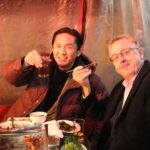
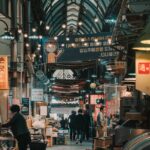
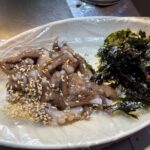
Chopsticks and Cups Across Seoul
Keep Browsing Seoul
More Seoul Write-Ups
Fresh on the Seoul pile
- Unique Native Experience : Han River Picnic, Board game, BBQ★ 5.0 · 3 reviews
- 2-Hour Private Kayaking and Paddleboarding Experience in Hanriver★ 5.0 · 3 reviews
- Korean Folk Village & Suwon Hwaseong Fortress Private Tour★ 5.0 · 3 reviews
- Seoul Korean BBQ Dinner Experience with Secret Food Tours★ 5.0 · 3 reviews
- Seoul Highlights & Hidden Gems – Private Tour with Photo Service★ 5.0 · 3 reviews
- Night Food Tour in Seoul with Traditional and Modern Cuisine★ 5.0 · 3 reviews
Markets you might have missed.
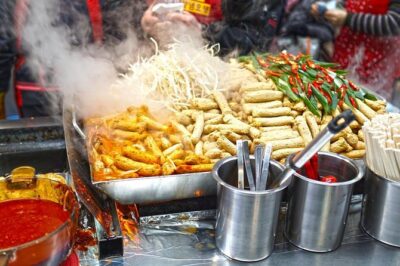 ★ 5.0Seoul Street Food Market TourFrom $731,226 reviews
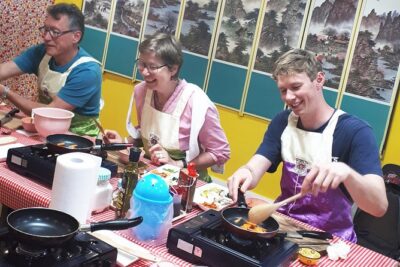 ★ 5.0Local Home Korean Cooking Class & Market Adventure in SeoulFrom $911,024 reviews
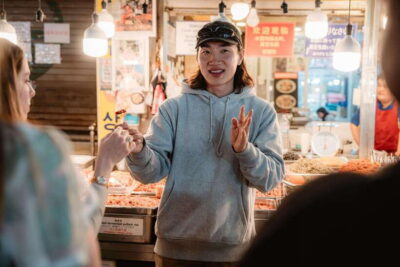 ★ 4.9Seoul: Night Market Food Tour with Local GuideFrom $73943 reviews
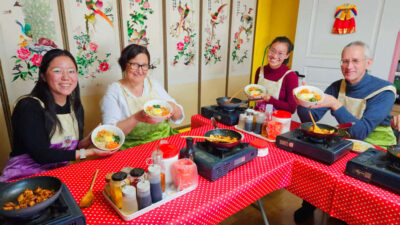 ★ 5.0Seoul: Korean Cooking Class at a Local Home and Market TourFrom $98348 reviews
 ★ 5.0Seoul Night Palace & Market Food Tour with VehicleFrom $79275 reviews
 ★ 5.0Cook 3 Authentic Korean Dishes with Local Market TourFrom $79231 reviews
 ★ 4.0Korean Palace and Market Tour in Seoul Including Insadong and Gyeongbokgung PalaceFrom $89174 reviews
 ★ 4.9Seoul: Nighttime Tour of Palace, Market, Naksan Park & MoreFrom $43143 reviews
Where this tour also appears