
REVIEW · CYCLING TOURS
Afternoon E-bike tour and “Happy Hour” food and drinks
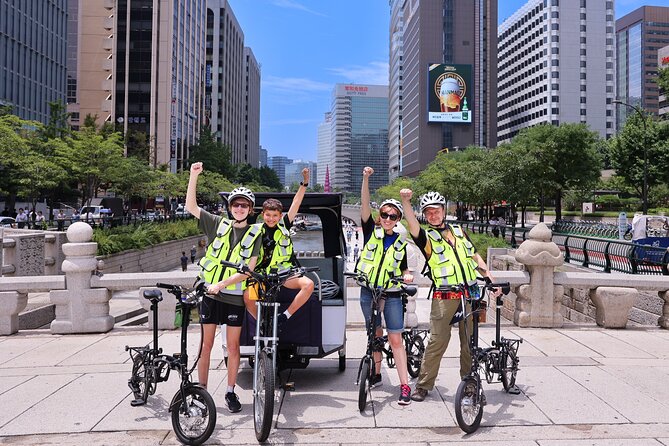
Seoul by bike makes the city feel manageable fast. This afternoon route strings together big-name sights and quieter backstreets, then caps it with a Korean market snack and a real food-and-drink stop. I love the small group cap of 10, which keeps the pace friendly and the guide easy to ask questions. I also like that you get e-bike support plus a helmet and insurance, so you can focus on seeing Seoul instead of fighting traffic.
My one caution is that the stops are short, so if you want long palace wandering or deep time for photography, this is more of a highlights sampler than a slow-study day.
In This Review
- Key highlights at a glance
- Why an afternoon e-bike tour is a smart first look at Seoul
- Getting ready at Le Meiller Jongno Town, and how the tour really starts
- Route highlights before the food stop: Cheonggyecheon to Daehanmun
- Ikseon-dong and Baek Inje House: traditional spaces without the museum slog
- Palace power around Deoksugung and Changdeokgung: quick context, big payoff
- The Korean Happy Hour stop: market snacks, fried comfort, and Makgeolli or beer
- Price, group size, and what $105 buys you in real value
- Should you book this e-bike and Happy Hour combo?
- FAQ
- Where is the meeting point and what time does the tour start?
- How early should I arrive before the tour?
- What’s included in the price?
- How big is the group?
- Can people with mobility needs join the tour?
- What happens if the weather is bad or I need to cancel?
Key highlights at a glance
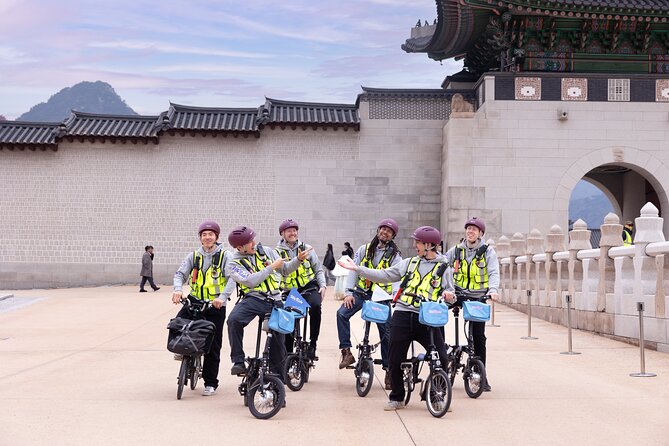
- Small-group riding (max 10) keeps the experience personal and easier to follow.
- Helmet, insurance, and safety fitting give you real peace of mind for your first e-bike ride in a busy city.
- Cheonggyecheon to Gwanghwamun gives you a fast read on modern Seoul and its history.
- Ikseon-dong and Korean home culture show you how traditional spaces still shape everyday neighborhoods.
- Deoksugung and Changdeokgung area stops keep the royal-palace context close, without requiring a whole-day commitment.
- Ends with Korean comfort food and drinks at a favorite restaurant spot, with seasonal menu options.
More eating and drinking in Seoul
Why an afternoon e-bike tour is a smart first look at Seoul
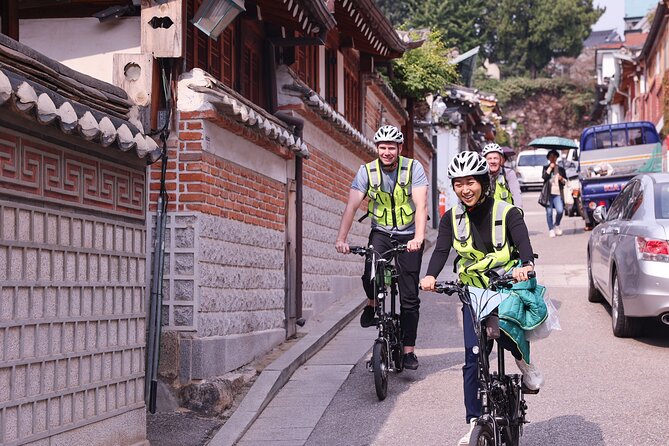
Seoul can overwhelm you early on. This tour helps because it’s built for timing. You start in the afternoon, you cover a lot of ground while it’s still light, and you get a mix of major landmarks and lived-in neighborhoods without turning your day into a logistics puzzle.
The e-bike part matters more than it sounds. Seoul has hills, turns, and stretches where the traffic can feel intense. With electric assist, you keep a steady pace and actually have energy to look around. That means you can stop at the right moments and enjoy short photo pauses instead of saving your strength for getting back to your hotel.
You also learn the city in layers. One stop zooms you toward the modern capital story. Another brings you into the rhythms of traditional housing areas. Then you finish with a meal-style break that feels like how locals actually spend time together.
Getting ready at Le Meiller Jongno Town, and how the tour really starts
The meetup point is Le Meiller Jongno Town, 19 Jong-ro, Jongno District. The start time is 2:30 pm, and you should arrive 20 to 30 minutes early. That early window is not wasted time. It’s when they prepare you, educate you on safe riding, and fit the bike to you.
This is the kind of small detail that makes a big difference on a first bike tour. If your handlebars are wrong or your seat height is off, you’ll spend the whole ride adjusting instead of enjoying the sights. Here, you’re getting that sorted upfront.
You’ll also have a mobile ticket, and you’ll want it ready on your phone at check-in. The tour includes a safety helmet and insurance, which is comforting if you’re nervous about traffic or just want an extra layer of coverage.
If you’re traveling with someone who needs an accessibility accommodation, the tour notes that you can join via a pedicab at the same price if you have additional mobility requirements.
Route highlights before the food stop: Cheonggyecheon to Daehanmun
Your ride has a clear “start in the city, then move deeper” rhythm. The tour begins by getting you comfortable on the bike and moving you toward central Seoul.
First, you spend time at the bike shop where you ride-prep. After that, you head to Cheonggyecheon Berlin Square. It’s a quick stop, but it’s a strong way to frame Korea’s divided-nation history because you’re standing in a space built to reflect modern political memories.
Next comes the Cheonggyecheon Stream. This is the kind of stop where even a brief pause makes sense, because you get to appreciate the waterway as a lived-in public space. It also helps that the tour gives you just enough time to look, take photos, and keep rolling.
Then you reach Gwanghwamun Square, a grand central plaza with statues connected to Korean history. The value here is perspective. Instead of treating each landmark as a disconnected postcard, you start understanding Seoul as a set of meaningful public spaces.
From there, you move into a more intimate cultural zone with stops like House of Baek Inje and Ikseon-dong. These shift the tone from “city center monuments” to “how tradition is still part of daily life.” You’re getting variety without losing continuity.
A short but memorable stop is Daehanmun Gate, described as the main gate of Deoksugung Palace and a symbol of Korea moving from older dynastic eras into a more modern period. Even if you don’t read every sign, the guide’s context helps the place feel connected to the larger story of Seoul.
Ikseon-dong and Baek Inje House: traditional spaces without the museum slog
Two stops do a lot of cultural work here.
At House of Baek Inje, you learn the key features of a traditional Korean home and how those elements still show up in use today. The benefit is that you’re not just looking at a building. You’re getting a quick, practical explanation you can carry with you as you walk through similar neighborhoods later.
Then comes Ikseon-dong, known for being a traditional housing district where past and present sit close together. This matters because Seoul’s modern energy can sometimes make tradition feel like a theme park. Places like Ikseon-dong help you see it as an everyday neighborhood pattern, not just a costume.
A key travel tip for stops like these: don’t try to cram in too much reading. Use the short time to notice layout, materials, and how people move through the space. In a two-hour window, the goal is recognition, not mastery.
Also, because the tour is designed for limited time, these segments are intentionally quick. That can be a downside if you want to linger, but it’s also why the whole experience fits into a simple afternoon plan.
Other food bookings in Seoul
- Seoul Night Palace & Market Food Tour with Vehicle
★ 5.0 · 275 reviews - Seoul Fun Food Tour: 12 different food tastings
★ 5.0 · 266 reviews - The Award-Winning PRIVATE Food Tour of Seoul: The 10 Tastings
★ 4.5 · 128 reviews - Afternoon E-bike tour and “Happy Hour” food and drinks
★ 5.0 · 46 reviews - Mangwon Market Food tour By Locals; Cheap Eats to Fancy Feast
★ 5.0 · 38 reviews
Palace power around Deoksugung and Changdeokgung: quick context, big payoff
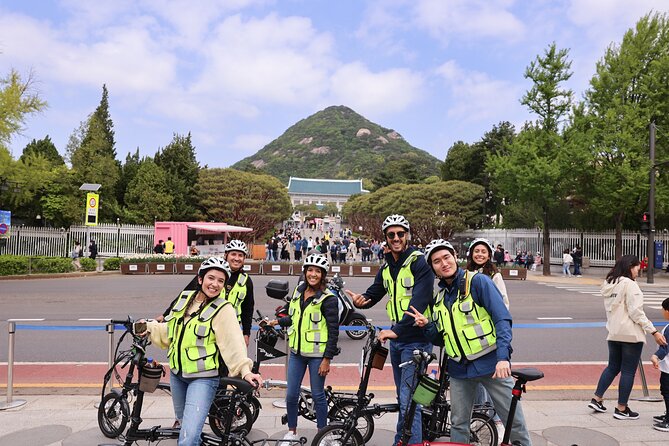
You finish the sights portion with Changdeokgung Palace. It’s presented as the seat of Joseon Dynasty power, yet still standing as a relevant landmark today. Even with short stop time, this is the kind of name you can’t ignore if you’re trying to understand Seoul beyond neighborhoods and shopping streets.
The way the tour stages palaces is smart for first-time visitors. Instead of scheduling a full palace day, you get palace context layered into your ride. You’re not guessing what matters. The guide points you toward what the palace represents, so your photos and your memories have meaning.
There’s also a timing benefit. By the time you’re near the end, you’re ready for the break that comes next. Your energy is still decent, and you’re not arriving at the food stop drained.
One consideration: because the stops are brief (many are around 5 to 15 minutes), you won’t have long hours for palace grounds. If you want to spend time inside buildings or wander slowly for a couple of hours, plan to return on another day. Think of this tour as the fastest way to decide what you want to see more of.
The Korean Happy Hour stop: market snacks, fried comfort, and Makgeolli or beer
This is the part that turns a sightseeing ride into an actual experience.
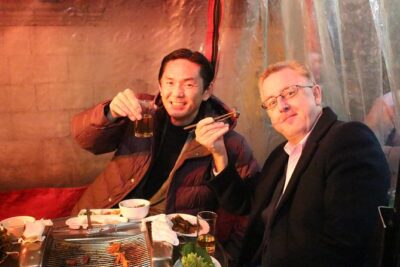
After you wrap up the last palace moment, you drop off the bikes and head into a restaurant area for local eats and drinks. The tour calls it favorite Korean soul food restaurants, and the format is effectively a Happy Hour-style hangout built around food and beverages, not just a meal ticket.
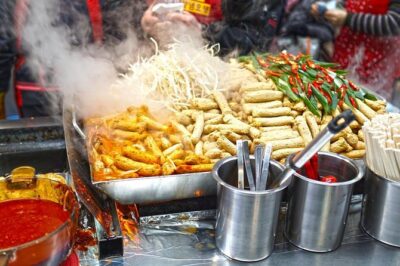
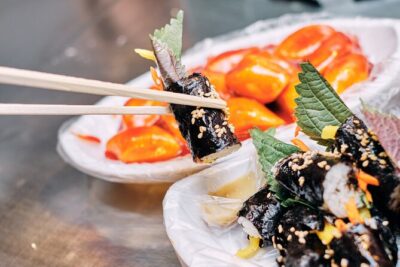
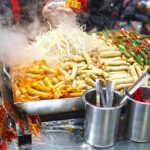
Before that, you also get snacks from a local market, which sets the tone. You get to taste while you’re still in tour mode, so you’re not waiting until the end to feel like you’re eating Seoul.
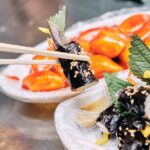
What you eat depends on the season. In winter, the menu is described as including kimchi soup, Korean pancakes, and Makgeolli rice wine. In summer, you’ll see options like K-fried chicken, plus seasonal drink pairings. If you’re a food-first traveler, this is a strong reason to book the tour in the season you’re visiting, since the menu is built to match it.
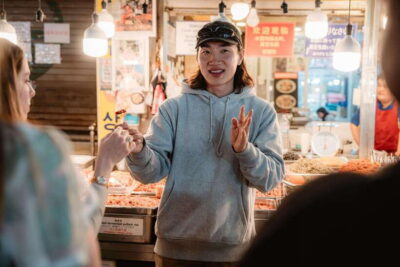
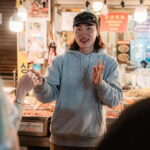
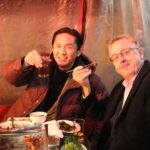
The reviews highlight how this ending feels authentic and relaxed. People specifically mentioned the food and beer being a great finish, and that the guide kept the mood fun while also maintaining safety on the ride. Names that came up include Hagar, who made sure everyone was safe, and Vincent and Taejin, who were praised for sharing city context and keeping the ride enjoyable.
Practical note: because the food stop is part of a timed 3-hour experience, come hungry, but don’t expect a long sit-down dining experience. You’re there to taste, drink, and reset, then go back to the meetup point when the tour wraps.
Price, group size, and what $105 buys you in real value
At $105 per person, this is not the cheapest way to “see Seoul.” But it can be good value because you’re buying several things that add up quickly if you do them separately.
You get:
- An e-bike (not just a rental, but a guided, fitted ride)
- A helmet and insurance
- A guide moving you through multiple areas
- Snacks from a local market
- An end-of-tour food-and-drinks stop with seasonal choices
The e-bike and safety package are the biggest cost drivers. Without the guided portion, you might still rent a bike, but you’d miss the structured route and the context that helps you understand what you’re looking at while you’re moving. With a group size capped at 10, you also avoid the “herding cats” feel that larger tours can have in dense neighborhoods.
If you’re a first-time visitor with limited time, the tour’s biggest strength is conversion. After this, you’ll know what you want to return to for deeper exploration. That matches what guides seem to focus on in the experience style, with strong guidance plus clear recommendations.
Also, the tour is scheduled for a practical window, 2:30 pm for about 3 hours. That’s ideal if you have morning plans or you’re pacing your trip so you don’t burn a whole day on transport.
Your main trade-off is time at each stop. The tour is built to hit many points, not to linger. If that sounds like what you want, the price feels easier to justify.
Should you book this e-bike and Happy Hour combo?
Book it if you want a fast, friendly way to get oriented in Seoul. You’ll cover major central areas like Cheonggyecheon and Gwanghwamun, you’ll get cultural stops such as House of Baek Inje and Ikseon-dong, and you’ll finish with a genuine food-and-drinks moment that changes with the season.
Skip it or add a second plan if you want long palace time. The palaces you see are framed and contextualized, but the stop length is short. Think of it as the first chapter, then return for your favorites.
I’d also book it if you’re worried about doing an e-bike ride solo. The safety fitting, helmets, insurance, and guided structure are exactly what make a first ride less stressful.
If you’re deciding, ask yourself one question: Do you want to optimize your afternoon and get a taste of Seoul’s variety in one go? If yes, this is a very solid match.
FAQ
Where is the meeting point and what time does the tour start?
The tour meets at Le Meiller Jongno Town, 19 Jong-ro, Jongno District. The start time is 2:30 pm, and the tour ends back at the meeting point.
How early should I arrive before the tour?
You should arrive about 20 to 30 minutes early. That extra time is used for preparation, safety education, and bike fitting.
What’s included in the price?
The price includes use of the e-bike, a safety helmet, and insurance. It also includes snacks from a local market, plus food and drinks at the end of the tour.
How big is the group?
The tour has a maximum group size of 10 travelers.
Can people with mobility needs join the tour?
Yes. The tour invites people with additional mobility requirements to join via a pedicab at the same price. Service animals are also allowed.
What happens if the weather is bad or I need to cancel?
The experience requires good weather. If it is canceled due to poor weather, you will be offered a different date or a full refund. You can cancel for a full refund up to 24 hours in advance of the experience start time.
Chopsticks and Cups Across Seoul
Keep Browsing Seoul
More Seoul Write-Ups
Fresh on the Seoul pile
- Unique Native Experience : Han River Picnic, Board game, BBQ★ 5.0 · 3 reviews
- 2-Hour Private Kayaking and Paddleboarding Experience in Hanriver★ 5.0 · 3 reviews
- Korean Folk Village & Suwon Hwaseong Fortress Private Tour★ 5.0 · 3 reviews
- Seoul Korean BBQ Dinner Experience with Secret Food Tours★ 5.0 · 3 reviews
- Seoul Highlights & Hidden Gems – Private Tour with Photo Service★ 5.0 · 3 reviews
- Night Food Tour in Seoul with Traditional and Modern Cuisine★ 5.0 · 3 reviews
Cycling Tours you might have missed.
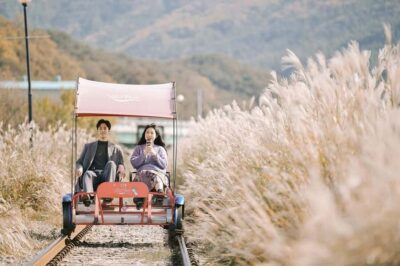 ★ 4.6From Seoul: Nami Island, K-drama Garden & Rail Bike Day TourFrom $61724 reviews
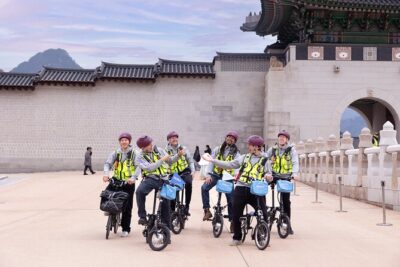 ★ 5.0Seoul E-bike TourFrom $120536 reviews
 ★ 4.5Day Trip to Nami Island with Rail bike and The Garden of Morning CalmFrom $76459 reviews
 ★ 5.0Nami+Alpaca+Garden of Morning Calm (+Rail Bike Option)From $92300 reviews
 ★ 4.9Seoul: Alpaca, Nami, Morning Calm or Eobi (+Rail Bike)From $90233 reviews
 ★ 5.0Full-Day Tour in Mt. Seorak & Nami (+Rail Bike Option)From $85186 reviews
 ★ 5.0Alpaca World and Nami Island with Gangchon Rail Bike TourFrom $65138 reviews
 ★ 5.0Morning Bike Tour along the Han River with a LocalFrom $5071 reviews
Where this tour also appears