
REVIEW · KOREAN COOKING CLASSES
Seoul: Korean Cooking Class at a Local Home and Market Tour
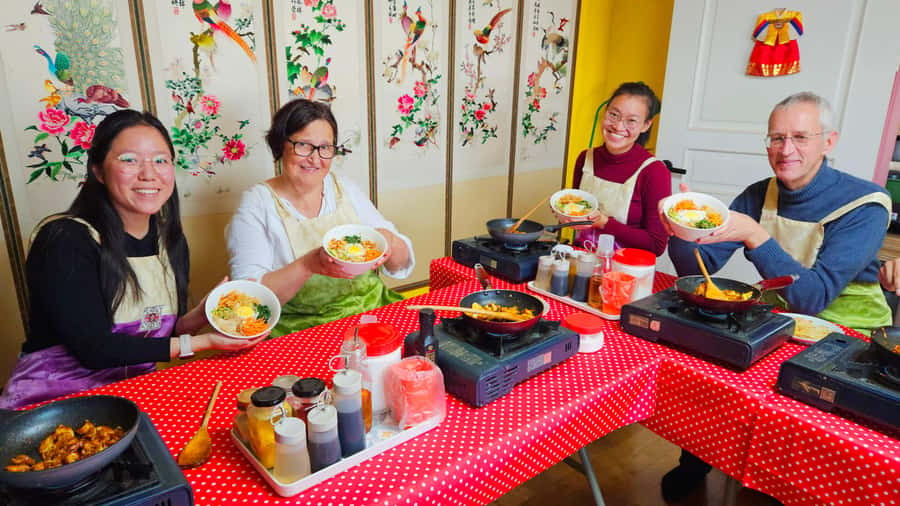
Hands-on meals beat photos every time. This Seoul Korean cooking class pairs a local market hunt with cooking four favorites, then finishes with a Hanjeongsik table that feels like a real Korean meal, not a demo. I especially like the market ingredient buying and the hands-on cooking space that lets you actually make dishes yourself. The main catch to plan for is that you go up to a local home with no elevator, so expect stairs and some walking.
You’ll cook (and taste) dishes most people only ever order: Bibimbap, Dakgalbi, Haemul-Pajeon, and Doenjang-Jjigae, plus you’ll learn a few Korean phrases along the way. A possible drawback is logistics, you meet at Mangwon Station and you’re responsible for getting there and back since there’s no hotel pickup.
In This Review
- Key Highlights I Think You’ll Care About
- From Mangwon Station to Real Cooking Culture in 3.5 Hours
- The Meeting Point at Mangwon Station Exit 2, and Why It’s a Good Sign
- Market Walk: Picking Ingredients You’ll Actually Use Later
- Welcome Tea, Korean Phrases, and Settling Into the Kitchen
- Cooking Four Dishes: The Skills That Translate to Home
- Bibimbap: Build, Balance, and Don’t Skip the Toppings
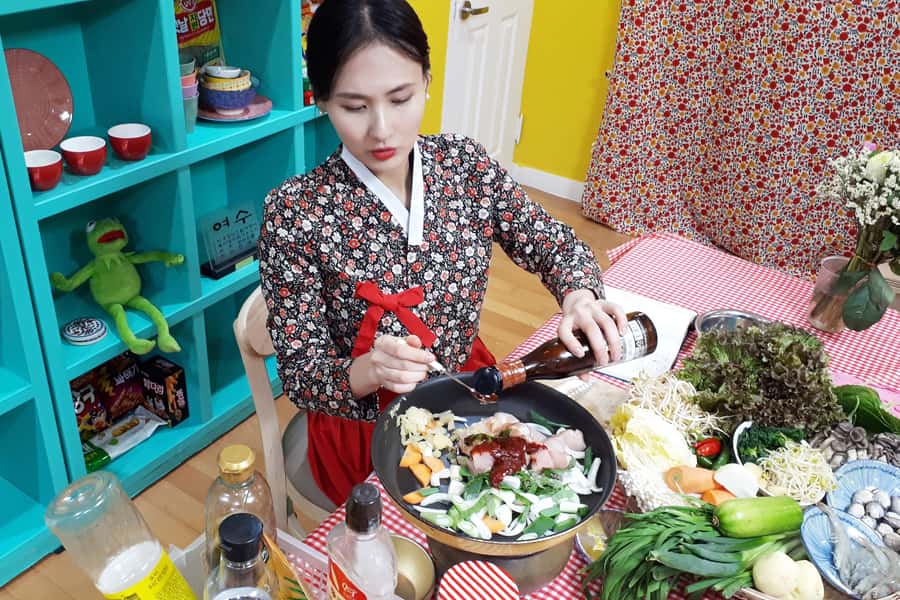
- Dakgalbi: Stir-Fry Technique With Korean Flavor Targets
- Haemul-Pajeon: Pancake Texture and Seafood-Scallion Logic
- Doenjang-Jjigae: The Fermented Soybean Paste Stew Lesson
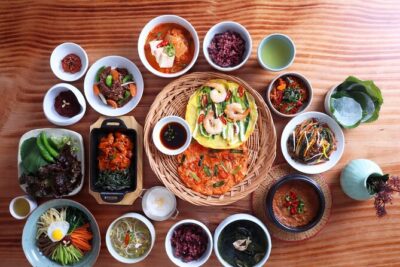
- Hanjeongsik Meal: 10+ Side Dishes, Seasonal Fruit, and Rice Wine
- The Tal Mask Moment and a Little Heritage Connection
- Price and Value: What $98 Covers, and How to Judge If It’s Worth It
- Small Group Format, Real Help, and the Names People Remember
- Practical Tips Before You Go
- Should You Book This Seoul Cooking Class at HELLO K COOKING?
- FAQ
- FAQ
- What’s the duration of the Seoul Korean cooking class?
- Where do I meet the guide?
- How many people are in the group?
- What dishes will I cook?
- What’s included in the price?
- Is hotel pickup or drop-off included?
- Is there an elevator at the home venue?
Key Highlights I Think You’ll Care About
- Market-first format: buy ingredients on the ground and snack on street food before you cook
- Four core dishes, not just one or two: Bibimbap, Dakgalbi, Haemul-Pajeon, and Doenjang-Jjigae
- Hanjeongsik experience: a meal with 10+ side dishes, seasonal fruit, and rice wine
- Small group setting: capped at 10 participants, so you get real help at your station
- Local-host culture moments: hosts like Sarah and Junghee are often praised for warm, clear guidance, plus the Tal mask tradition adds a fun cultural stop
More kitchens to book in Seoul
From Mangwon Station to Real Cooking Culture in 3.5 Hours
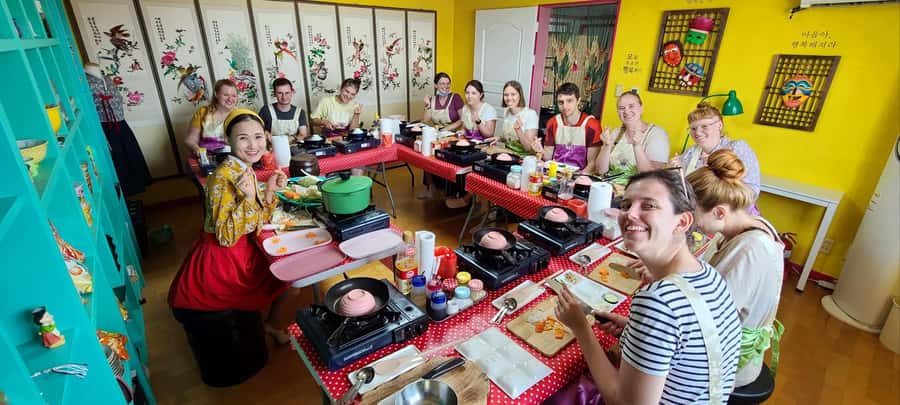
If you want Seoul food that feels personal, this format helps a lot. It starts with a local market, then shifts to a home kitchen where you cook the dishes you would actually make and eat. The rhythm is simple: see the ingredients, understand why they matter, then put them together yourself.
I like this because it trains your cooking brain, not just your camera roll. After a market walk, you’re not guessing what Korean ingredients are or how they’re used. And since the group is small (up to 10), you typically get more attention than you would in big studio classes.
One more point that matters for planning: it’s only 3.5 hours, so you’ll be moving at a steady pace. Wear comfortable shoes, keep your jacket handy if it’s cool out, and arrive ready to cook.
The Meeting Point at Mangwon Station Exit 2, and Why It’s a Good Sign
You’ll meet your guide at Mangwon Station, exit 2 (outside). That’s a detail that should make you feel better, not worried. It means this tour is built around local movement and local timing, not a hotel bus shuffle.
When there’s no hotel pickup, you can usually get more predictable timing. You’ll also be free to start your day in Seoul however you like, as long as you can reach Mangwon Station on your own. If you’re staying far out, just factor in travel time so you don’t show up late and stressed.
Also, the tour ends back at the same meeting point, so plan your next stop around Mangwon Station, not deep into central Seoul.
Market Walk: Picking Ingredients You’ll Actually Use Later
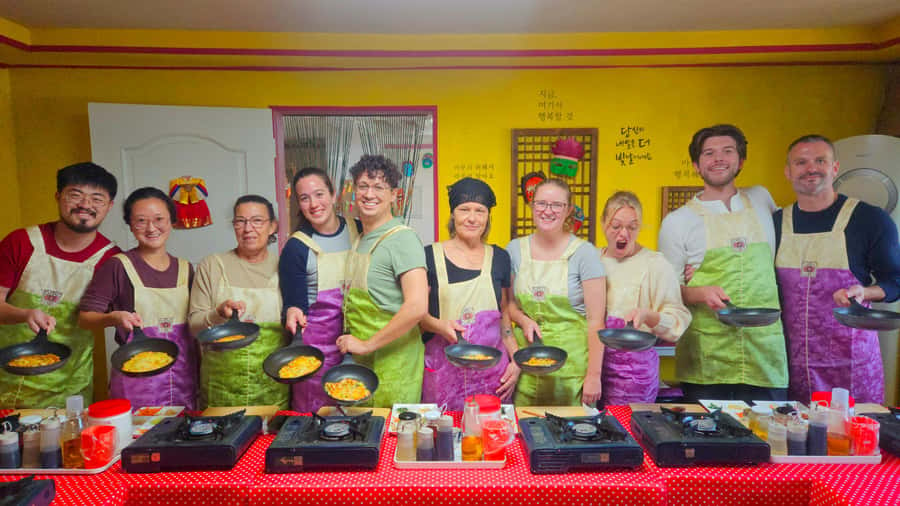
The market part is where this class earns its keep. You’ll visit a local market to shop for fresh ingredients and then taste street food samples with your guide. Several people highlight that the market is less touristy and helps you see what everyday shopping looks like.
Here’s what you should watch for during the walk:
- Vegetables and greens that show up in Korean dishes, especially for pancakes and stir-fries
- Fermentation and pantry staples connected to soups and stew, especially for doenjang-jjigae
- Seasonal choices, since Korean cooking changes with what’s best and available
This is also where you get little cultural shortcuts. Your guide will point out ingredients you might otherwise ignore, and those tips stick when you’re cooking later. In practice, it’s the difference between following a recipe and understanding what to buy when you cook at home.
You’ll also get street food tastes. You’re not just eating snacks, you’re learning what flavors and textures are common in Korean street food, and how those flavors connect to the dishes you’ll prepare.
Welcome Tea, Korean Phrases, and Settling Into the Kitchen
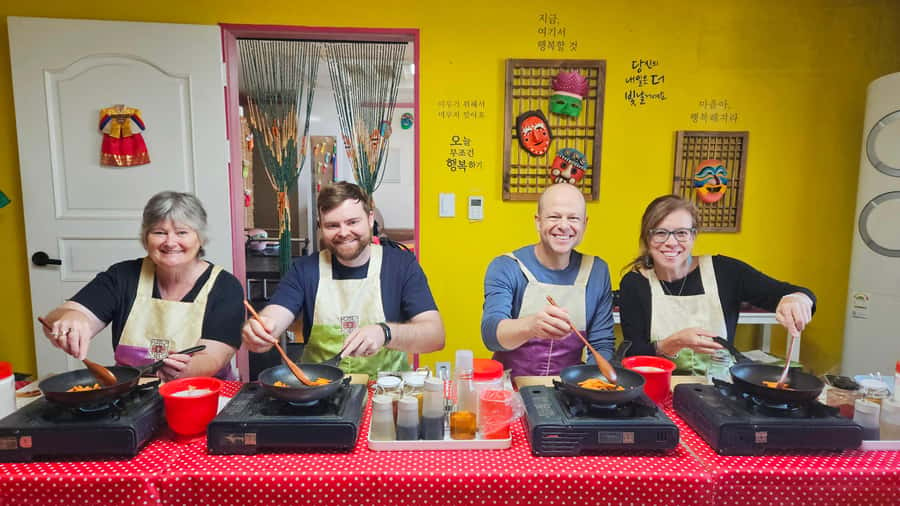
After the market, you head to the class venue. Before cooking begins, you’ll get a welcome drink (tea) and a moment to learn a few Korean phrases.
That sounds small, but it’s useful. Even basic phrases can help you order food, ask for help in shops, and feel more comfortable in Korea. This is the kind of learning that makes your trip easier, not just more interesting.
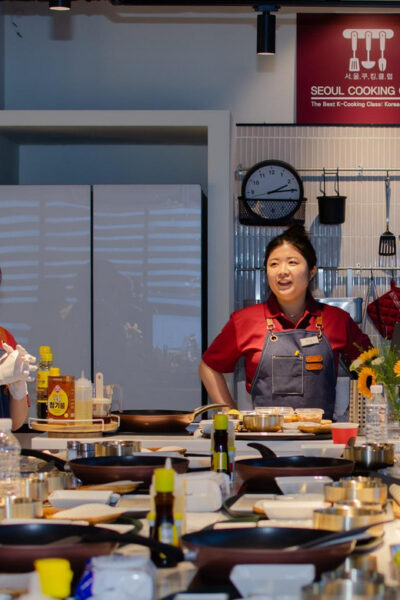
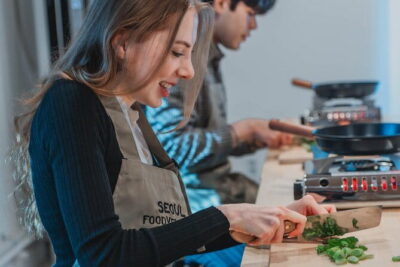
Then you’ll get set up for hands-on cooking. The class includes ingredients and equipment, so you’re not hunting for tools or worrying you packed the wrong stuff. Your chef-guide, a native Korean instructor who speaks English and Korean, walks you through what you’re doing and why.
More shopping runs in Seoul
- Seoul Street Food Market Tour
★ 5.0 · 1,226 reviews - Local Home Korean Cooking Class & Market Adventure in Seoul
★ 5.0 · 1,024 reviews - Seoul: Night Market Food Tour with Local Guide
★ 4.9 · 943 reviews - Private DMZ Tour (No Shopping): 3rd Tunnel & Suspension Bridge
★ 5.0 · 607 reviews - Downtown Seoul Guided Food & Market Tour with 8+ Local Tastings
★ 5.0 · 580 reviews
Cooking Four Dishes: The Skills That Translate to Home
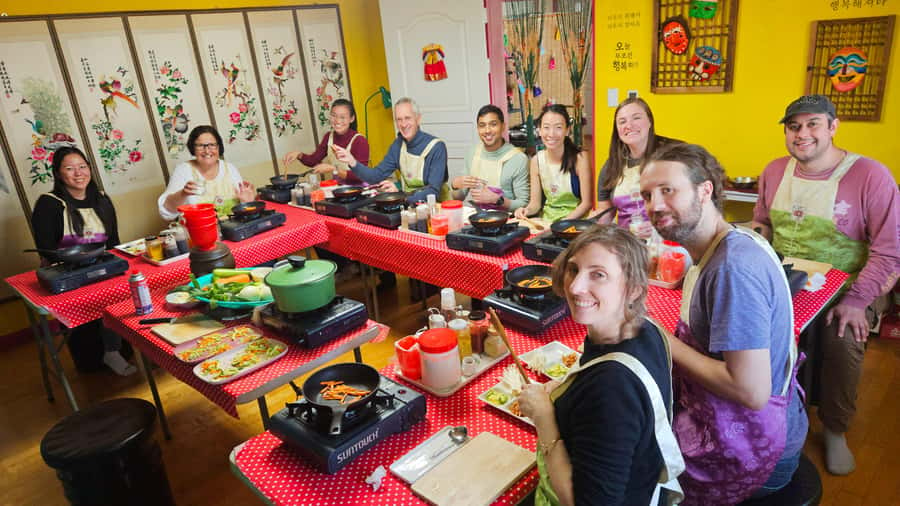
This is the core of the experience. You prepare 3 Korean main dishes and 1 stew, with a guided, step-by-step approach.
Bibimbap: Build, Balance, and Don’t Skip the Toppings
Bibimbap is the dish most people recognize, but this class pushes past the basics. You’re learning how to combine rice with vegetables and meat components, and how the dish gets its signature balance.
What matters for you later at home:
- You’ll see how the components work together, not just how they look on a plate
- You’ll learn how to assemble so every bite has contrast in texture and flavor
Dakgalbi: Stir-Fry Technique With Korean Flavor Targets
Dakgalbi is stir-fried chicken, usually with a sauce that clings and coats. Cooking it teaches you a practical Korean method: controlling heat and timing so the chicken cooks through without drying out and the sauce becomes glossy.
This is also where you build confidence. Once you can manage a stir-fry, Korean home cooking stops feeling mysterious.
Haemul-Pajeon: Pancake Texture and Seafood-Scallion Logic
Haemul-Pajeon is a green-onion and seafood pancake. Even if you’ve never made a pancake before, you’ll learn what makes Korean style different: the batter behavior and how toppings affect texture.
You’ll likely focus on getting the pancake cook right, with enough crisp edges and proper distribution of seafood and scallions. That’s a skill you can reuse if you swap in other fillings later.
Doenjang-Jjigae: The Fermented Soybean Paste Stew Lesson
Doenjang-jjigae is fermented soybean paste stew. This part helps you understand Korean flavor architecture, where fermented depth shows up as comfort and warmth.
Cooking a stew in class is also great for memory. You’ll learn how the soup comes together, how it tastes as it develops, and how to aim for the right intensity.
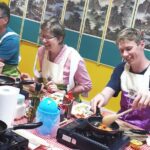
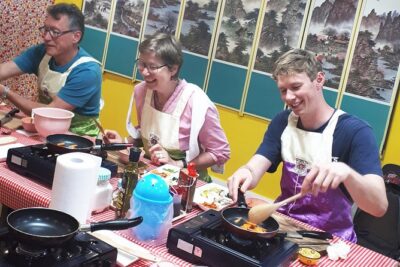
And yes, all of this is hands-on. People repeatedly praise the clear instructions and the fact that everyone has their own cooking space. That’s a big deal in cooking classes. If you’re stuck watching one person cook, you don’t leave with confidence. Here, you should leave able to recreate the dishes.
Hanjeongsik Meal: 10+ Side Dishes, Seasonal Fruit, and Rice Wine
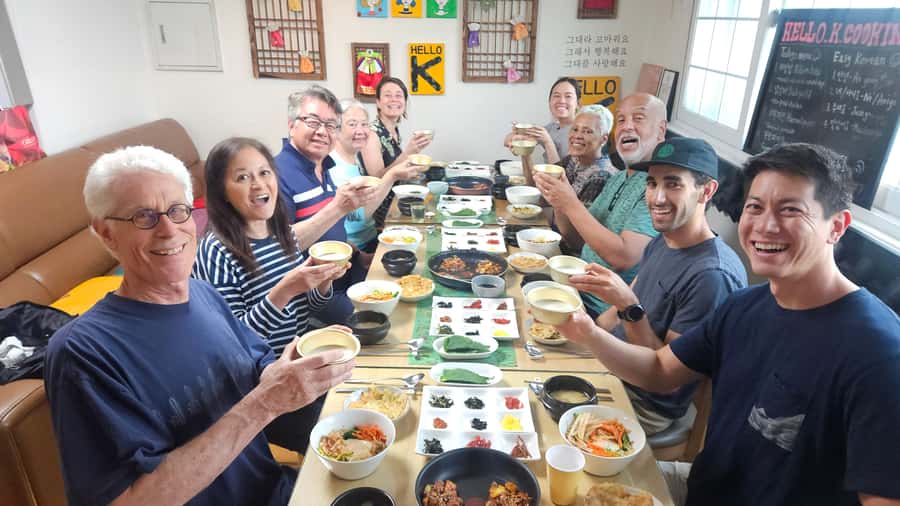
After cooking, you sit down to eat what you made, and then the meal expands into a proper Hanjeongsik course experience.
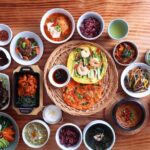
A Hanjeongsik-style table is known for lots of side dishes, usually more than 10, plus seasonal fruit and rice wine. In plain terms, it’s a full Korean meal structure where the sides matter as much as the main.
Why this part is valuable for you:
- You learn how Korean meals are paced. It’s not one dish and done.
- You taste variety, so you understand how different flavors and textures balance a meal.
- You see how small dishes can change how a main dish tastes.
It’s also one of the reasons the class feels more like culture than a cooking workshop. You get to experience the format at the table, not just learn recipes.
The Tal Mask Moment and a Little Heritage Connection
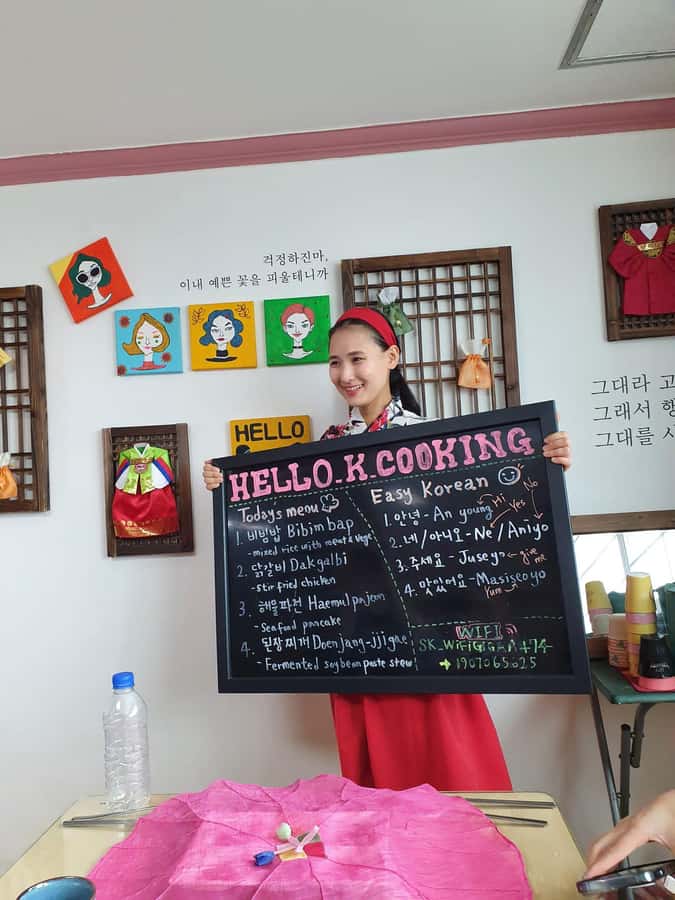
There’s also a cultural stop tied to heritage festivals: you can try on a Tal mask that’s worn during Korean celebrations. This adds a playful element, and it helps you connect food with Korean cultural traditions.
It’s not a full history lecture, so you won’t feel like you’re stuck in a museum. It’s more like a small moment of context that makes the day feel complete.
Price and Value: What $98 Covers, and How to Judge If It’s Worth It
At $98 per person for roughly 3.5 hours, the pricing makes sense if you measure it the right way. You’re not just paying for instruction, you’re paying for:
- Market shopping and street food samples
- A professional chef-guide and small-group support (up to 10)
- Ingredients and equipment for multiple dishes
- A full meal experience, including side dishes, seasonal fruit, and rice wine
- Practical extras like photo and video service and recipes
If you’ve ever taken a cooking class where you only make one simple dish, this is different. Four dishes plus the Hanjeongsik table means more cooking time, more food variety, and more skills you can use later.
That said, it’s worth weighing your travel style. If you want a relaxed, sightseeing-only day, this will feel active. But if you want real food skills and a local meal format, it’s a strong use of your limited time in Seoul.
Small Group Format, Real Help, and the Names People Remember
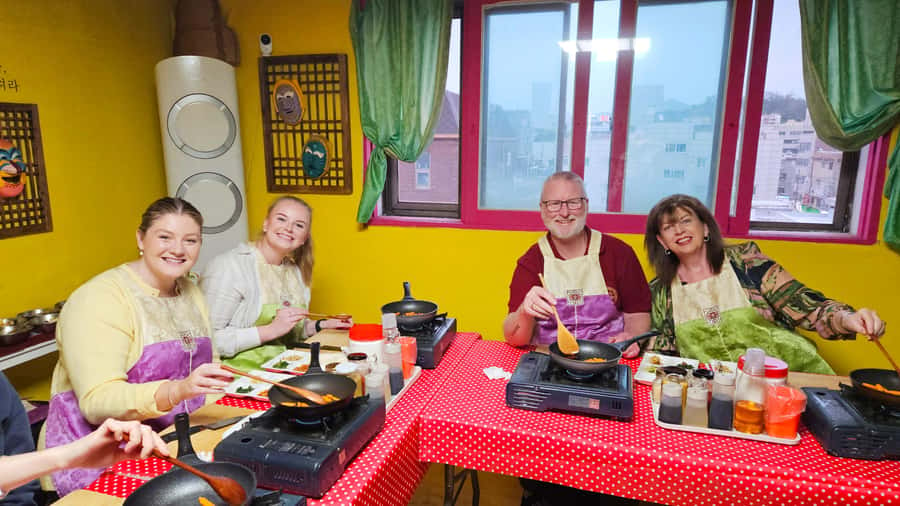
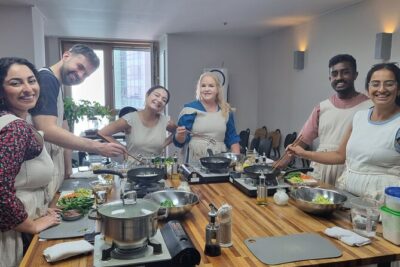
The class is limited to 10 participants, which usually means you get more than a quick glance from the instructor. People often mention hosts like Sarah and Junghee for being warm, funny, and organized, with English that makes instructions easy to follow.
When you’re cooking, small-group attention matters. You want someone correcting your timing, clarifying steps, and helping when a sauce looks off. This format is set up for that.
Also, there’s a photo and video service included. That helps you remember the day without needing to juggle your phone while you’re cooking.
Practical Tips Before You Go
Here’s how I’d set yourself up so the experience feels smooth.
Plan for stairs: the venue is a local home with no elevator. If you have mobility concerns, take that seriously.
Bring an appetite: market snacks plus a full class meal can add up fast.
Tell them dietary needs early: you’re responsible to contact the local host for dietary restrictions and allergies. If you have allergies, don’t wait until the day of.
Use the kitchen time wisely: the best part of cooking classes is doing the steps with guidance. Don’t hover, ask questions.
Take notes on the flavors you like: leave room in your mind for how each dish tastes. Recipes help later, but your palate memory is what makes you cook confidently.
Should You Book This Seoul Cooking Class at HELLO K COOKING?
I’d book this if you want more than a one-dish souvenir. The market walk teaches you what to buy, and the four-dish class teaches you how to cook, then the Hanjeongsik meal shows you how it comes together as a full Korean table.
Skip it if you need a completely low-energy day, since it moves from market to cooking to a structured meal in about 3.5 hours. Also consider the stairs and the fact that you must reach Mangwon Station on your own.
If you’re a first-time cook, this kind of structured class is especially helpful because you’re not thrown into chaos. You get clear steps, hands-on practice, and a finished meal at the end.
FAQ
FAQ
What’s the duration of the Seoul Korean cooking class?
The class runs for about 3.5 hours. Exact starting times vary, so you’ll want to check availability when booking.
Where do I meet the guide?
You meet your guide at Mangwon Station, exit 2 (outside). The activity ends back at the same meeting point.
How many people are in the group?
The group is small, limited to 10 participants.
What dishes will I cook?
You’ll prepare Bibimbap, Dakgalbi, Haemul-Pajeon, and Doenjang-Jjigae.
What’s included in the price?
The price includes the market tour, cooking class with a professional chef, ingredients and equipment, street food samples, welcome tea, meals with side dishes, rice wine, water, photo and video service, and recipes.
Is hotel pickup or drop-off included?
No. You are responsible for getting to and from Mangwon Station since there is no hotel pickup and drop-off.
Is there an elevator at the home venue?
No. There is no elevator to get up to the local home, so you should plan for stairs.
Keep Browsing Seoul

More Seoul Write-Ups
Back to the Kitchen in Seoul
Fresh on the Seoul pile
- Unique Native Experience : Han River Picnic, Board game, BBQ★ 5.0 · 3 reviews
- 2-Hour Private Kayaking and Paddleboarding Experience in Hanriver★ 5.0 · 3 reviews
- Korean Folk Village & Suwon Hwaseong Fortress Private Tour★ 5.0 · 3 reviews
- Seoul Korean BBQ Dinner Experience with Secret Food Tours★ 5.0 · 3 reviews
- Seoul Highlights & Hidden Gems – Private Tour with Photo Service★ 5.0 · 3 reviews
- Night Food Tour in Seoul with Traditional and Modern Cuisine★ 5.0 · 3 reviews
Korean Cooking Classes you might have missed.
 ★ 5.0Local Home Korean Cooking Class & Market Adventure in SeoulFrom $911,024 reviews
 ★ 5.0Master Korean traditional cooking with a Kimchi chefFrom $85385 reviews
 ★ 5.0Seoul: Korean Cooking at Seoul Cooking Club!From $109311 reviews
 ★ 5.0Korean Cooking at Seoul Cooking ClubFrom $109220 reviews
 ★ 5.0Experience Korean Cooking in Modern Hanok KitchenFrom $87118 reviews
 ★ 5.0Korean Cooking Class with Grocery Shopping at Seoul Local MarketFrom $91107 reviews
 ★ 5.0Korean Kimchi Making Day Experience with a Local Market TourFrom $8999 reviews
 ★ 5.0Korean cooking class in Haeundae, BusanFrom $10092 reviews
Where this tour also appears