
REVIEW · BUSAN TOURS
Korean cooking class in Haeundae, Busan
Korean cooking in Busan is personal, not performance. This Haeundae class pairs hands-on cooking at your own station with culture lessons from your host, Min, including Joseon-era food ideas and why sauces matter. I love the small group setup (max 7 people, up to 8 travelers), and I also like that you eat what you make, palace-style, at a traditional bapsang table.
One thing to consider: this experience is weather-dependent, and your menu can vary by date, so think of it as a flexible culinary lesson rather than a guaranteed exact recipe checklist every time.
In This Review
- Quick Hits Before You Go
- Why This Haeundae Class Feels Like More Than Cooking
- The Morning Flow: From Marine City to Scenery Stops
- Step Into the Kitchen With the Joseon-Inspired Apron
- Your Own Station Matters: Hands-On Cooking You Actually Do
- What You Cook: Bibimbap, Seaweed Soup, and Korean Pancake
- Bibimbap: Learn Assembly and Sauce Balance
- Seaweed Soup: Comfort Food With Clear Technique
- Korean Pancake: Get the Pan Rhythm
- Korean Table Style: Bapsang Dining and the Floor Seating Choice
- Tea, Dessert, and the Participation Certificate
- Price and Value: Is $100 Worth It?
- Dietary Needs: Ask Early, Expect Adjustments
- Logistics That Make a Difference in Real Life
- Who Should Book This Class in Busan
- Should You Book This Korean Cooking Class in Haeundae?
- FAQ
- How long is the Korean cooking class in Haeundae?
- What dishes will I cook?
- How big is the group?
- Where does the class meet?
- Do I need cooking experience?
- Will I have to sit on the floor?
- Is tea and dessert included?
- Do I get a certificate?
- Are dietary options available?
- What happens if the weather is bad?
- Is there a special vegan or temple food menu date in 2025?
Quick Hits Before You Go

- Small group, real attention: max seven people for hands-on guidance.
- Your own cooking station: you actively make the food, not just watch.
- Palace apron theme: you wear a traditional apron inspired by history.
- Sit on bapsang, chair if needed: floor dining is part of the experience.
- What you learn sticks: sauce tastings and practical instruction for everyday Korean cooking.
- You leave with proof: a Certificate of Participation, plus tea and dessert.
Other Busan days worth comparing
Why This Haeundae Class Feels Like More Than Cooking
If you want Korean food you can actually recreate later, this is a strong format. You cook at your own station, taste key sauces, and then eat your results right away. That timing matters, because you learn flavors in context, not in theory.
The host, Min, is the engine of the class. Multiple guests highlight how engaging and thoughtful she is, and how clearly she guides you step-by-step even if you do not cook much at home. The result is a class that feels friendly and practical, while still packing in culture, like Joseon-era cooking traditions and the meaning behind the apron.
The best part for me is that this is not a rushed meal. You get time to learn, taste, adjust, and then enjoy. And if your group includes different skill levels, the teaching style seems built to keep everyone moving forward.
The Morning Flow: From Marine City to Scenery Stops
The class starts at 10:00 am and meets at 37 Marine city 3-ro, Haeundae, Busan. It ends back at the meeting point, so you are not stuck figuring out transport when you are hungry and slightly floured up.
Along the way, you make a few stops that break up the morning. You visit Dongbaekseom, Haeundae Beach, The Bay 101 Yacht Club, and Nurimaru APAC House. The benefit of this approach is simple: you arrive for cooking already feeling like you are in Haeundae, not just dropped into a kitchen.
A small drawback here is that your “3 hours approx.” timeline includes more than the cooking itself. If you prefer a straight line, cooking-only experience, you may feel there is a bit more moving around than you expected. Still, the route is a nice way to pair Busan sights with the meal you will later eat.
Step Into the Kitchen With the Joseon-Inspired Apron
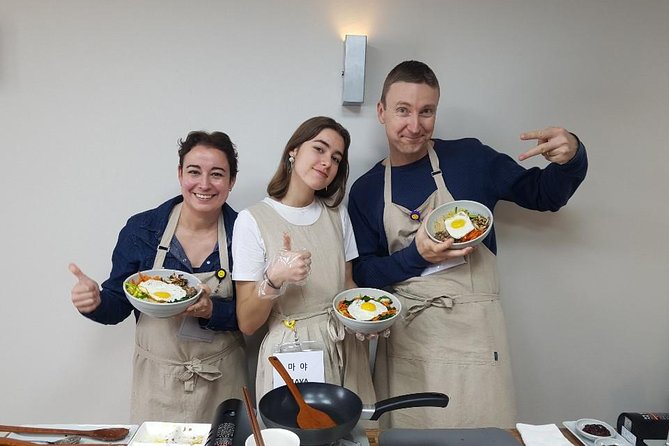
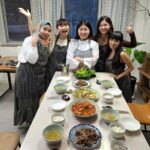
Once you are set up, you start with small details that make the class feel authentic. You wear a traditional apron that references the kind of apron used by the cook in the palace in history. It sounds like a costume detail, but it actually signals the tone of the class: historical context plus practical technique.
Before you start cooking, you get a welcome drink, and you also taste the main sauces. That tasting step is smarter than it sounds. Korean dishes rely on balance, and sauces are where that balance lives. If you taste them early, you cook with intention rather than guessing.
You’ll also get clear pacing and instruction. Guests repeatedly mention that Min adjusts her teaching so people can follow even with zero cooking background. This matters because many cooking classes fail at the basics, like how to hold a knife, how long to heat, or when to season.
Your Own Station Matters: Hands-On Cooking You Actually Do
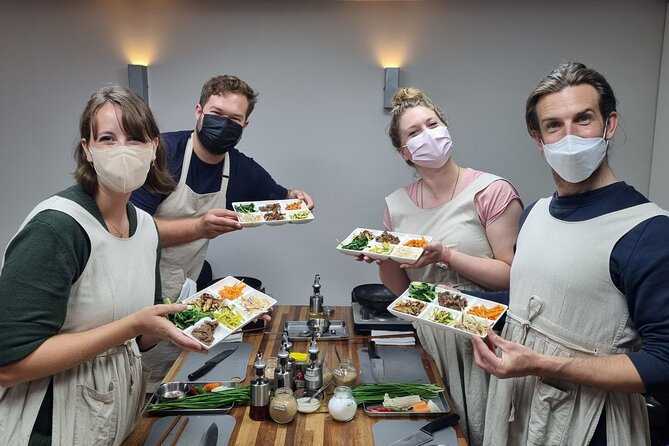
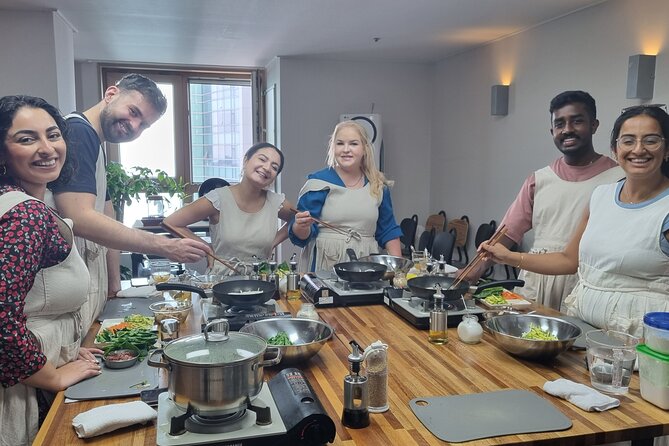
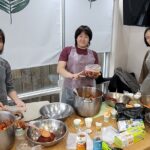
This is not a sit-and-watch class. Your station is set up so you prepare ingredients, mix, and assemble your dishes yourself. That one shift changes everything, because you are building muscle memory you can use later.
The class is small group by design, with max seven people. That size keeps the experience personal. You are more likely to get corrected in real time, whether it is how you mix, how you portion toppings, or how you handle the pan for pancakes.
You’ll also get encouragement to ask questions. Min’s style, as described by guests, includes checking that everyone is comfortable, and explaining the why behind steps. That is the difference between a recipe you copy and a method you understand.
More kitchens to book in Busan
- Korean cooking class in Haeundae, Busan
★ 5.0 · 92 reviews - Busan Tailored Korean cooking class (Vegan OK)with market tour
★ 5.0 · 66 reviews - Busan: Small-Group Traditional Korean Food Cooking Class
★ 4.9 · 58 reviews - Busan Local Food Cooking Class with Market Tour
★ 5.0 · 53 reviews
What You Cook: Bibimbap, Seaweed Soup, and Korean Pancake
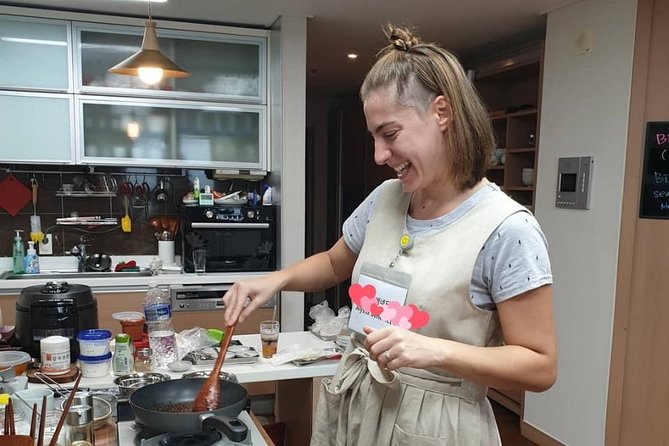
The menu is designed around a classic Korean set meal feel. On most dates, you will cook bibimbap, seaweed soup, and a Korean pancake. The exact dishes and sides can vary by date, but the core set keeps the lesson coherent.
Bibimbap: Learn Assembly and Sauce Balance
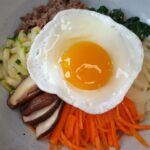
Bibimbap is more than mixing rice and toppings. The teaching focus is on how the elements come together and how sauce flavor anchors the whole bowl. Since you taste the main sauces before cooking, you have a reference point for the final taste.
A common note from guests is that the guidance is clear enough that they left confident making the dishes again. If you care about recreating food at home, bibimbap is a great “learning vehicle,” because it trains assembly, seasoning, and flavor layering.
Seaweed Soup: Comfort Food With Clear Technique
Seaweed soup is a practical skill builder. You learn how to work with a Korean staple ingredient without overcomplicating it. Even if you have never cooked Korean food, the class format supports you with step-by-step directions and tasting so the result makes sense in your mouth.
Korean Pancake: Get the Pan Rhythm
The Korean pancake is where a lot of cooking classes either shine or fall apart. Here, the instruction and pacing aim to make it doable. Guests specifically mention enjoying the chive pancake, which suggests the class gives you the chance to do something classic and satisfying, not just a filler dish.
If you are cooking for picky eaters, pancake night is a win. The texture is forgiving, and it is easy to customize with what you enjoy.
Korean Table Style: Bapsang Dining and the Floor Seating Choice
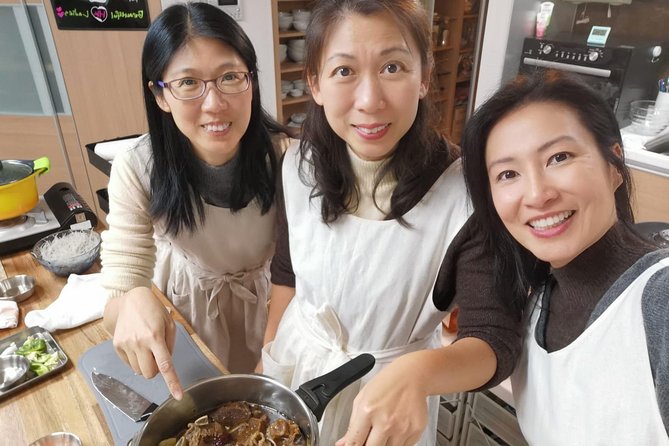
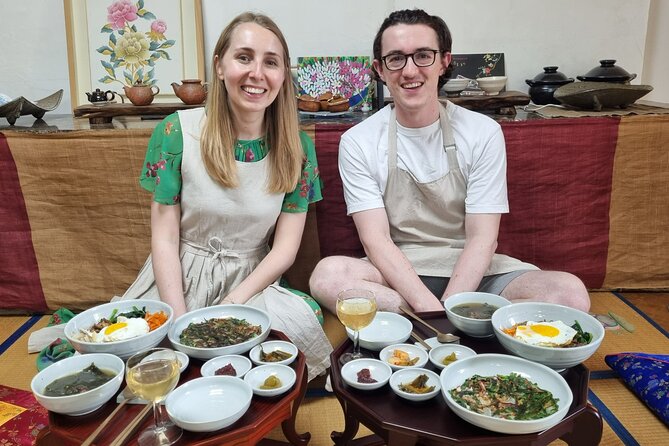
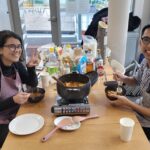
Then you eat. You enjoy your meal on bapsang, a traditional Korean dining table set on the floor. If sitting on the floor is hard for you, the class offers an alternative: you can eat on the table with a chair.
This part is not just a photo moment. It changes how you experience the food, because you slow down and treat the meal like an actual shared event. You also get to taste each dish when it is still at its best, which helps you connect flavor to what you did in the kitchen.
Your meal is also paired with the class’s pacing, so you are not eating alone in a hurry while your instructor clears up. The whole session feels like one continuous experience: learn, cook, and then share.
Tea, Dessert, and the Participation Certificate
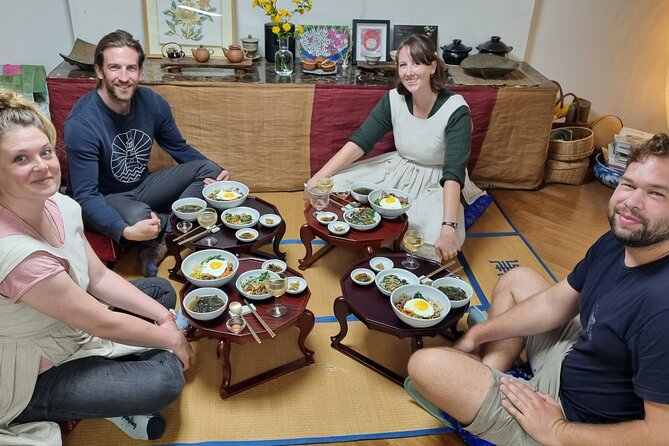
After the meal, you get tea plus a simple Korean dessert. It is a nice ending, because it cools things down after cooking and eating something savory and rich.
You also receive a Certificate of Participation. That might sound like a small thing, but it signals that this is an experience, not just a ticketed activity. Guests also mention a small end-of-class surprise on some dates, like a pouch to choose from, so if you get that extra item, consider it part of the fun.
Finally, there is time for counseling near the area. In plain terms, you leave with practical suggestions connected to Haeundae and your next moves, not just a departure from the venue.
Price and Value: Is $100 Worth It?
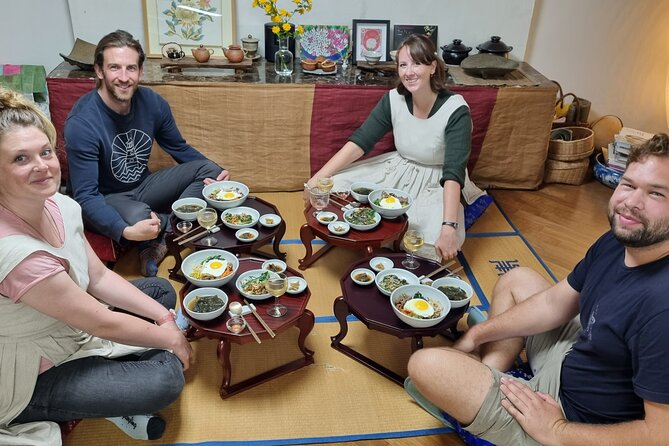
At $100 per person for about 3 hours, the value depends on what you want from the class.
Here is what you are paying for, in real terms:
- Hands-on cooking at your own station, for multiple dishes
- Small group limits (up to seven people), meaning more attention
- Sauce tasting before you cook, which improves results
- Meal included, served in a traditional format
- Tea and dessert
- A participation certificate, plus optional end-of-class surprises
- A host who teaches not only steps but also culture context
If you compare this to a typical food tour where you taste multiple bites and leave hungry, this class is different. You leave fed and with repeatable skills. If you are the type who wants one meaningful activity that brings food and culture together, $100 can feel reasonable.
If your goal is low-cost, drop-in entertainment, it is not the cheapest way to spend a morning. But if you want to learn cooking you can do at home, this format is built to deliver more than a souvenir.
Dietary Needs: Ask Early, Expect Adjustments
The class includes practical support for different diets. Guests report accommodations like gluten-free options and vegetarian options.
What you should do: when booking, flag any dietary needs right away so the instructor can plan. Because the menu can vary by date, flexibility helps, but only if you communicate your needs early.
If you have allergies, be extra clear about what you need to avoid. The class is small, and that often makes it easier to manage, but you still want specifics.
Logistics That Make a Difference in Real Life
This experience uses a mobile ticket, which is helpful when you are walking around Haeundae and do not want to juggle paper vouchers. It is also near public transportation, so you are not reliant on private rides.
One more practical note: service animals are allowed. That is worth knowing if you travel with one and want confidence about comfort during the session.
Finally, the class requires good weather. If it is canceled because of poor conditions, you will be offered another date or a full refund. Since the cooking session and route are planned around the day, it is smart to keep an eye on forecasts once you lock in your time.
Who Should Book This Class in Busan
This is a great pick if you:
- Want a hands-on Korean cooking lesson instead of a tasting-only experience
- Like a small-group format with enough attention to ask questions
- Want to eat in a traditional Korean dining setup, bapsang style
- Travel with kids or family members who will enjoy cooking and eating together
- Prefer practical skills you can bring home, like sauce-based cooking and assembly
It is also a solid choice if you have never cooked before. Multiple guests highlight that even minimal cooking experience works here, mainly because Min teaches clearly and keeps you on track.
Should You Book This Korean Cooking Class in Haeundae?
Yes, if you want one activity that leaves you satisfied, informed, and able to cook. The biggest reason is the combination: small group, hands-on cooking, sauce tasting, and then a proper meal you eat right away. That is a lot of “time value” for your $100.
Book it especially if you like the idea of learning Korean food through a Joseon-era lens, but still keeping it practical. The apron theme and cultural explanations add context, while the instruction keeps the focus on results.
Pass on it only if you hate floor dining even with a chair option, or if you want a strictly cooking-only itinerary with no sightseeing stops. Otherwise, this is a warm, well-paced way to experience Busan through food.
FAQ
How long is the Korean cooking class in Haeundae?
It runs for about 3 hours.
What dishes will I cook?
The class focuses on bibimbap, seaweed soup, and a Korean pancake. The menu may vary by date.
How big is the group?
It is small, with a maximum of seven people, and the activity can have up to eight travelers.
Where does the class meet?
You meet at 37 Marine city 3-ro, Haeundae, Busan, South Korea.
Do I need cooking experience?
No previous culinary experience is necessary. You get instruction and one-on-one attention.
Will I have to sit on the floor?
You will enjoy the meal on a bapsang (floor dining table). If sitting on the floor is hard for you, you can eat using a table with a chair instead.
Is tea and dessert included?
Yes. You get tea and a simple Korean dessert after the meal you cooked.
Do I get a certificate?
Yes. You receive a Certificate of Participation.
Are dietary options available?
Dietary needs can be accommodated, and guests have reported gluten-free and vegetarian options.
What happens if the weather is bad?
If the experience is canceled due to poor weather, you will be offered a different date or a full refund.
Is there a special vegan or temple food menu date in 2025?
No temple food cooking dates are scheduled for 2025 based on the information provided.
More Busan Write-Ups





Back to the Kitchen in Busan
Still in Busan? More Here
Fresh on the Busan pile
- Suncheon and Yeosu Daily Private Tour with Pickup Service★ 5.0 · 3 reviews
- Suncheon one day tour from Seoul, Busan or Suncheon★ 5.0 · 3 reviews
- Busan Seafood Tour : Oyster village Tour with Oyster cuisines★ 5.0 · 3 reviews
- 2-DAYS Busan Customized and Included Night tour★ 5.0 · 3 reviews
- Busan Dialect Class with local snack★ 5.0 · 3 reviews
- Korean UNESCO World Heritage Tour including Gyeongju, Andong and Daegu(2N3D)★ 5.0 · 3 reviews
Busan Tours you might have missed.
 ★ 4.8Busan: Gyeongju Guided Day Trip to Three Kingdoms CapitalFrom $521,925 reviews
 ★ 5.0Small Group Full Day Busan Tour (Max 6 Pax)From $991,464 reviews
 ★ 4.8From Busan: Gyeongju UNESCO World Heritage Guided Day TourFrom $521,250 reviews
 ★ 5.0Busan Private Tour with licensed tour guide + private vehicleFrom $1691,143 reviews
 ★ 4.7Busan: Coastal Treasures Beach Train, Culture Village & MoreFrom $51832 reviews
 ★ 4.5Busan’s Cultural Wonders with Beach Train & Gamcheon Village etcFrom $47663 reviews
 ★ 5.0Gyeongju UNESCO World Heritage Guided Day Tour from BusanFrom $57660 reviews
 ★ 5.0Private Busan Tour -Explore Cultural Landmarks with a Local GuideFrom $169552 reviews
Where this tour also appears