
REVIEW · GYEONGJU HERITAGE TOURS
Korean UNESCO World Heritage Tour including Gyeongju, Andong and Daegu(2N3D)
Three UNESCO days can feel like a week.
This private circuit from Busan strings together Seokguram’s sea-view grotto, Shilla-era sites around Gyeongju, and the cultural heart of Andong and Daegu, without you juggling tickets, meeting points, or transit connections. The big appeal is that your driver and guide handle the moving parts, while you focus on the sights and ask questions when you want answers.
I really like two things here. First, the daily hotel pickup and drop-off removes the usual morning scramble. Second, you get undivided guide attention, the kind that makes temples and tombs click instead of feeling like a checklist. One guide name you may see associated with this tour is Peter, and that matches the overall vibe: clear, practical explanations.
One possible drawback is simple: it starts early, it moves steadily, and lunch is not included. Add in a couple of museum and temple stops, and you will want to plan your meals so you do not feel rushed.
In This Review
- Key highlights to watch for
- Entering Korea’s UNESCO sites without the planning stress
- Day 1 in Gyeongju: Seokguram, Bulguksa, and the Shilla artifacts that connect it all
- Day 2 in Andong: Hahoe Folk Village and the daily-life side of UNESCO
- Day 3 from Gaya Mountain to Daegu’s herbs and Seomun Market
- A note about where you stay
- Price and value: what is included, what is not, and who should budget for meals
- Getting the most out of a fast UNESCO schedule
- Who this UNESCO tour fits best
- Should you book this Gyeongju, Andong, and Daegu UNESCO tour?
- FAQ
- How long is the Korean UNESCO World Heritage Tour (Gyeongju, Andong, Daegu)?
- What time does the tour start?
- Is hotel pickup and drop-off included?
- Are admission tickets included?
- Is Wi-Fi available during the tour?
- Is lunch included in the price?
- Do I need accommodation in Daegu?
- Is this a private tour?
- Can I request a vegetarian option?
- What is the cancellation policy?
Key highlights to watch for
- Seokguram and Bulguksa as one story, with UNESCO recognition tied to both sites
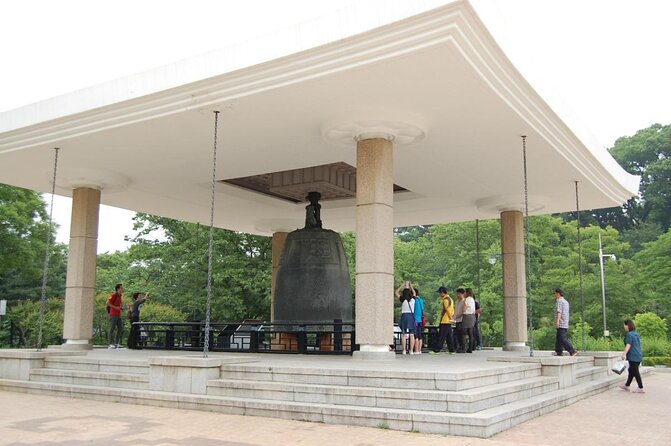
- Shilla Kingdom relics in Gyeongju, including King Seongdeok’s Bell (Emille Bell)
- Hahoe Folk Village’s clan heritage, preserved traditional houses tied to the Pungsan Ryu clan
- Andong Soju Museum with a tasting, plus a quick look at how traditional soju is made
- Haeinsa and the Daejanggyeong Tripitaka, a major Goryeo-era manuscript collection
- Seomun Market time included, a 50-minute window for food and shopping style browsing
More Silla history around Busan
Entering Korea’s UNESCO sites without the planning stress
If you have ever tried to connect UNESCO stops on public transit in South Korea, you already know how fast the day can get complicated. This tour keeps things straightforward: you ride in an air-conditioned minivan, you do not have to find parking, and you do not have to guess schedules. The tour includes hotel pickup and drop-off, and it runs with a set start time of 8:00 am, so your mornings feel organized.
Another practical win is the onboard comfort setup. You get Wi-Fi on board and bottled water, which sounds minor until you are halfway through a long day and your phone is dying. There is also a mobile ticket approach, which tends to make entry points easier to handle when you are doing multiple stops in one run.
Because this is a private tour, your group is the only group with you. That matters more than it sounds. You can ask for extra time in a museum room, slow down at a tomb, or spend a little longer where the details catch your eye. Also, the tour is designed as a first-timer-friendly history route, with your guide acting like a translator for ideas, not just language.
Day 1 in Gyeongju: Seokguram, Bulguksa, and the Shilla artifacts that connect it all
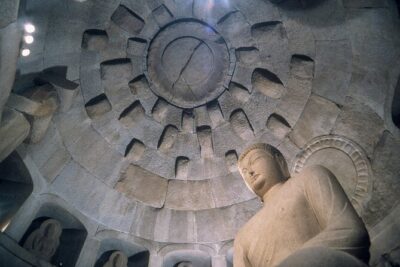
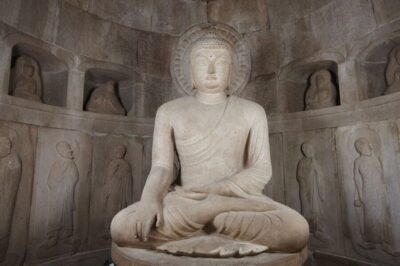
Gyeongju is one of those places where the pieces of history feel scattered until someone hands you the thread. This day does that job for you. You start with Seokguram, a hermitage that is part of Bulguksa. The setting is a big deal: it is a grotto with views over the East Sea. The UNESCO connection is shared with Bulguksa, and Seokguram is known for Buddhist sculptures that people often call among the best anywhere.
Plan for this stop to be more about atmosphere than speed. You are not just walking into a building, you are stepping into a location designed to feel enclosed and reverent, with the coast as the backdrop. If you like religious art, sculpture details, or just the feeling of old stone work, this is a strong opener.
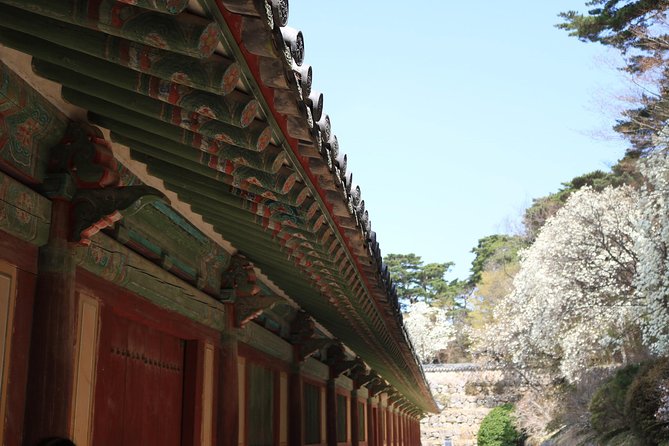
Next comes Bulguksa Temple, famous in part because it is called the Temple of the Buddha land. Here, you see key relics from the Shilla Kingdom, including two famous stone pagodas: Dabotap and Seokgatap. These pagodas are not just decorative. They are a visual shorthand for Shilla religious architecture and the style of craftsmanship tied to that period.
From there, you shift from temple to tomb with Cheonmachong Tomb. The name means Heavenly Horse Tomb, based on a painting of a heavenly horse found during excavation in 1973. This tomb is for an unknown king of the Shilla Kingdom. Even if you are not a tomb-nerd, this stop helps you understand that Shilla culture was not only about temples and ceremonies, it was also about royal identity and burial traditions.
Finally, you land at Gyeongju National Museum, which is where the day becomes cohesive. You get about 3,000 relics from the Shilla Dynasty, including King Seongdeok’s Bell, also known as the Emille Bell. The museum also includes a notable national treasure labeled No. 29. If you feel like temples can sometimes be hard to interpret from the outside, the museum gives you the context that makes the earlier stops more meaningful.
Tip for your first day: wear shoes you can walk in comfortably. Between tomb grounds, temple paths, and museum floors, you will be on your feet more than you might expect.
Day 2 in Andong: Hahoe Folk Village and the daily-life side of UNESCO
This is the day that slows things down in a good way. You go from Shilla grandeur into the lived-in world of Andong, where UNESCO recognizes not only monuments but cultural preservation.
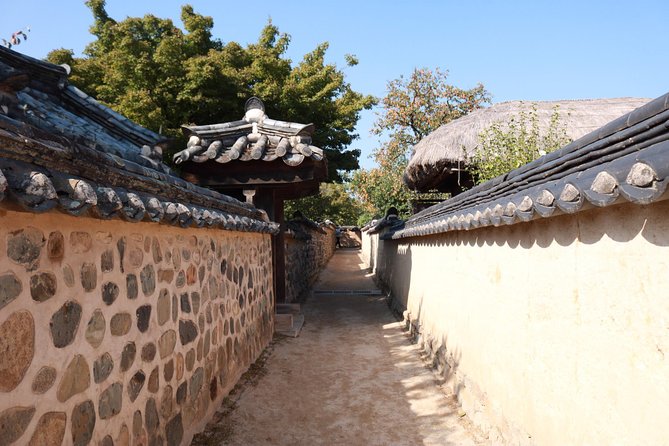
The anchor stop is Andong Hahoe Folk Village. It is a UNESCO World Heritage site and one of Korea’s best-known traditional village destinations. Here, the village is tied to the descendants of the Pungsan Ryu clan, and the houses are well preserved in traditional styles. What I like about this kind of stop is that it is not just about looking. It is about imagining how people moved through daily life, how homes were built, and how community identity stayed intact across generations.
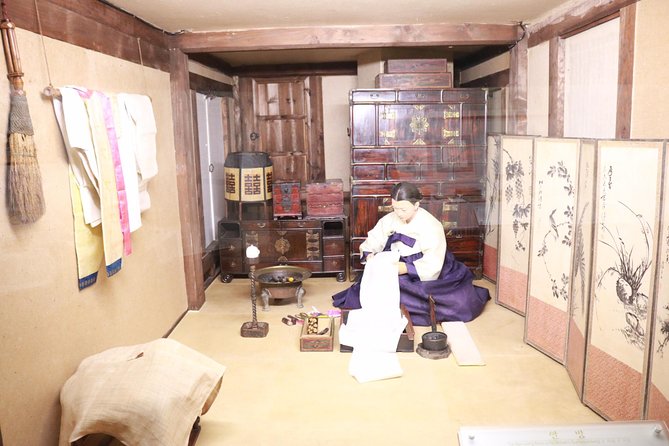
After that, you visit the Andong Folk Museum, which leans into Confucian culture. You get a look at older lifestyles and important cultural ceremonies, with exhibits built around everyday patterns of life and belief. For a lot of first-time visitors, this is the point where Korea stops being a string of scenic places and starts becoming a set of social values and customs.
Then you hit something hands-on: Andong Soju Museum. You learn how traditional soju is made, see displays connected to local foods, and then you can taste Andong soju. This is exactly the kind of practical cultural stop I like. You come away with a sensory memory, not just photos.
If you are the type who loves food and traditions, this day has a friendly mix. If you prefer history, the folk museum and the village preservation still deliver without feeling like a lecture.
Day 3 from Gaya Mountain to Daegu’s herbs and Seomun Market
Day three has a dual personality: deep religious heritage in the morning, then culture and local life in the afternoon.
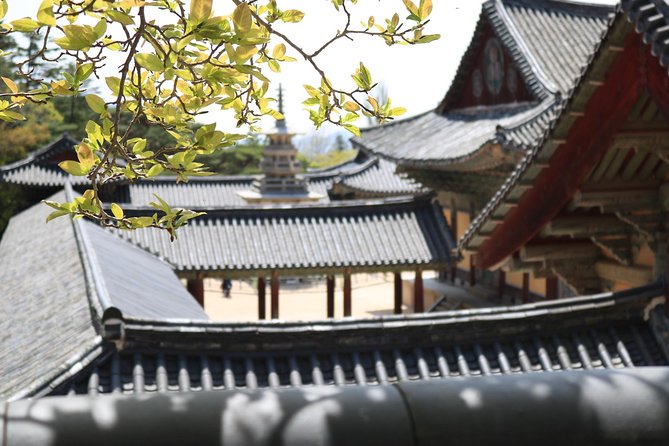
You start with Haeinsa Temple, one of Korea’s Three Jewel Temples. It is located on Gaya Mountain, and it is especially important because it houses the Goryeo Daejanggyeong, known as the Tripitaka Koreana. If you have ever wondered why Korea takes so much pride in preserving ancient texts, this is where that pride becomes real. A temple that functions as a guardian for massive historical works is a powerful idea, and it helps explain why UNESCO recognizes this site at such a high level.
After Haeinsa, the tour shifts to Daegu with Yangnyeongsi, a place connected to a Herbal Medicine Festival. This is tied to traditional oriental medical science. As you walk around the area, you can see many kinds of herbs, and you also have time at the museum section to learn about traditional medical care.
This is not a medical course, and you should not expect technical lab knowledge. But it is a refreshing change from temples. It gives you a new lens on how people historically approached health, and it adds a local flavor that fits the Daegu side of the trip.
The day finishes with Seomun Market, described as one of the biggest and lively markets in Korea. You get around 50 minutes here to eat local foods and browse cloths and fashion items. Even with limited time, a market stop is a great way to ground the whole UNESCO-heavy itinerary. It is where you can feel the city, buy a small snack, and watch everyday life move around you.
Other village stays in Busan
- Andong Hahoe Folk Village Day Tour From Busan
★ 5.0 · 4 reviews
A note about where you stay
Accommodation for Daegu for two nights is not included. The tour operator can share stay recommendations, and it is also possible to start from Gyeongju or another city near Busan. So you have some flexibility when you plan your sleeping situation. The best approach is to pick a hotel that makes your next morning easy and lets you recover after long temple days.
Price and value: what is included, what is not, and who should budget for meals
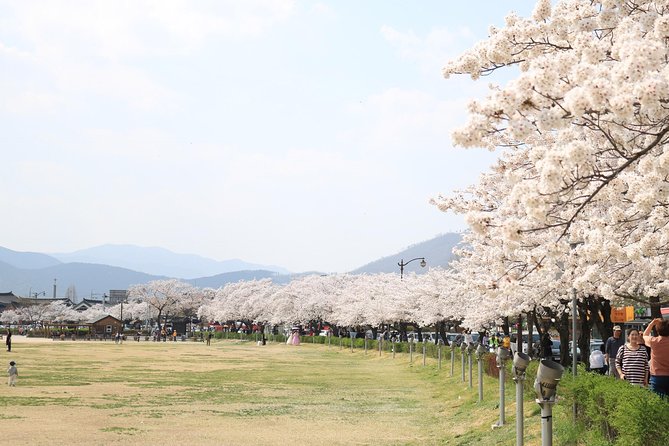
The price is $988.49 per person for about 3 days of touring. That sounds like a lot until you break down what is actually handled for you. You are paying for a private tour, professional guide support, and transport by air-conditioned minivan with hotel pickup and drop-off. On top of that, the tour includes Wi-Fi on board, bottled water, and admission tickets for most stops.
So where is the value? It is in the time and stress you do not spend. Instead of piecing together routes, figuring out entry timing, and trying to manage language questions all by yourself, you focus on the sites. UNESCO days can be tiring when you are planning everything. This tour is designed to remove that friction.
What is not included is also clear. Lunch is not included, and you will need to plan meals on your own. Daegu lodging for two nights is not included either. That means your real budget should cover food and your hotel beds.
If you travel as a group, you can also look into the group discounts mentioned with the tour. And since the typical booking window is about 61 days in advance, it is smart to reserve early if you are traveling during peak seasons.
Getting the most out of a fast UNESCO schedule
Three days sounds short, but these sites are the kind that reward attention, not just quick photos. The trick is to pace your focus.
Here is what works well:
- Treat the museum stop as your brain’s glue. When you hit Gyeongju National Museum after Seokguram and Bulguksa, the artifacts help you connect the earlier structures to the people who made them.
- Use your guide for interpretation. With a private guide, you can ask what to look for in a pagoda, what a tomb name suggests, or why a specific temple collection matters.
- Keep your energy up. Bottled water is included, but you still need to eat. Since lunch is not included, plan snacks or budget time for meals rather than hoping you will find something quickly between stops.
You also have the convenience of a mobile ticket, which helps with smoother entry points when you are hopping from one UNESCO site to the next.
Who this UNESCO tour fits best
This is a strong fit for:
- First-time visitors who want a structured UNESCO overview without getting lost in logistics
- Families who want a traditional Korea experience and prefer guided history over solo problem-solving
- People who like a mix of religious sites, royal-era remnants, and preserved everyday culture
- Travelers who appreciate a private guide who can answer questions in real time
The tour is also noted as suitable for most travelers, and it runs near public transportation. That does not mean it is a full accessibility guarantee, but it does suggest it is not in a completely remote location.
Should you book this Gyeongju, Andong, and Daegu UNESCO tour?
If your goal is to see major UNESCO highlights across Gyeongju, Andong, and Daegu in a way that feels organized and guided, this is an easy yes. You get a tight 3-day arc with hotel pickup, private transport, and admission included, which is the biggest reason this works when you do not want to spend your vacation time planning.
I would think twice if you want long shopping breaks, a fully independent pace, or you do not want to handle lunch planning on your own. Since lunch and Daegu lodging are not included, you will still need to do a little decision-making outside the tour.
My bottom line: book it if you want UNESCO highlights with less stress and more understanding. Book it early, especially if your dates are fixed, and plan for meals so the day stays enjoyable.
FAQ
How long is the Korean UNESCO World Heritage Tour (Gyeongju, Andong, Daegu)?
It runs for about 3 days, based on the 2N3D style schedule.
What time does the tour start?
The start time is 8:00 am.
Is hotel pickup and drop-off included?
Yes. Daily hotel pickup and drop-off are included.
Are admission tickets included?
Admission tickets are included for the listed UNESCO and museum stops. Seomun Market is free.
Is Wi-Fi available during the tour?
Yes. Wi-Fi is available on board, and bottled water is included.
Is lunch included in the price?
No. Lunch is not included.
Do I need accommodation in Daegu?
Yes. Accommodation in Daegu for 2 nights is not included. The office can provide information and recommendations.
Is this a private tour?
Yes. It is private, and only your group participates.
Can I request a vegetarian option?
Vegetarian options are available. You should advise at booking if you need it.
What is the cancellation policy?
You can cancel for a full refund up to 24 hours before the experience start time. If you cancel less than 24 hours before, the amount paid is not refunded.
More Listed Sites in Busan
Other Hanok Village Days
More Gyeongju, More Silla
Fresh on the Busan pile
- Suncheon and Yeosu Daily Private Tour with Pickup Service★ 5.0 · 3 reviews
- Suncheon one day tour from Seoul, Busan or Suncheon★ 5.0 · 3 reviews
- Busan Seafood Tour : Oyster village Tour with Oyster cuisines★ 5.0 · 3 reviews
- 2-DAYS Busan Customized and Included Night tour★ 5.0 · 3 reviews
- Busan Dialect Class with local snack★ 5.0 · 3 reviews
- Korean UNESCO World Heritage Tour including Gyeongju, Andong and Daegu(2N3D)★ 5.0 · 3 reviews
Gyeongju Heritage Tours you might have missed.
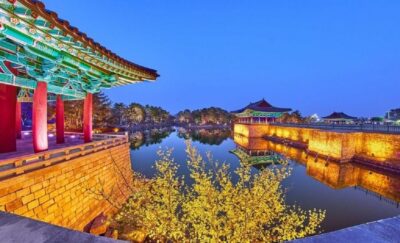 ★ 4.8Busan: Gyeongju Guided Day Trip to Three Kingdoms CapitalFrom $521,925 reviews
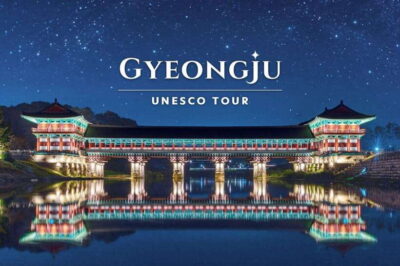 ★ 4.8From Busan: Gyeongju UNESCO World Heritage Guided Day TourFrom $521,250 reviews
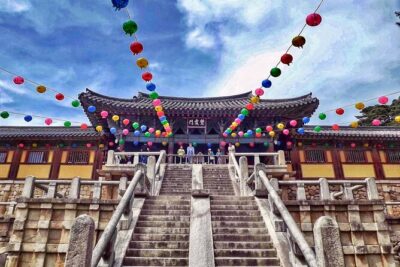 ★ 5.0Gyeongju UNESCO World Heritage Guided Day Tour from BusanFrom $57660 reviews
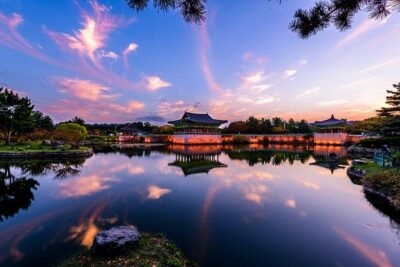 ★ 5.0Old Korea Thousand History Tour of Gyeongju from BusanFrom $64518 reviews
 ★ 5.0Gyeongju UNESCO sites Private tour with licensed tour guideFrom $186275 reviews
 ★ 5.0Private Gyeongju Tour – Explore Gyeongju UNESCO SitesFrom $186272 reviews
 ★ 5.0Busan: Gyeongju UNESCO Legacy Tour with National MuseumFrom $48172 reviews
 ★ 4.8Gyeongju: UNESCO Heritage Tour Including Bulguksa TempleFrom $189104 reviews
Where this tour also appears