
REVIEW · BUSAN TOURS
Old Korea Thousand History Tour of Gyeongju from Busan
Gyeongju history, packed into one long day. This Old Korea Thousand History Tour is built for focus: round-trip transportation from key Busan areas, live commentary, and included entry as you hop through the Silla era highlights. You get a full day of meaningful stops without needing to plan trains, tickets, or timing on your own.
Two things I really like are the included admission at every major site and the way the guides keep the day moving with clear explanations (I especially saw praise tied to guides like Bada, Erica, Kayla, Katrina, and Eva). One thing to consider is that it is a long, walking-heavy day, and the inland heat can make it feel more intense than it sounds on paper.
In This Review
- Key Things You Should Know Before You Go
- A 12-Hour Gyeongju Day That Actually Works
- Price and Inclusions: What $64 Buys You
- From Busan Pickup Points to a Late Return
- Bulguksa Temple: UNESCO Calm in Silla Style
- Gyeongju Gyochon Traditional Village: Hanok Streets and Real Local Flavor
- Daereungwon Tomb Complex: Royal Mounds and Big-Picture Meaning
- Hwanglidangil: A 1960s Street Walk Without Trying Too Hard
- Donggung Palace and Wolji Pond (Anapji Pond): Palace Views Over Water
- Woljeonggyo Bridge at Night: Lights That Land in the Right Place
- Live Commentary and the Guides: Why Some Days Feel Easier
- What to Pack for a Long Day of Walking and Heat
- Who Should Book This Tour (and Who Might Skip It)
- Should You Book This Old Korea Thousand History Tour?
- FAQ
- How long is the Old Korea Thousand History Tour of Gyeongju from Busan?
- What is the price per person?
- What is included in the tour price?
- Are meals included?
- Where are the pickup points in Busan?
- Is this tour good for people who can walk but prefer not to do strenuous travel?
- What is the cancellation and weather approach?
Key Things You Should Know Before You Go
- Round-trip bus pickup from Busan Station, Seomyeon Station, and Haeundae Station, so you do not waste time getting oriented
- Admission included at the temple, royal tomb complex, village, and palace pond stops
- UNESCO World Heritage access through Bulguksa Temple (and other major heritage sites on the route)
- Night views are part of the plan, with Woljeonggyo Bridge and evening lighting at the end of the day
- Guides get repeated praise for humor, pacing, and helping with photos for solo travelers
Other Busan days worth comparing
A 12-Hour Gyeongju Day That Actually Works
If you only have a day in Busan, Gyeongju can feel like a faraway detour. This tour is designed to solve that problem with one simple promise: go to Gyeongju with a bus, learn as you go, and come back with the stress removed. The total time is about 12 hours, and the schedule includes late-day sightseeing.
I like that the route is built around major landmarks instead of random photo stops. You spend your time at places that explain who the Silla kingdom was and how their culture still shapes the city today.
Price and Inclusions: What $64 Buys You
At $64 per person, the big value is not just the bus. You also get a professional guide and admission to the attractions on the route. When you compare that to the cost of individual tickets plus transit, this starts to look like a practical deal for a day you do not want to manage.
You should still plan on paying for your own meals, because meals are not included. Many days like this have an option to buy lunch separately, so you are not stuck hungry, but you will want to budget a little extra.
Also note that you get a mobile ticket, which helps on a day with multiple pickups and timed stops.
From Busan Pickup Points to a Late Return
This tour starts in Busan and picks you up around the city, beginning at Busan Station, then completing pickups at Seomyeon Station and Haeundae Station. The itinerary shows summer-season departure times (for example, Busan Station at 10:00 and Seomyeon Station at 10:20), which hints at the main rhythm: plan for a morning start and a night return.
Because this is a full-day schedule, you should treat it as a commitment. Expect real walking, time spent waiting for the group, and short photo windows at some stops.
One more practical detail: this experience has a maximum group size of 400 travelers. That number is large, but in practice it usually feels like a managed tour day rather than a chaotic crowd, especially when guides keep everyone on schedule.
Bulguksa Temple: UNESCO Calm in Silla Style
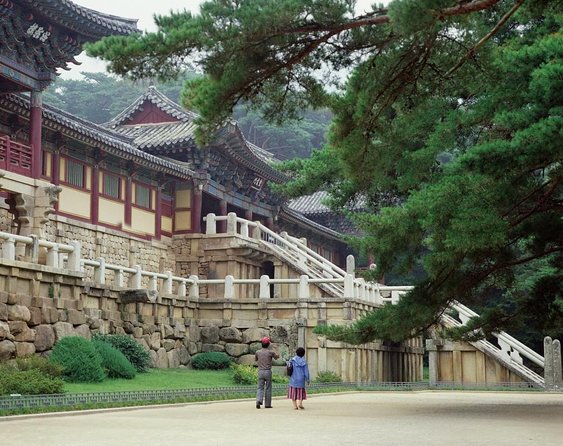
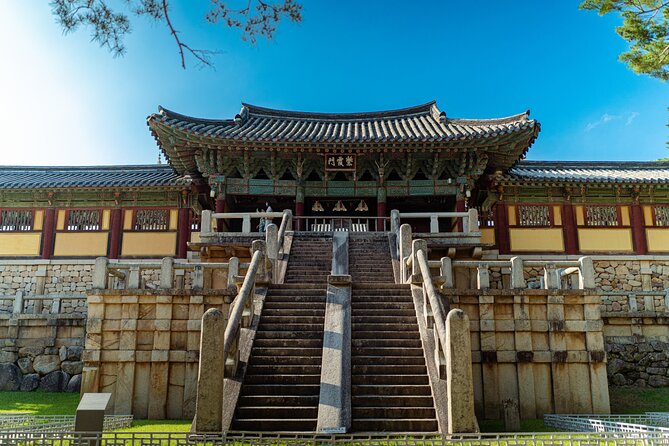
Your first big stop is Bulguksa Temple, a UNESCO World Heritage Site. It represents the Silla period, and the setting is part of the experience, with the temple harmonizing with the surrounding landscape. This is the kind of place where you get more out of it when someone explains what you are seeing, and the tour provides that live commentary.
The stop is about one hour, which is enough to take in the main areas and get a feel for the temple layout. The drawback is that one hour can be tight if you like slow wandering or want to photograph every detail from multiple angles.
If you care about symbolism and historical design, this is the most satisfying early anchor of the day. It sets the tone for everything that follows, especially the later Silla-era sites.
More Silla history around Busan
- Gyeongju UNESCO World Heritage Guided Day Tour from Busan
★ 5.0 · 660 reviews - Old Korea Thousand History Tour of Gyeongju from Busan
★ 5.0 · 518 reviews - From Busan to Gyeongju UNESCO Legacy Tour with National Museum
★ 5.0 · 87 reviews - From Busan: Echoes of Silla Gyeongju Historical Day Tour
★ 4.8 · 55 reviews - Gyeongju Small Group photo Tour (Max 6 Pax)
★ 5.0 · 38 reviews
Gyeongju Gyochon Traditional Village: Hanok Streets and Real Local Flavor
Next you head to Gyeongju Gyochon Traditional Village, connected with Woljeonggyo. This is a hanok village area, meaning you get old-style Korean houses and a street setting that makes Gyeongju feel lived-in rather than purely museum-like. The route also includes access to traditional food spots nearby, which can be a nice break from pure sightseeing.
Time here is about one hour, and you will likely focus on the best sections of the village rather than trying to see everything. Some visitors felt the village time could be more generous, especially if they wanted to explore more than a small subset of houses and streets.
Still, I think this stop is worth it because it shifts the day from royal monuments back to everyday culture. You get a taste of what “old Korea” looks like on the street level.
Daereungwon Tomb Complex: Royal Mounds and Big-Picture Meaning
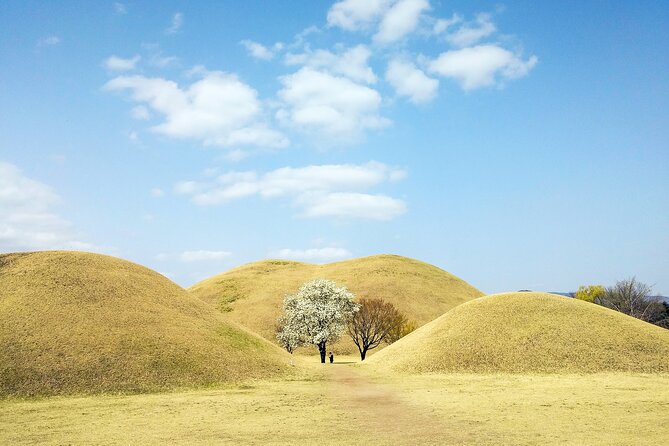
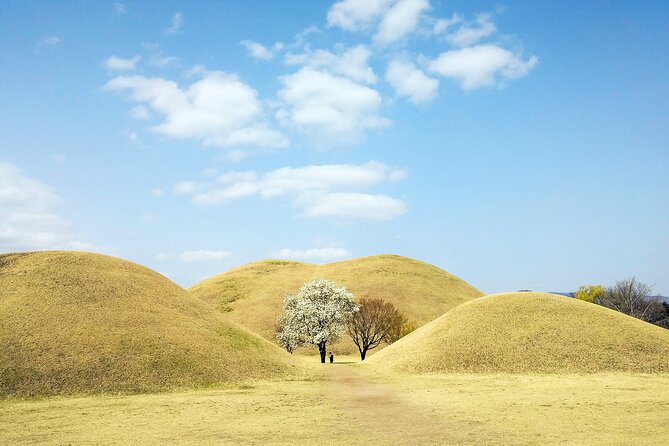
Then the tour moves to the Daereungwon Tomb Complex, an essential heritage site tied to Gyeongju’s Silla rulers. It includes the dense areas of large tombs of kings, queens, and aristocrats from the old Silla era. Even if you are not a tomb-and-architecture specialist, the scale of this place communicates power and ceremony.
The stop is also about one hour. The main consideration is how it might feel depending on your expectations. This is not a site full of indoor exhibits. It is more about the setting, the earthworks, and the historical importance of where the burials are located. If you came hoping for lots of detailed structures to inspect up close, you might feel the time is spent on seeing the grounds more than seeing artifacts.
That said, this is exactly why a guided day trip helps. The guide’s framing can make the mounds feel less like blank hills and more like a historical story about rank, era, and landscape planning.
Hwanglidangil: A 1960s Street Walk Without Trying Too Hard
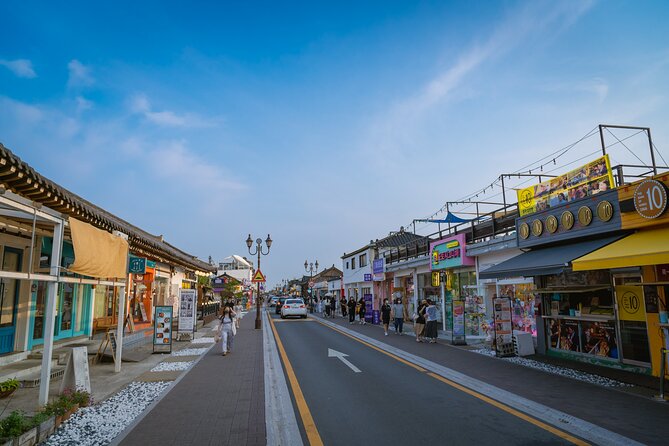
Your mid-day break in the itinerary is Hwanglidangil (also spelled Hwangridan-gil in many references). This is described as a street where you can feel the old atmosphere because older buildings from the 1960s are preserved.
This part is free (no admission), and it is about two hours. I like the slower feel here compared to the more structured heritage sites. It also gives you breathing room in a day that can get physically tiring.
On the downside, a street stop can feel hit-or-miss if you expect major monuments at every stop. Think of it as atmosphere time. You can shop, snack, and take photos, but you should not expect this to be as historically heavy as the temple or tomb complex.
Donggung Palace and Wolji Pond (Anapji Pond): Palace Views Over Water
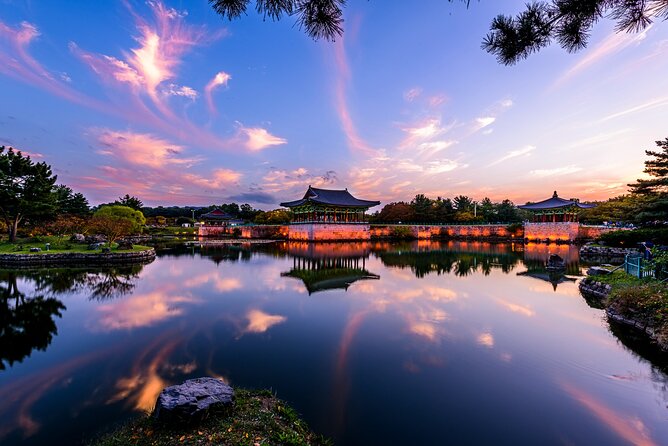
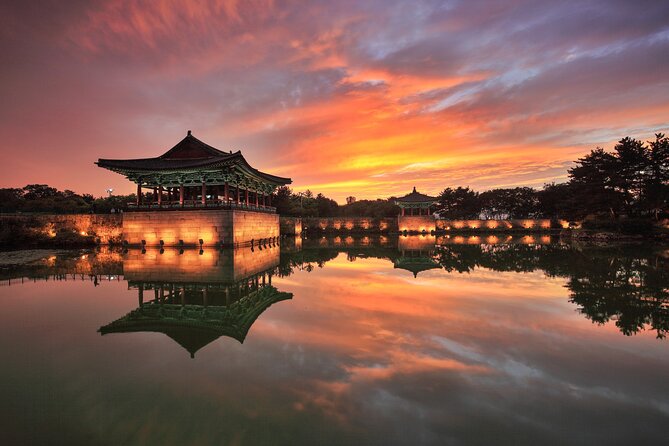
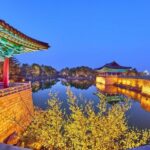
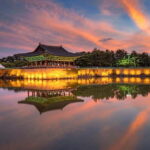
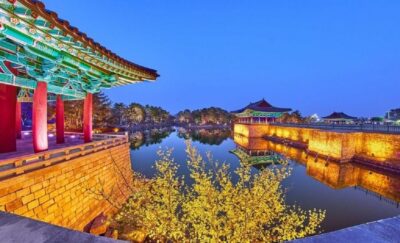
In the afternoon, you reach Donggung Palace and Wolji Pond, also known as Anapji Pond. This is tied to the Unified Silla period and is one of the representative ancient Korean structures in the area. The standout here is the reflection of the palace site in the water, which is a big part of why people remember the stop.
Time is about one hour, and admission is included. The best approach is to take a few minutes to look at the pond from different angles and let the scene settle in your mind. It helps to understand that the palace elements are historical remnants and reconstructions, so you are soaking in the layout and the effect rather than expecting a fully intact building.
Many guides keep the group moving, but the pond scene still offers time for photos. I found this is a stop where you can actually feel the shift from “information gathering” to “quiet appreciating,” even with a group schedule.
Woljeonggyo Bridge at Night: Lights That Land in the Right Place
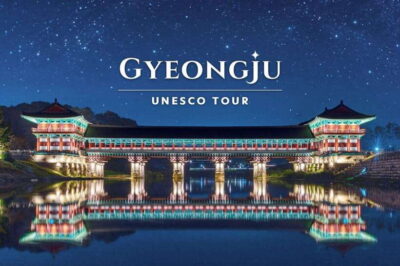
The tour finishes with a photo-friendly evening stop at Woljeonggyo Bridge. It is free and takes about 30 minutes, with emphasis on the night view and the lights reflecting on the water.
This timing matters because the reflection shots are what make the stop feel special. If you are the kind of traveler who wants a calm moment at the end of a long day, this is one of the best ways the schedule supports that.
One more tip: wear shoes you can stand in for a bit. The bridge stop is short, but you might spend that time waiting your turn for the best angles.
Live Commentary and the Guides: Why Some Days Feel Easier
A day trip can feel either exhausting or satisfying, and the guide often decides which one it becomes. This tour explicitly includes engaging live commentary, and the reviews attached to this experience repeatedly name guides like Bada, Erica, Kayla, Katrina, Eva, and Hyony. Names come and go by group, but what stays consistent is the idea that the guide helps you connect the dots.
If you like history told in plain language, you are in the right place. A strong guide also helps you handle timing, especially on hot days. Several comments praise guides for staying on pace while still answering questions and helping with photos, including support for solo travelers.
There is also a small caution to keep in mind. A couple of people raised concerns about tip or review prompting. Korea is generally not a tipping culture, and if that kind of pressure makes you uncomfortable, it is worth mentally preparing so it does not sour your day.
What to Pack for a Long Day of Walking and Heat
This is the part that matters most for comfort. Gyeongju is inland, and conditions can run hotter than coastal Busan. Bring water, sunscreen, and something for shade like a hat or umbrella. Several guides are praised for reminding people to stay hydrated, which is a signal you should not rely on luck.
You will do real walking. Some visitors reported more than 18,000 steps for the day, so plan for it. Good walking shoes are not optional, and light layers help because you will be changing between bus air conditioning and outdoor heat.
If you care about photos, consider bringing a phone grip or small tripod. This kind of tour does give photo moments, and guides often help people take pictures, but the best shots still come from being ready.
Who Should Book This Tour (and Who Might Skip It)
This tour is a great fit if you want an organized day with minimal planning. It works especially well for first-timers who want major UNESCO-level and Silla-era sights without figuring out transport between locations.
You will also like it if you enjoy storytelling. The itinerary is a mix of temples, palace pond views, traditional village streets, and a street-with-old-buildings stop, and the live commentary ties it together.
I would suggest thinking twice if you want long, slow stays at each site. The stops are mostly around one hour each, with some exceptions like the two-hour street walk. That structure is efficient, but it is not built for deep museum-style browsing.
Should You Book This Old Korea Thousand History Tour?
Book it if you want maximum value for a single day, and you like being guided through big heritage sites in one loop from Busan. The included admission plus professional commentary makes it feel like less hassle for a price that is hard to beat for a long itinerary.
Skip or consider another option if you dislike tight time windows, or if you know heat and long walking days drain your energy fast. If that is you, you may still enjoy it, but go in with realistic expectations and pack for comfort.
If you can handle a long day and want to see Gyeongju’s most important Silla-era highlights, this is a strong choice.
FAQ
How long is the Old Korea Thousand History Tour of Gyeongju from Busan?
It runs for about 12 hours (approximately).
What is the price per person?
The price is $64.00 per person.
What is included in the tour price?
Round-trip transfers, admission to the attractions, and a professional tour guide are included.
Are meals included?
No, meals are not included.
Where are the pickup points in Busan?
Pickup starts at Busan Station and also includes stops at Seomyeon Station and Haeundae Station.
Is this tour good for people who can walk but prefer not to do strenuous travel?
The tour notes a moderate physical fitness level is recommended.
What is the cancellation and weather approach?
You can cancel for a full refund up to 24 hours in advance. The tour requires good weather, and if it is canceled due to poor weather, you are offered a different date or a full refund. Service animals are allowed.
More Busan Write-Ups
More Gyeongju, More Silla
Still in Busan? More Here
Fresh on the Busan pile
- Suncheon and Yeosu Daily Private Tour with Pickup Service★ 5.0 · 3 reviews
- Suncheon one day tour from Seoul, Busan or Suncheon★ 5.0 · 3 reviews
- Busan Seafood Tour : Oyster village Tour with Oyster cuisines★ 5.0 · 3 reviews
- 2-DAYS Busan Customized and Included Night tour★ 5.0 · 3 reviews
- Busan Dialect Class with local snack★ 5.0 · 3 reviews
- Korean UNESCO World Heritage Tour including Gyeongju, Andong and Daegu(2N3D)★ 5.0 · 3 reviews
Busan Tours you might have missed.
 ★ 4.8Busan: Gyeongju Guided Day Trip to Three Kingdoms CapitalFrom $521,925 reviews
 ★ 5.0Small Group Full Day Busan Tour (Max 6 Pax)From $991,464 reviews
 ★ 4.8From Busan: Gyeongju UNESCO World Heritage Guided Day TourFrom $521,250 reviews
 ★ 5.0Busan Private Tour with licensed tour guide + private vehicleFrom $1691,143 reviews
 ★ 4.7Busan: Coastal Treasures Beach Train, Culture Village & MoreFrom $51832 reviews
 ★ 4.5Busan’s Cultural Wonders with Beach Train & Gamcheon Village etcFrom $47663 reviews
 ★ 5.0Gyeongju UNESCO World Heritage Guided Day Tour from BusanFrom $57660 reviews
 ★ 5.0Private Busan Tour -Explore Cultural Landmarks with a Local GuideFrom $169552 reviews
Where this tour also appears