
REVIEW · BUSAN TOURS
Busan Dialect Class with local snack
Busan sounds friendly fast. This small-group Busan dialect class pairs Hangul basics with real-life snack practice in the places locals go. You get just enough language to try simple words and phrases, then use them immediately while you eat.
I like the pace. For about 1.5 hours, you focus on consonants and vowels, then you move on to food and shopping so your new skills actually stick. I also like the teacher setup, especially when Suyang brings the jokes and easygoing energy so even difficult Korean feels manageable.
One thing to consider is time. With only about 3 hours total, you are sampling multiple stops, so if you want hours of market wandering or a long temple circuit, this may feel a bit quick.
In This Review
- Key Things You’ll Notice on This Busan Dialect Tour
- A Busan Dialect Class Built for Real Use, Not Cramming
- Your 3-Hour Flow: Class First, Then Market or Temple
- Learning Hangul Consonants and Vowels (Without Getting Overwhelmed)
- Bujeon Market: Where Your New Phrases Meet Street Food
- Samgwangsa Temple: Beautiful Cheontae Order Architecture and a Park Snack
- What’s Included, What’s Not, and How to Plan Your Spending
- Meeting Point and Getting Around Without Stress
- Who This Tour Is Best For (And Who Might Skip It)
- Tips to Get More Out of Your Language and Food Time
- Should You Book This Busan Dialect Class?
- FAQ
- How long is the Busan dialect class and market/temple experience?
- What language level do I need to join?
- Are food and drinks included?
- Which places does the tour visit?
- Where does the tour start and end?
- What is the cancellation policy?
Key Things You’ll Notice on This Busan Dialect Tour
- Hangul in 90 minutes: consonants and vowels first, then practical phrases
- Use language right away: order simple snacks after the class
- Two route options: class then Bujeon Market, or market then Samgwangsa Temple
- Bujeon Market focus: a traditional market many tourists skip
- Samgwangsa Temple architecture: known for beautiful temple buildings of the Cheontae Order
- Max 15 people: small group means easier questions and faster feedback
Other Busan days worth comparing
A Busan Dialect Class Built for Real Use, Not Cramming
This tour is designed around one simple idea: learn a few things you can use immediately. Instead of hours of grammar, you get a direct starting point with Hangul reading, then Busan dialect expressions you can try in the moment.
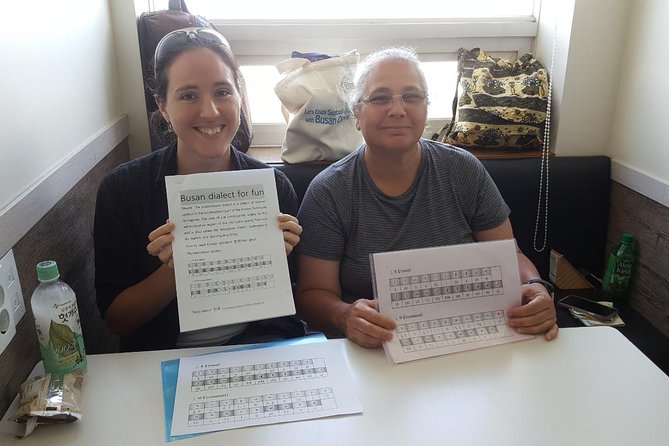
The teaching format matters. You only need basic participation, not prior Korean. That is helpful if you are nervous about speaking or if you freeze when you see writing. By the end of the class, you are not aiming for perfect pronunciation, you are aiming for being understood while you buy something simple and tasty.
And the vibe is part of the value. In a short class, humor can do a lot. From the way the teacher style is described, Suyang keeps things light and fun, so the lesson feels like a hangout with structure, not a sit-and-sweat language session.
Your 3-Hour Flow: Class First, Then Market or Temple
The tour runs about 3 hours, and the order changes based on your chosen option. You’ll either go:
- Dialect class, then Bujeon Market
- Bujeon Market, then Samgwangsa Temple
Either way, the rhythm is the same. You get about 1.5 hours of instruction on understanding and reading Hangul. Then you move to a real setting where you practice what you learned by buying simple food.
That layout is a smart way to study on the road. Your brain learns faster when the classroom part turns into a real task. It is one thing to recognize vowels on paper. It is another thing to see words on a stall, point at something you want, and say a short phrase confidently.
Learning Hangul Consonants and Vowels (Without Getting Overwhelmed)
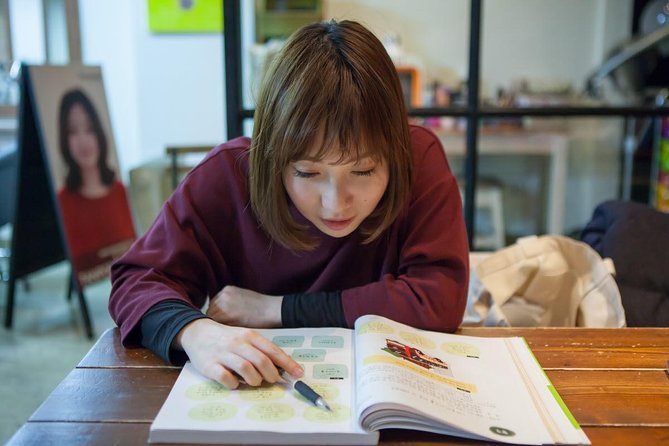
The class portion is the core of the experience, so it is worth knowing what you are actually covering. For around 1.5 hours, you learn how to understand and read the consonants and vowels of Hangul.
You also learn useful Busan dialect expressions. The idea is not to master a whole conversation. It is to get simple but efficient phrases so you can participate without needing Korean skills.
Here’s why that matters. Hangul is often intimidating on a first look, but it is built from a limited set of characters. When you learn the basic building blocks, you start seeing patterns everywhere. Even if your accent is not perfect, being able to read or recognize key parts can help you order food, ask for something, or just follow the flow.
Bring your attention to the practical parts. Focus on what you are likely to use in a market, like short requests and responses. If you pay attention to that chunk, you’ll feel a lot more confident during the snack and shopping portion.
Bujeon Market: Where Your New Phrases Meet Street Food
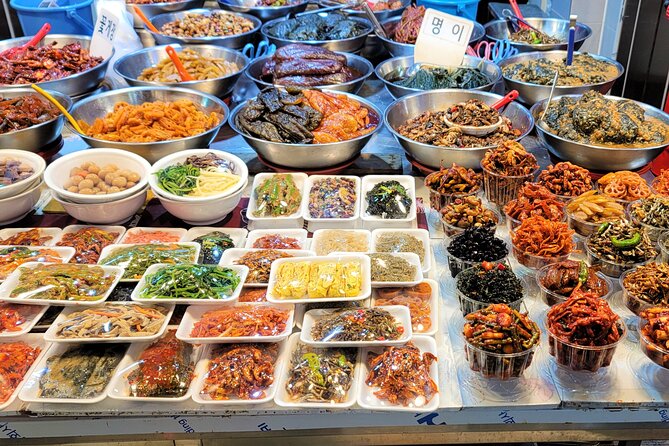
The standout part of this tour, for many people, is the market time that comes right after the lesson. Bujeon Market is where you get to review the expressions you just learned, because you have a chance to purchase simple food.
This is exactly the kind of practice that improves fast. You’re not repeating lines for a test. You’re trying them in a real exchange, with real sights, smells, and people moving around you. If you learn a phrase and then use it within minutes, it feels like it becomes yours.
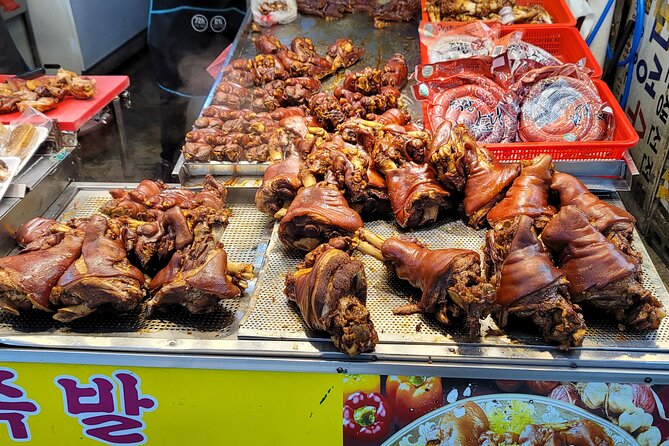
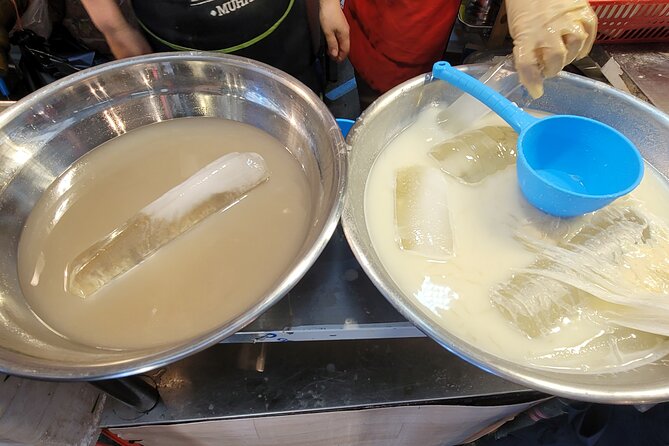
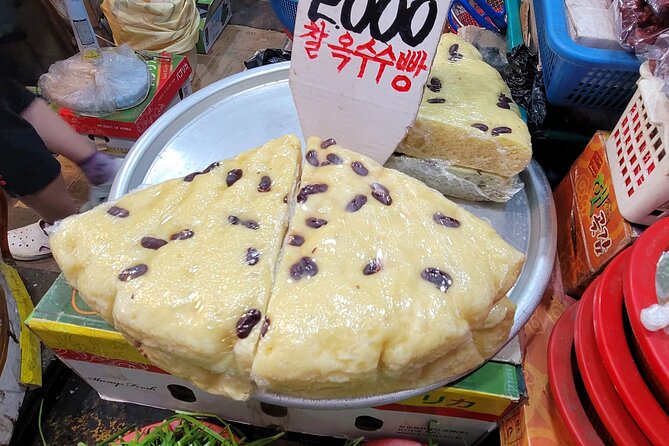
You might try items like rice cakes, since the tour is set up around easy-to-order snack types. Even if you do not buy multiple things, the point is to understand how to communicate while making a small purchase.
Practical take: go into the market portion with an attitude of small wins. Your goal is not perfection. Your goal is to try. If you do that, the market stop turns into a language lesson you can taste.
Also, note that this market is described as a traditional place that many tourists miss. That matters because market areas can vary a lot. A “tourist market” often feels like browsing for photos. A market like this is more about everyday needs and local preferences, which is where dialect and small talk feel more natural.
More sit-down-and-try sessions in Busan
- Korean cooking class in Haeundae, Busan
★ 5.0 · 92 reviews - Busan Tailored Korean cooking class (Vegan OK)with market tour
★ 5.0 · 66 reviews - Busan: Small-Group Traditional Korean Food Cooking Class
★ 4.9 · 58 reviews - Busan Local Food Cooking Class with Market Tour
★ 5.0 · 53 reviews - [BUSAN,GamcheonVillage] Private Korean Art Painting Class
★ 5.0 · 20 reviews
Samgwangsa Temple: Beautiful Cheontae Order Architecture and a Park Snack
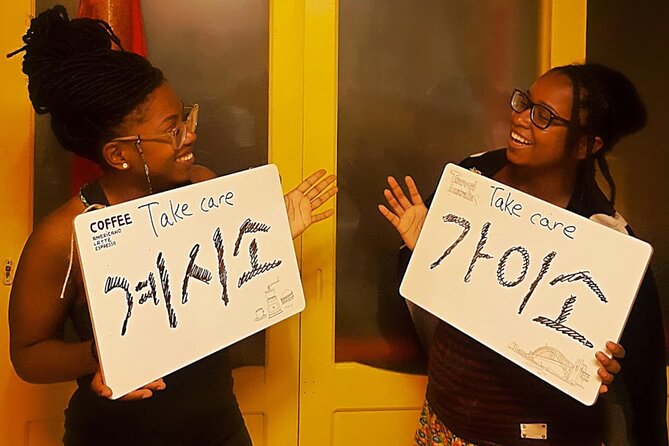
If you choose the route that includes Samgwangsa, you’ll get a temple stop that is specifically known for its buildings. Samgwangsa belongs to the Cheontae Order, which is one of the major Buddhist sects in Korea, along with the Jogye Order. The key detail here is the temple buildings, which are famous for their beauty.
Temple visits can sometimes feel like a quick photo stop. This one is paired with food and a calmer moment. After you arrive, you’ll enjoy a snack in the park inside the temple grounds. That break is more than a snack. It gives you a chance to slow down after market noise.
What I like about pairing dialect practice with a temple is contrast. You shift from market communication to a quieter space where your senses reset. You’ll likely notice how your posture and pace change once you’re not focused on ordering. That helps the experience feel balanced.
If you’re choosing between the two routes, here’s a simple decision guide. If you want the language practice to happen before you see the temple, pick class then market first. If you want the day to start with food and local market energy before you calm down at the temple, pick market then Samgwangsa.
What’s Included, What’s Not, and How to Plan Your Spending
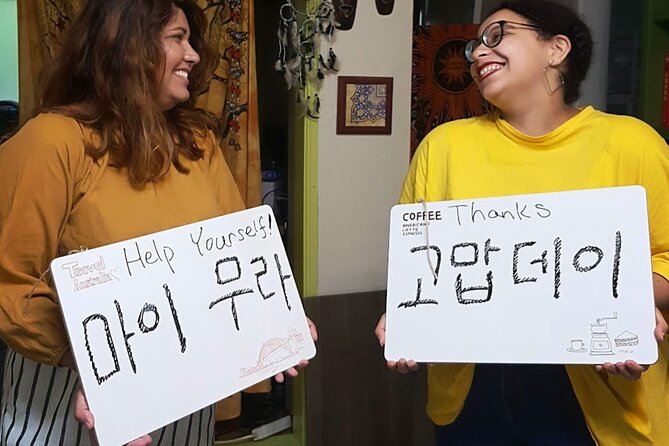
This tour includes coffee and/or tea, plus snacks. You also get classroom rental items and printouts for the language lesson.
Alcoholic beverages are not included, so if you want to drink, plan to buy it separately. Most of the spending you’ll handle yourself will likely be small purchases during the market practice, because the tour is built around using phrases by buying simple food.
So what are you really paying for at $100 per person? Not just sightseeing. You are paying for structured language teaching, the materials to support it, and a guided setup that turns language into action. That structure is what makes the price feel more reasonable than a generic walking tour, especially if you value learning something you can use immediately.
Also, small-group time is part of the cost. The experience caps at a maximum of 15 travelers, which keeps the class interactive and makes it easier to ask questions without feeling like you are in a lecture hall.
Meeting Point and Getting Around Without Stress
You start at 웰컴저축은행 서면지점, 721 Jungang-daero, Busanjin District, Busan. The activity ends back at the meeting point.
The location is described as near public transportation. That matters because you’ll spend less time guessing how to get there, and more time actually learning and eating. If you prefer to arrive a little early, that helps too, since you can settle your nerves before the class begins.
And because the tour uses a mobile ticket, you can keep everything on your phone instead of hunting for paper confirmations.
Who This Tour Is Best For (And Who Might Skip It)
This experience is ideal if you:
- Want a beginner-friendly introduction to reading Hangul
- Like practical language learning tied to real food
- Prefer small groups, so questions are actually possible
- Are curious about Busan beyond the standard highlights
It is especially good for people who feel intimidated by Korean. The format is built for you. You don’t need Korean skills to participate, because you’ll learn short expressions designed to get you through the market portion.
You might want a different plan if you’re the type who wants deep time in a single place. This is not a long market stroll or a lengthy temple circuit. It is a focused, guided taste of multiple sides of Busan in one package.
Tips to Get More Out of Your Language and Food Time
Here are a few ways to make the most of what the tour sets up.
First, take notes on the phrases you actually practice. The printouts and the lesson give you a base, but your memory will stick better if you write down the exact expressions you use at the market.
Second, treat the market purchase like a small mission. Decide what you want to try ahead of time if you can. That reduces hesitation and helps you stay focused on the phrases.
Third, keep your expectations realistic. You are not learning a whole conversation in 90 minutes. You are learning enough to participate, and that is the win.
And finally, lean into the teacher’s energy. When the tone is playful, the lesson gets easier. Suyang’s humor and easy explanations, as described, are not just personality. They’re part of why the class works for first-timers.
Should You Book This Busan Dialect Class?
I think you should book it if you want a fun, beginner-friendly way to connect with Busan through language, food, and a real local market stop. The combination is strong: Hangul basics in a structured lesson, then immediate use by buying simple snacks in Bujeon Market. Add Samgwangsa Temple if your route includes it, and you get beautiful Cheontae Order architecture plus a calmer snack break in the park.
Skip it if you need a slower-paced day with long time in one place. This is a tight, efficient experience. It’s built for quick learning and quick taste, not for deep wandering.
If you like the idea of getting your bearings in Korean fast and turning that into a practical moment, this tour is a very good bet for Busan.
FAQ
How long is the Busan dialect class and market/temple experience?
It runs about 3 hours.
What language level do I need to join?
Most travelers can participate, and the class is designed for people who do not know Korean yet. You learn basic Hangul reading and useful Busan dialect expressions.
Are food and drinks included?
Coffee and/or tea are included, and snacks are also included. Alcoholic beverages are not included.
Which places does the tour visit?
Depending on your chosen option, you will visit Bujeon Market and either do the dialect class before the market or do the market before visiting Samgwangsa Temple. Samgwangsa is known for its beautiful temple buildings, and you can enjoy a snack in the temple park.
Where does the tour start and end?
It starts at 웰컴저축은행 서면지점, 721 Jungang-daero, Busanjin District, Busan, South Korea, and it ends back at the meeting point.
What is the cancellation policy?
You can cancel for a full refund up to 24 hours in advance of the experience start time. If you cancel less than 24 hours before, the amount paid is not refunded.
Build It With Your Hands in Busan
More Busan Write-Ups



Still in Busan? More Here
Fresh on the Busan pile
- Suncheon and Yeosu Daily Private Tour with Pickup Service★ 5.0 · 3 reviews
- Suncheon one day tour from Seoul, Busan or Suncheon★ 5.0 · 3 reviews
- Busan Seafood Tour : Oyster village Tour with Oyster cuisines★ 5.0 · 3 reviews
- 2-DAYS Busan Customized and Included Night tour★ 5.0 · 3 reviews
- Busan Dialect Class with local snack★ 5.0 · 3 reviews
- Korean UNESCO World Heritage Tour including Gyeongju, Andong and Daegu(2N3D)★ 5.0 · 3 reviews
Busan Tours you might have missed.
 ★ 4.8Busan: Gyeongju Guided Day Trip to Three Kingdoms CapitalFrom $521,925 reviews
 ★ 5.0Small Group Full Day Busan Tour (Max 6 Pax)From $991,464 reviews
 ★ 4.8From Busan: Gyeongju UNESCO World Heritage Guided Day TourFrom $521,250 reviews
 ★ 5.0Busan Private Tour with licensed tour guide + private vehicleFrom $1691,143 reviews
 ★ 4.7Busan: Coastal Treasures Beach Train, Culture Village & MoreFrom $51832 reviews
 ★ 4.5Busan’s Cultural Wonders with Beach Train & Gamcheon Village etcFrom $47663 reviews
 ★ 5.0Gyeongju UNESCO World Heritage Guided Day Tour from BusanFrom $57660 reviews
 ★ 5.0Private Busan Tour -Explore Cultural Landmarks with a Local GuideFrom $169552 reviews
Where this tour also appears