
REVIEW · KOREAN COOKING CLASSES
Seoul: Korean Cooking at Seoul Cooking Club!
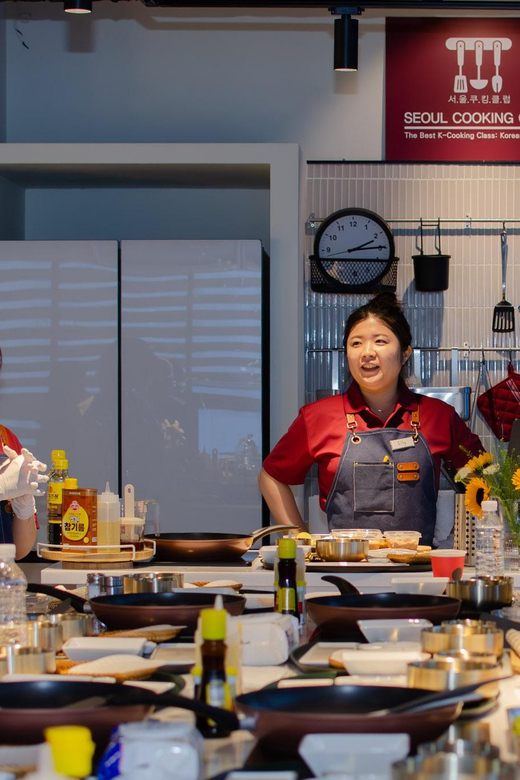
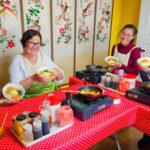
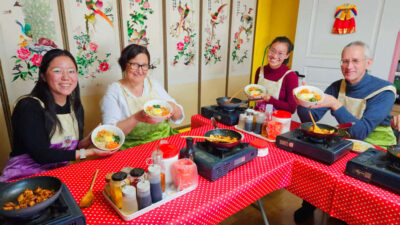
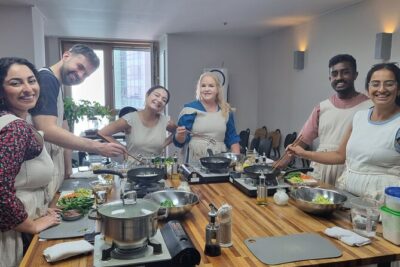
Korean cooking here is social and hands-on. Seoul Cooking Club’s 150-minute class in Jongno turns classic dishes into a real cooking lesson, then you sit down to a three-course meal with around ten tastings. I especially like the English-speaking teaching, with instructors such as Sally and Olivia guiding you step by step.
I also like the food mix. You’ll practice Jeon (Korean small pancakes) in several flavors, then cook mainstays like japchae, bulgogi, and Jeonju bibimbap, plus you’ll sample a spread of banchan side dishes.
One consideration: there’s no hotel pickup, so you’ll need to navigate to Jonggak Station on your own. Also, the menu includes seafood and anchovy flavors in places, so check ingredients if you avoid specific foods.
In This Review
- Key highlights you should care about
- Cooking club in Jongno: what this 150-minute class really feels like
- Getting to the class at Jonggak Station, and why it matters
- Your Jeon starter lineup: small pancakes with big lessons
- Main dishes you’ll cook together: japchae, bulgogi, and Jeonju bibimbap
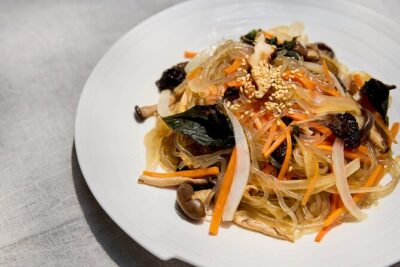
- Japchae (stir-fried vegetables and glass noodles)
- Bulgogi (soy sauce seasoned barbecued beef)
- Jeonju bibimbap
- Banchan tastings: learning the seasoning map of Korean meals
- Dessert and drinks: bing-su and Korean sweet rituals
- The chefs in English: what you’ll learn beyond the recipe
- Timing and session style: brunch, lunch, or early dinner
- What to do before and after: pairing the class with Jongno sights
- Price and value: is $109 worth it?
- Who should book this cooking class, and who might skip it
- Should you book Seoul Cooking Club in Jongno?
- FAQ
- What is the duration of the Seoul Cooking Club class?
- How do I get to the meeting point by metro?
- Is the cooking class taught in English?
- What dishes are included in the class?
- Do I need hotel pickup and drop-off?
- What should I bring, and is it suitable for kids?
Key highlights you should care about
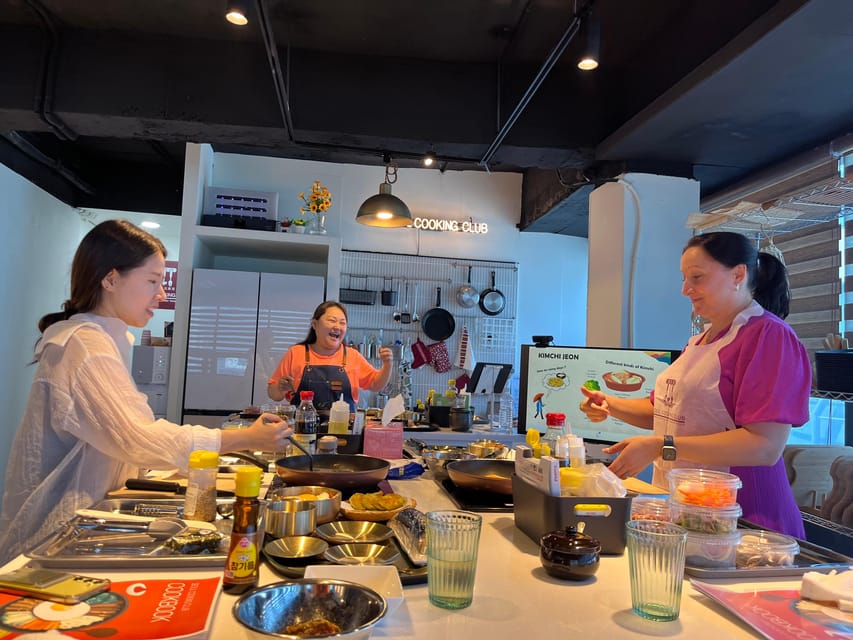
- Jongno location, easy metro access: Jonggak Station Line 1 exit 12 is a short walk.
- Make, then eat: you cook Jeon, mains, and banchan tastings, followed by a three-course-style meal.
- Ten tastings with a banchan focus: you get to compare textures and seasoning styles, not just one dish.
- English instruction plus helpful pacing: chefs like Sally, Elly, Olivia, and Grace keep directions clear.
- Take-home support: you get a recipe book, and there are takeaway containers so you can keep cooking at home.
More kitchens to book in Seoul
Cooking club in Jongno: what this 150-minute class really feels like
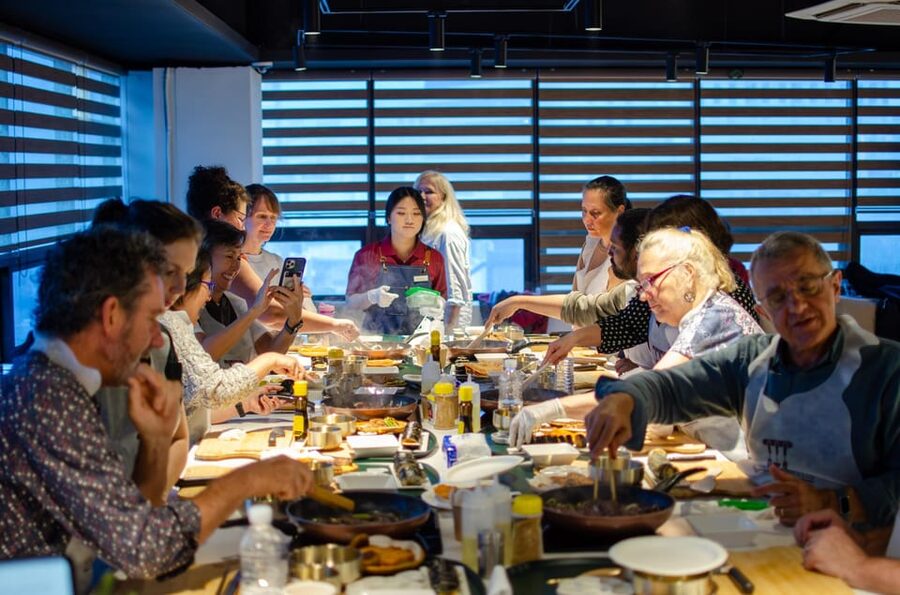
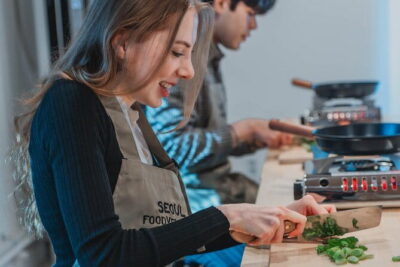
This is the kind of Seoul experience that changes how you see dinner. Instead of ordering a spread and moving on, you actually work the stove, make sauces, and build flavor in a hands-on way. Then you get to eat what you made, while everything is still fresh in your head.
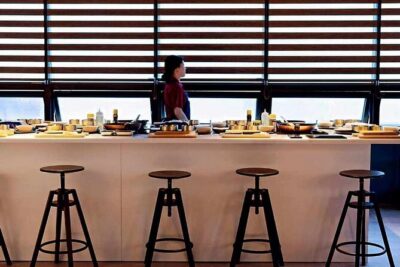
The pacing matters here. At 150 minutes, the class has enough time to cover multiple dishes without turning into a frantic cooking contest. If you come hungry, you’ll be able to taste while you cook and still have room at the end for dessert like bing-su.
Another quiet win is the location. The meeting spot is in central Jongno, with Jonggak Station (Line 1) exit 12 listed as the key landmark. After class, you can connect to nearby areas like Insadong, Ikseondong, Gwangjang Market, Myeongdong, and Gyeongbokgung Palace with short walks.
Getting to the class at Jonggak Station, and why it matters
If you want an easy first day in Seoul, logistics are part of the value. Here, you’re not waiting on a pickup van or trying to find a hidden address in the dark. The directions are straightforward: go to Jonggak Station Line 1, exit 12, walk straight, take the first right around Pascucci, and look for the entrance next to the Good Game Zone, on the 7th floor.
That matters because your time is limited. You’re spending 150 minutes cooking, then you likely want to keep exploring Jongno right after. If you can get there in a calm way, you arrive ready instead of stressed, and the whole class feels better.
Bring closed-toe shoes. You’ll be standing, using tools, and working near heat. Even if you’re not a big cook, simple shoes make it easier to stay comfortable for the full session.
Your Jeon starter lineup: small pancakes with big lessons
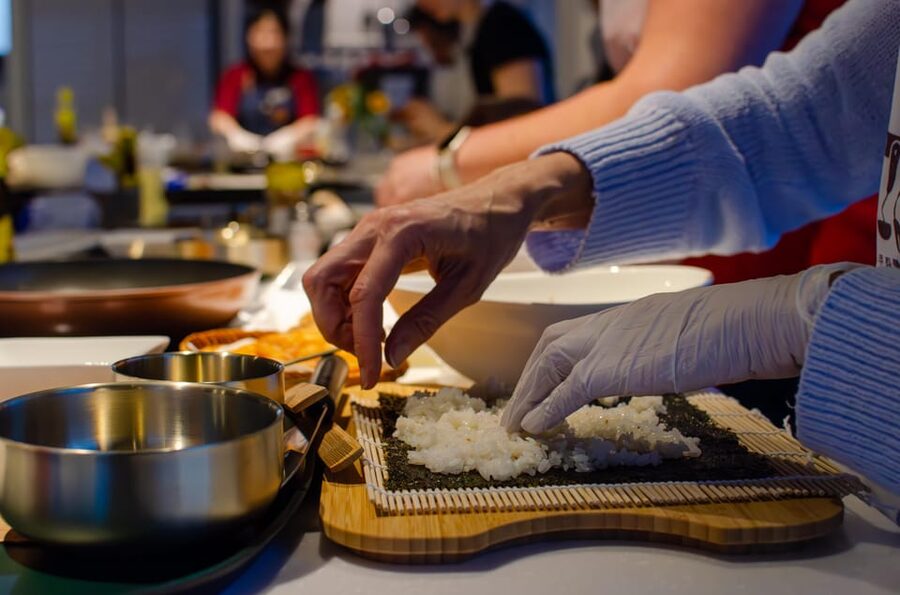
Jeon is where you learn Korean flavor in a very practical way. These are thin, pan-fried pancakes where batter thickness, heat control, and seasoning balance all show up fast. Even better, you’ll make several varieties, which means you’re not stuck with one technique.
You’ll prepare 3 to 4 Jeon, chosen from options like Donggrangttaeng (pan-fried battered meatballs), pollack pancake, pajeon (seafood pancake), beef pancake, tofu pancake, and sesame leaf pancakes. The exact set can vary by session, but the skill is consistent: mix and handle batter, learn what a good texture looks like, then adjust timing so you get crisp edges without burning.
Why this is a big deal for value: Jeon is “forgiving” food. It’s easier to taste why something works and why something doesn’t, compared with dishes where timing is the whole game. When you leave, you can recreate the method without needing restaurant-level equipment.
Also, Jeon naturally leads into banchan culture. As you move from pancakes to sides, you’ll start noticing how Korean meals build around contrast: savory with crunchy, spicy with cooling, fermented with fresh.
Main dishes you’ll cook together: japchae, bulgogi, and Jeonju bibimbap
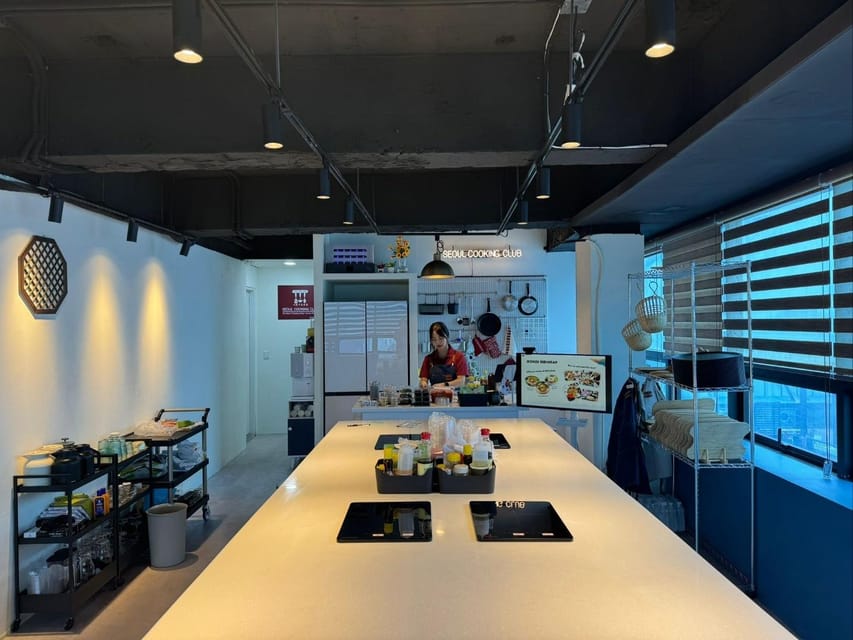
The main portion is where the class feels like a real Seoul meal, not just snack cooking. You’ll collaborate on three main dishes, and each one teaches a different style of Korean cooking.
Other classes with a stove in Seoul
- Korean Cooking at Seoul Cooking Club
★ 5.0 · 220 reviews - Experience Korean Cooking in Modern Hanok Kitchen
★ 5.0 · 118 reviews - Korean Cooking Class with Grocery Shopping at Seoul Local Market
★ 5.0 · 107 reviews - Royal Seoul Cooking Class in a 100-Year-Old Hanok
★ 5.0 · 81 reviews - Seoul : Taste of Korea, Authentic Home-Style Cooking Class
★ 5.0 · 64 reviews
Japchae (stir-fried vegetables and glass noodles)
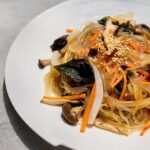
Japchae is all about slicing, stir-frying, and balancing sauce. It’s a great learning dish because glass noodles can go from perfect to sticky if heat and timing are off. When someone explains what to watch for, it clicks quickly.
Bulgogi (soy sauce seasoned barbecued beef)
Bulgogi teaches you the idea of marinade as flavor delivery. Soy sauce, sweetness, and aromatics all work together, and the cooking itself is fast. It’s also the dish that often makes people realize Korean cooking isn’t about one magic ingredient. It’s about proportion and technique.
Jeonju bibimbap
Jeonju bibimbap is a strong finale because it’s built. Bibimbap isn’t just one dish, it’s an assembly of seasoned elements. You’ll connect the dots between what you cooked, what you tasted in banchan, and what makes the final mix work.
And yes, you get a built-in meal structure. The class includes Jeonju bibimbap as part of what you eat, so you’re not guessing how it all comes together. It’s one of the reasons the class is a great value at $109 per person: you’re paying for instruction plus a real multi-part Korean meal.
Banchan tastings: learning the seasoning map of Korean meals
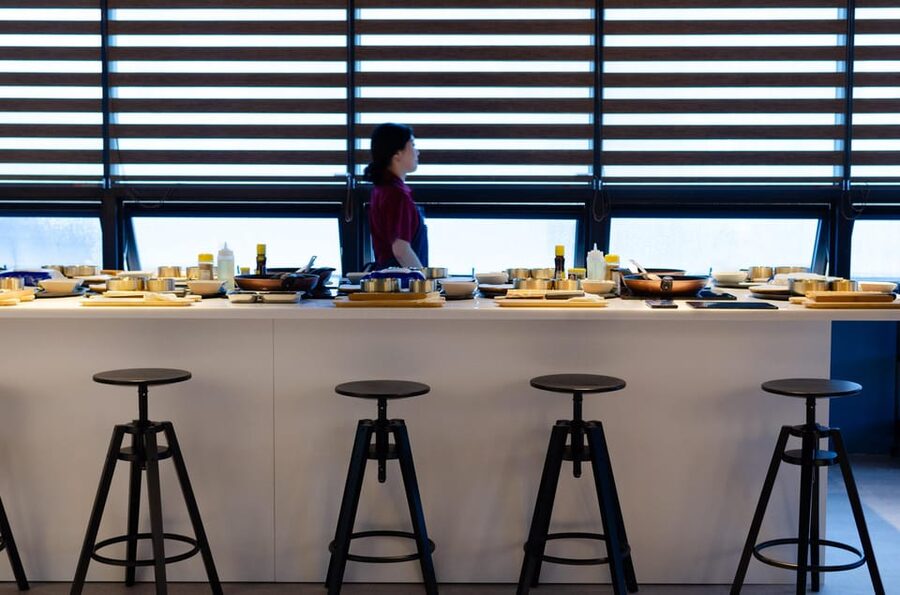
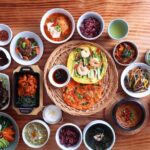
You should come into this expecting many tastes. The class includes about ten tastings, including items like kimchi, Korean egg-roll, stir-fried anchovy, radish kimchi, seasoned soybean sprouts, seasoned spinach, and spicy cucumber.
This is the part many food experiences skip. They’ll serve one highlight dish and call it Korean food. Here, the banchan tastings teach you how Korean meals manage variety: crunchy textures, fermented tang, gentle bitterness, and heat, all alongside rice and noodles.
Two useful things you’ll likely notice as you taste:
- Seasonings are layered, not one-note.
- Similar ingredients taste different depending on whether they are stir-fried, pickled, or dressed.
That’s why a banchan tasting section is worth your time. It turns your memory into a shopping list later, whether that’s looking for the right sauces at home or choosing what to order next time in Seoul.
Dessert and drinks: bing-su and Korean sweet rituals
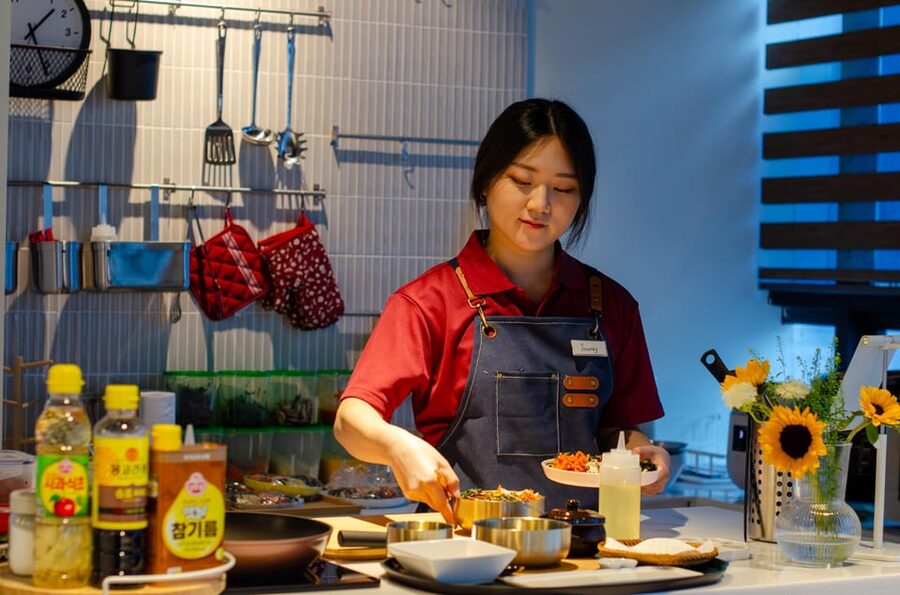
The sweet part of the class is not an afterthought. Your dessert option includes bing-su, a Korean favorite, and dessert choices can change daily.
You also get drinks during the class, including water, Sikhye (a sweet rice drink), and Korean tea. Sikhye is especially handy in a cooking class because it’s gentle and comforting after savory dishes. Korean tea also fits the rhythm of the meal, helping you reset your palate between bites.
If you’re worried about sugar after cooking, don’t. Dessert here is a chance to round out flavors, not just a pile of sweets. It also gives the group a natural end point before you head back out into Seoul.
The chefs in English: what you’ll learn beyond the recipe
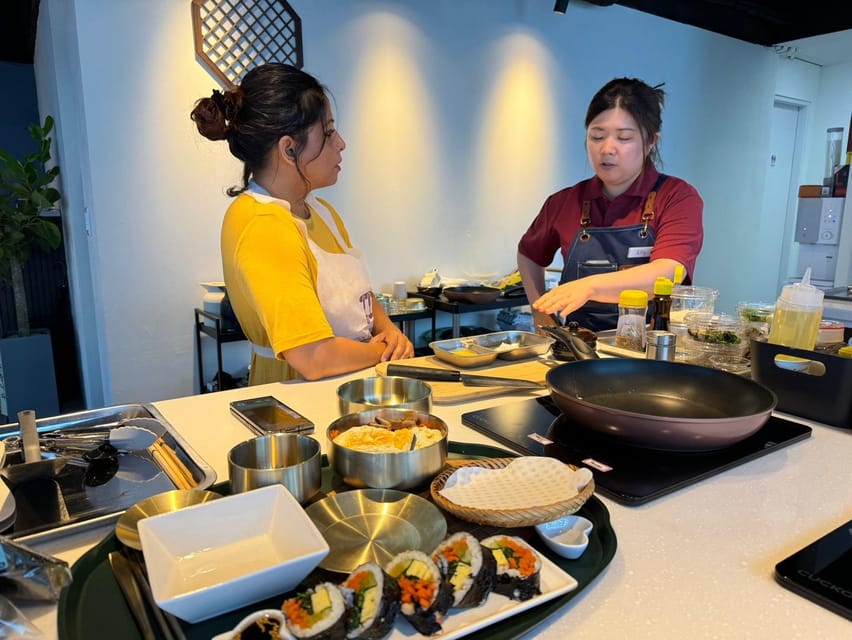
The teaching style is a major reason this class scores so high. Multiple instructors are mentioned in the experience, including Sally, Elly, Olivia, and Grace, and the recurring theme is patience and clear step-by-step guidance in English.
You’re not just watching someone cook. You’re getting instructions for each step so you can act, not just observe. And because the menu spans multiple dishes, you learn patterns: how batter should behave, how sauces cling, and how seasoned components fit together in bibimbap.
If you like practical cooking, this class gives you more than a list of dishes. You’ll come away with a method mindset. That’s how you end up cooking Korean food at home, not just recreating one dish and calling it a day.
One more detail worth noting: you may also receive take-home items like a recipe book and takeaway containers, plus a bag in some sessions. That turns your ticket into something you can use again later.
Timing and session style: brunch, lunch, or early dinner
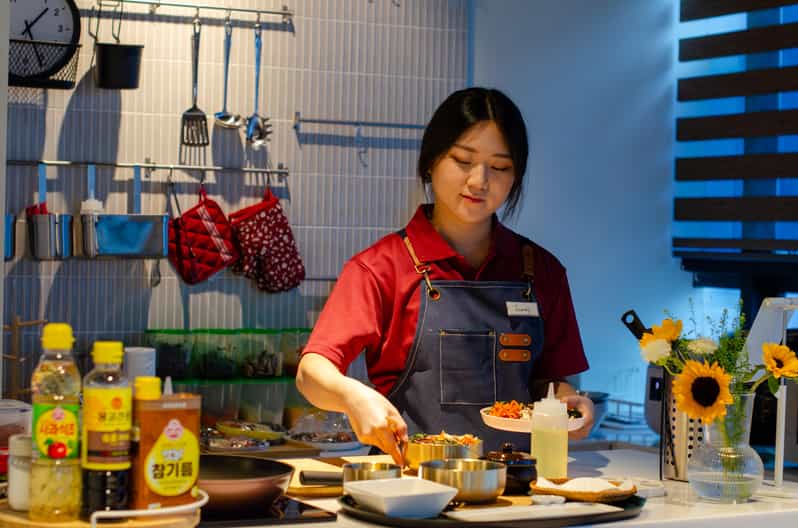
Sessions run multiple times from Monday to Sunday. You can choose a cooking slot that matches your day: brunch, lunch, or an early dinner.
That choice matters because Seoul sightseeing is a lot easier when you’re not rushing. If you do lunch, you may feel like you can snack or shop afterward. If you choose early dinner, you might even skip another meal, since the class includes starters, cooking, and a three-course-style dining portion with tastings and dessert.
What to do before and after: pairing the class with Jongno sights
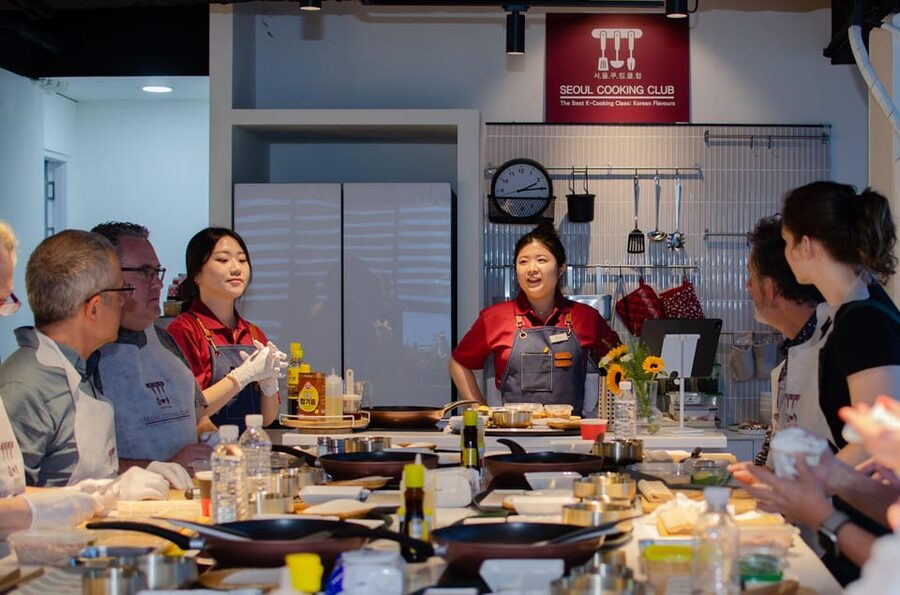
This is one of the easiest classes to plug into a normal Seoul day. You’re in Jongno, and it’s close to several major food and culture zones.
After your class, you can walk to places like Insadong and Ikseondong for traditional streets and small shops, or head to Gwangjang Market for food browsing. If you want bigger landmarks, Gyeongbokgung Palace is also within the short walking range listed.
Practical tip: don’t schedule an exhausting hike right before your cooking class. You’ll want your energy for chopping, stirring, and tasting. Then, right after, plan lighter sightseeing like walking markets, browsing cafes, and enjoying live music in the area rather than stacking heavy commitments.
Price and value: is $109 worth it?
At $109 per person for a 150-minute, hands-on cooking class with meals, it only feels expensive if you compare it to a casual bite. But if you compare it to instruction plus multiple dishes plus dessert and drinks, it’s actually fair.
Here’s the value breakdown in plain terms:
- You get real cooking practice, not just a tasting.
- You eat what you make, plus there are about ten tastings of banchan.
- You get drinks including Sikhye and Korean tea.
- You likely leave with a recipe book and takeaway containers.
The price also includes the overhead you do not want to deal with yourself in Seoul. Someone sources ingredients, sets up stations, explains techniques, and cleans the mess. In a short time, you learn multiple dishes and how they relate to each other as a meal.
If you like Korean food but want to understand it, this price makes more sense than a one-dish meal or a market tour where you sample but do not cook.
Who should book this cooking class, and who might skip it
You’ll love it if:
- You want hands-on Korean cooking, especially Jeon and bibimbap assembly.
- You like eating well, not just collecting photos.
- You want a practical skill you can recreate at home.
You might skip it if:
- You need a fully kid-friendly option. The class is not suitable for children under 16.
- You are extremely sensitive to seafood and anchovy flavors, since items like stir-fried anchovy and seafood pancakes are part of the menu options.
- You prefer sitting and watching only, because the class is designed for making food.
Should you book Seoul Cooking Club in Jongno?
Yes, if your Seoul trip includes food goals. This class earns its spot because it teaches you technique through dishes that are central to Korean eating, and it feeds you like you actually belong at the table. The combination of English instruction, multiple Jeon flavors, major mains like japchae and bulgogi, banchan tastings, and dessert makes the $109 price feel like a true meal plus a cooking lesson.
Book it especially if you plan to spend time in Jongno anyway. The location near Jonggak Station keeps your day flexible, and you can roll right into shopping and sightseeing afterward.
If you’re choosing between this and a simpler tasting-only option, pick this one. Cooking gives you context, and context is what turns food into memory.
FAQ
What is the duration of the Seoul Cooking Club class?
The class lasts 150 minutes.
How do I get to the meeting point by metro?
Go to Jonggak Station (Line 1), Exit 12. Walk straight ahead, take the first right around Pascucci, and find the entrance next to the Good Game Zone on the 7th floor.
Is the cooking class taught in English?
Yes. The instructor teaches in English.
What dishes are included in the class?
You’ll make Jeon starters (3 to 4 options such as Donggrangttaeng, pollack pancake, pajeon, beef pancake, tofu pancake, sesame leaf pancakes), and you’ll collaborate on mains including japchae, bulgogi, and Jeonju bibimbap. The meal also includes banchan tastings, a Korean dessert, and Korean drinks.
Do I need hotel pickup and drop-off?
No. Hotel pickup and drop-off are not included.
What should I bring, and is it suitable for kids?
Bring closed-toe shoes. The experience is not suitable for children under 16 years.
Classes With a Stove
More Seoul Write-Ups



Back to the Kitchen in Seoul
Fresh on the Seoul pile
- Unique Native Experience : Han River Picnic, Board game, BBQ★ 5.0 · 3 reviews
- 2-Hour Private Kayaking and Paddleboarding Experience in Hanriver★ 5.0 · 3 reviews
- Korean Folk Village & Suwon Hwaseong Fortress Private Tour★ 5.0 · 3 reviews
- Seoul Korean BBQ Dinner Experience with Secret Food Tours★ 5.0 · 3 reviews
- Seoul Highlights & Hidden Gems – Private Tour with Photo Service★ 5.0 · 3 reviews
- Night Food Tour in Seoul with Traditional and Modern Cuisine★ 5.0 · 3 reviews
Korean Cooking Classes you might have missed.
 ★ 5.0Local Home Korean Cooking Class & Market Adventure in SeoulFrom $911,024 reviews
 ★ 5.0Master Korean traditional cooking with a Kimchi chefFrom $85385 reviews
 ★ 5.0Seoul: Korean Cooking Class at a Local Home and Market TourFrom $98348 reviews
 ★ 5.0Korean Cooking at Seoul Cooking ClubFrom $109220 reviews
 ★ 5.0Experience Korean Cooking in Modern Hanok KitchenFrom $87118 reviews
 ★ 5.0Korean Cooking Class with Grocery Shopping at Seoul Local MarketFrom $91107 reviews
 ★ 5.0Korean Kimchi Making Day Experience with a Local Market TourFrom $8999 reviews
 ★ 5.0Korean cooking class in Haeundae, BusanFrom $10092 reviews
Where this tour also appears