
REVIEW · KOREAN COOKING CLASSES
Korean Cooking Class Full Meal with BBQ on an All in One Table
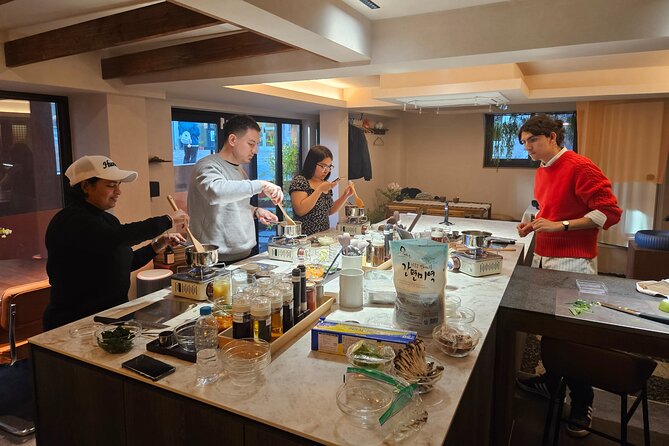
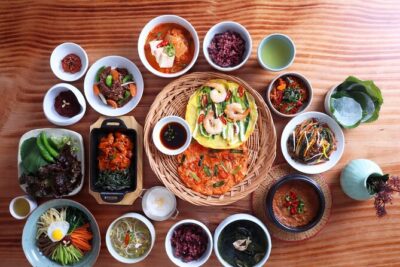
Korean food tastes better when you cook it. This hands-on Seoul class has you making a full meal from scratch in a calm Hanok-inspired kitchen, then eating it the Korean way, all together. I love that you prepare the banchan plus your own bibimbap plating, and I also like the balanced menu structure that fits real Korean dining rather than a Western demo style. One thing to consider: it is active, you choose your main and soup based on taste, and you should go hungry and ready to chop, mix, and plate.
The experience is run for small groups, so it feels more like cooking with a friend than sitting through a lecture. You will get welcome tea, seasonal sides, a DIY bibimbap moment, chef-served grilled pork belly BBQ, a taste of traditional liquor, and then you all make a popular Korean dessert together. If you prefer watching more than doing, this may feel a bit hands-on.
In This Review
- Key Highlights You Should Know
- Step Into a Hanok-Inspired Kitchen in Mapo-gu
- The Welcome Start: Tea, Ingredients, and Sauce Basics
- Making Four Kinds of Korean Side Dishes (Banchan) From Seasonal Produce
- Choosing Your Main Dish and Soup or Stew
- Plating Bibimbap the Korean Way, With Your Own Style
- The All-at-Once Korean Meal Rhythm (And Why It Works)
- Chef-Served BBQ Pork Belly and a Taste of Traditional Liquor
- A Shared Korean Dessert to Finish the Table
- What the Group Size and Timing Feel Like
- Price, Value, and Why $89 Can Make Sense
- Who This Class Is Best For
- Quick Practical Tips Before You Go
- Should You Book This Korean Cooking Class in Seoul?
- FAQ
- How long is the Korean cooking class experience?
- What is the price per person?
- How many people are in a group?
- What do I cook during the class?
- Is the BBQ cooked by you?
- Do you serve dessert as part of the experience?
- Where is the class located in Seoul?
Key Highlights You Should Know
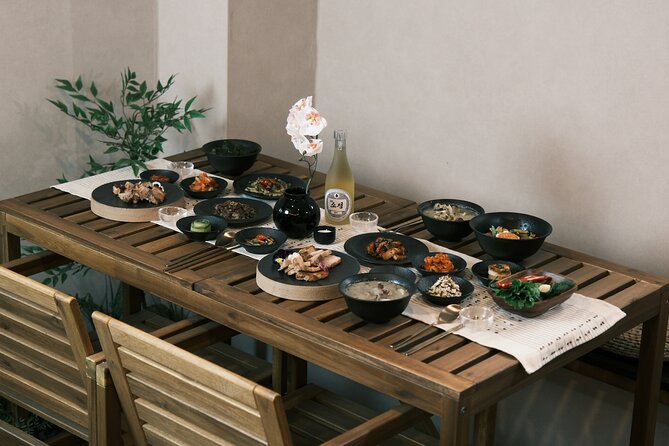
- Hanok-inspired studio kitchen: A calmer setting that helps you focus on cooking.
- Full table, not a snack: Four side dishes plus a chosen main and soup or stew.
- Bibimbap plating you control: You build and present your own bowl.
- Chef handles the BBQ: Grilled pork belly comes from the chef while you keep cooking the rest.
- Dessert-making together: A shared finish that keeps the energy up.
- Small group size: Up to 8 travelers, which helps with attention and pacing.
More kitchens to book in Seoul
Step Into a Hanok-Inspired Kitchen in Mapo-gu
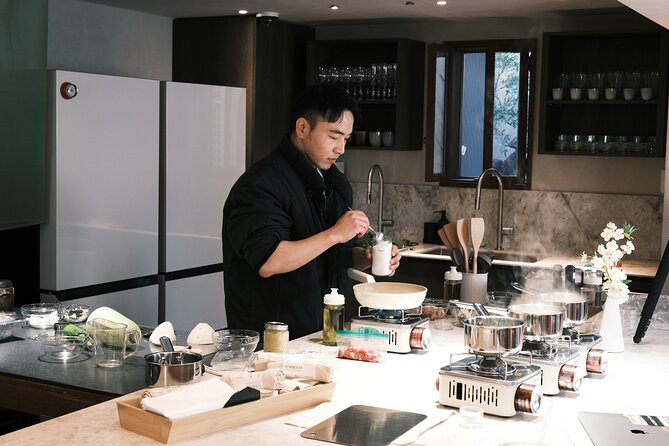
This class starts in Seoul, in Mapo-gu, at a studio called Soop Table: The Hansik Atelier. The address is Soop Table: Korean Cooking Class, Seoul, Mapo-gu, Donggyo-ro 46-gil, 34, 1층. It is a straightforward meeting point that ends back there after the meal.
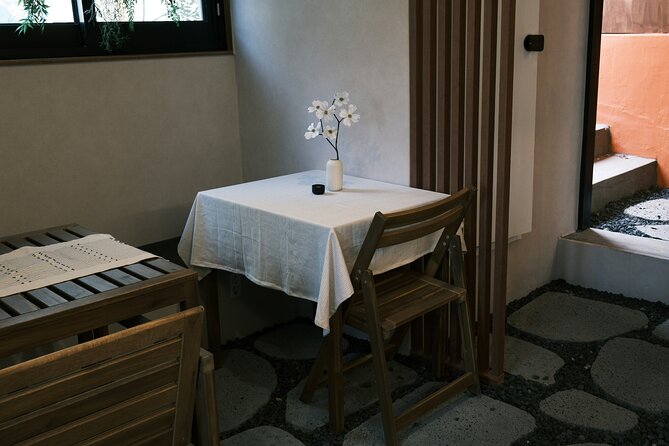
What I like about the setting is the purpose-built calm. You are not bouncing between stops. You are inside a kitchen inspired by traditional Hanok architecture, which is a big part of why the class feels like cooking at home, just with better tools and clear guidance. From the reviews, the building itself gets praised for ambiance, including a lava and slate walkway and a delightful, welcoming feel. That matters because when the space is comfortable, you cook more confidently and slower, instead of rushing.
You are also with a small group, capped at eight. That usually means you get help when you need it, and you are not stuck waiting for your turn at the cutting board or mixing bowls. If you have ever taken a class where the instructor is running between ten people, you know how different this feels.
The Welcome Start: Tea, Ingredients, and Sauce Basics
The first moment is a seasonal Korean welcome tea. It sounds simple, but it sets the tone. You are about to learn the logic behind Korean flavors, not just copy recipes.
Then the class builds your foundation with essential Korean ingredients and sauces, the ones that make Korean home cooking recognizable. You will work with fermented elements like doenjang and gochujang. Even if you have tasted Korean food before, fermentation flavors can feel mysterious until you see how they behave in cooking. Here, you learn why these pastes matter, how they show up across dishes, and how they connect to the idea of season and nature in Korean cuisine.
A nice detail in the class design is that you do not just hear about ingredients. You use them as you cook. That makes the knowledge practical fast.
Making Four Kinds of Korean Side Dishes (Banchan) From Seasonal Produce
Next comes one of the most hands-on parts: you make four types of Korean side dishes using fresh seasonal vegetables. In Korean dining, these small plates are not an afterthought. They are part of the balance. Sweet, salty, sour, crunchy, soft, warm, cool. Side dishes help your bibimbap and main flavors make sense on the table.
Practically, this is also where you learn technique. Korean banchan often involves quick seasoning, mixing, and careful portioning so each dish has its own texture and flavor role. Because you are making four different kinds, you get variety in one session, instead of repeating one method.
One thing to know: you will be cooking “Korean style,” meaning the goal is a table that works together, not just a plate that looks good by itself. If you like the craft of adjusting seasoning and tasting as you go, you will probably enjoy this section a lot.
Choosing Your Main Dish and Soup or Stew
After your banchan, you choose one main dish and one soup or stew to cook based on your taste. This is a smart setup for a mixed group because you are not forced into the same flavor profile as everyone else.
Why it matters: Korean meals are often built around contrast. A hearty main pairs well with a soup or stew that brings warmth and a different flavor lift. When you get to make both pieces, you learn how Korean tables stay balanced, even when the flavors are bold.
You should expect time for active cooking here, too. This is not a short demo. You will be working hands-on, with the class designed to keep you moving through the meal in a steady rhythm.
Other tables worth booking in Seoul
- Small-Group Night Food Tour in Seoul with Korean BBQ
★ 5.0 · 304 reviews - Seoul: Anthony Bourdain-Inspired BBQ and Pub Experience
★ 5.0 · 186 reviews - Seoul Night “Private Tour”(Korean BBQ, N-Tower, Seoul Fortress, Local Market)
★ 4.5 · 86 reviews - Private DMZ Tour and Suspension Bridge + Korean BBQ
★ 5.0 · 79 reviews - Seoul Food n Night view with Local Korean BBQ dinner Hongdae st.
★ 5.0 · 30 reviews
Plating Bibimbap the Korean Way, With Your Own Style
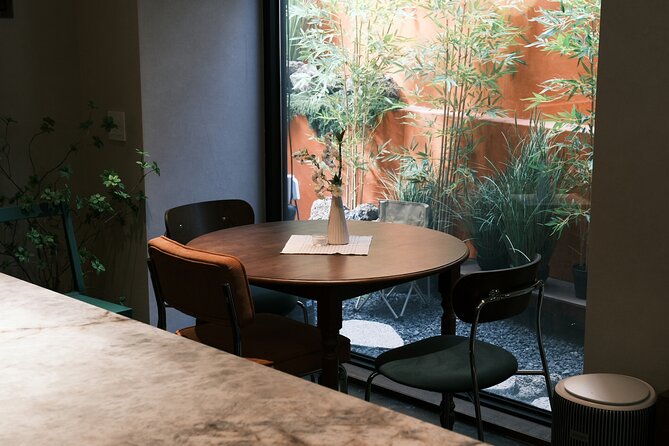
If there is one moment that feels like the payoff, it is plating your own bibimbap beautifully. The class is built around the idea that Korean meals are served all at once, not in courses spaced far apart. You will cook multiple components and then assemble and style your bowl for the table.
Bibimbap is more than rice with toppings. It is how you arrange textures and sauces so each bite works. In this class, you are not just eating it. You are deciding how your bibimbap looks and how it feels.
The practical value for you: you will leave with a mental map. You will understand what ingredients belong together, how sauce changes the whole bowl, and how plating affects appetite. When you make bibimbap later at home, this is the part that will actually help you.
And because the meal is designed to be shared, the plating also becomes social. Even if you are cooking solo, it becomes a table experience once you sit down.
The All-at-Once Korean Meal Rhythm (And Why It Works)
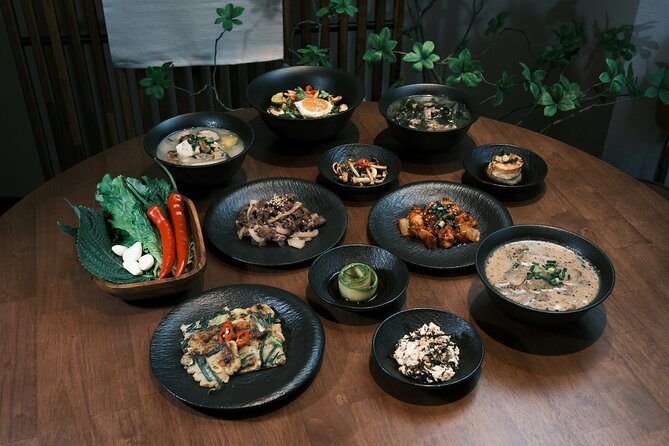
This class is designed around a very specific Korean dining rhythm: you make, then you eat everything together. That is different from many cooking classes where you eat one dish right away and the rest is packed away.
Here, the “all at once” structure shapes how you think about the food. Side dishes set the stage, the main and soup or stew anchor the meal, and bibimbap becomes the center you build around. Eating everything at the same time makes the flavors feel connected.
It also makes the timing smoother. You stay in the cooking experience, then transition into a shared meal without a long pause. For a 3-hour session, that matters. You do not waste the middle of the class waiting for the next part.
Chef-Served BBQ Pork Belly and a Taste of Traditional Liquor
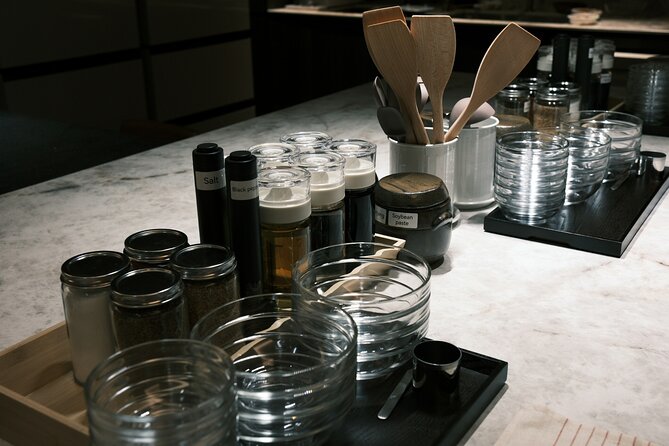
You do most of the cooking yourself, but there is one clear break in the workload: BBQ is handled by the chef. During the meal, grilled pork belly is served, and you get a taste of traditional liquor.
This part is worth noting for two reasons. First, it keeps the focus on you learning Korean home cooking while still giving you the joy of a proper grilling moment. Second, having the chef serve the BBQ helps ensure the meat is timed and cooked right, so you experience it at its best.
From the reviews, the instruction style is easy to follow, and the experience feels well organized. That likely contributes to why the BBQ moment lands well. You get a satisfying, richer centerpiece to the meal, without the class becoming overly complicated for a short session.
If you do not drink alcohol, the wording only says a taste is served. You can likely observe or skip, but the exact rules are not specified in the info you have. If alcohol is a concern, you will want to ask ahead when you book.
A Shared Korean Dessert to Finish the Table
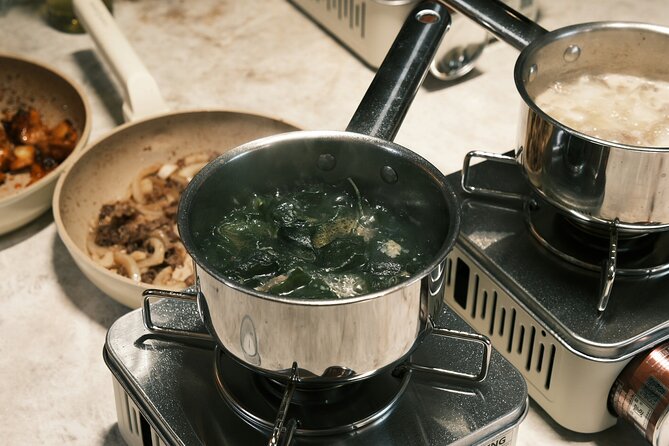
After you eat, the class doesn’t end with cleanup. You make a popular Korean dessert together. That shared dessert-making is a great way to extend the skills you learned earlier. Even when the main cooking is finished, you still get to practice Korean flavors and how a recipe comes together.
Dessert is also a morale boost. After a full meal with banchan, soup or stew, and bibimbap, many classes leave you tired. Ending with a group dessert moment keeps energy up and makes the whole thing feel complete.
What the Group Size and Timing Feel Like
This experience runs about 3 hours. It is long enough for true hands-on cooking, but not so long that you feel stuck in a marathon. With a maximum of eight travelers, you also avoid that chaotic class dynamic where everyone is waiting and you cannot concentrate.
The class uses a mobile ticket, so you do not need to print anything. It is also near public transportation, which matters in Seoul where neighborhoods can be tricky if you are relying only on taxis.
You should plan to show up a bit early. When a class is designed around a full table being served all at once, late arrivals can throw off the cooking flow. Since the info says confirmation is received at booking and timing is coordinated, the organizers seem to plan around your schedule.
Price, Value, and Why $89 Can Make Sense
At $89 per person, this class is not the cheapest way to do Korean food in Seoul. But it is also not a “small tasting” activity.
You are paying for:
- A full Korean meal that you help create, including side dishes and bibimbap plating
- Cooking time for four kinds of banchan plus a chosen main and soup or stew
- Chef-served grilled pork belly BBQ and a taste of traditional liquor
- A dessert-making session after the meal
- A guided studio experience in a Hanok-inspired space for a small group
If you break it down, $89 is roughly a high-quality meal plus instruction, not just one dish. And instruction here is practical. You do not leave with a list of restaurant names. You leave with steps, seasoning logic, and plating habits you can repeat.
Value is also about what you get to avoid. You are not spending your time hunting ingredients across markets, and you are not doing a commercial “see and taste” food tour. The focus is the cooking journey.
If you want a Korean meal experience that feels like home cooking, this price has a clearer match.
Who This Class Is Best For
This class is ideal if:
- You enjoy cooking and want a hands-on Korean table experience
- You want real Korean structure, banchan plus soup plus main plus bibimbap
- You like the idea of eating everything at once the way Koreans do
- You want small-group attention rather than a crowded show
It may not be ideal if:
- You prefer watching only, with minimal kitchen time
- You want a quick “taster” rather than a full meal and cooking workload
- You have limited tolerance for being actively involved for about 3 hours
Quick Practical Tips Before You Go
A few things will help you enjoy the class more:
- Come ready to cook, with comfortable clothes for standing and chopping.
- If you have strong dietary restrictions, ask before booking, because the menu includes multiple components.
- If you are sensitive to fermented flavors, know you will work with doenjang and gochujang, so decide based on your comfort level.
- If BBQ and a taste of traditional liquor are not your thing, you should clarify expectations when you book.
Should You Book This Korean Cooking Class in Seoul?
Yes, if your goal is a full Korean meal experience where you actually cook, plate, and eat as one table. The biggest reason to book is the structure: banchan plus chosen main and soup or stew, then bibimbap plating, plus chef BBQ and a dessert finish. That combination is rare for a short, small-group class.
You might skip it only if you want a light tasting tour or you do not want to cook beyond basic assembly. Otherwise, this is a strong choice for anyone who wants Seoul food to feel personal, not just sampled.
FAQ
How long is the Korean cooking class experience?
It lasts about 3 hours.
What is the price per person?
The price is $89.00 per person.
How many people are in a group?
The maximum group size is 8 travelers.
What do I cook during the class?
You make four kinds of Korean side dishes using seasonal vegetables, and you choose one main dish plus one soup or stew to cook based on your taste. You also plate bibimbap.
Is the BBQ cooked by you?
No. The chef serves grilled pork belly BBQ during the meal.
Do you serve dessert as part of the experience?
Yes. After eating, you enjoy making a popular Korean dessert together.
Where is the class located in Seoul?
The start point is Soop Table: Korean Cooking Class, Seoul, Mapo-gu, Donggyo-ro 46-gil, 34 1층, and the activity ends back at the meeting point.
More Seoul Write-Ups


More Grills and Local Tables


Back to the Kitchen in Seoul
Fresh on the Seoul pile
- Unique Native Experience : Han River Picnic, Board game, BBQ★ 5.0 · 3 reviews
- 2-Hour Private Kayaking and Paddleboarding Experience in Hanriver★ 5.0 · 3 reviews
- Korean Folk Village & Suwon Hwaseong Fortress Private Tour★ 5.0 · 3 reviews
- Seoul Korean BBQ Dinner Experience with Secret Food Tours★ 5.0 · 3 reviews
- Seoul Highlights & Hidden Gems – Private Tour with Photo Service★ 5.0 · 3 reviews
- Night Food Tour in Seoul with Traditional and Modern Cuisine★ 5.0 · 3 reviews
Korean Cooking Classes you might have missed.
 ★ 5.0Local Home Korean Cooking Class & Market Adventure in SeoulFrom $911,024 reviews
 ★ 5.0Master Korean traditional cooking with a Kimchi chefFrom $85385 reviews
 ★ 5.0Seoul: Korean Cooking Class at a Local Home and Market TourFrom $98348 reviews
 ★ 5.0Seoul: Korean Cooking at Seoul Cooking Club!From $109311 reviews
 ★ 5.0Korean Cooking at Seoul Cooking ClubFrom $109220 reviews
 ★ 5.0Experience Korean Cooking in Modern Hanok KitchenFrom $87118 reviews
 ★ 5.0Korean Cooking Class with Grocery Shopping at Seoul Local MarketFrom $91107 reviews
 ★ 5.0Korean Kimchi Making Day Experience with a Local Market TourFrom $8999 reviews
Where this tour also appears