
REVIEW · DMZ & BORDER TOURS
Seoul: DMZ Tour with Japanese-Speaking Guide
Two Koreas in one day trip.
This Seoul DMZ tour takes you right to the border story that shaped modern Korea, with stops like Imjingak Park and the 3rd Infiltration Tunnel, plus views from Dora Observatory when the weather cooperates. I also like that it is built for real-world pacing, about 7 to 8 hours with guided time at each key site, not a rushed highlight reel. One possible drawback: the military-run DMZ can change your plan, and visits like JSA are not included.
The tour is run in Japanese by a licensed guide, and that matters because the meaning is in the details, not just the scenery. If you are a mixed group, it helps that guides here have a habit of checking in and communicating clearly, even when guests are not using Japanese as a first language. If you are sensitive to steep walking or long days, note that the tunnel stop includes a steep slope and takes about 30 to 40 minutes round trip on foot.
You start with transfers from central Seoul, then move through the border zone sequence: Freedom Bridge, the tunnel, Dora, and finally a stop at Unification Village for peace-themed souvenirs. Bring your passport, and wear shoes that can handle uneven ground, because flip-flops and heels are strongly discouraged.
In This Review
- Key highlights you will remember from this DMZ day
- Entering the DMZ from Seoul: a day built around meaning, not speed
- A Japanese-speaking licensed guide, and why it changes everything
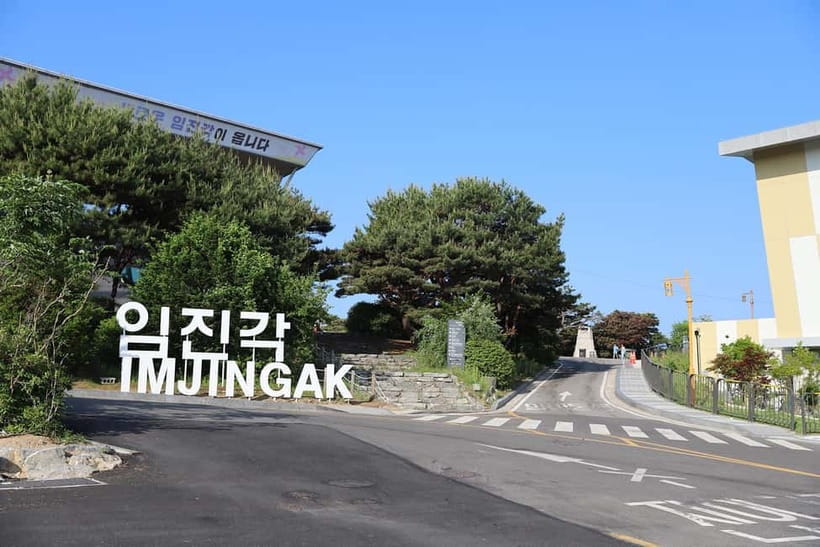
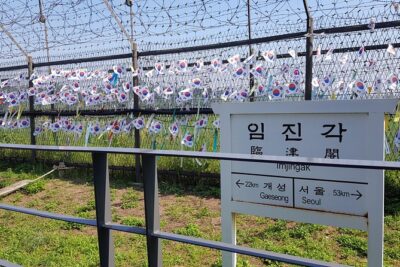
- The route starts with Imjingak Park: the tone-setting stop
- Freedom Bridge: where the repatriation story becomes visible
- The 3rd Infiltration Tunnel: the coolest part and the hardest walk
- Dora Observatory on Mountain Dora: views depend on weather
- Unification Village: peace-themed souvenirs and real shopping energy
- If the DMZ changes the plan: what you can still expect
- Price and logistics: is $50 worth it for a DMZ day?
- What to bring, what to avoid, and how to dress
- Who should book this Seoul DMZ tour with a Japanese guide
- Should you book this DMZ tour or choose another option?
- FAQ
- How long is the Seoul DMZ tour?
- What language is the guide?
- Do I need a passport for the DMZ tour?
- Is food included in the price?
- Is the Joint Security Area (JSA) included?
- Where will the tour finish in Seoul?
- Is there a difficult part of the tour?
- What happens if the military cancels or changes the itinerary?
Key highlights you will remember from this DMZ day
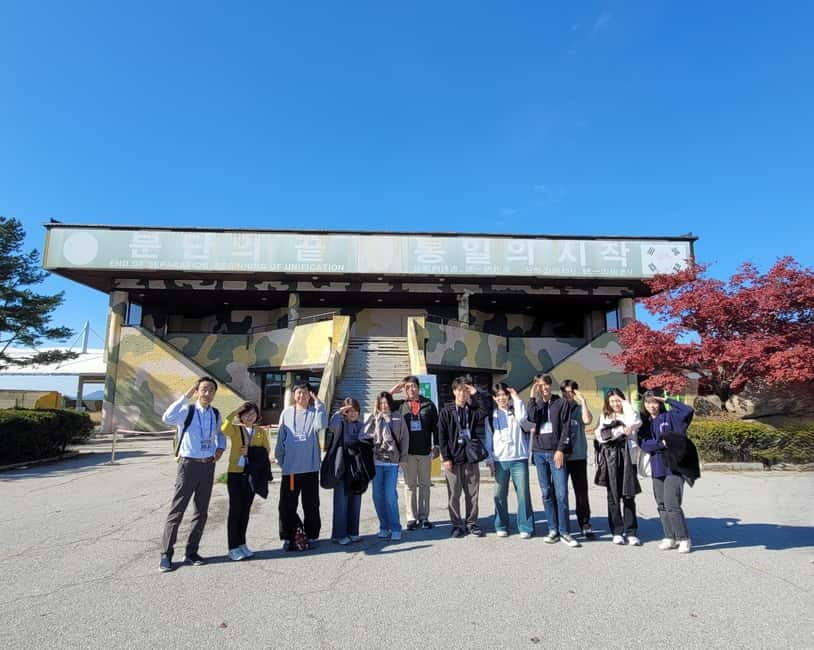
- Imjingak Park and the Freedom Bridge story: POW repatriation history tied to a specific crossing point
- Third Infiltration Tunnel on foot: you actually go inside and feel the scale, plus a cool break from heat
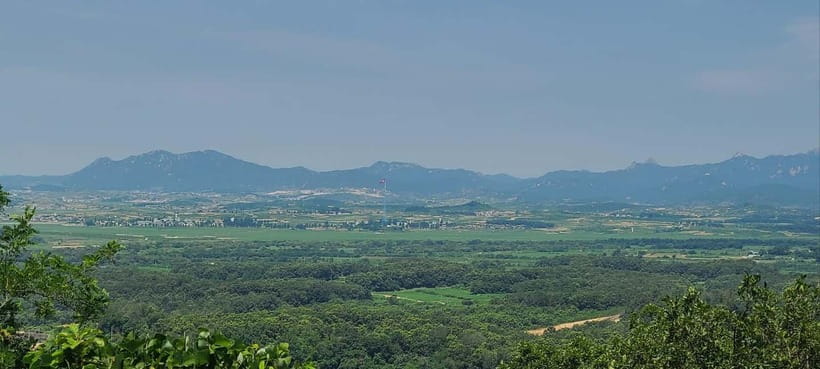
- Dora Observatory views from Mountain Dora: in good weather you can see toward North Korea without relying on the telescope
- Unification Village shopping with North-themed goods: peace and reconciliation items, sometimes including products associated with the North
- Japanese-language guidance with clarity: multiple guides on this route, like Hong Yuseon, Yun, and Park, are known for making the history understandable
- Weather and military regulation can reshape the day: you may visit alternative sites instead of a planned DMZ segment
Other routes to the border, side by side
Entering the DMZ from Seoul: a day built around meaning, not speed
This is the kind of tour where the schedule is the point. You are not just getting a photo of a fence line. You are walking through sites that explain how the Korean peninsula stayed divided after 1953, and why the DMZ became a permanent, visible boundary.
The timing is structured and human-sized. Expect about an hour of shared transfer by air-conditioned bus or minivan, then guided time across the key border stops, ending back in Seoul with a drop-off choice of either Myeongdong or City Hall station depending on what you select.
The vibe is serious, but the day is not only heavy. There is also a practical realism to it: you see memorial spaces, walk the tunnel, look out from Dora, and then you come back to normal city life for a souvenir stop that feels almost surreal after the border sites.
A Japanese-speaking licensed guide, and why it changes everything
In a DMZ context, language is more than convenience. It changes how well you follow the story: what you are seeing, why that location matters, and how the events connect from one stop to the next.
This tour runs with a live Japanese guide and it is described as licensed and professional. You may encounter guides such as Hong Yuseon, Yun, or Park based on past participants, and many guests highlight how clearly and interestingly the explanations are delivered. I like that focus on clarity, because DMZ history can sound confusing if you are handed facts without framing.
You also need to know what you are buying. This is not a private tour with guaranteed one-on-one pacing. It is shared transport and guided groups, so your best move is to listen closely in the bus and ask short questions when you get time.
The route starts with Imjingak Park: the tone-setting stop
Most people think the DMZ day begins at the border itself. Here, the first major guided block is Imjingak, about an hour. This is where you start to understand the human side of separation: the area around the DMZ became a place of remembrance and reflection, not just a transit point.
Why I recommend you treat Imjingak as the anchor stop: it gives you context before the day gets physically intense. Once you have the background, the later moments like Freedom Bridge and the tunnel feel less like random attractions and more like chapters.
A practical note for your body: after the transfer, do a quick mental reset. The rest of the day involves walking, stairs, and standing time for viewpoints.
Freedom Bridge: where the repatriation story becomes visible
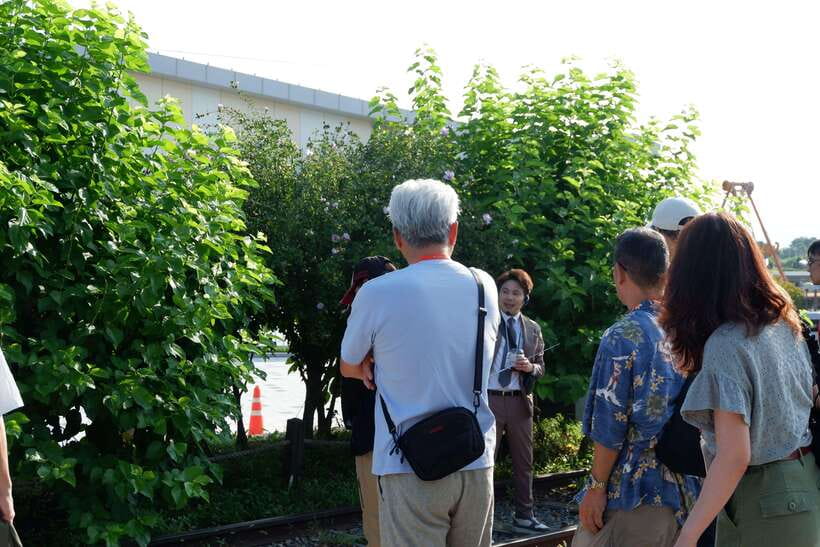
After Imjingak, you move to the Freedom Bridge, with guided time of about 30 minutes. The key detail here is not the bridge as architecture. It is the bridge as a historical function: it was used by prisoners of war who were repatriated from the North.
This stop helps you connect policy and history to something you can stand on and look at. Even if you know the broad outline, the bridge framing makes it harder to stay abstract, because you are seeing a specific crossing point tied to human movement.
If you care about photography, treat this like a place for fewer, more intentional shots. Spend the extra minute looking before you shoot. It is a short stop, so your best photos come from understanding what you are photographing, not just aiming at the biggest structure.
More days where a guide does the work in Seoul
- Seoul: Night Market Food Tour with Local Guide
★ 4.9 · 943 reviews - DMZ Guided Tour with Suspension Bridge / Gondola from Seoul
★ 5.0 · 876 reviews - Downtown Seoul Guided Food & Market Tour with 8+ Local Tastings
★ 5.0 · 580 reviews - Seoul: DMZ Guided Tour with Suspension Bridge and Gondola
★ 4.9 · 553 reviews - Flexible Private Guided Tour in Seoul (Optional Incheon Layover)
★ 5.0 · 323 reviews
The 3rd Infiltration Tunnel: the coolest part and the hardest walk
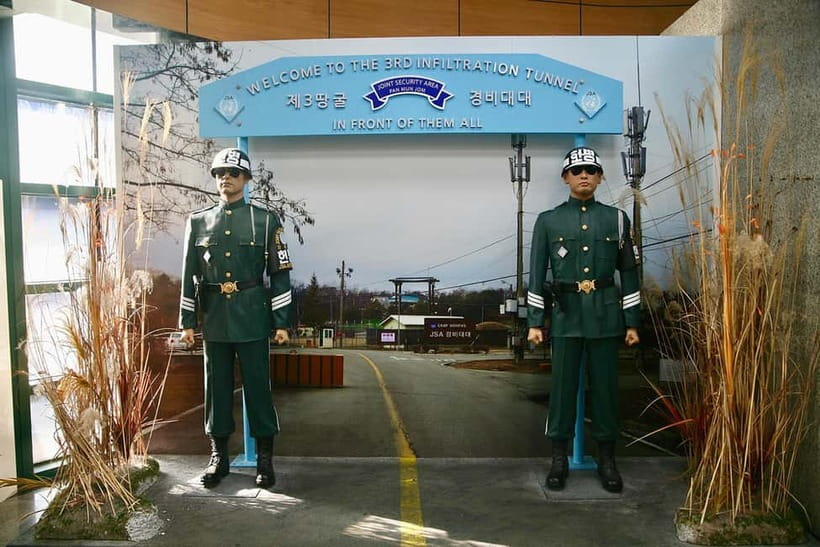
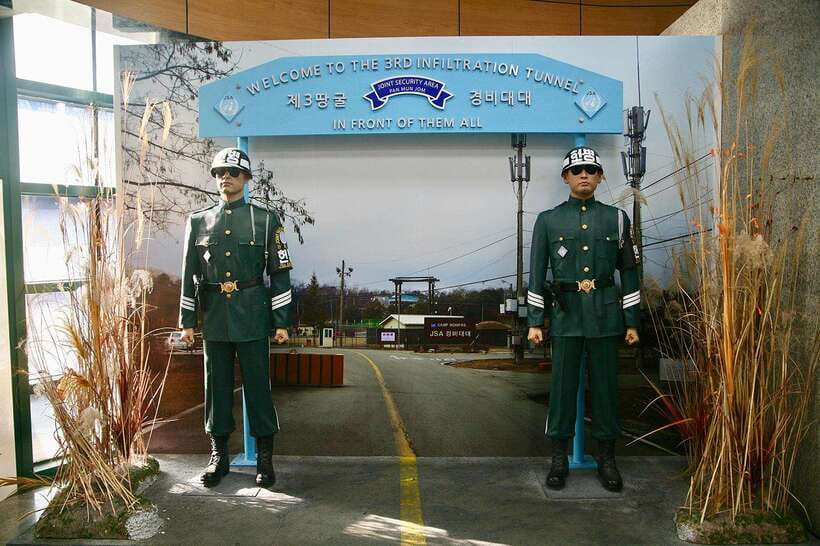
The tour’s most physically demanding stop is also the most memorable for many people: the 3rd Infiltration Tunnel of Aggression. You get about 40 minutes of guided time at this segment, and you go inside the tunnel on foot.
Here is what you should plan for realistically. The tunnel visit includes a steep slope, and the round trip on foot can take about 30 to 40 minutes. That is long enough to matter if you are traveling with kids, have limited mobility, or get tired easily. The good news is that you can often wait in front of the tunnel if you prefer not to go in. That option helps the day stay flexible.
I also like this stop for a simple reason: it gives your senses something history usually cannot. A tunnel changes how you perceive scale and proximity. You feel the confinement rather than only reading about it.
Heat note from practical experience on this type of outing: people often say the tunnel feels cooler than the outside, which can be a welcome break, especially in warmer months. Just remember, cooler air inside can still be followed by sun and walking outside, so dress in layers.
Who should be cautious? The tour is listed as not suitable for people with heart problems and wheelchair users. If you fall into those categories, it is better to choose a different DMZ option that matches your mobility needs.
Dora Observatory on Mountain Dora: views depend on weather
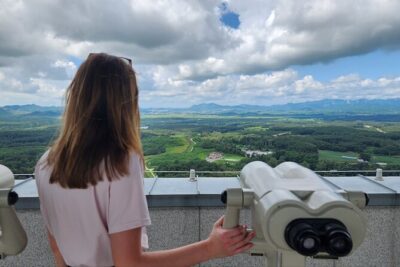
After the tunnel, you climb into the viewpoint phase. You go up the slopes of Mountain Dora for the Dora Observatory, with guided time about an hour.
This is where the DMZ becomes a visible geography problem. You are looking out across the divided area, including a 2.4-mile (4 km) stretch of the DMZ that has divided Korea since 1953.
The most useful detail is the weather factor. In good weather, you can see all the way to North Korea without using the observatory telescope. In other words, you are not fully dependent on a specific device to get the main effect, but clear conditions greatly improve what you can make out.
If you tend to get impatient waiting for views, this is your chance to slow down. Give yourself time to scan. The value here is not one quick look, it is comparing the visible features across the day’s explanation.
Unification Village: peace-themed souvenirs and real shopping energy
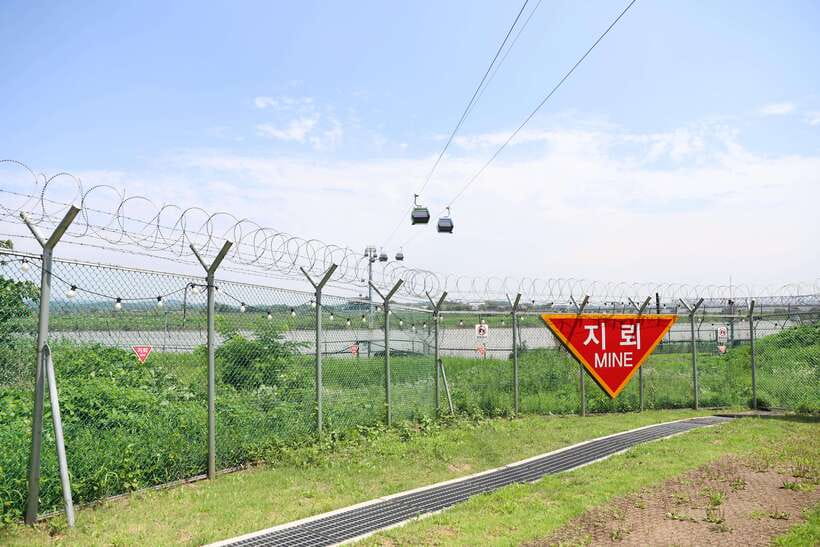
Once you are back on the surface and the border segment is complete, the tour heads to Unification Village, about 30 minutes. This stop is near the DMZ in South Korea and it is set up for souvenirs linked to peace and reconciliation.
What makes it interesting is the theme is not only symbolic. The shops often carry items with goods from North Korea too, which can make the shopping stop feel unusually connected to the bigger political story you just walked through.
A practical tip: this is your moment to buy snacks and small gifts before you return to Seoul. Do not treat it like a random retail stop. Treat it like a chance to bring home something that matches the day you experienced.
If the DMZ changes the plan: what you can still expect
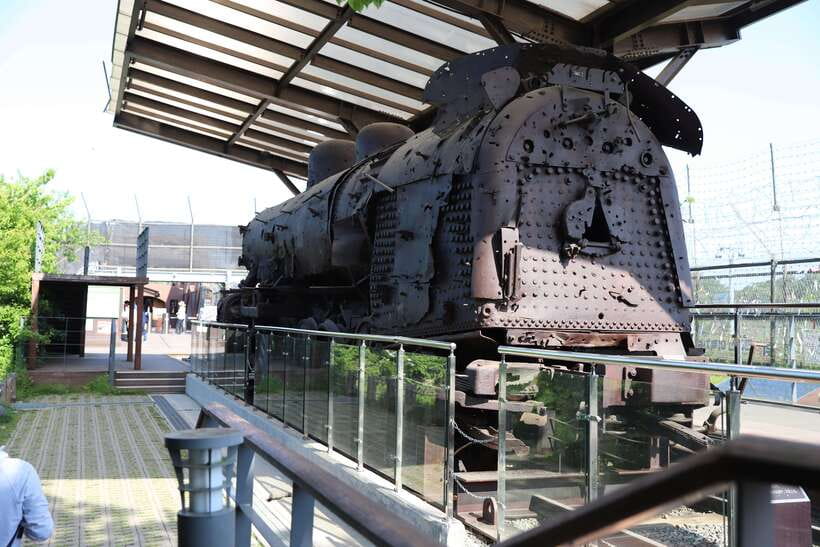
Because the DMZ is operated by the military, the itinerary can change without notice. You might not get every planned visit, and no refund is offered if the trip is canceled or altered. Instead, you may visit alternative stops such as Art Space BEAT 131, Odusan Unification Observatory, War Memorial of Korea, and still finish around City Hall or Myeongdong.
I like knowing this in advance because it helps you plan expectations. If you are booking with a flexible attitude, you can still end up with meaningful context and a solid day, even if one segment is adjusted.
The biggest takeaway is simple: arrive with a mindset that this is a controlled, government-run environment. Your itinerary is not fully in your hands.
Price and logistics: is $50 worth it for a DMZ day?
At $50 per person for a 7 to 8 hour tour, this price can feel like a bargain once you factor what is included. You get entrance fees, roundtrip shared transfer, a licensed professional DMZ guide, and transportation by air-conditioned bus or minivan.
Not included is also clear: food and drinks. That is pretty typical for Seoul day tours, but it is your responsibility to budget for a meal and water.
So is it value? For me, yes, if you want guided structure. A DIY DMZ day would cost you time, coordination, and likely frustration. Here, you are paying for a guided flow that connects the sites into a coherent story, plus transportation that keeps you from spending most of the day figuring out routes.
Also consider the language. This is Japanese. If you are comfortable with Japanese, you get full value. If you are not, you might still enjoy the visuals, but you will miss some nuance.
What to bring, what to avoid, and how to dress
This is one of those trips where small decisions matter. You need a passport. You should strongly avoid flip-flops, slippers, or shoes with heels, because the day involves uneven ground and walking up and down.
There are also firm rules. No intoxication, no smoking in the vehicle, and no alcohol or drugs. Unaccompanied minors are not allowed.
If you are traveling with a baby, infants under 24 months are free of charge, but no seat is provided. That can affect how comfortable the transfer will be, since it is shared transport.
Finally, keep an eye on your email the day before your tour date. Pickup time can change, and you are required to look for notices.
Who should book this Seoul DMZ tour with a Japanese guide
This tour fits best if you want a structured DMZ day and you care about understanding what you are seeing. The Japanese-language guide experience can make the history click, especially at stops like Freedom Bridge and the tunnel.
Book it if you:
- Want to see major DMZ-related sites like Imjingak, Freedom Bridge, the 3rd Infiltration Tunnel, Dora Observatory, and Unification Village in one go
- Prefer guided context over trying to self-navigate military-controlled areas
- Can handle a steep slope and a longer walk segment, or you are comfortable waiting in front of the tunnel instead of going inside
Skip it if you:
- Have heart problems or wheelchair needs, since the tour is listed as not suitable for those situations
- Know you cannot manage steep walking and sustained standing time
- Expect JSA or Panmunjom, because that visit is specifically not included
Should you book this DMZ tour or choose another option?
I would book it if your priority is a full DMZ day that balances big sights with guided explanation, and if you can travel comfortably in a group format. The inclusion of entrance fees, transport, and a licensed guide makes the price feel fair, and the route hits the big, most educational stops: Imjingak, Freedom Bridge, the tunnel, Dora, and Unification Village.
I would think twice if you need wheelchair access, have serious health constraints, or you want JSA included. Also, if you hate uncertainty, remember the DMZ can cancel or modify plans due to military and government regulations, and refunds are not offered for itinerary changes.
FAQ
How long is the Seoul DMZ tour?
The tour lasts about 7 to 8 hours, depending on conditions like timing and the number of tourists.
What language is the guide?
The live tour guide speaks Japanese.
Do I need a passport for the DMZ tour?
Yes. A passport is required.
Is food included in the price?
No. Food and drinks are not included.
Is the Joint Security Area (JSA) included?
No. A visit to JSA is not included.
Where will the tour finish in Seoul?
You will be dropped off at either Myeongdong or City Hall station, depending on your preference.
Is there a difficult part of the tour?
Yes. The 3rd Infiltration Tunnel has a steep slope and the round trip on foot takes about 30 to 40 minutes. It can be challenging for children and the elderly, and waiting in front of the tunnel may be possible.
What happens if the military cancels or changes the itinerary?
The trip may be canceled without prior notice, and there is no refund offered in that case. Instead, you may visit alternate places such as Imjingak, Art Space BEAT 131, Odusan Unification Observatory, and the War Memorial of Korea.
Keep Browsing Seoul
More Seoul Write-Ups
The Border, Other Routes In
Fresh on the Seoul pile
- Unique Native Experience : Han River Picnic, Board game, BBQ★ 5.0 · 3 reviews
- 2-Hour Private Kayaking and Paddleboarding Experience in Hanriver★ 5.0 · 3 reviews
- Korean Folk Village & Suwon Hwaseong Fortress Private Tour★ 5.0 · 3 reviews
- Seoul Korean BBQ Dinner Experience with Secret Food Tours★ 5.0 · 3 reviews
- Seoul Highlights & Hidden Gems – Private Tour with Photo Service★ 5.0 · 3 reviews
- Night Food Tour in Seoul with Traditional and Modern Cuisine★ 5.0 · 3 reviews
DMZ & Border Tours you might have missed.
 ★ 5.0Best DMZ Tour Korea from Seoul (Red Suspension Bridge Optional)From $2941,422 reviews
 ★ 5.0DMZ Tour: 3rd Tunnel, Option(Suspension Bridge, Boat) from SeoulFrom $3521,373 reviews
 ★ 5.0DMZ tour south Korea from Seoul (NK experience hall, defector)From $2620,599 reviews
 ★ 4.9DMZ Insider Tour: 3rd Tunnel, NK Defector Meet & Red BridgeFrom $5015,214 reviews
 ★ 4.8Seoul: DMZ Tour with Optional Suspension BridgeFrom $455,277 reviews
 ★ 5.0Signature DMZ Tour: Exclusive Defector Talk & Suspension BridgeFrom $274,459 reviews
 ★ 5.0Thrilling Korean DMZ 3rd Tunnel Tour from Seoul + Red Bridge RushFrom $353,097 reviews
 ★ 5.0DMZ Past and Present: Korean Demilitarized Zone Tour from SeoulFrom $372,481 reviews
Where this tour also appears