
REVIEW · HISTORICAL TOURS
Korean History & Heritage Tour
Palace to market in one long story. This private Gangbuk tour strings together royal Seoul, everyday Joseon life, and modern city flow into one efficient 7-hour circuit, with free hotel pickup and an air-conditioned ride between stops. I love the way the day is planned like a narrative, starting at Gyeongbokgung Palace and moving outward into museums, villages, temples, and street food. One thing to consider is that it’s a full day with short walks at several stops, and the Gyeongbokgung admission ticket is not included.
Good guiding matters on a day like this. Guides like Michael are praised for translating big historical ideas into practical, human details, while Judy is noted for being patient and kind during the walking portions. The route is also smart if you want an easy, car-assisted day in Gangbuk without juggling transit or timing.
In This Review
- Key highlights worth planning around
- Why the Gangbuk route tells the Joseon story in order
- Your 9:00 am plan and how the pickup keeps the day smooth
- Gyeongbokgung Palace and the changing of the guard
- National Folk Museum of Korea: life from birth to afterlife
- Bukchon Hanok Village and Insadong’s artist-and-antiques lane
- Jogyesa Temple and Cheonggyecheon: religion then a calmer walking reset
- Kwangjang Market street food, and how to shop smarter
- Price and value for a private up-to-6 group
- What could go wrong, and how to protect your day
- Who should book this Korean History and Heritage Tour
- Should you book this Korean History and Heritage Tour?
- FAQ
- What is the duration of the tour?
- What time does the tour start?
- Is this a private tour, and how many people are in a group?
- Does the tour include hotel pickup and drop-off?
- Are entrance tickets included?
- Is lunch included?
- Is there an extra charge for pickup outside Seoul?
- What is the cancellation policy?
Key highlights worth planning around
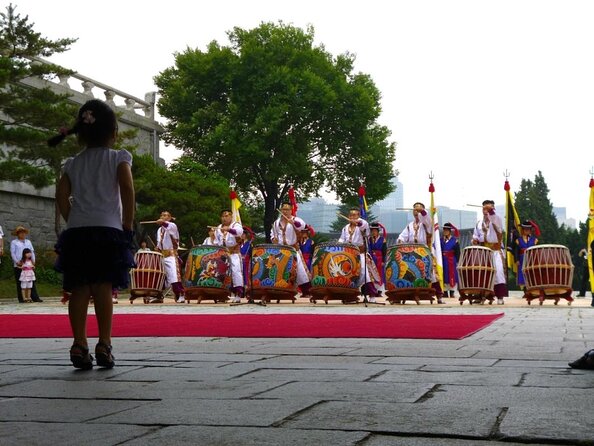
- Changing of the guard at Gyeongbokgung: a major palace moment, with time to appreciate the architecture
- National Folk Museum of Korea for daily life context: birth to death themes, with the afterlife also covered
- Bukchon Hanok Village, where people still live: quick look at traditional homes in a lived-in neighborhood
- Insadong art lane + antiques: see the area tied to royal-era artists, then browse souvenir alleys
- Jogyesa Temple plus Cheonggyecheon: religion, then a calmer walking break along the stream
- Kwangjang Market’s long food history: a 600-year market that evolved from linens to comfort street food carts
Other history-led days in Seoul
Why the Gangbuk route tells the Joseon story in order
This tour is built around one idea: you learn Seoul faster when you follow a sequence. You start with the palace, where power and court life were on display. Then you step into a museum that explains what life looked like for ordinary people across stages of existence. After that, you move through neighborhoods and cultural spaces that connect the royal world to craftsmen, religion, and everyday routines.
I like that you are not stuck in one type of stop. Instead of doing only palaces or only markets, you get a mix of architecture, storytelling, and real places where culture still happens. If you are the type of traveler who wants your photos to mean something, this order helps. You can feel the shift from court to community as you go.
You also get a practical benefit: Gangbuk can be spread out. An organized route means fewer detours and less time figuring out how to connect places by transit, especially when some stops are on foot and others require careful timing.
Your 9:00 am plan and how the pickup keeps the day smooth
The day starts at 9:00 am. You’ll get hotel pickup and drop-off included, with pickup offered free from anywhere in Seoul. That matters because Seoul’s traffic and walking distances can add up fast, and you are spending the day moving between very different areas.
The tour runs about 7 hours, and the listed time at stops totals roughly 4 hours. The rest of the time is what makes the day work: transit, short pauses, and the buffer you want when crowds or ceremony schedules affect how quickly you move.
You also get an air-conditioned vehicle, which is a real quality-of-life upgrade on a long sightseeing day. This is especially helpful if you are traveling with someone older, someone who walks slower, or you just do not want to turn your history tour into a cardio test.
Gyeongbokgung Palace and the changing of the guard
Your first major moment is Gyeongbokgung Palace, with the Changing of the Guard ceremony. The stop is scheduled for 45 minutes, and the admission ticket is not included, so you’ll want to budget for that extra cost.
What makes this stop worthwhile is not only the ceremony itself. You also get time to venture deeper into the palace and appreciate the architecture. That kind of guidance helps you notice patterns you might miss if you were wandering. You can also use this early start to get your bearings in a palace setting, before the day turns into smaller neighborhood scenes.
The main drawback is simple: palace days are always partly about timing. When a ceremony or crowd flow moves differently than expected, your 45 minutes can feel tight. If you are sensitive to crowds, go with flexible expectations and wear comfortable shoes.
National Folk Museum of Korea: life from birth to afterlife
Next comes the National Folk Museum of Korea, a stop designed to answer the question, What did people actually do and believe in earlier Korea? The museum time is about 30 minutes, and admission is listed as free.
You’ll talk about life stages, starting with birth and moving through daily life, death, and the afterlife themes. That structure is helpful because it connects the big Joseon-era worldview to something you can visualize. It’s also a smart contrast to the palace stop. Palaces can make history feel distant. Museums like this bring it back to human routines and belief systems.
The only caution is that 30 minutes is not enough to read everything. Instead, treat this as a guided “map” of the museum rather than a complete self-guided visit. If you love museums, you might later come back for a longer look on your own, but the short guided stop is exactly what keeps this day moving.
- Best DMZ Tour Korea from Seoul (Red Suspension Bridge Optional)
★ 5.0 · 41,422 reviews - DMZ Tour: 3rd Tunnel, Option(Suspension Bridge, Boat) from Seoul
★ 5.0 · 21,373 reviews - DMZ tour south Korea from Seoul (NK experience hall, defector)
★ 5.0 · 20,599 reviews - Seoul: DMZ Tour with Optional Suspension Bridge
★ 4.8 · 5,277 reviews - Signature DMZ Tour: Exclusive Defector Talk & Suspension Bridge
★ 5.0 · 4,459 reviews
Bukchon Hanok Village and Insadong’s artist-and-antiques lane
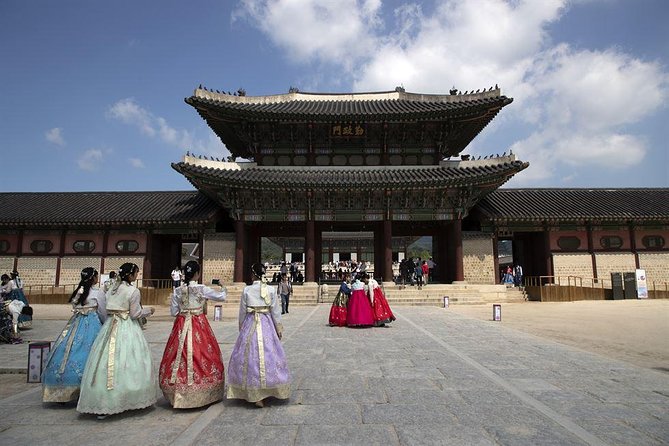
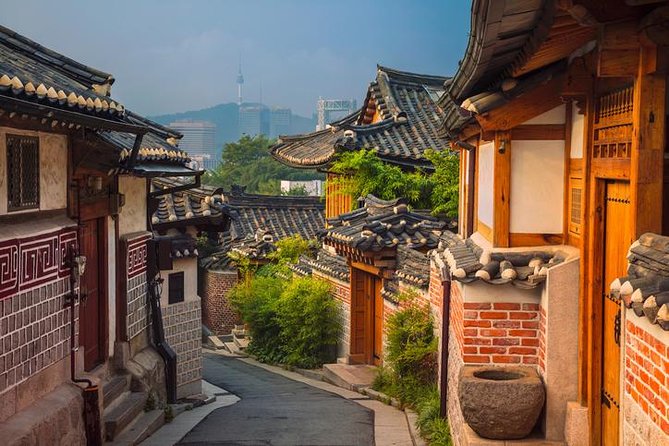
Bukchon Hanok Village is up next, with about 40 minutes on the schedule and admission listed as free. The key detail here is that people still live there. That changes the vibe. This is not a theme park of old houses. It’s a real neighborhood, so you’ll likely notice everyday life happening around traditional architecture.
After Bukchon, you head to Insadong for about 45 minutes, also listed as free. This stop connects to royal-era culture through the idea of a king’s guild commissioning artists and designers. Today it’s known for antique alleys, so you get a practical payoff: you can turn history talk into souvenir browsing without feeling like you are hunting.
A small consideration: both Bukchon and Insadong involve walking and crowds. If you want photos without too much jostling, aim to keep your pace steady and use your guide’s advice on where to stand.
Jogyesa Temple and Cheonggyecheon: religion then a calmer walking reset
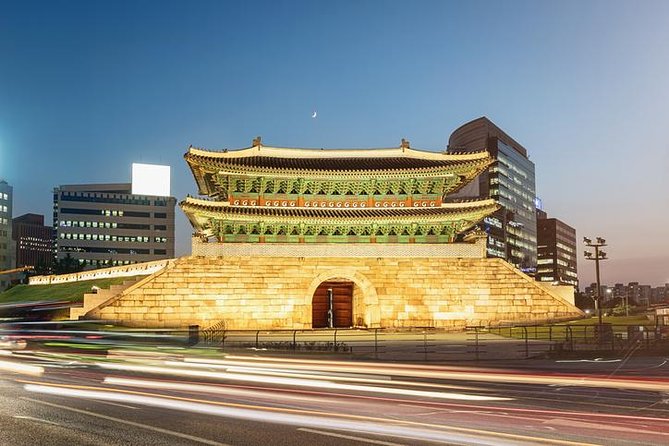
Jogyesa Temple is scheduled for about 20 minutes, free admission. The emphasis is on Buddhism as it used to be the national religion of the country. Even in a short visit, a guided stop here can help you understand the role of religious space in everyday life, not just as a tourist attraction.
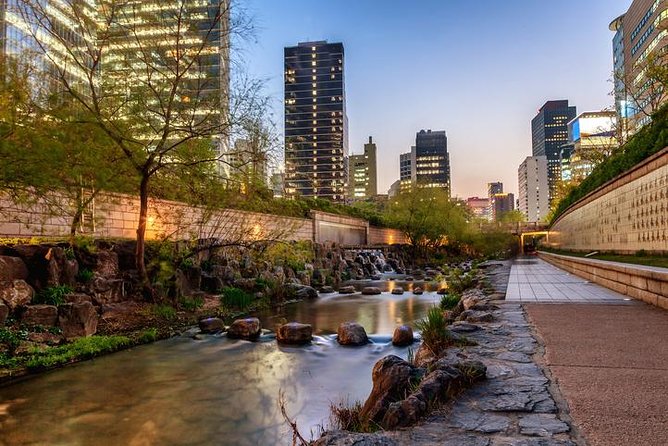
Then you shift gears to Cheonggyecheon Stream for about 30 minutes. This is a walk through the stream with stories behind it. I like this break in the middle of the day because it gives your brain a breather. After palaces, museums, and village streets, a quieter linear walk can reset your energy.
The only drawback with a short temple-plus-stream combo is that both are time-boxed. If either one is a top priority for you, you may want to add extra time after the tour ends. As written, though, this pairing helps keep the overall day balanced.
Kwangjang Market street food, and how to shop smarter
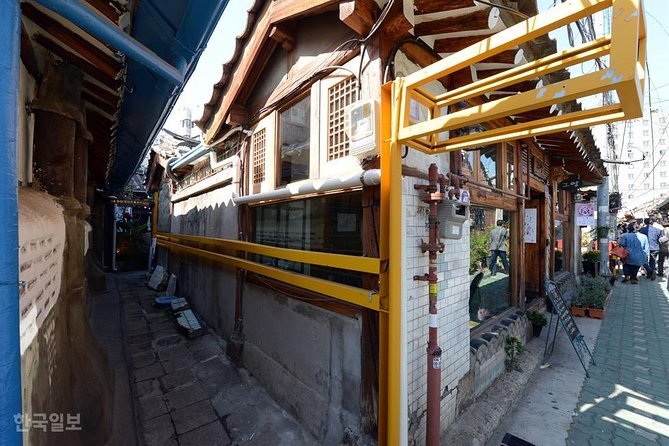
You end at Kwangjang Market for about 30 minutes. Admission is listed as free, but food is not included, so you’ll buy what you want on the spot.
This market’s appeal is its long timeline. It started out selling linens for special occasions, then reinvented itself into a place known for Korean comfort street food carts. That evolution matters because it explains why the market feels both traditional and practical. You are eating in a space with history, but the experience is centered on current tastes.
With only 30 minutes, the best approach is to plan how you want to use it. If you are a first-timer, pick one or two items rather than trying to sample everything. If you are a repeat Korea visitor, you can use the stop to find specific stalls your guide recommends, then return later with a fuller plan.
There’s another benefit here. Markets can be chaotic for independent navigation. A guide helps you cut through the noise, so you get food without spending your limited time wandering and translating every sign.
Price and value for a private up-to-6 group
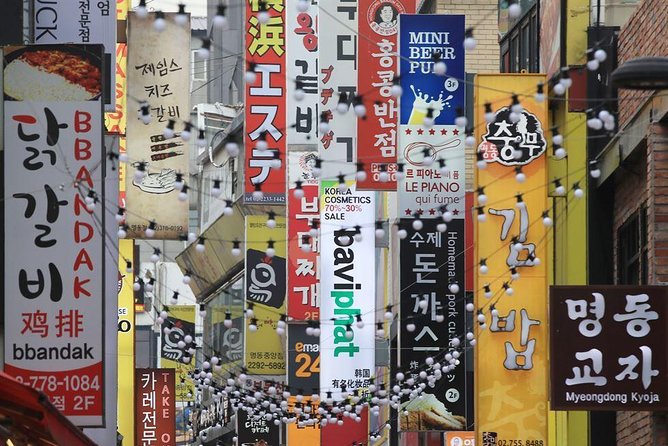
The price is $475 per group, up to 6 people, for the full-day tour. That is a private setup, not per-person pricing, so the value depends on your group size.
If you can fill the group, the cost per person drops to roughly $79. If you’re traveling as a couple, you’ll pay more per person since you are splitting one group price. In that case, you are really paying for time savings and a guided sequence across multiple neighborhoods.
What you get for that price is not just sightseeing. You get:
- free pickup and drop-off around Seoul
- an air-conditioned vehicle for moving between stops
- a focused route that reduces your planning stress
- admission planning, where most museum and neighborhood stops are listed as free, with only Gyeongbokgung requiring an admission ticket
The smart way to think about the price is this: if you would otherwise spend hours coordinating transit, buying separate tickets, and figuring out how to connect Gangbuk sites, a private car and a guide can feel like “insurance” against wasted time.
What could go wrong, and how to protect your day
Most feedback points to a smooth, enjoyable day, but I think it’s smart to acknowledge risk. One negative account described a guide labeled YT Kim being unprofessional and turning a private car tour into more of a walking-focused experience, including parking the vehicle far away after an initial stop. That’s not the standard you want.
You can’t eliminate all risk, but you can reduce it. Before you go, confirm your pickup location and ask the provider to restate that the air-conditioned vehicle will be used between stops. During the tour, pay attention to whether the car is actually part of the plan, not just a backup. If something feels off early, address it right away, while you still have time to adjust.
Who should book this Korean History and Heritage Tour
This is best for travelers who want a single day in Seoul that connects the dots. If you like context, you’ll appreciate the structure that moves from palace to folk life, then to neighborhood craft and food. It’s also ideal if you prefer having someone handle route flow, especially when you are trying to see a lot without turning the day into logistics.
It can also fit families and most travelers because it’s a guided private experience with planned short stop times. Service animals are allowed, which is useful to know if you travel with one.
If you hate walking crowds, or you only want museum time and hate markets, you might feel a bit time-boxed. This tour is intentionally varied, so it’s not a “slow and deep” single-theme day. It’s a smart day, not a lazy one.
Should you book this Korean History and Heritage Tour?
I’d book it if your priority is a well-paced day that covers the biggest Gangbuk-style cultural hits, with transportation handled and free stop admissions sprinkled in. The combination of Gyeongbokgung’s ceremony, the National Folk Museum’s life-cycle framing, Bukchon’s lived-in hanok view, and a real market food ending is a strong mix.
Skip or at least think twice if you are extremely sensitive to crowd timing, or if you want long museum readings and zero movement. Also, if you are a solo traveler, the private-group price will feel steep, since the cost is per group, not per person.
If you do book, do one simple thing: wear comfortable shoes and set expectations that this is a packed but guided route. The payoff is that you’ll leave with more than photos, you’ll understand how palace power, everyday life, religion, and street culture connect.
FAQ
What is the duration of the tour?
The tour lasts about 7 hours.
What time does the tour start?
The start time is 9:00 am.
Is this a private tour, and how many people are in a group?
Yes, it is a private tour/activity. Only your group participates, and the group size is up to 6.
Does the tour include hotel pickup and drop-off?
Yes. Hotel pickup and drop-off are provided free of charge from anywhere in Seoul.
Are entrance tickets included?
Gyeongbokgung Palace admission is not included. Other stops listed as free include the National Folk Museum of Korea, Bukchon Hanok Village, Insadong, Jogyesa Temple, and Cheonggyecheon Stream. The Kwangjang Market stop is also listed as free.
Is lunch included?
No, lunch is not included.
Is there an extra charge for pickup outside Seoul?
Pickups outside of Seoul but within Gyeonggi Province add a $50 surcharge.
What is the cancellation policy?
You can cancel for a full refund up to 24 hours before the experience’s start time. If you cancel less than 24 hours before, you will not receive a refund.
History-Led Days in Seoul

Keep Browsing Seoul
More Seoul Write-Ups
Fresh on the Seoul pile
- Unique Native Experience : Han River Picnic, Board game, BBQ★ 5.0 · 3 reviews
- 2-Hour Private Kayaking and Paddleboarding Experience in Hanriver★ 5.0 · 3 reviews
- Korean Folk Village & Suwon Hwaseong Fortress Private Tour★ 5.0 · 3 reviews
- Seoul Korean BBQ Dinner Experience with Secret Food Tours★ 5.0 · 3 reviews
- Seoul Highlights & Hidden Gems – Private Tour with Photo Service★ 5.0 · 3 reviews
- Night Food Tour in Seoul with Traditional and Modern Cuisine★ 5.0 · 3 reviews
Historical Tours you might have missed.
 ★ 4.8From Busan: Gyeongju UNESCO World Heritage Guided Day TourFrom $521,250 reviews
 ★ 5.0Gyeongju UNESCO World Heritage Guided Day Tour from BusanFrom $57660 reviews
 ★ 5.0Seoul: Evening Dark History, Folklore & Ghost Story Walking TourFrom $42593 reviews
 ★ 5.0Old Korea Thousand History Tour of Gyeongju from BusanFrom $64518 reviews
 ★ 5.0Hanbok Photoshoot and History Tour at Gyeongbokgung PalaceFrom $60276 reviews
 ★ 4.9From Seoul: Dae Jang Geum Park Historic K-Drama Set TourFrom $55143 reviews
 ★ 4.8Gyeongju: UNESCO Heritage Tour Including Bulguksa TempleFrom $189104 reviews
 ★ 5.0Gyeongju UNESCO World Heritage Sites and History Full-Day Tour with LunchFrom $189104 reviews
Where this tour also appears