
REVIEW · DMZ & BORDER TOURS
DMZ Tour, 2nd Tunnel & UNESCO Suspension Bridge Tour from Seoul
Cold concrete history and then blue sky views.
This DMZ tour pairs the heavy subject matter of the 2nd Tunnel with calmer nature stops at Hantangang Geopark. I also like that the day runs with a tight flow, plus a pro English guide named Leo who kept the story clear and practical. The main drawback is simple: it is a long haul, and the experience depends on good weather, so plan for a big day outdoors and in a vehicle.
You also need to be okay with standing and walking on uneven terrain at points, since the tour includes tunnel time plus viewpoints and cliffside paths. Still, at $87, you get a full day’s transport, entry tickets where noted, and an air-conditioned ride, which makes this one of the more straightforward ways to see a lot without juggling details.
In This Review
- Key things to know before you go
- DMZ Tour, 2nd Tunnel, and Hantangang day trip: what you’re really buying for $87
- Starting at Myeong-dong: an early start that sets the tone
- Korean Workers’ Party Headquarters: context before the tunnel
- The 2nd Tunnel: going 50 to 160 meters underground is the point
- What you might notice inside and around the tunnel
- Physical comfort note
- Cheorwon Peace Observatory: a break from outside, with a different kind of seeing
- Woljeongri Station and the Iron Triangle area: the last step before DMZ access feels close
- Hantangang Geopark and the UNESCO Sky Bridge: where the day turns scenic
- The geology angle you’ll actually feel
- Bidulginang Waterfalls: short, easy, and tied to a dove legend
- Lunch isn’t included, so eat strategically before you run out of steam
- How the schedule holds up: a long day with real pacing
- Best for who? When this DMZ and UNESCO combo makes the most sense
- Weather matters more than you think
- Should you book this DMZ Tour with the 2nd Tunnel and UNESCO Sky Bridge?
- FAQ
- What is the duration of this DMZ and UNESCO tour?
- Where does the tour start and end?
- What stops are included?
- Is lunch included in the price?
- Do I need a certain fitness level?
- Is the tour affected by weather?
Key things to know before you go
- 500 m of tunnel access lets you experience the scale of the 2nd Tunnel without having to traverse the whole underground passage
- 50 to 160 m below ground means you will feel the atmosphere change fast once you step inside
- Cheorwon Peace Observatory adds perspective beyond military sites, with indoor viewing space
- Hantangang Sky Bridge ties a famous TV location to real river-and-geology views
- Bidulginang Waterfalls are short, easy time, and the dove story gives the stop a human touch
- Max group size up to 80 keeps it organized, but it is still a group day, not a private pace
Other routes to the border, side by side
DMZ Tour, 2nd Tunnel, and Hantangang day trip: what you’re really buying for $87
At $87 per person, this feels like one of those deals that works because it bundles the hard parts. You get hotel pickup, an air-conditioned vehicle, a professional English-speaking guide, and entry tickets for the stops that charge. You also get a full, long day route, not just one quick sightseeing stop.
The trade-off is time. The tour runs about 11 to 13 hours, and the round trip drive from Seoul is roughly 4 to 5 hours. If you like big days and want variety in one shot, that is a win. If you hate being on a bus, you might find this stretches your patience.
Starting at Myeong-dong: an early start that sets the tone
You begin at Myeong-dong Station at 7:00 am, then return to the same meeting point. That early departure matters because the DMZ day does not move like city sightseeing. It is a slow-and-steady route where timing, access, and the overall schedule all depend on conditions out on the route.
Because it is a group tour with up to 80 people, the rhythm is: listen, move, wait a bit, then settle into the next stop. Plan your morning like you would for a long excursion, not like a relaxed brunch crawl. Bring a water bottle, and wear shoes you trust on paths that may be slippery or uneven.
Korean Workers’ Party Headquarters: context before the tunnel
The first stop is the Korean Workers’ Party Headquarters. The origins of the building are unclear, with records pointing to it being built in early 1946, before the establishment of the Workers’ Party of North Korea. That timing detail is useful because it frames the DMZ story as something that formed long before today’s borders became familiar to most visitors.
This stop lasts about 30 minutes. It is not where you get the big visual payoff, but it helps you understand why guides emphasize dates and structures as part of the larger narrative. If you usually skip the “intro” stop on group tours, don’t here. It makes the next location hit harder and make more sense.
The 2nd Tunnel: going 50 to 160 meters underground is the point
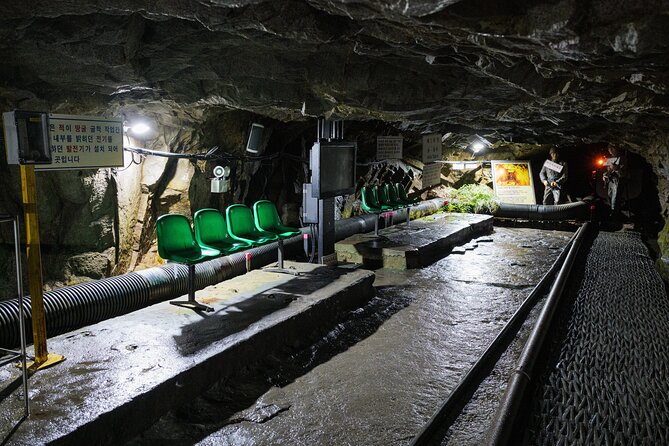
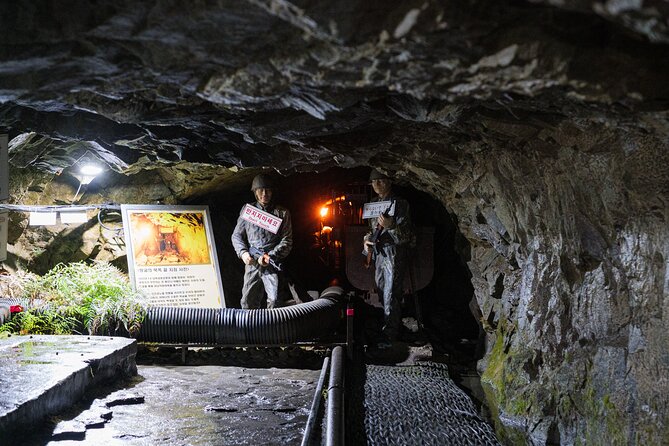
The main event is the 2nd Tunnel, an underground passage discovered in March 1975. It stretches about 3.5 kilometers long and sits roughly 50 to 160 meters below the surface. The tunnel’s dimensions are part of the story too: about 2.1 meters wide, around 2 meters high, and engineered as a serious infiltration route.
You will not walk the full tunnel. Instead, you explore about 500 meters of the accessible length near the nearest southern limit line. That limited access matters for practical reasons, and it also helps you manage how intense the setting feels. Half a kilometer down there is still enough to change your perspective.
More high crossings in Seoul
- Signature DMZ Tour: Exclusive Defector Talk & Suspension Bridge
★ 5.0 · 4,459 reviews - Ultimate Korea DMZ Tour from Seoul (Gondola & Suspension Bridge)
★ 5.0 · 2,396 reviews - DMZ; NK Defector, 3rd Tunnel, Suspension Bridge,Hotel pickup
★ 4.9 · 2,055 reviews - DMZ Tour w/ North Korea Experience Hall & Opt. Suspension Bridge
★ 5.0 · 1,724 reviews - Small Group Tour to DMZ & Suspension Bridge with Hotel Pickup
★ 5.0 · 1,568 reviews
What you might notice inside and around the tunnel
The tour description focuses on more than military facts. You also hear about the geology and the way views shift as the ground structure changes. There is mention of granite formations thought to be around 110 million years old, covered by basalt lava flows and later eroded into asymmetrical natural views. Near guard-post areas, you get a contrast between harsh engineering and lush greenery.
You also learn the tunnel was designed to handle large-scale movement, with an oft-cited idea that tens of thousands of armed troops could infiltrate in an hour using vehicles, artillery pieces, and even tanks. Whether you focus on the scale or on the engineering, this is the kind of stop where your brain starts doing size calculations automatically.
Physical comfort note
The tunnel stop is about 1 hour 30 minutes including visiting time. Since your tour expects moderate physical fitness, dress for comfort and movement. You are dealing with stairs or ramps in many underground settings, and even if you do not see the full tunnel, the environment can feel cooler or enclosed compared to the surface.
Cheorwon Peace Observatory: a break from outside, with a different kind of seeing
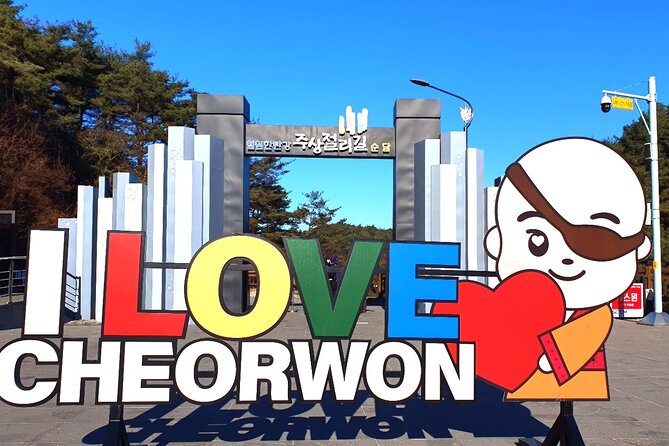
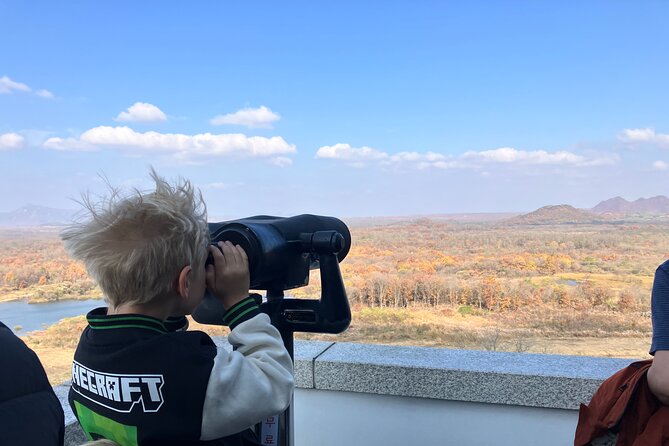
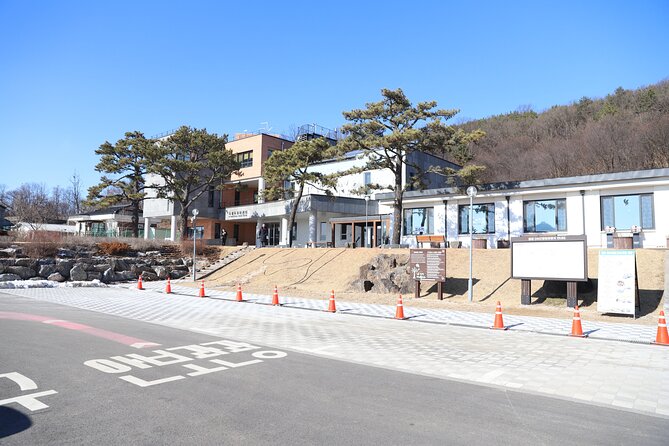
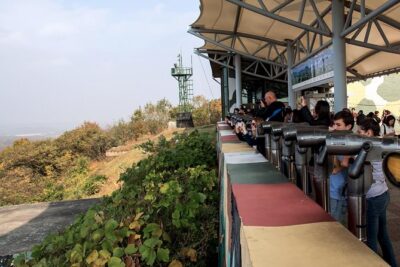
After the tunnel, the day shifts to the Cheorwon Peace Observatory, which opened in November 2007. It has three stories plus a basement, and the design supports both information and observation. The first floor is an exhibition space, and the second floor is where you can observe from inside, which helps when weather turns.
This stop runs about 1 hour. I like it because it changes the format: instead of moving through locations, you get time to absorb what you saw and connect it to a broader view of the area. If you felt tunnel fatigue, indoor observation is a smart reset.
The value here is not just the building itself. It is the transition from underground scale back to distance and positioning. You start to picture borders as lived space, not just lines on maps.
Woljeongri Station and the Iron Triangle area: the last step before DMZ access feels close
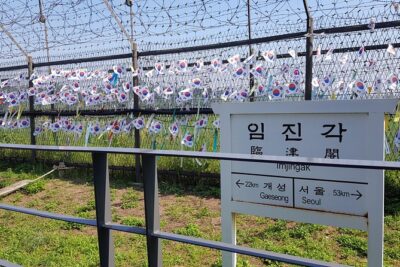
Next comes Woljeongri Station, also associated with the Iron Triangle Battlefield. It is described as the last stop before reaching the DMZ, which is the kind of phrasing that makes you pay attention. There is signage on-site and remnants of a train setup used for frequent trips toward the northern area of the front.
This is only about 30 minutes, but it is a good tempo shift. You are back to surfaces, not underground or strictly indoor viewing. I find stops like this useful because they remind you that rail, roads, and logistics were part of how conflict unfolded, not just soldiers and weapons.
If you are someone who likes taking photos, be mindful that you are in a sensitive area. The goal is to watch, listen, and respect the setting, not to treat it like an urban landmark.
Hantangang Geopark and the UNESCO Sky Bridge: where the day turns scenic
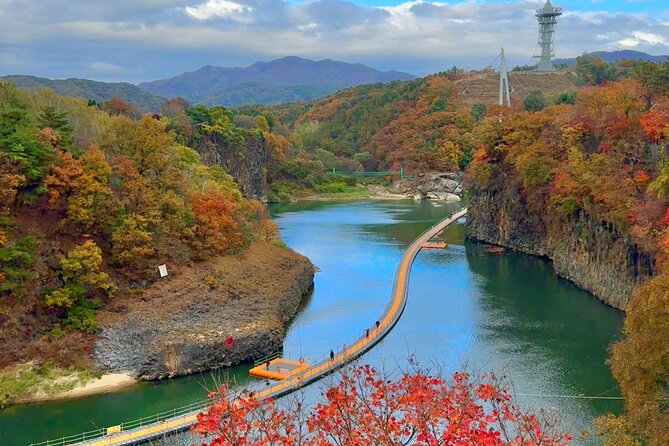
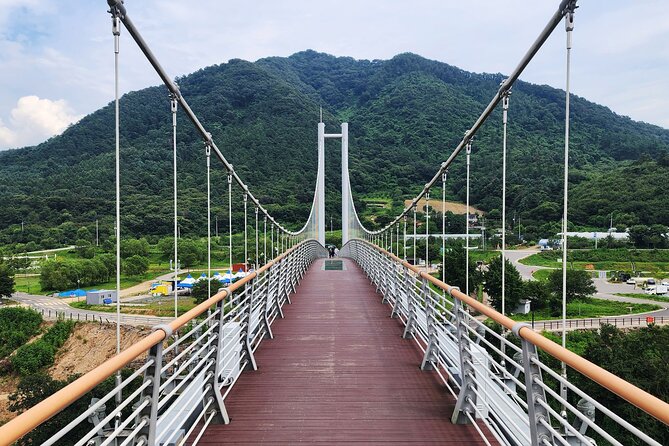
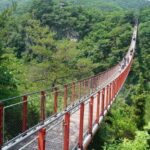
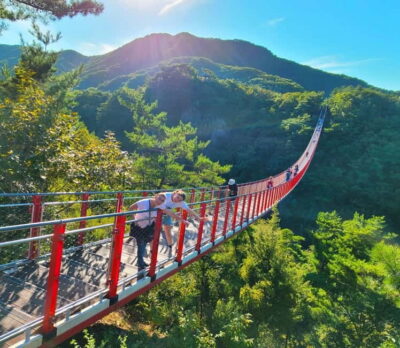
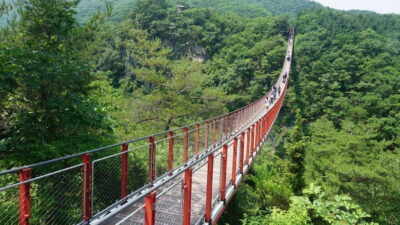
Then the tour pivots to nature and views with the Hantangang stop. You visit the Sky Bridge, a suspension bridge that became widely known through the drama Crash Landing on You. This is the kind of connection that helps many visitors stay engaged, even after the DMZ content.
The official stop time is about 30 minutes. You also get views tied to the Hantangang Geopark area, which is part of why this day is worth doing as a package. It is not all heavy history back-to-back. The geography talk and the river-and-bridge scenery reset your eyes and your mood.
The geology angle you’ll actually feel
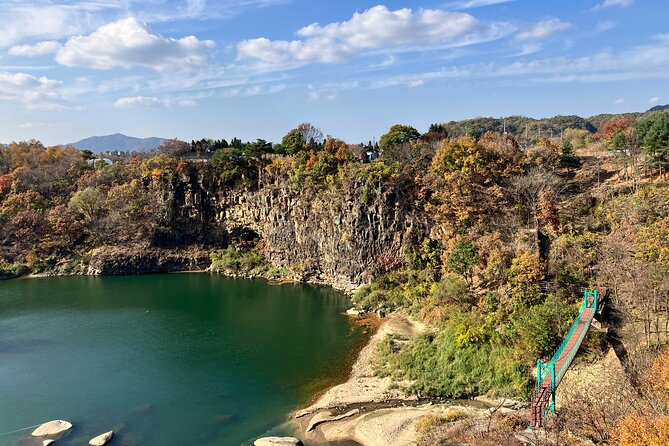
Earlier, the tunnel section includes a lot of geology detail, and here that theme continues. There is a description of columnar jointing formations and cliffside paths around 30 to 40 meters high, linked to an UNESCO global geopark stretch. Even if you do not remember every number, you end up with a stronger sense that the region’s shape is part of the story, not just a backdrop.
Bidulginang Waterfalls: short, easy, and tied to a dove legend
The final main nature stop is Bidulginang Waterfalls. This one is only about 20 minutes, which makes it a nice end-of-day moment when you still have energy but your brain is done with long speeches.
The name is explained as coming from a Korean word meaning nest, connected to the story of hundreds of white doves that once nested in a cave behind the waterfall. That is the sort of legend that makes a small stop feel warmer and more human. It turns a quick scenic pause into something you can remember later.
Lunch isn’t included, so eat strategically before you run out of steam
Lunch is not included in the tour price. That matters because the day runs long, and you will be hungry by the time you reach the later stops. In my case, my guide Leo worked around this with local food, taking us to a restaurant for lunch that ended up being one of the best Korean meals of the whole trip.
That is not something you should assume will happen for every group, but it is a good sign about how your guide may handle the practical needs of the day. Either way, plan to buy lunch during the open time, or eat something light before 7:00 am if you are prone to early hunger.
How the schedule holds up: a long day with real pacing
This is an all-day route with multiple segments, each designed for a different type of attention:
- a context-building stop at the start
- the tunnel as the emotional and physical centerpiece
- indoor observation at the observatory
- an on-the-ground frontier remnant stop
- scenic and geology-based DMZ-adjacent nature time
- a short waterfall stop to close strong
The biggest challenge is simply endurance. You are in a vehicle for a big chunk of the day, and then you stand and walk between viewing points. The tour does provide air-conditioned transport, and it asks for moderate fitness, not extreme hiking readiness. Still, bring water, wear practical shoes, and treat this as a full-day commitment.
Best for who? When this DMZ and UNESCO combo makes the most sense
I think this tour is a great fit if you:
- want a guided DMZ experience without arranging multiple separate trips
- care about both political history and physical geography
- like your day to move, with stops that change tone
- prefer professional English explanations over reading alone
It may not be the best match if you:
- get restless on long drives
- hate enclosed spaces, since the tunnel is underground
- struggle with long days that depend on weather
Because the maximum group size is up to 80, it is organized for efficiency, not for personalized pace. It is still a group day, but with a guide who can keep the information flowing.
Weather matters more than you think
The tour requires good weather. If it is canceled due to poor weather, you are offered a different date or a full refund. That is important because many stops depend on outdoor viewing and safe walking paths.
Check the forecast the day before and the morning of your tour. If you pack for layers and wind, you will handle the temperature shifts better, especially when the day moves from vehicle to tunnel to viewpoints.
Should you book this DMZ Tour with the 2nd Tunnel and UNESCO Sky Bridge?
I’d book it if you want one structured day that covers the biggest DMZ-adjacent highlights plus a satisfying nature finish. The combination of the 2nd Tunnel and the Hantangang Sky Bridge gives you two very different kinds of memory, heavy and scenic, in one itinerary. With a guide like Leo, the day also feels easier to follow because you get clear storytelling instead of chaotic guesswork.
Skip it if you want a short outing, a totally relaxed pace, or you know you are sensitive to long drives and underground spaces. This is meant for people who are ready for an 11 to 13 hour day with real movement and real context.
If you match that mindset, you will likely feel like the time and price were justified.
FAQ
What is the duration of this DMZ and UNESCO tour?
The tour runs about 11 to 13 hours, including travel time. The round trip drive by vehicle from Seoul is around 4 to 5 hours.
Where does the tour start and end?
It starts at Myeong-dong Station in Seoul at 7:00 am and ends back at Myeong-dong Station.
What stops are included?
The tour includes the Korean Workers’ Party Headquarters, the 2nd Tunnel, Cheorwon Peace Observatory, Woljeongri Station (Iron Triangle Battlefield), Hantangang Tour with the Sky Bridge, and Bidulginang Waterfalls.
Is lunch included in the price?
No, lunch is not included.
Do I need a certain fitness level?
The tour suggests a moderate physical fitness level.
Is the tour affected by weather?
Yes. The experience requires good weather. If canceled due to poor weather, you will be offered a different date or a full refund.
More Listed Sites in Seoul
More Bridges Worth the Nerve
The Border, Other Routes In
Fresh on the Seoul pile
- Unique Native Experience : Han River Picnic, Board game, BBQ★ 5.0 · 3 reviews
- 2-Hour Private Kayaking and Paddleboarding Experience in Hanriver★ 5.0 · 3 reviews
- Korean Folk Village & Suwon Hwaseong Fortress Private Tour★ 5.0 · 3 reviews
- Seoul Korean BBQ Dinner Experience with Secret Food Tours★ 5.0 · 3 reviews
- Seoul Highlights & Hidden Gems – Private Tour with Photo Service★ 5.0 · 3 reviews
- Night Food Tour in Seoul with Traditional and Modern Cuisine★ 5.0 · 3 reviews
DMZ & Border Tours you might have missed.
 ★ 5.0Best DMZ Tour Korea from Seoul (Red Suspension Bridge Optional)From $2941,422 reviews
 ★ 5.0DMZ Tour: 3rd Tunnel, Option(Suspension Bridge, Boat) from SeoulFrom $3521,373 reviews
 ★ 5.0DMZ tour south Korea from Seoul (NK experience hall, defector)From $2620,599 reviews
 ★ 4.9DMZ Insider Tour: 3rd Tunnel, NK Defector Meet & Red BridgeFrom $5015,214 reviews
 ★ 4.8Seoul: DMZ Tour with Optional Suspension BridgeFrom $455,277 reviews
 ★ 5.0Signature DMZ Tour: Exclusive Defector Talk & Suspension BridgeFrom $274,459 reviews
 ★ 5.0Thrilling Korean DMZ 3rd Tunnel Tour from Seoul + Red Bridge RushFrom $353,097 reviews
 ★ 5.0DMZ Past and Present: Korean Demilitarized Zone Tour from SeoulFrom $372,481 reviews
Where this tour also appears