
REVIEW · HISTORICAL TOURS
Discover Seoul: Local Life and History
Palaces and hanoks in one smart walk. This 3 hour 30 minute tour ties Gyeongbokgung Palace to nearby streets and neighborhoods, so the Joseon era feels close instead of distant. I like how you get a guided route that moves from official Seoul history to everyday traditional life.
I especially love the contrast built into the stops, Insadong tea houses and craft streets right beside major royal and memorial sites. You also get practical food and drink pointers, including where to find Korea’s famous beer chicken style street food.
One consideration: the tour requires good weather, and the City Hall stop can be closed on some Tuesdays.
In This Review
- Key highlights to know before you go
- From Seoul Plaza to Bukchon: why this walk works
- Seoul City Hall, Gwanghwamun Square, and the Joseon figures you spot first
- Small practical notes for these early stops
- Gyeongbokgung Palace: the main stage and the guard-change moment
- Why this stop is valuable
- A couple of real-life considerations
- Insadong’s hanok lanes: tea houses, craft shops, and where to eat
- What to do with this stop
- Food and drink tips, including beer chicken
- Bukchon Hanok Village: a hilltop finish with old-world alley vibes
- Where you finish matters
- How the 3 hour 30 minute schedule feels in real life
- Price and value: is $96.75 worth it?
- Who this tour suits best (and who should look elsewhere)
- Weather, Tuesdays, and comfort tips before you step out
- Should you book Discover Seoul: Local Life and History?
- FAQ
- How long is the tour?
- What is the price per person?
- Do I get a mobile ticket?
- What are the start and end locations?
- What stops are included?
- Is there an admission fee for these stops?
- How large is the group?
- What happens if the weather is bad?
- Is free cancellation available?
- Is the tour suitable for most people, and are service animals allowed?
Key highlights to know before you go
- A tight route across Gwanghwamun, Jongno-gu, and Bukchon so you do not waste time hopping around
- Gyeongbokgung Palace plus a guard-change introduction to anchor the Joseon story
- Insadong hanok lanes for tea houses, craft shops, and quick bites
- Statues of King Sejong and Admiral Yi Sunshin at Gwanghwamun Plaza for fast context
- Small group size up to 20 with time to ask questions
- Mobile ticket plus all listed stops showing free admission
Other history-led days in Seoul
From Seoul Plaza to Bukchon: why this walk works
Seoul can feel like two cities at once. You get neon, tech, and fast fashion in the foreground, but you also get layered tradition in palaces, shrines, and old neighborhoods. This tour is built to help you connect those worlds with a simple walking circuit in and around Gwanghwamun and Jongno-gu.
I like the pacing because it is not just a photo run. It is guided, with short introductions that help you read what you are seeing. The result is that names you might have heard before, like Joseon-era figures and royal court culture, land in your brain with meaning.
And you end in Bukchon, which is where a lot of people finally slow down. The walk climbs and tightens into traditional alleys between hanoks, so the last stretch feels like a reward rather than a finish-line scramble.
Seoul City Hall, Gwanghwamun Square, and the Joseon figures you spot first
You start at Seoul Plaza (110 Sejong-daero, Jung District). City Hall can sound like a bureaucratic stop, but as an opening move it does something smart: it gives you a baseline for modern Seoul. You start with an orientation to Seoul’s story, then quickly step into the grand public spaces where Korea’s national identity gets displayed.
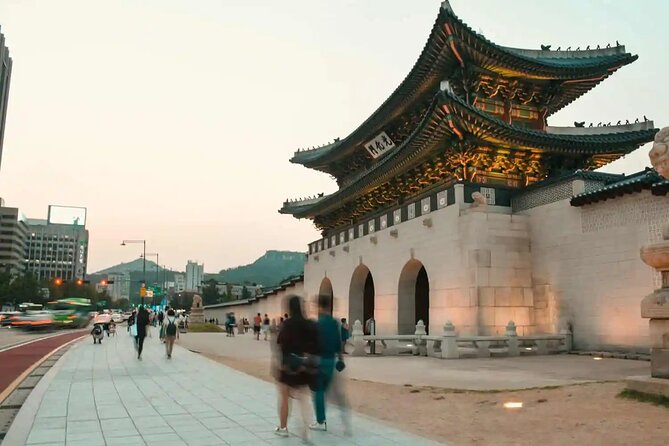
Next you head to Gwanghwamun Square and walk Gwanghwamun Avenue, the main boulevard area with major civic landmarks. This is where the city’s scale clicks. Even if you have never read a Korean history book, the arrangement of space, monuments, and sightlines helps you understand why this area functions as a kind of outdoor “front page” for the capital.
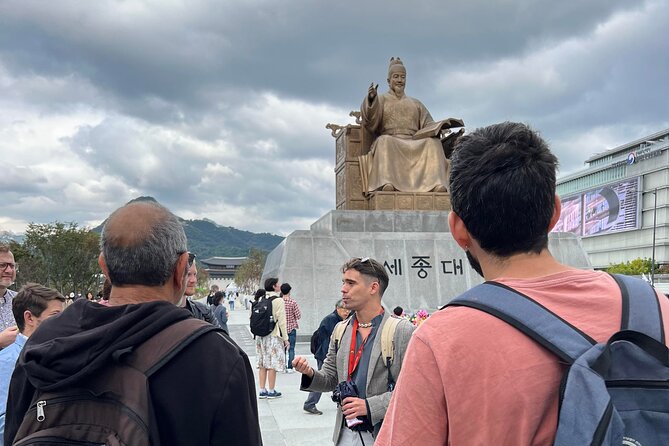
From there, you stand at Gwanghwamun Plaza in front of the Gwanghwamun Gate, where you get quick context through statues of Admiral Yi Sun-sin and King Sejong the Great. The time is short, but that is the point. These two figures show up again and again in Korean culture, so seeing them right at the start helps you notice their influence later, even when you are just browsing streets.
Small practical notes for these early stops
City Hall is marked free, but there is a real-world caution: on some Tuesdays it might be closed. If that happens, the tour may adjust your path, but the idea is to keep the historical grounding without losing the flow. Also, the opening stops are spread across public areas, which usually makes them easier even if you are jet-lagged.
Gyeongbokgung Palace: the main stage and the guard-change moment
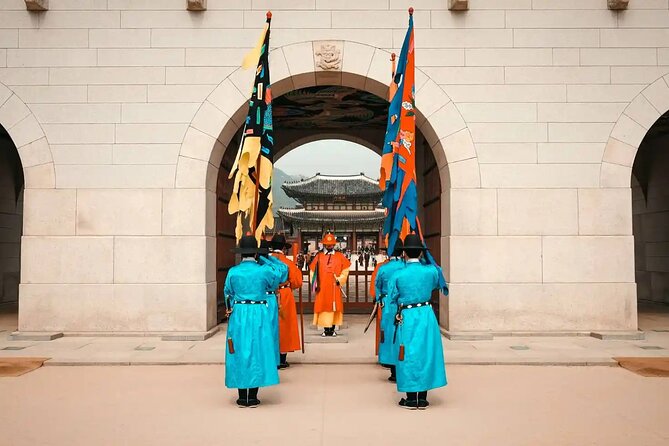
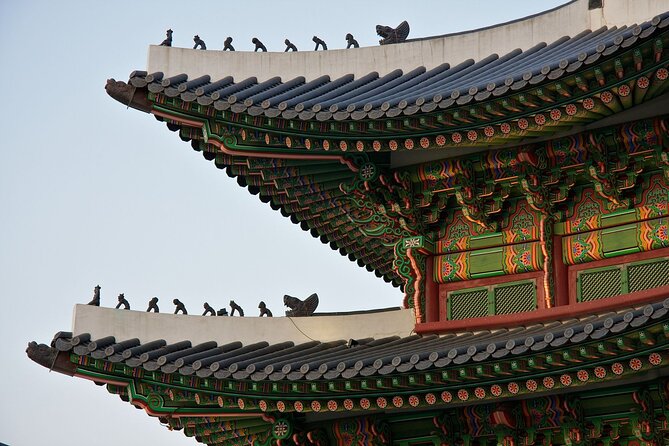
The heart of the tour is Gyeongbokgung Palace, the royal palace of Seoul. This stop is where the walking circuit becomes a time machine. The palace is the big anchor because it relates directly to Joseon dynasty court life, architecture, and ceremonial culture.
You get an introduction to the palace grounds, plus the change of the guards moment. Even if you do not catch every detail, this is one of those parts of Seoul that works for almost anyone. It is visual, it is structured, and it gives you a clear rhythm to watch. It also frames your later stroll through hanoks and temple-adjacent streets, because you start connecting palace power with everyday tradition.
- Best DMZ Tour Korea from Seoul (Red Suspension Bridge Optional)
★ 5.0 · 41,422 reviews - DMZ Tour: 3rd Tunnel, Option(Suspension Bridge, Boat) from Seoul
★ 5.0 · 21,373 reviews - DMZ tour south Korea from Seoul (NK experience hall, defector)
★ 5.0 · 20,599 reviews - Seoul: DMZ Tour with Optional Suspension Bridge
★ 4.8 · 5,277 reviews - Signature DMZ Tour: Exclusive Defector Talk & Suspension Bridge
★ 5.0 · 4,459 reviews
Why this stop is valuable
A palace can be impressive but also confusing if you only follow signage. With a guide’s framing, you start to understand what you are looking at and why it mattered. You also get an easier sense of the Joseon context as you continue to other cultural stops.
The palace is marked free for this tour, so you are not paying extra just to get the best-known monument on the route. That matters when you compare day-tour value, especially if your budget is tight.
A couple of real-life considerations
This is still a walking tour, so plan for steps and outdoor time. If you are coming from another part of the city, give yourself buffer time before the palace. The tour runs about 3 hours 30 minutes total, and this stop is one of the most time-sensitive parts because the guard-change timing is involved.
Insadong’s hanok lanes: tea houses, craft shops, and where to eat
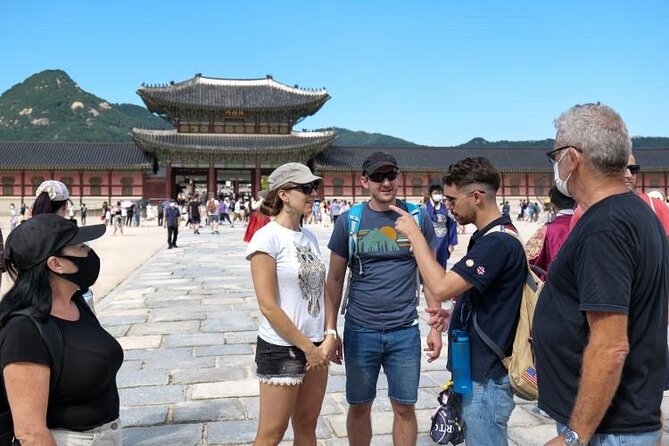
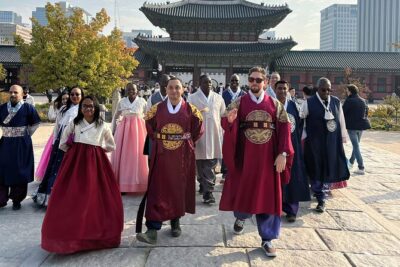
After Gyeongbokgung, you transition into Insadong, one of Seoul’s older neighborhoods. The character changes quickly. The big monuments give way to narrow lanes and a more intimate street rhythm, with hanoks clustered close together.
This is where the tour leans into “local life,” not just landmarks. You are guided through traditional tea houses, galleries, bars, and craft shops among labyrinthine streets lined with hanoks. In other words, you are not only looking at history. You are seeing how people keep it in daily use.
What to do with this stop
Even if you do not buy much, this is a great time to browse with a purpose. Look for small craft items that show regional style rather than mass souvenir bundles. If tea culture matters to you, take advantage of the tour’s guidance here, because it helps you pick a place that feels traditional instead of tourist-only.
Food and drink tips, including beer chicken
One of the strongest perks of this tour is the way the guide shares food and drink recommendations. The overview specifically points you toward where to drink and eat, including famous Korean beer chicken. That matters because Seoul street food can be overwhelming. A short, guided recommendation saves you from guesswork, especially when you have a limited time window.
In feedback about guides such as Moises and Gemma, English clarity and thoughtful recommendations come up often. More important than the language is the practical angle: where to go, what to order, and how to fit it into your day without losing time.
Bukchon Hanok Village: a hilltop finish with old-world alley vibes
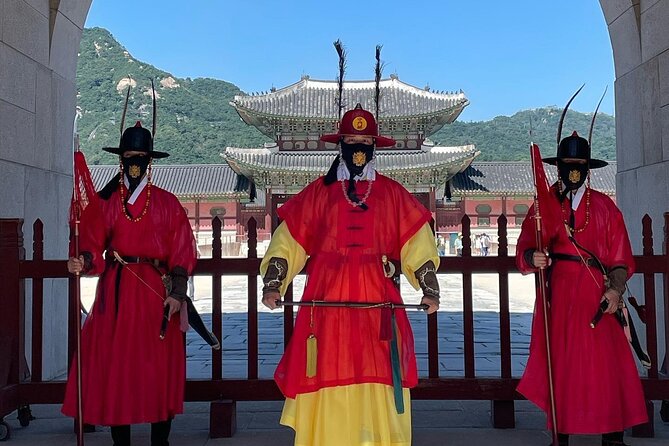
The final stop is Bukchon Hanok Village, where the traditional village sits high between Gyeongbok Palace and the hanok area around it. The walking circuit ends with a 30 minute window in the village itself, so you can slow down, take photos, and get a feel for the alleys without rushing.
Bukchon is where hanoks become more than architecture. The way streets are arranged, the sense of scale, and the tight turns in the lane layout help you understand how neighborhoods were designed for daily movement. It is also a strong “wrap-up” location because it visually ties together everything from palace authority to everyday traditional housing.
Where you finish matters
Your tour ends at Cafe Onion Anguk (5 Gyedong-gil, Jongno District), and the meeting point notes indicate you finish at Bukchon Hanok Village. That is useful because it gives you a nearby landmark for getting your bearings. After the tour, you are already in a classic area for continuing on your own.
How the 3 hour 30 minute schedule feels in real life
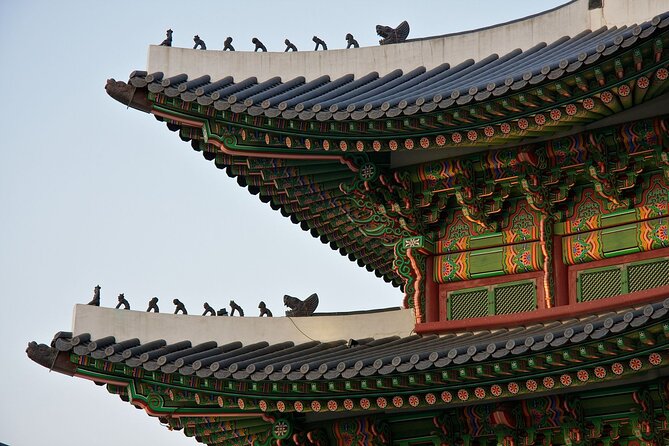
The itinerary shows six stop blocks totaling around the time you expect, plus transit walking between them. That is why the day works well for first-time visitors with a tight schedule. You are not cramming in five museums. You are moving through the city’s key “story spaces” with short, focused introductions.
Group size is capped at 20, which is the sweet spot for a guided walk in a dense city. Big groups get noisy and slow down. Smaller groups tend to move at a human pace, and you can ask questions without waiting your turn forever.
The tour also uses a mobile ticket, and it is noted as near public transportation. That helps if you are building your own Seoul itinerary around this walk. You do not need to plan a whole day of internal logistics just to make the tour happen.
Price and value: is $96.75 worth it?
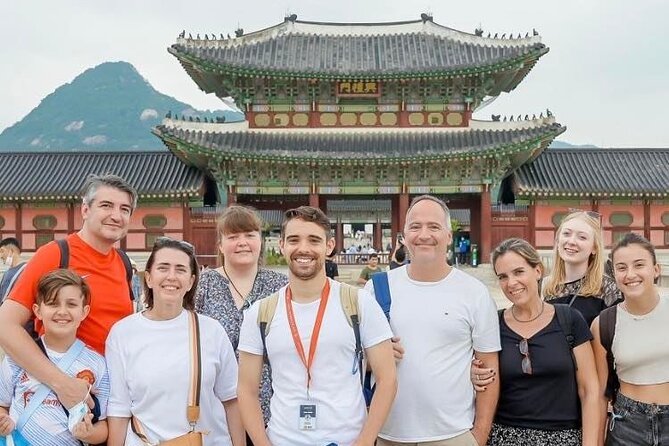
At $96.75 per person, this is not a “cheap and cheerful” tour. But it also is not just a basic sightseeing route. You are paying for a guide who ties together royal history, civic spaces, and neighborhood life in a single chain.
Here is the value angle I see:
- All listed stops are marked with free admission, which reduces out-of-pocket surprises.
- You get a guided explanation, not just the chance to stand near monuments.
- You receive where-to-eat and where-to-drink advice, including beer chicken, plus recommendations that help you avoid decision fatigue.
- You end in a strong traditional area, so you can continue exploring right after the tour window.
If you plan to move through Gwanghwamun, Gyeongbokgung, Insadong, and Bukchon anyway, the tour is effectively turning those stops into a coherent storyline. That storyline is what you are buying, and that is worth real money on a short schedule.
Who this tour suits best (and who should look elsewhere)
This tour fits best if you want structure in a first or second day in Seoul. It is also a good match if you like seeing how official landmarks connect to everyday neighborhoods.
You might also like this if you prefer walking tours that cover the basics without pushing you into long transit loops. Since it is concentrated in Jongno-gu and nearby areas, you can pair it with other Seoul highlights later the same day.
What might not suit you:
- If you do not like walking, or you need a low step count, this is still a city-walk experience.
- If you want museum deep-dives or long temple visits, the time windows are shorter and designed for an overview rather than a slow, detailed study.
Weather, Tuesdays, and comfort tips before you step out
Two practical constraints are built into the tour info.
First, it requires good weather. That is common for outdoor walking circuits, but it still matters. If rain is likely, you will want a plan B so you do not lose a day.
Second, there is a note that Seoul City Hall might be closed on some Tuesdays. If your schedule includes Tuesday, be ready for an alternate experience at that first stop, even if the tour remains focused on the overall history route.
Comfort tips that are worth following:
- Wear shoes you can walk in for a few hours.
- Bring a layer even in mild weather, since palace and plaza areas can feel different from street-level shopping zones.
- Keep water handy, especially if you are also planning to snack at Insadong after the guided portion.
Should you book Discover Seoul: Local Life and History?
I would book this if you want a guided, time-efficient way to connect Seoul’s major Joseon-era landmarks with traditional street life in Insadong and Bukchon. The mix of free admission stops, a small group size up to 20, and direct food and drink recommendations makes it practical, not just ceremonial.
I would skip it or look for an alternative if you are traveling on a day with unstable weather, or if you want more time inside specific palaces or temple buildings. This tour is designed to guide your eyes and understanding across key spots, not to linger for a half-day at a single monument.
If you are flexible with weather, bring comfortable walking shoes, and want your Seoul history to come with street-level context, this one is a strong value for the time you spend.
FAQ
How long is the tour?
It runs about 3 hours 30 minutes.
What is the price per person?
The price is $96.75 per person.
Do I get a mobile ticket?
Yes, the tour uses a mobile ticket.
What are the start and end locations?
It starts at Seoul Plaza (110 Sejong-daero, Jung District) and ends at Cafe Onion Anguk (5 Gyedong-gil, Jongno District).
What stops are included?
The tour includes Seoul City Hall, Gwanghwamun Square, the Story of King Sejong and the Story of Admiral Yi Sunshin area, Gyeongbokgung Palace, Insadong, and Bukchon Hanok Village.
Is there an admission fee for these stops?
All listed stops show admission ticket free.
How large is the group?
The tour has a maximum of 20 travelers.
What happens if the weather is bad?
The tour requires good weather, and if it is canceled due to poor weather you will be offered a different date or a full refund.
Is free cancellation available?
Yes. You can cancel up to 24 hours in advance for a full refund.
Is the tour suitable for most people, and are service animals allowed?
The tour notes say most travelers can participate and service animals are allowed. It is also near public transportation.
History-Led Days in Seoul

More Seoul Write-Ups

Fresh on the Seoul pile
- Unique Native Experience : Han River Picnic, Board game, BBQ★ 5.0 · 3 reviews
- 2-Hour Private Kayaking and Paddleboarding Experience in Hanriver★ 5.0 · 3 reviews
- Korean Folk Village & Suwon Hwaseong Fortress Private Tour★ 5.0 · 3 reviews
- Seoul Korean BBQ Dinner Experience with Secret Food Tours★ 5.0 · 3 reviews
- Seoul Highlights & Hidden Gems – Private Tour with Photo Service★ 5.0 · 3 reviews
- Night Food Tour in Seoul with Traditional and Modern Cuisine★ 5.0 · 3 reviews
Historical Tours you might have missed.
 ★ 4.8From Busan: Gyeongju UNESCO World Heritage Guided Day TourFrom $521,250 reviews
 ★ 5.0Gyeongju UNESCO World Heritage Guided Day Tour from BusanFrom $57660 reviews
 ★ 5.0Seoul: Evening Dark History, Folklore & Ghost Story Walking TourFrom $42593 reviews
 ★ 5.0Old Korea Thousand History Tour of Gyeongju from BusanFrom $64518 reviews
 ★ 5.0Hanbok Photoshoot and History Tour at Gyeongbokgung PalaceFrom $60276 reviews
 ★ 4.9From Seoul: Dae Jang Geum Park Historic K-Drama Set TourFrom $55143 reviews
 ★ 5.0Gyeongju UNESCO World Heritage Sites and History Full-Day Tour with LunchFrom $189104 reviews
 ★ 4.8Gyeongju: UNESCO Heritage Tour Including Bulguksa TempleFrom $189104 reviews
Where this tour also appears