
REVIEW · BUSAN TOURS
Busan: Haeundae 100-Minute Walking Tour
Haeundae has a secret story in plain sight. This 90-minute Busan walking tour turns the beach-and-skyscraper postcard into a real sense of place, starting with the former Haeundae Station and ending with sea views and meaning, not just photos. I especially like how it connects Haeundae Beach to what happened here, so the shoreline feels tied to Korea’s story, not just a summer stop.
My other big plus is the way the route explains the peninsula in everyday terms, including how the North and South relationship shaped this coast, then wraps with a thoughtful finish on Dongbaek Island. One thing to plan for: the walk is easy most of the time, but there is a hill around 50 meters and it is not aimed at kids under 10 or people over 70.
In This Review
- Key things that make this tour worth your time
- A 90-Minute Busan Walking Tour That Explains More Than You Expect
- Meeting at Old Haeundae Station, Not the Usual Tourist Shortcut
- The Former Haeundae Station Stop, Where the Railway Becomes the Plot
- Gunam-ro and the Only Seaside Hot Spring, Royal Spa Energy With Real History
- Haeundae Beach, Beautiful Views With Korean War Context
- A Return to Old Haeundae, Where the Station Story Gets Visual
- Dongbaek Island and Choi Chi-Won, A Calm Finish With Meaning
- The Guide Factor: Kim Ingyu’s Storytelling Style
- Why This Tour Feels Like Value, Not Just a Buy-One-Walk
- Who This Tour Is Best For (And Who Should Skip It)
- Small Tips That Make the Walk Easier
- Should You Book This Busan Haeundae Walking Tour?
- FAQ
- How long is the Busan Haeundae walking tour?
- Where do I meet the guide?
- How much walking is involved?
- Is the tour wheelchair accessible?
- What should I bring?
- Is the tour appropriate for children or older adults?
- What is included, and is there anything special about the audio?
Key things that make this tour worth your time
- Former Haeundae Station as your starting point, with the Japanese colonial-era railway context and how old lines shaped today’s Haeundae
- Gunam-ro and the Gunam Oncheon seaside hot spring story, including the royal connection
- Korean War context at Haeundae Beach, so you understand why this coast matters
- North and South Korea context explained in a way that fits a short walk, not a lecture
- Dongbaek Island and Choi Chi-Won, pairing a naming story with coastal photo time
- Small-group friendly energy with Q and A, especially if your group is limited
Other Busan days worth comparing
A 90-Minute Busan Walking Tour That Explains More Than You Expect

I’ll be blunt: Haeundae is easy to oversimplify. You come for the beach, you eat something seafood-ish, you take a few pictures, and you move on. This tour helps you do the same area, but with your eyes open.
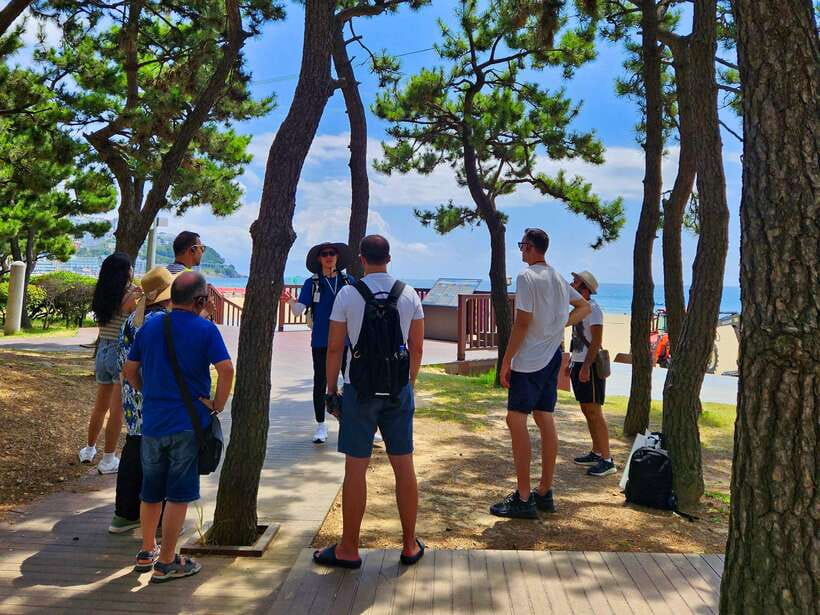
You get a structured route through the heart of Haeundae, with an English-speaking guide who uses the places themselves as chapter headings. The pacing is relaxed, and the whole experience is designed for time-crunched visitors. At the same time, it does not feel like a rushed slideshow. It’s more like getting directions from a local friend who also happens to be a history nerd, in the best way.
The practical side matters, too. You are walking about 2 kilometers total. Most of the route is straightforward, but you climb a hill roughly 50 meters. That single detail can make or break your day if you have knee issues, hate slopes, or are traveling with someone who tires fast.
Meeting at Old Haeundae Station, Not the Usual Tourist Shortcut

The tour starts at Haeundae Atelier Chik Chik Pok Pok (옛 해운대역), located at 621, Haeundae-daero, Haeundae-gu, Busan. The easiest approach is the metro: take Busan Metro Line 2 to Haeundae Station, then exit through Exit 4.
When you come out, you will see a public square on your right. The guide meets you there and holds a flag. This is one of those small logistics wins that makes it easier to show up calm, not sprinting while reading signage.
Also, you get help hearing the guide clearly. The tour includes a wireless transmitter and receiver. Complimentary earphones are provided, and the operator recommends you bring your own 3.5mm wired earphones if you want better hygiene or a familiar fit.
One more rule to keep in mind: audio recording is not allowed. That does not affect photos or normal conversation, but it’s good to know so you do not accidentally bring out a phone recorder.
The Former Haeundae Station Stop, Where the Railway Becomes the Plot
Starting at the old station is smart. It instantly changes the vibe from seaside amusement to “how did this place become this place?”
At the former Haeundae Station, you hear how the station connected to the Donghae-Nambu Line, and how that railway period during Japanese colonial rule helped reshape the region. Even if you do not care about rail trivia, you should care about the cause and effect. Transportation turns into development. Development turns into population. Population turns into neighborhoods that stay long after the tracks change.
This is where the tour’s bigger theme becomes clear: modern Haeundae is not random. It is the result of old infrastructure, repurposed over time. The experience notes that the old rail line has been adapted for modern attractions such as the Blue Line Park. So you see how the past can get reused instead of erased.
Why I like this kind of first stop: it gives you a mental map. After you understand the old station’s role, everything you see later along the coast makes more sense.
Gunam-ro and the Only Seaside Hot Spring, Royal Spa Energy With Real History
Next you head along Gunam-ro, which is presented as the cultural core of Haeundae. This part is not only about a pretty walk. It is about why people gathered here in the first place.
You’ll learn about Gunam Oncheon, described as Korea’s only seaside hot spring. The story includes a royal connection, meaning this was not just local “soak and relax” culture. It shaped social habits and helped define the area’s identity over time.
This stop also gives you an important travel lesson: beaches often get remembered for leisure, but places with water and health traditions tend to draw communities across centuries. When your guide ties the hot spring to street life, it becomes easier to see the human rhythm behind today’s crowds and storefronts.
If you like stopping to watch people, this stretch is a good place to do it. You are not stuck under history facts the whole time. The street helps you ground the story in real atmosphere.
Other walks we have covered in Busan
- Busan: Haeundae 100-Minute Walking Tour
★ 5.0 · 48 reviews - Busan Private Walking Tour with a Local
★ 4.5 · 11 reviews - Busan: Jagalchi Market & Gamcheon village Walking Tour
★ 5.0 · 7 reviews
Haeundae Beach, Beautiful Views With Korean War Context
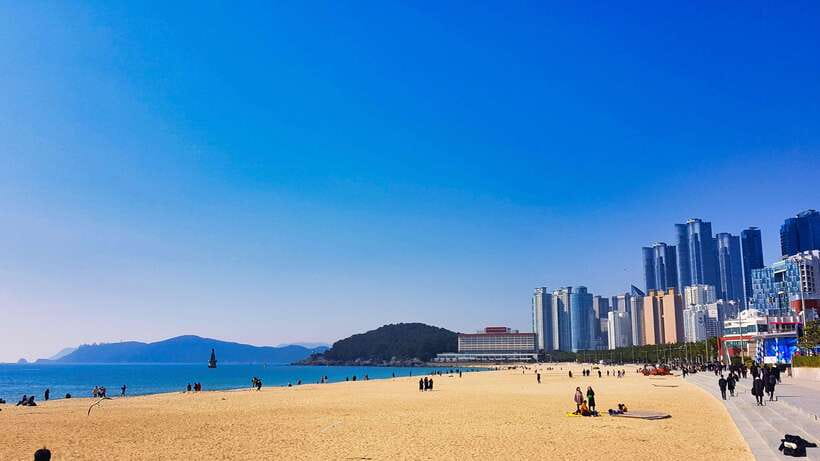
Now for the part everyone wants to see: Haeundae Beach.
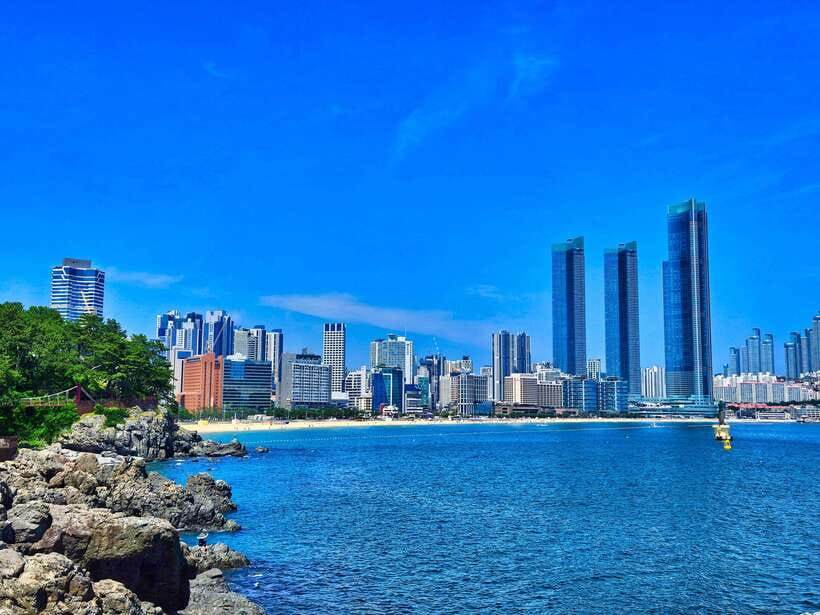
Here, the tour slows down just enough to connect the shoreline to bigger events. You learn that after the Korean War, this area became a U.S. military base, and that the broader North and South Korea relationship has influenced Haeundae’s development over time. In other words, the beach you see today did not become famous only through summer tourism.
This is the tour’s value for first-timers. You still get to enjoy the beach itself, but you also leave with context. The next time you look out at the water, you can picture this coast in a different light.
Practical note: if you are going on a sunny day, plan for heat. The tour advises bringing water, and a sun umbrella can help with shade. Even if the walk feels short, beachfront weather is no joke.
A Return to Old Haeundae, Where the Station Story Gets Visual
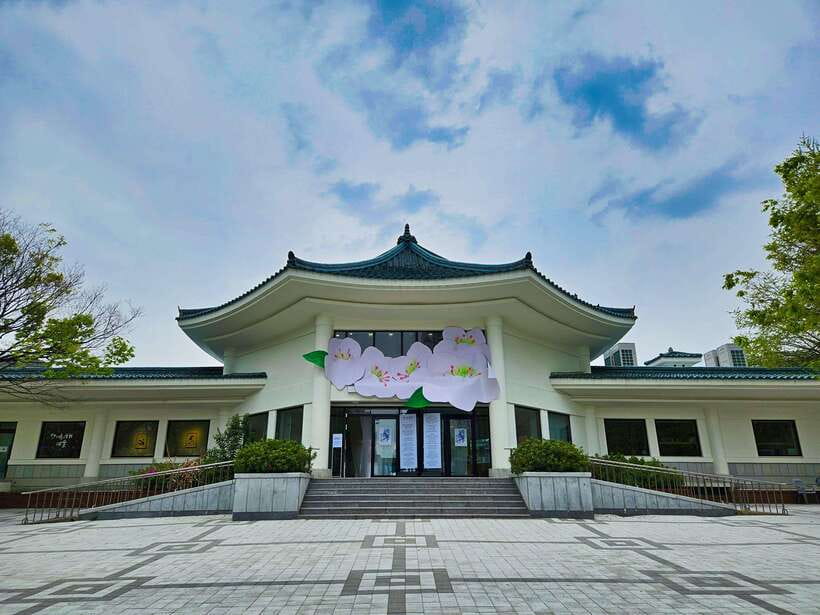
Between the beach and the final sea-island section, the route brings you back to Haeundae Atelier Chik Chik Pok Pok again for a guided look at the old station area.
This matters because it is not just a pass-by. The guide uses the station and its repurposed setting to tie the railway story back into the broader transformation of the neighborhood. It’s a chance to connect what you heard earlier with what you see in front of you now.
If you tend to like tours that mix ideas with physical space, this stop is where it clicks. You leave the tour with a stronger mental timeline.
Dongbaek Island and Choi Chi-Won, A Calm Finish With Meaning
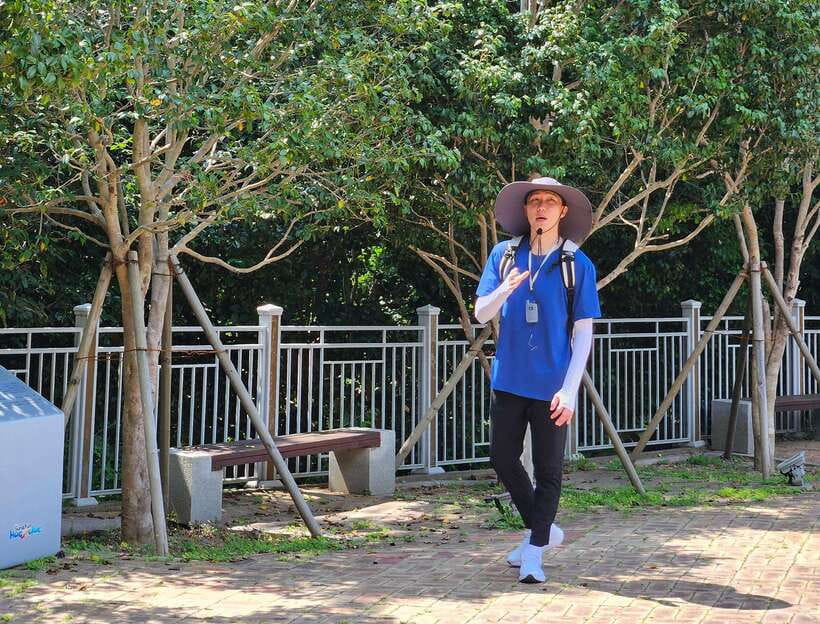
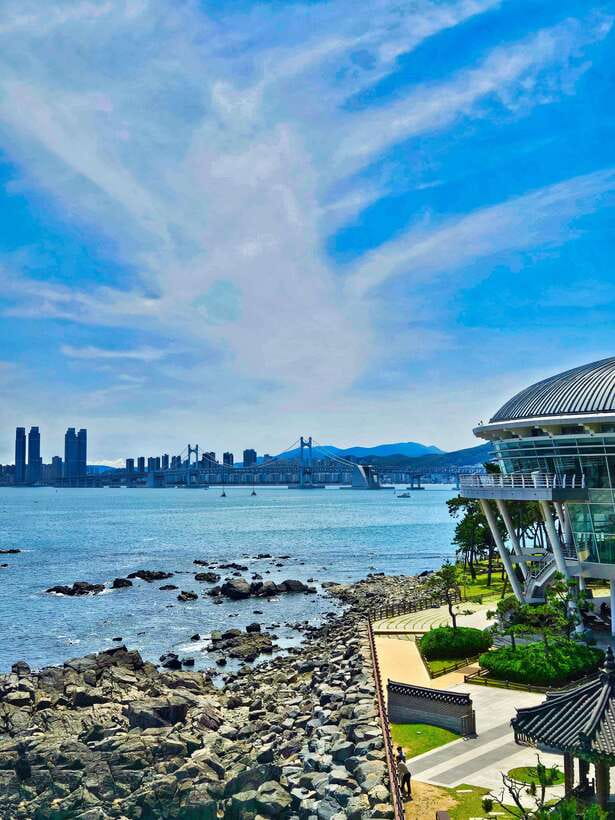
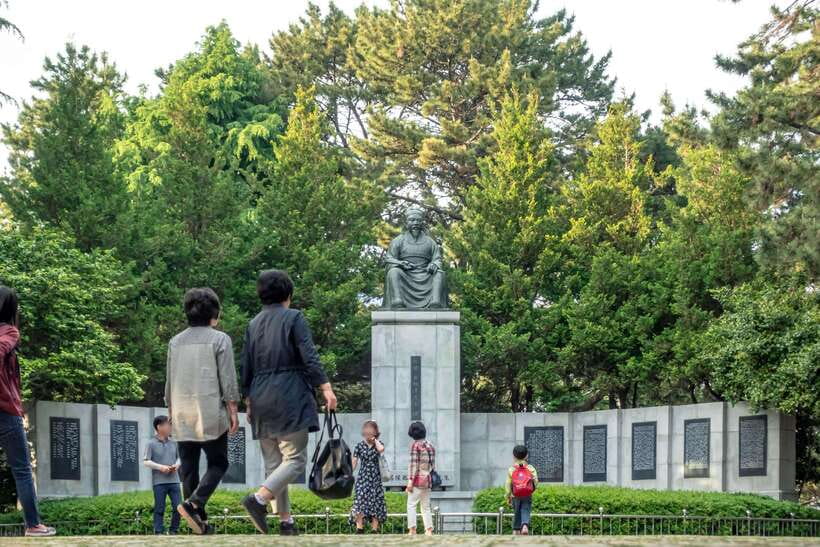
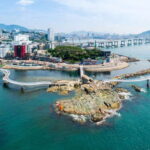
The walking tour ends on Dongbaek Island, known as Dongbaekseom on signs. This is a great ending point because you shift from urban streets to a quieter coastal feel.
Here, the tour explains the legacy of Choi Chi-Won, a scholar credited with naming Haeundae. That naming story is simple on the surface, but it gives you an anchor point. Instead of only thinking about foreign forces, military history, or rail lines, you also get cultural identity.
You also get coastal views at the end, which is exactly the right timing. After the heavier context earlier, the island offers a chance to breathe, take photos, and let the facts settle.
The Guide Factor: Kim Ingyu’s Storytelling Style
A walking tour lives or dies on the guide. This one stands out because the lead guide, Kim Ingyu, is described as friendly, humorous, and able to explain major themes in a concise, engaging way.
What keeps it from turning into a dry lecture is the balance. The guide uses the short route to build a narrative arc for Busan and Korea, then makes space for questions. You can feel the difference between a guide who recites facts and one who knows how to shape them into an experience.
If you get a smaller group, you may also get more back-and-forth conversation. That’s the kind of situation where you can ask clarifying questions about anything from Korean War context to what to do next in Busan.
Why This Tour Feels Like Value, Not Just a Buy-One-Walk
At $29 per person for about 90 minutes, the price is reasonable, especially because it includes an English-speaking guide and a wireless hearing system. In busy tourist areas, that small tech detail can be the difference between enjoying the talk and missing half of it due to street noise.
But the bigger value is the content focus. You are not paying just for movement between famous spots. You are paying for an explanation of how Haeundae grew from earlier coastal life into a modern landmark area, with context about Japanese colonial-era transport, seaside hot spring culture, Korean War aftermath, and the North-South relationship.
If you plan to spend only one short block of time in Haeundae with a guided history approach, this is the type of tour that gives you a foundation. Then you can explore on your own afterward with better questions.
Who This Tour Is Best For (And Who Should Skip It)
You’ll likely love this tour if:
- You want a short, high-impact way to understand Haeundae beyond the beach photo
- You like guided storytelling that connects sites to historical events
- You are curious about how the peninsula relationship shows up in everyday places
You might want to skip or choose another format if:
- You struggle with hills. There is a 50-meter climb.
- You are traveling with children under 10 or someone over 70, since the tour is not suitable for those ages.
- You want a purely relaxed beach afternoon. This tour includes history stops and walking pace that stays active.
Small Tips That Make the Walk Easier
Bring comfortable shoes. That hill is manageable for many people, but you will feel it in flip-flops. Bring water, too, and if it’s sunny, consider a sun umbrella for shade.
If you have sensitive ears or hate shared earphones, bring your own 3.5mm wired option. You are allowed to use the included earphones, but your call.
And arrive a little early. The meeting point is specific, and you will get more relaxed once you see the guide flag by the square.
Should You Book This Busan Haeundae Walking Tour?
If you are in Busan for a short time and want a fast way to understand why Haeundae matters, I’d book it. The structure is strong: old station context, seaside hot spring culture, Korean War and North-South influence at the beach, then a calm closing at Dongbaek Island tied to Choi Chi-Won.
I especially think it’s a smart first-or-second day choice because it gives you a lens. After the tour, you can roam and spot details you would otherwise miss.
If you mainly want zero-thinking beach time, or you cannot handle that hill, then spend your money elsewhere and keep it easy. But for the right traveler, this is one of the most efficient ways to turn Haeundae from a destination into a story you understand.
FAQ
How long is the Busan Haeundae walking tour?
It runs about 90 minutes.
Where do I meet the guide?
Meet at Haeundae Atelier Chik Chik Pok Pok (Old Haeundae Station), at 621, Haeundae-daero, Haeundae-gu, Busan. If you use the metro, take Line 2 to Haeundae Station, exit Exit 4, then look for a guide holding a flag near the public square.
How much walking is involved?
The tour involves walking about 2 kilometers, and it includes a hill about 50 meters high.
Is the tour wheelchair accessible?
Yes, it is listed as wheelchair accessible.
What should I bring?
Wear comfortable shoes and bring water. On sunny days, the guidance suggests bringing a sun umbrella for shade.
Is the tour appropriate for children or older adults?
It is not suitable for children under 10 or people over 70.
What is included, and is there anything special about the audio?
You get an English-speaking guide and a wireless transmitter and receiver. Complimentary earphones are provided, and it is recommended to bring your own 3.5mm wired earphones for hygiene.
Keep Browsing Busan




More Busan Write-Ups

Still in Busan? More Here
Fresh on the Busan pile
- Suncheon and Yeosu Daily Private Tour with Pickup Service★ 5.0 · 3 reviews
- Suncheon one day tour from Seoul, Busan or Suncheon★ 5.0 · 3 reviews
- Busan Seafood Tour : Oyster village Tour with Oyster cuisines★ 5.0 · 3 reviews
- 2-DAYS Busan Customized and Included Night tour★ 5.0 · 3 reviews
- Busan Dialect Class with local snack★ 5.0 · 3 reviews
- Korean UNESCO World Heritage Tour including Gyeongju, Andong and Daegu(2N3D)★ 5.0 · 3 reviews
Busan Tours you might have missed.
 ★ 4.8Busan: Gyeongju Guided Day Trip to Three Kingdoms CapitalFrom $521,925 reviews
 ★ 5.0Small Group Full Day Busan Tour (Max 6 Pax)From $991,464 reviews
 ★ 4.8From Busan: Gyeongju UNESCO World Heritage Guided Day TourFrom $521,250 reviews
 ★ 5.0Busan Private Tour with licensed tour guide + private vehicleFrom $1691,143 reviews
 ★ 4.7Busan: Coastal Treasures Beach Train, Culture Village & MoreFrom $51832 reviews
 ★ 4.5Busan’s Cultural Wonders with Beach Train & Gamcheon Village etcFrom $47663 reviews
 ★ 5.0Gyeongju UNESCO World Heritage Guided Day Tour from BusanFrom $57660 reviews
 ★ 5.0Private Busan Tour -Explore Cultural Landmarks with a Local GuideFrom $169552 reviews
Where this tour also appears