
REVIEW · WALKING TOURS
Seoul History Walking Tour
Seoul history can feel like a textbook. This walking tour turns it into a route you can follow, with an Australian guide and short stops that keep the story moving. I like that you get a clear sweep through Joseon to modern Korea without getting stuck in one era, and I also like the small-group feel, max 8 people, which makes questions easier to ask. One thing to consider: it is tightly timed, so you will be moving fairly often across 15 stops in about 3.5 hours.
You start at Bosingak Bell Pavilion, then work your way through major landmarks tied to big moments, like King Sejong, Admiral Yi Sun-sin, and the push for democracy. Stops are mostly admission-ticket-free, so you can spend your time listening instead of lining up. The tour ends near where it began, and your guide helps you with directions if you want to keep exploring after the last temple bell.
If your goal is value and momentum, this is a strong pick at $26.60 per person. Just plan for basic comforts, like water, because bottled water is not included.
In This Review
- Key highlights I’d actually plan around
- Price and schedule that make sense for a first visit
- Meeting at Bosingak, then using the city as your textbook
- Bells, water, and Seoul’s long memory (Bosingak to Plaza)
- Palace views and love legends, with a clear turn toward harder history
- Women’s education, royal escape, and two figures who shaped national memory
- Sejong, democracy protests, and what you can spot from a rooftop
- Japan embassy protests, bells at Jogyesa, and a final note on meaning
- What to expect from the guide, and how to get more out of it
- Should you book the Seoul History Walking Tour?
- FAQ
- How long is the Seoul History Walking Tour?
- How much does the tour cost per person?
- Where does the tour start and end?
- What is included in the tour price?
- Is bottled water included?
- Do I need to pay admission fees at the stops?
- How many people are in the group?
- Is there a mobile ticket?
- What is the start time of the tour?
- Is free cancellation available?
- Are service animals allowed?
Key highlights I’d actually plan around
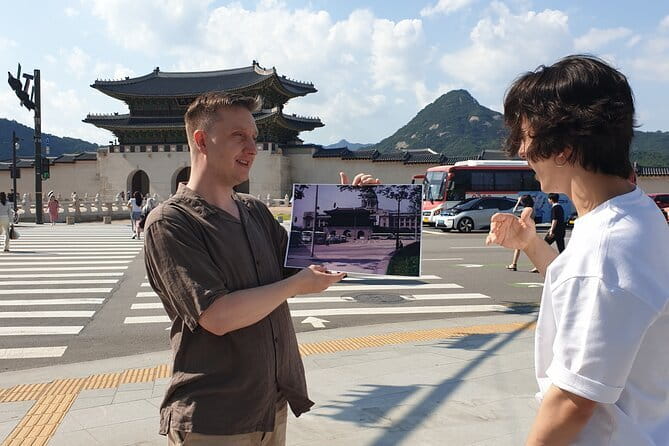
- Max 8 people with an Australian guide, so it stays conversational instead of lecture-style
- 15 stop route in about 3 hours 30 minutes, with lots of short, easy-to-digest moments
- Free admission at the listed sights, so your money goes to context, not tickets
- Buses of history on foot, from bells and streams to palaces, education, protests, and a temple
- Traditional snack included, plus a memento that helps you remember what you just walked past
Other walks we have covered in Seoul
Price and schedule that make sense for a first visit
At $26.60 per person for roughly 3 hours 30 minutes, this tour sits in that sweet spot where you can learn a lot without losing an entire day. It is also priced in a way that feels realistic for a focused walking experience, especially because you get more than just sightseeing. The tour includes traditional Korean snacks and an informative memento, so you leave with something practical, not just photos.
The timing matters too. The start time is 2:30 pm, which is convenient when mornings are already claimed by palaces or markets. A mid-afternoon start also tends to work well for pacing, since you can still do dinner afterward. One more plus for planning: it is usually booked around 81 days in advance, and the group size caps at 8, so it is not the kind of tour you want to assume will be easy to grab last minute.
The possible drawback is speed. Many stops are around 10 minutes, and there are 15 of them. You will get the big ideas, but you will not have long, slow time at every location. If you like to linger, you will want to do your own follow-up walk after the tour ends.
Meeting at Bosingak, then using the city as your textbook
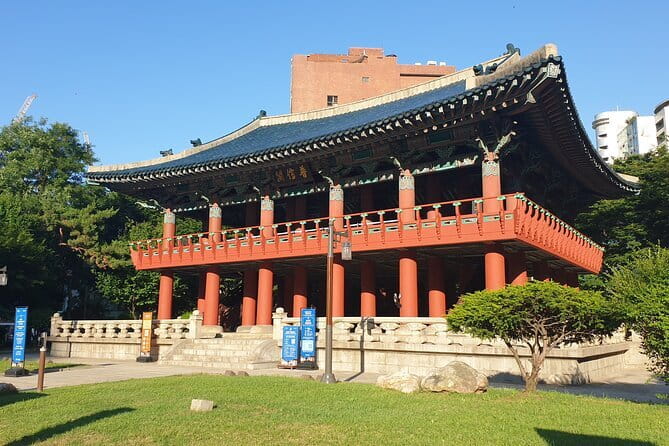
You begin at Bosingak Bell Pavilion, address 54 Jong-ro, Jongno District. This is a good start point because it anchors you right in the historic center. Even the first stop comes with a question that sets the tone for the whole afternoon: why the city bells rang 28 times at night and 33 times in the morning.
That kind of framing is what makes the walking format work. Instead of hearing facts listed like flashcards, you get prompts that lead you to notice details as you go. And because the tour is designed as a step-by-step history walk, each stop feels like a link in one chain.
From a practical point of view, the tour starts and ends close together. It finishes near Jogyesa Temple, and your guide can assist with directions. That means you are not stuck figuring out how to get back across town with tired legs at the end.
One practical note: bottled water is not included, so if you sweat easily or you plan to keep walking after, bring water with you. The tour includes snacks, which helps, but snacks are not a full substitute for hydration.
Bells, water, and Seoul’s long memory (Bosingak to Plaza)
After Bosingak, the story keeps moving toward everyday spaces that carried history for centuries. Next is Cheonggyecheon Stream, where the guiding question is what the stream provided Seoul through the Joseon Dynasty, the Korean War, and modern times. The fact that the tour connects a single place to multiple eras is a great reminder that history is not only crowns and battles. It is also how daily life survives, changes, and adapts.
Then you step into the civic heart with Seoul City Hall. The stop is short, but it is pointed: how the building works as an architectural gem, both inside and out. Even if you only get a brief look, this kind of stop is useful because it ties historical change to governance and public life, not just old stones.
After that comes Seoul Plaza, with a question about how the plaza reflects the hearts of modern citizens. This is where you start to see the tour’s broader theme. It is not only teaching you what happened. It also nudges you to notice what people do with public spaces today.
What I like here is the balance between monumental and human. Bells, a stream, a civic building, and a plaza. You are building a mental map of how Seoul has organized power and daily living across time.
Palace views and love legends, with a clear turn toward harder history

Once you move beyond the main civic zone, the tour leans into the palaces and the stories that sit behind them. A highlight is Jeongdong Observatory, where the prompt is how much of the palace and cityscape you can see from that perch. Even though it is only about 10 minutes, a viewpoint stop is smart on a walking tour. It helps you understand what you are looking at, because height forces you to connect the dots.
Then you get to Deoksugung Doldam-gil, a stop with a famous local belief: Koreans say that if you walk along this stone wall with your spouse, you will soon be divorced. You might or might not take the superstition seriously, but as a story element it works. It gives you a cultural lens that is not about dynasties or wars. It is about how people turn ordinary places into meaning.
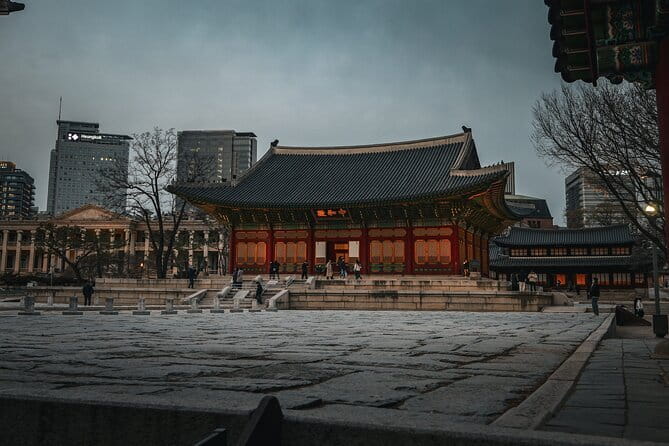
After the lighter angle, the tour shifts to a much heavier subject with Jungmyeongjeon Hall and the question of how Imperial Japan forced Korea to surrender its independence. This stop matters because it is one of the tour’s direct confrontations with occupation and loss. It also helps the rest of the afternoon make more sense, since later stops focus on protests and independence again.
A practical consideration: when a tour hits emotional topics, the best experience comes from being mentally prepared for less cheerful moments. If you prefer only decorative sightseeing, this route may feel more intense than a simple highlights walk.
Other history-led days in Seoul
- Seoul: Evening Dark History, Folklore & Ghost Story Walking Tour
★ 5.0 · 593 reviews - Hanbok Photoshoot and History Tour at Gyeongbokgung Palace
★ 5.0 · 276 reviews - Seoul: City Highlights and Historical Experience No Shopping
★ 5.0 · 74 reviews - Street photoshoot and Seoul Hidden gem History Walking Tour
★ 5.0 · 68 reviews - Discover Seoul: Local Life and History
★ 4.5 · 53 reviews
Women’s education, royal escape, and two figures who shaped national memory
The tour keeps expanding the cast of historical actors beyond kings alone. At Ewha Museum, the prompt is how Korea’s first school for girls changed views on women’s roles. This is an important pivot because it frames modernization through education. It also gives you a different entry point into social change, not just political change.
Then you move to the Former Russian Legation, where the question is why Korea’s penultimate monarch fled the palace in the middle of the night and stayed here for a year. This is the kind of stop that clicks for many people because it is specific and story-driven. Even with a short time on site, it tends to stick in your mind because it reads like a turning point.
And then comes one of the tour’s most action-oriented stops: a statue of Admiral Yi Sun-sin. The guide asks how this general saved Korea and changed the course of world history. The wording is bold, but the value is that you are hearing the name attached to a major narrative. You also get a chance to connect the “who” to the “why it mattered,” without needing to wade through dense timelines.
From a review-reader point of view, this middle stretch is where the tour earns trust. It is not only pointing at landmarks. It is telling you who mattered, what changed, and why those names still show up in public spaces.
If you like history that includes social shifts and human choices, you will probably feel like the tour hits the right mix around here.
Sejong, democracy protests, and what you can spot from a rooftop
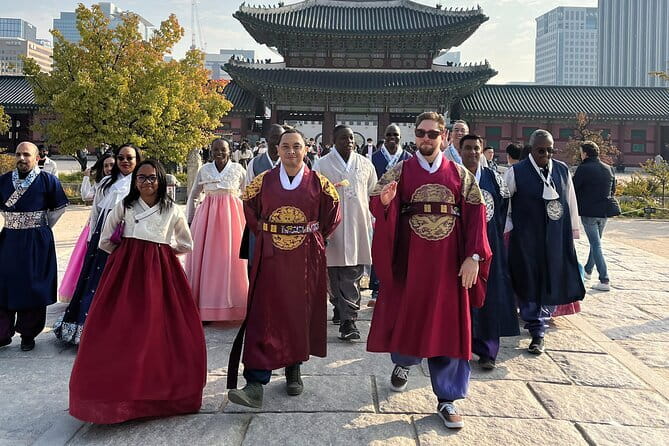
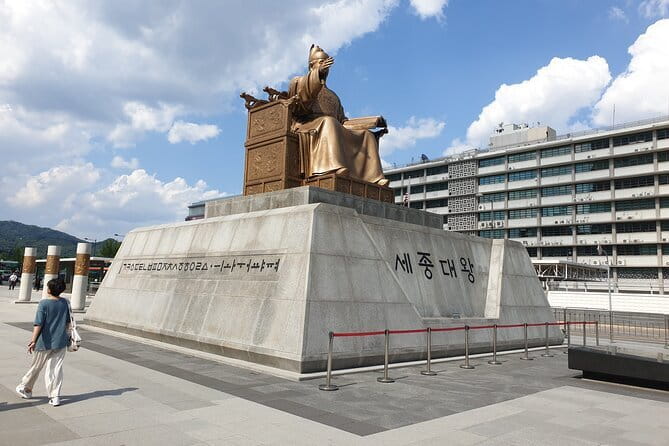
Next, the route focuses on leadership and civic action. At Jungmyeongjeon Hall earlier, you saw the pressure applied to Korea’s independence. Here, the tour flips toward the ideas people fought for. A statue of Sejong the Great comes with the question of why Sejong is considered the greatest king of the Joseon Dynasty. You get the sense that the tour wants you to connect leadership with long-term outcomes, not just reign lengths.
Then you arrive at Gwanghwamun Square, a stop that asks how many protests it takes to change a democracy. This is one of those prompts that stays with you as you walk. It makes you look at a major public space and think about how change becomes visible.
After that, you head to the National Museum of Korean Contemporary History, where the question is how much history you can see from the rooftop. This is a smart stop to include in a walking tour because it gives you a wider perspective. Even if you only have about 15 minutes here, a rooftop viewpoint usually helps you connect the museum’s themes to the city around it.
If you are the type who needs context to enjoy museums, this stop can act like a preview. You can understand what you are about to learn, then carry that understanding forward.
Japan embassy protests, bells at Jogyesa, and a final note on meaning
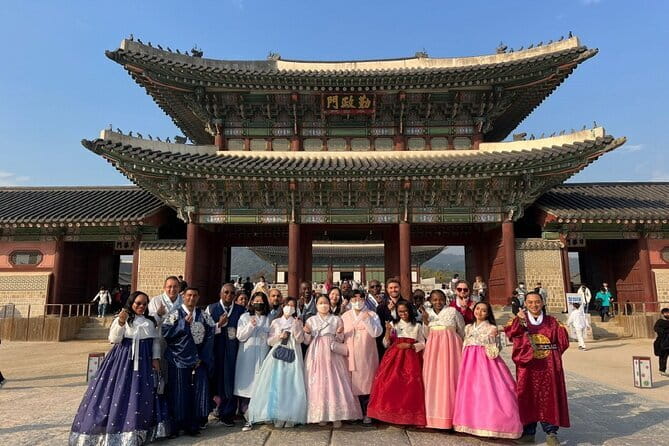
The afternoon closes with symbolism and public conscience. At the Embassy of Japan, you are asked why this site is the location of the world’s longest running protest. That phrasing signals the tour’s theme shift: from building blocks of history to moments where history becomes visible through action.
Finally, you end at Jogyesa Temple, and the stop is tied to a spiritual idea: how the ringing of bells connects us with the universe. It is a gentle landing after the heavier politics. It also gives you a satisfying loop, because earlier you started with city bells, now you finish with temple bells. The repetition is the point.
This closing rhythm is also practical. Temple stops are often easier to enjoy at the end because you can sit, listen, and let your mind decompress. And since the tour ends near where it began, you do not have that last-step scramble.
If you want a simple souvenir, the included memento helps. If you want a simple action, use the snack break and the bell moments to reset your attention before you head out for dinner.
What to expect from the guide, and how to get more out of it
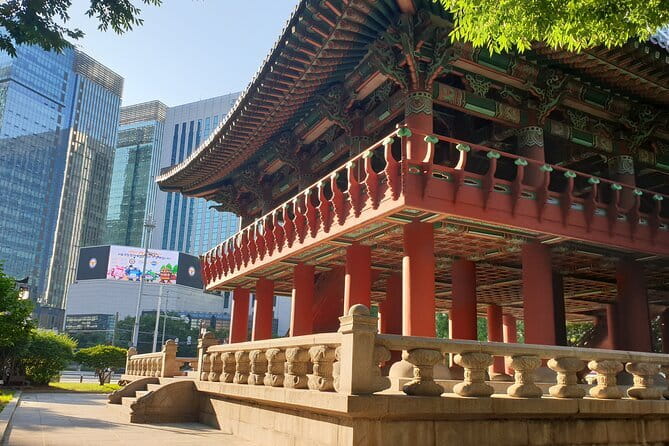
Your guide is Australian, and the experience is built around Q and A. The tone seems to invite questions rather than shut them down. In a small group, that matters. You can ask your own follow-ups, like what a particular place means or how different eras connect.
For your part, come in with two or three questions. For example: Which stop do you want to understand more deeply, Sejong, Admiral Yi, or the independence story? If you have that ready, you will remember more because you will be listening with a goal.
Also, plan your pace. The stops are short, so you will not get every detail. Instead, you get an overview you can build on later. Think of it like a fast walk through a highlighted reading list, not a slow study session.
One more small thing: you get a mobile ticket. Make sure you can access it offline or on your phone screen without fiddling too much during check-in.
Should you book the Seoul History Walking Tour?
I’d book it if you want a compact, guided Seoul history lesson that links monarchy, social change, occupation, and democracy without turning into a boring lecture. The small group size of up to 8 people, the free-entry style stops, and the included snacks plus memento make it good value for the money.
Skip it, or at least go in with expectations, if you hate fast pacing or if you need long time sitting in one place. This route packs 15 stops into about 3 hours 30 minutes. You will likely enjoy it most as a primer, then follow up with deeper self-guided time in the sections that grab you.
If you’re visiting Seoul for the first time and want your map of Korean history to line up with your map of the city, this is a very practical way to do it.
FAQ
How long is the Seoul History Walking Tour?
The tour lasts about 3 hours 30 minutes.
How much does the tour cost per person?
The price is $26.60 per person.
Where does the tour start and end?
It starts at Bosingak Bell Pavilion, 54 Jong-ro, Jongno District and ends at Jogyesa Temple.
What is included in the tour price?
The tour includes traditional Korean snacks and an informative memento.
Is bottled water included?
No, bottled water is not included.
Do I need to pay admission fees at the stops?
The listed stops are admission-ticket-free.
How many people are in the group?
The tour has a maximum of 8 travelers.
Is there a mobile ticket?
Yes, the tour uses a mobile ticket.
What is the start time of the tour?
The start time is 2:30 pm.
Is free cancellation available?
Yes. You can cancel for a full refund up to 24 hours in advance of the experience start time.
Are service animals allowed?
Yes, service animals are allowed.
Shoe Leather Around Seoul



Keep Browsing Seoul


More Seoul Write-Ups
Fresh on the Seoul pile
- Unique Native Experience : Han River Picnic, Board game, BBQ★ 5.0 · 3 reviews
- 2-Hour Private Kayaking and Paddleboarding Experience in Hanriver★ 5.0 · 3 reviews
- Korean Folk Village & Suwon Hwaseong Fortress Private Tour★ 5.0 · 3 reviews
- Seoul Korean BBQ Dinner Experience with Secret Food Tours★ 5.0 · 3 reviews
- Seoul Highlights & Hidden Gems – Private Tour with Photo Service★ 5.0 · 3 reviews
- Night Food Tour in Seoul with Traditional and Modern Cuisine★ 5.0 · 3 reviews
Walking Tours you might have missed.
 ★ 5.0Seoul moonlight walking tour with local historianFrom $31940 reviews
 ★ 5.0Seoul: Nighttime Hidden Gems Walking TourFrom $33775 reviews
 ★ 5.0Seoul: Evening Dark History, Folklore & Ghost Story Walking TourFrom $42593 reviews
 ★ 4.8Seoul: Dark Side of the City and Ghost Stories Walking TourFrom $42484 reviews
 ★ 5.0Gangnam Walking Tour on Youth and Society in Seoul KoreaFrom $31401 reviews
 ★ 4.8Seoul: Gyeongbok Palace and Bukchon Hanok Walking TourFrom $88157 reviews
 ★ 5.0Best Walking Tour to Gyeongbok Palace Bukchon Hanok VillageFrom $88138 reviews
 ★ 4.5Highlights & Hidden Gems With Locals: Best of Seoul Private Walking TourFrom $12383 reviews
Where this tour also appears