
REVIEW · WALKING TOURS
Seoul moonlight walking tour with local historian
A good night in Seoul is all about hills and stories. This moonlight walking tour links local history with Seoul’s best night views, climbing from the Hyehwa area up through Naksan Park and into the Seoul City Wall area. I love the tight, human-scale route, and I love that the guide blends Korean daily life with clear historical context. The main thing to consider is that the walk includes stairs and uphill sections, so comfy shoes matter.
You get a small group experience, usually capped at 20, and you keep your logistics simple with a mobile ticket and a start point right by public transport. I also like the stop choices because they shift the focus away from only big-name sights, toward student life, theater culture, working-class neighborhoods, and the city’s changing geography. One small drawback: the tour depends on decent weather for the best views, so plan to be flexible if conditions are poor.
In This Review
- Key Highlights You’ll Actually Feel During the Walk
- Why This Moonlight Walk Works Better Than a Typical Sightseeing Loop
- Getting Oriented Fast at Hyehwa: Where the Tour Begins and What to Expect
- Stop 1: Seoul University Hospital Medical Museum and Student-Life Context
- Stop 2: Marronnier Park for Live Theater Energy
- Stop 3: Naksan Park and the Capital Story Behind the City’s Layout
- Stop 4: Ihwa Mural Village, Art on Hills, and a Working-Class Lens
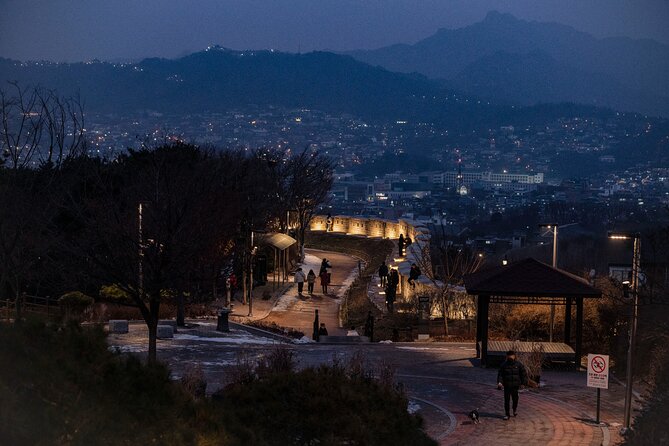
- Stop 5: Seoul City Wall and Hanyang City Wall Night Views
- Price and What You’re Really Paying For at Around $32
- Group Size, Timing, and the Hilly Reality You Need to Plan For
- Optional Dinner After the Walk: How to Extend the Night
- Who This Tour Suits Best (and Who Might Skip It)
- Should You Book This Night Walking Tour?
- FAQ
- How long is the Seoul moonlight walking tour?
- How much does the tour cost?
- Where does the tour start?
- How many people are in the group?
- Do I need to buy tickets for the stops?
- Is dinner included?
- What do I need to bring or prepare?
- What happens if the weather is bad?
Key Highlights You’ll Actually Feel During the Walk
- Local historian storytelling that connects sites to how Seoul society works today, not just old dates
- Naksan Park sunset and night views, including the romantic feel of looking back over Seoul
- Ihwa Mural Village viewed through the history of the people who lived on these hills
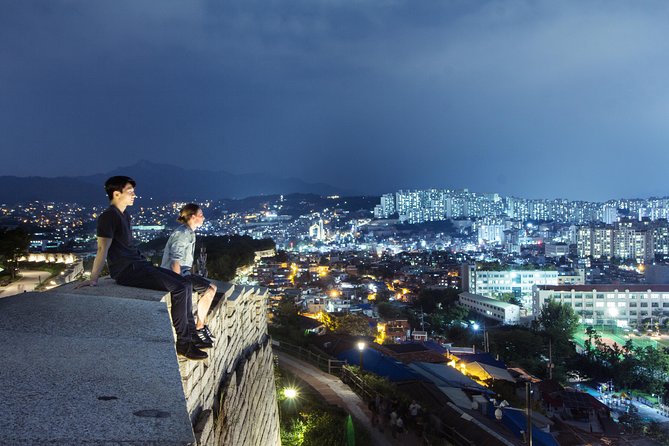
- Seoul City Wall at night, where the viewpoint feels quieter and more special than the usual photo spots
- A guide-led pace that makes a hilly route manageable, with frequent photo stops
- Small group size (max 20), so questions and interactions stay easy
Other walks we have covered in Seoul
Why This Moonlight Walk Works Better Than a Typical Sightseeing Loop
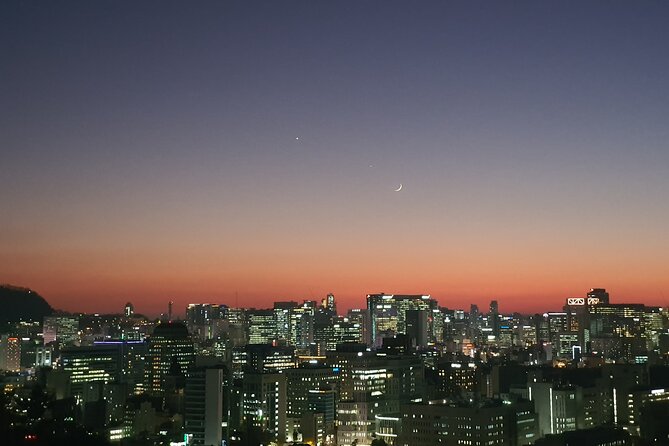
Seoul at night can feel like a blur if you only jump between landmarks. This tour is built around a different rhythm: you walk uphill, you pause for stories, you look out over the city, then you keep moving. That pacing makes the views feel earned, and it helps the history stick because you’re learning it while you can actually see what the site is talking about.
I like that the tour stays focused on one neighborhood belt and a clear theme. It is not trying to cover all of Seoul. You get a coherent arc: student culture and everyday Seoul at the start, art and community on the hillside, then the big night payoff at Naksan Park and the Hanyang City Wall area.
The best part for many people is also the most practical: the route is short enough to finish in about 2 hours, but long enough to feel like more than a quick stroll. You also get a free admission structure at the museum stop and the key viewpoint stops, so you are not constantly budgeting for entry fees.
Getting Oriented Fast at Hyehwa: Where the Tour Begins and What to Expect
Meet near Hyehwa at Hyehwa (120 Daehak-ro, Jongno District). This matters because Daehak-ro is easy to reach, and it sets your expectations for the night. You start in an area that’s connected to students, performance, and street life. Even before the uphill climb begins, you’re already in Seoul’s cultural pulse.
The start also helps solo travelers and small groups. You are not trying to find a remote meeting point in the dark, and you are close enough to public transport that you can plan dinner or drinks after without stress.
From the tour structure, I’d plan for an evening that includes:
- frequent short stops (think 5 to 20 minutes each)
- a steady climb with breaks
- photo opportunities when the lighting turns good
And yes, it is a walking tour, so you’ll want to come ready for a hill environment.
Stop 1: Seoul University Hospital Medical Museum and Student-Life Context
The walk opens at Seoul University Hospital Medical Museum. The tour frames it as the highest place students can go in Korea, and it uses that idea to talk about current university culture. Even if you do not go deep into medical history, this stop is a smart way to ground the night in how education and institutions shape daily life.
What I like about starting here: it gives you a lens. Soon you’ll be walking through neighborhoods tied to culture, class, and the city’s evolution. If you start with student culture, the rest feels connected instead of random.
Practical note: it’s a short visit, around 10 minutes, and the tour lists admission as free.
Potential drawback: if you are hoping for only outdoor viewpoints at night, you might find this first stop more intro-oriented than scenic. But it pays off later when the guide connects present-day Seoul to how the city developed.
Stop 2: Marronnier Park for Live Theater Energy
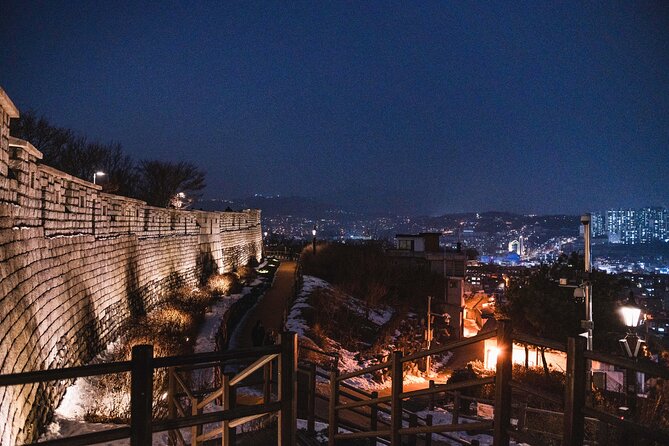
Next is Marronnier Park, described as a cultural zone known for live theaters and live shows. This is one of those stops that works even if you do not plan to attend a performance. It helps you understand why this area of Seoul has a special feel after dark.
For me, this stop is a useful contrast. You are not yet far into the quiet hillside views. You’re still in a zone where art and public spaces overlap. That makes the night walk feel like a story that is moving forward, not just climbing toward a view.
The time commitment is small, about 5 minutes, and admission is free.
If you have motion sensitivity or you hate crowds at night, you may want to be mindful. Theater districts can be lively depending on the evening, though the tour group itself stays small.
- Best DMZ Tour Korea from Seoul (Red Suspension Bridge Optional)
★ 5.0 · 41,422 reviews - DMZ Tour: 3rd Tunnel, Option(Suspension Bridge, Boat) from Seoul
★ 5.0 · 21,373 reviews - DMZ tour south Korea from Seoul (NK experience hall, defector)
★ 5.0 · 20,599 reviews - Seoul: DMZ Tour with Optional Suspension Bridge
★ 4.8 · 5,277 reviews - Signature DMZ Tour: Exclusive Defector Talk & Suspension Bridge
★ 5.0 · 4,459 reviews
Stop 3: Naksan Park and the Capital Story Behind the City’s Layout
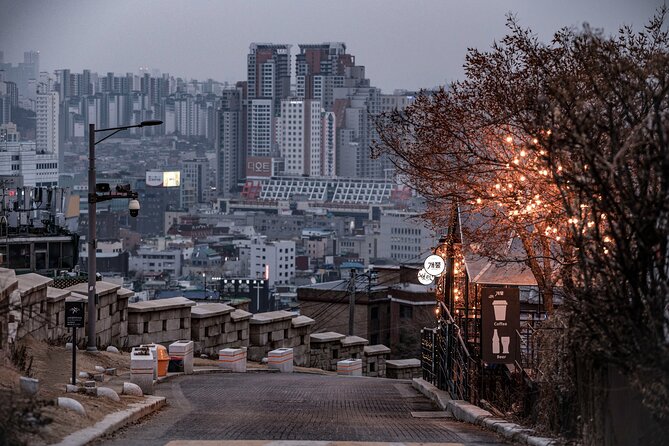
Then you hit Naksan Park, with the tour’s key question: how Korea’s capital ended up located in Seoul, and how it changed over time. This is where the hike starts to feel meaningful, because the terrain and the viewpoints are not random.
Naksan Park is also tied to a big night expectation. The tour positions it as an area with beautiful historical monument surroundings, plus classic sunset and city-view angles. A lot of people in the feedback call out the view quality and the way the timing works well for photos.
Stop length is about 10 minutes, with free admission noted for this part as well.
Two things to plan for here:
- The walk is still mostly uphill toward the next climb stages.
- The lighting changes quickly in the evening, so if you want a photo-heavy pace, it helps to keep your phone charged and ready.
Stop 4: Ihwa Mural Village, Art on Hills, and a Working-Class Lens
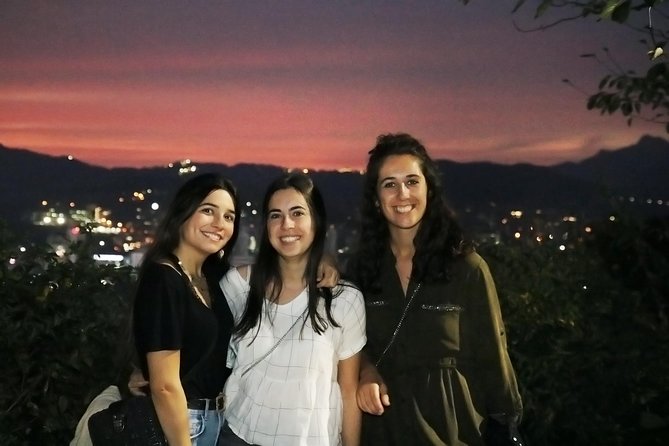
After Naksan Park, you move into Ihwa Mural Village for around 20 minutes. The tour’s angle here is not just pretty walls and street art. It explicitly frames the village as a mural village connected to unwealthy people, including the idea that many hillside homes here historically belonged to people with less wealth.
That lens is important. It changes how you see the art. Instead of thinking of the murals as decoration only, you start noticing how creative spaces often grow where communities already exist, and how a city’s attention can shift over time.
This stop also tends to be a favorite because it gives variety: you get open-air art textures, the hillside feel, and plenty of story opportunities. In several guide-led experiences, the commentary style is also praised for mixing humor with clear context, which helps if you normally find cultural explanations dry.
Practical note: this stop is not listed as having an admission ticket cost, and the tour signals it as free at this stage. Expect it to involve walking on uneven surfaces, plus some stairs depending on your route within the village.
Stop 5: Seoul City Wall and Hanyang City Wall Night Views
The final big payoff is Seoul City Wall, described as a historical monument with romantic atmosphere and awesome night views. The tour specifically calls out the Hanyang City Wall feel and the idea that this is a quieter viewpoint space you might not find on your own.
This is where the night starts to click for most people. You’ve climbed step by step, listened to how the city formed and reformed, and now you look out and see Seoul as a layered city, not a flat grid.
The scheduled time here is about 20 minutes, and admission is listed as free. It’s also the stop that most strongly matches the advice you’ll see repeated: come prepared for stairs, keep your camera ready, and take your time.
One review tip worth repeating: bring bug spray. Night views are great, but insects are real in park and hillside settings, and the practical fix is easy.
Price and What You’re Really Paying For at Around $32
At $31.98 per person for about 2 hours, this sits in the midrange for a guided walking tour in Seoul. The value comes from two places.
First, you get a curated route with multiple stops that are designed to work together as one theme: student culture, theater culture, hillside community history, and then the big night viewpoint at the city wall.
Second, you’re paying for a guide who can connect what you’re seeing to context you can’t easily piece together from a map alone. In the feedback, guides such as Jessica, Ethan, Leah, June, and Smin are mentioned for being fun, funny in a natural way, and able to explain both historical and current cultural angles. That is not just entertainment. It changes how you interpret Seoul while you’re standing there.
What about the tradeoffs? You are still paying for a guided walking experience, so if you only want viewpoints and do not care about history or culture, you might prefer a self-guided plan. But if you like learning while walking, the price feels fair.
Group Size, Timing, and the Hilly Reality You Need to Plan For
This tour caps at 20 travelers, which is a sweet spot. You get enough people for an easy group vibe, but small enough for the guide to manage pacing and answer questions. Many of the guide-focused comments also point to an easy-to-follow flow, with patience for photo breaks and questions.
Timing wise, think about:
- the tour lasting about 2 hours (approx.)
- short stop windows that add up to a full evening walk
- the best views likely aligning with sunset or evening light (the route is built for that)
And now the important part: plan for uphill walking and stairs. The feedback keeps bringing this up. It is not described as an extreme hike, but it is absolutely a hill walk. Your best upgrade to the experience is boring and simple: wear comfy shoes and keep your phone charged for pictures.
Optional Dinner After the Walk: How to Extend the Night
The tour notes an optional food session after the tour. The key detail is that dinner is not included and comes with an extra fee. I like that setup because you are not forced into a meal you may not want.
If you want a clean plan: finish the city wall stop, then decide on the spot whether you want the optional dinner or an alternative nearby. Since you start in the Hyehwa/Daehak-ro area, you’ll likely find food options without having to travel far.
Who This Tour Suits Best (and Who Might Skip It)
This tour is a great fit if you:
- want to see Seoul at night without only doing the same landmark route
- like stories that connect history to daily life and social context
- enjoy walking and do not mind stairs as part of the price of city views
- want a guided route that helps you notice details on your own later
It may be less ideal if you:
- hate uphill walking or stair-heavy routes
- only want short, mostly flat sightseeing
- are not interested in cultural and historical commentary at all
If you can handle a hill walk, though, this is exactly the kind of experience that makes Seoul feel personal.
Should You Book This Night Walking Tour?
I’d book it if you want a Seoul evening that feels like you’re walking with a local storyteller, not just following a checklist. The combination of Naksan Park night views and the Seoul City Wall payoff is a strong reason, and the stop sequence gives you context as you move.
Choose it with confidence if:
- you’re okay with stairs and an uphill route
- you want a guide who mixes humor with clear cultural explanations (guided names like Jessica, Ethan, Leah, June, and Smin show how strong that style can be)
- you want a small-group feel capped at 20
Skip it if your ideal night in Seoul is flat, minimal walking, or purely photo stops. If that’s you, self-guided viewpoint hopping will likely feel easier.
FAQ
How long is the Seoul moonlight walking tour?
It runs for about 2 hours (approx.).
How much does the tour cost?
The price is $31.98 per person.
Where does the tour start?
The meeting point is Hyehwa (120 Daehak-ro, Jongno District, Seoul, South Korea).
How many people are in the group?
The tour has a maximum of 20 travelers.
Do I need to buy tickets for the stops?
Admission ticket is listed as free for the museum stop and the other stops in the itinerary.
Is dinner included?
No. There is an optional food session after the tour, but dinner is not included and has a fee.
What do I need to bring or prepare?
No special supply is needed for the walking tour, but the route involves stairs and uphill sections, so wear comfy shoes and have your phone charged for views.
What happens if the weather is bad?
This tour requires good weather. If it’s canceled due to poor weather, you’ll be offered a different date or a full refund.
Shoe Leather Around Seoul


Keep Browsing Seoul

More Seoul Write-Ups
Fresh on the Seoul pile
- Unique Native Experience : Han River Picnic, Board game, BBQ★ 5.0 · 3 reviews
- 2-Hour Private Kayaking and Paddleboarding Experience in Hanriver★ 5.0 · 3 reviews
- Korean Folk Village & Suwon Hwaseong Fortress Private Tour★ 5.0 · 3 reviews
- Seoul Korean BBQ Dinner Experience with Secret Food Tours★ 5.0 · 3 reviews
- Seoul Highlights & Hidden Gems – Private Tour with Photo Service★ 5.0 · 3 reviews
- Night Food Tour in Seoul with Traditional and Modern Cuisine★ 5.0 · 3 reviews
Walking Tours you might have missed.
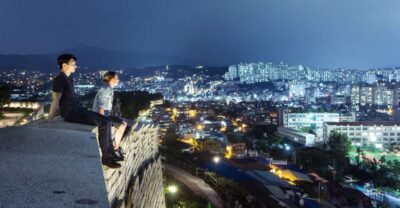 ★ 5.0Seoul: Nighttime Hidden Gems Walking TourFrom $33775 reviews
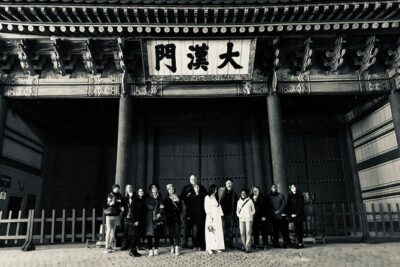 ★ 5.0Seoul: Evening Dark History, Folklore & Ghost Story Walking TourFrom $42593 reviews
 ★ 4.8Seoul: Dark Side of the City and Ghost Stories Walking TourFrom $42484 reviews
 ★ 5.0Gangnam Walking Tour on Youth and Society in Seoul KoreaFrom $31401 reviews
 ★ 4.8Seoul: Gyeongbok Palace and Bukchon Hanok Walking TourFrom $88157 reviews
 ★ 5.0Best Walking Tour to Gyeongbok Palace Bukchon Hanok VillageFrom $88138 reviews
 ★ 4.5Highlights & Hidden Gems With Locals: Best of Seoul Private Walking TourFrom $12383 reviews
 ★ 5.0Street photoshoot and Seoul Hidden gem History Walking TourFrom $4568 reviews
Where this tour also appears