
REVIEW · MORNING
Seoul: Guided Small Group V.I.P Morning Pedicab Tour
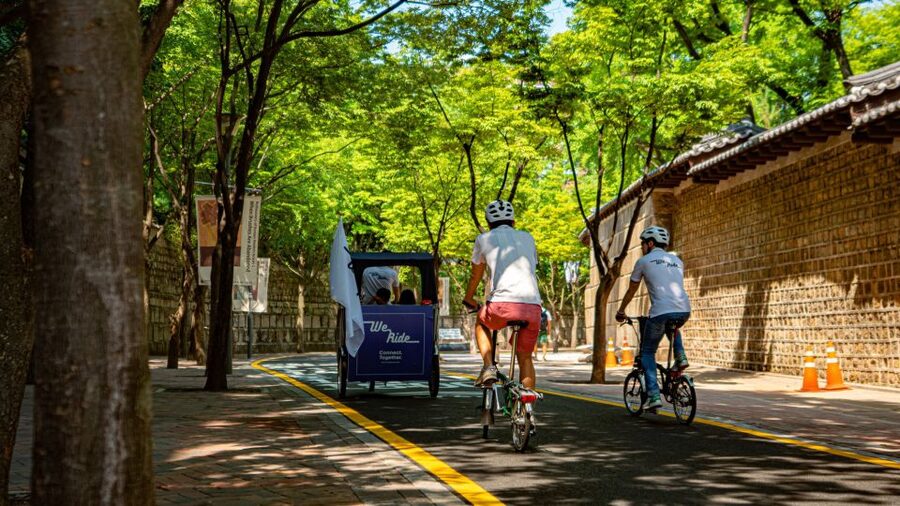
Pedicabs, palaces, and market snacks. This Seoul morning tour strings together big sights and real local life in one smooth ride, with Wi-Fi, a blanket, and power bank so you stay comfortable while the city moves around you. You’ll roll past Cheonggyecheon, Gwanghwamun, the Blue House area, and ends in the calm of Jogyesa Temple.
What I like most is that you get both photo-focused stops and clear context from an English-speaking guide (for example, guides such as Hagar and June are known for organized explanations and plenty of photos taken along the way). The schedule also builds in a stop at Tongin Traditional Market so you can taste and not just look. One catch: with only about 3 hours total, each major site is intentionally brief, so if you want long time inside palaces or to wander for an hour in one neighborhood, plan on coming back.
In This Review
- Key Things That Make This Tour Work
- VIP Pedicab Comfort With Real Practical Perks
- Finding We Ride Korea on Jong-ro (The Part That Saves Your Time)
- From Cheonggyecheon to Gwanghwamun, You Get Seoul’s Big Picture Fast
- Gyeongbokgung Photo Stop and the Architecture You Actually Remember
- Seochon Hanok Village and the Quiet West Side
- Tongin Traditional Market: Street Food Time Done Right
- Blue House Area Views and the Photo Moment Mindset
- Bukchon Hanok Village Photos From the Road, Not a Random Shuffle
- Jogyesa Temple Calm and a Quick Buddhism Primer
- A Smart Pace, and Why Some Stops Feel Brief
- Who This Tour Fits Best (And Who Might Want to Skip It)
- Price, Value, and How to Get Your Money’s Worth
- Should You Book This Seoul Morning Pedicab Tour?
- FAQ
- How long is the Seoul morning pedicab tour?
- How much does the tour cost, and how many people can be in a group?
- Where is the meeting point for We Ride Korea?
- What’s included in the tour?
- What should I bring or wear?
- What happens if weather is extreme or my travel plans change?
Key Things That Make This Tour Work
- VIP e-rickshaw comfort with Wi-Fi and a blanket, plus water and optional helmet
- Small group size (up to 3), which keeps the pace friendly and the explanations targeted
- Photo stops at multiple landmarks, so you’re not just rushing from one place to the next
- Tongin Traditional Market time built in for street food and tastings
- Old Town routing that’s hard to stitch together alone, especially across palace and hanok areas
- Jogyesa Temple visit with a quick, human explanation of Buddhism in Korea
More days where a guide does the work in Seoul
VIP Pedicab Comfort With Real Practical Perks
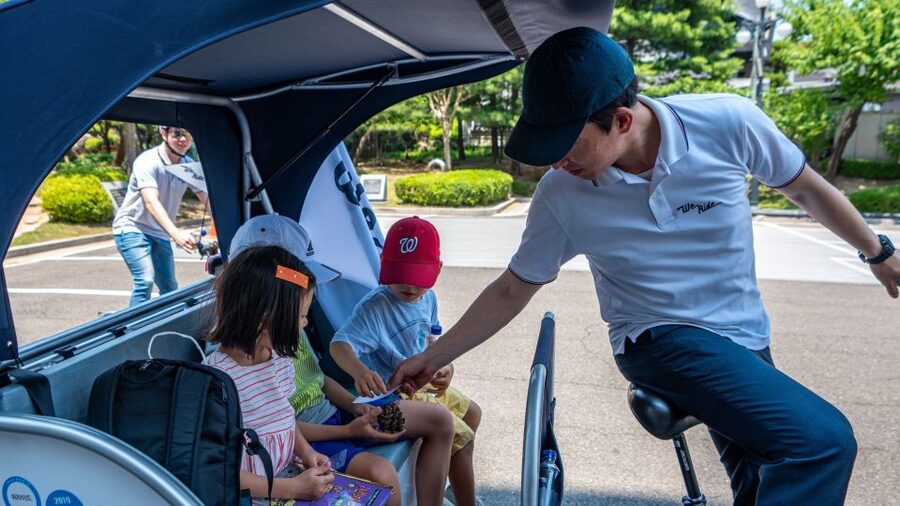
You start off meeting your team at We Ride Korea, then hop into a brand-new e-rickshaw driven by a professional guide. If you prefer, the experience also gives you the option to take your own bike. Either way, you’re not doing a solo navigation sprint, and that matters in Seoul, where getting from one historic cluster to the next can eat your energy fast.
The “VIP” part is not just a marketing word here. You get a blanket for comfort, plus Wi-Fi and a power bank during the ride, and a bottle of water. That may sound like small stuff, but on a morning tour it means fewer frantic stops for charging or Googling your next turn. You can focus on photos, listening, and the changing scenery.
They also include insurance, and they offer a safety helmet (optional). There’s a short safety briefing at the start, too, so you’re not figuring out the routine while moving.
Finding We Ride Korea on Jong-ro (The Part That Saves Your Time)
Meeting point details are very specific, and I’m glad they are. Your stop is on the 2nd floor of the Le Meiller Jongno Town building at 19 Jong-ro Boulevard area, right in the center of old city Seoul. It’s between Jonggak Station (Line 1, Exit 1) and Gwanghwamun Station (Line 5, Exit 4).
Walk along Jong-ro until you spot a statue of a man on a horse. Next to it is the building. Go in through the glass doors with the number 19 above, then take the escalator to the 2nd floor. If you get turned around, you can contact them via the phone or WhatsApp number listed in your voucher.
Practical tip: arrive 20 to 30 minutes early. That buffer helps with the “getting ready” time before the tour actually begins.
From Cheonggyecheon to Gwanghwamun, You Get Seoul’s Big Picture Fast
Most morning tours either skip the city’s everyday flow or cram too much walking into the first hour. This one starts with the Cheonggyecheon area, with a guided look and sightseeing time. It’s a canal zone that helps you understand Seoul’s mix of history and modern city life. Even in a short stop, you’ll feel how the old town rhythm works, and it’s an easy way to get oriented without starting at the busiest palace gate.
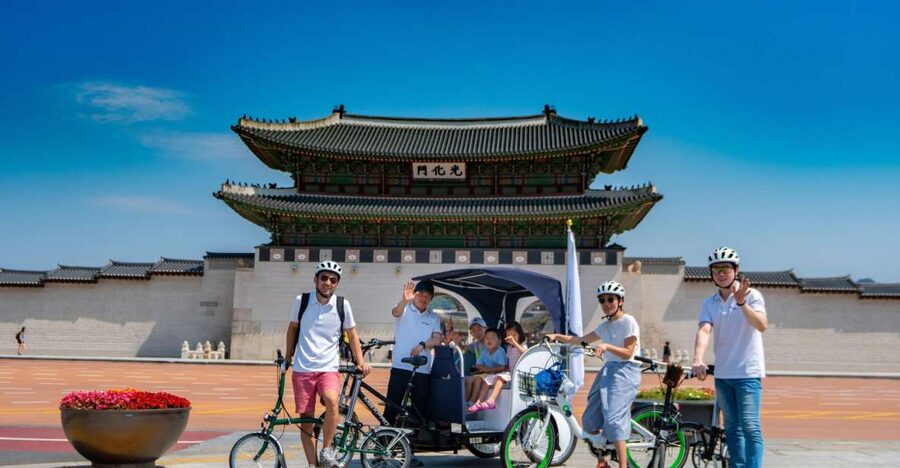
Next is Gwanghwamun with a photo stop and guided sightseeing. This is one of those places where the scale can surprise you, and the guide’s job is to help you read what you’re seeing. You’ll get quick context for why these gates and axes mattered historically, and you’ll also get a clean shot setup so you’re not guessing where to stand for the best angles.
If you’re coming to Seoul for the first time, this pairing is smart. Cheonggyecheon gives you the city’s “breathing space,” then Gwanghwamun snaps you into the historical core.
Gyeongbokgung Photo Stop and the Architecture You Actually Remember
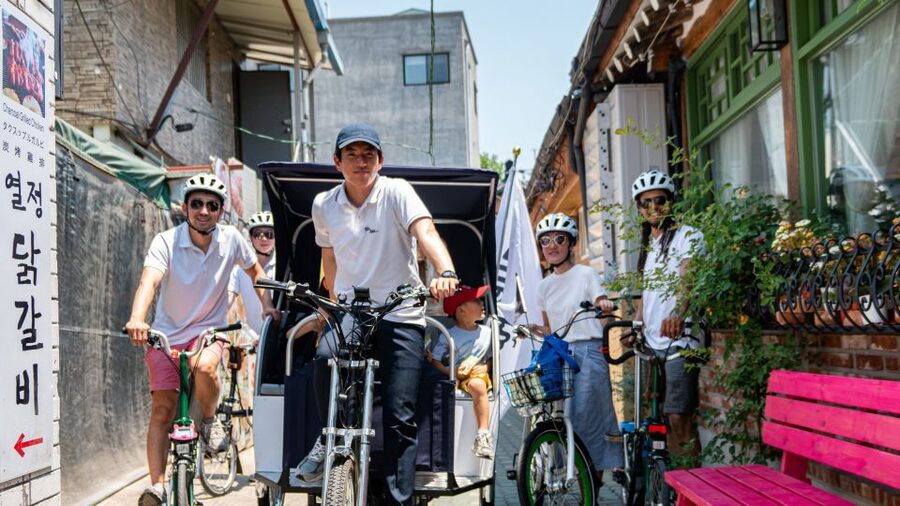
Then you roll toward Gyeongbokgung Palace, one of Seoul’s most famous royal sites. The tour includes a photo stop plus guided sightseeing and riding time, so you’re not just passing by. You’ll get a look at the palace’s grand architecture, and the guide will point out what to notice so it doesn’t blur into “big building, next stop.”
This is the kind of stop where time can make you either overwhelmed or helpful. You won’t have hours to wander every courtyard, but you will get a guided structure for understanding what you’re seeing. That’s valuable when you want memories that feel specific, not just photos.
One note for expectations: palace grounds are big, and this tour keeps things moving. If your priority is slow museum-style reading, you may want separate time at Gyeongbokgung on another day. Here, you’re getting a strong overview, plus the chance to capture the key visuals.
More pre-dawn pickups in Seoul
- Mt. Seorak+Nami Island+Garden of Morning Calm Day Trip from Seoul
★ 5.0 · 959 reviews - Seoul: Nami Island and Garden of Morning Calm opt Railbike
★ 4.6 · 907 reviews - Day Trip to Nami Island with Rail bike and The Garden of Morning Calm
★ 4.5 · 459 reviews - Trip to Nami Island with Petite France & Italian Village, Garden of Morning Calm
★ 4.5 · 373 reviews - Nami Island & Garden of Morning Calm & Gangchon Railbike Tour
★ 4.5 · 370 reviews
Seochon Hanok Village and the Quiet West Side
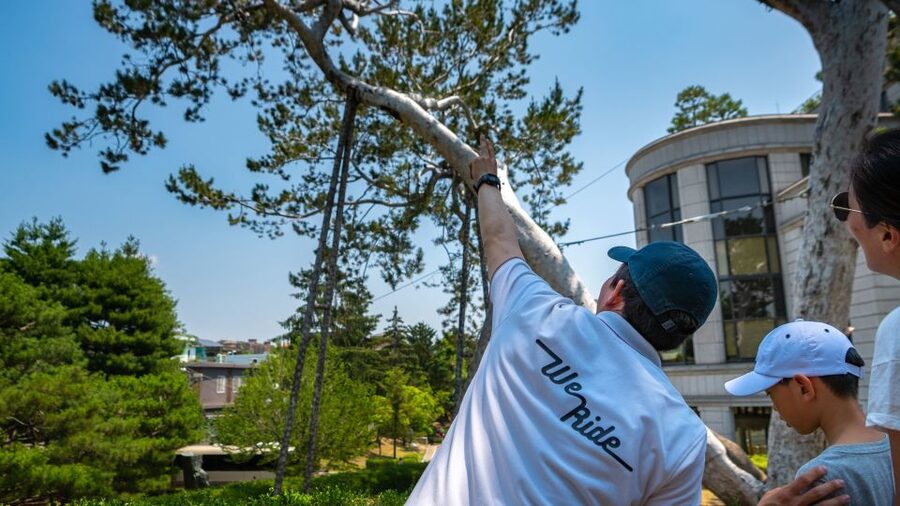
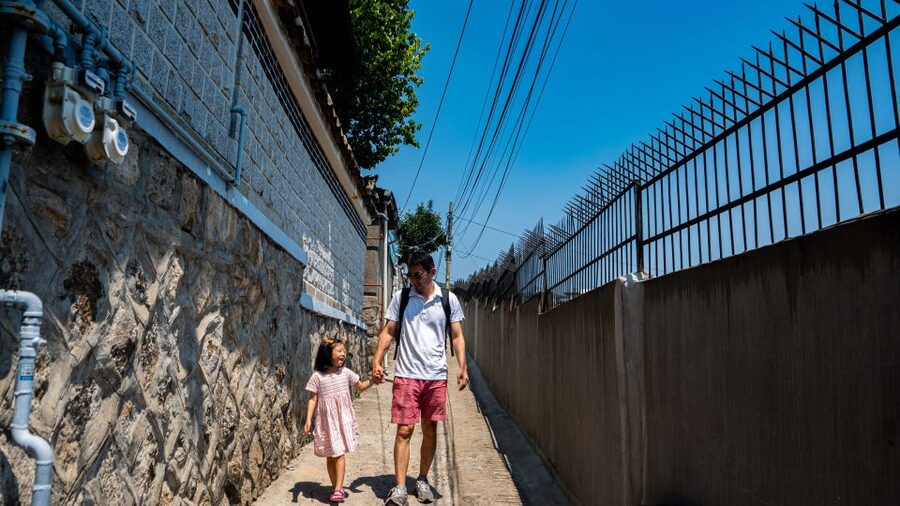
After the palace area, the tour shifts into Seochon Hanok Village, sometimes described as the West Village vibe. You’ll get guided time, sightseeing, and a relaxed ride through traditional streets. Seochon is often less frantic than some other hanok zones, and that makes it a nice contrast after the grand scale of the palace.
In the west-side area, you’ll also pass through or near a traditional market section for added flavor. The benefit of having a guide here is simple: hanok neighborhoods are charming, but they can also be confusing to navigate. Your route is planned so you see meaningful streets without wasting energy circling for landmarks.
You’ll also get photo moments during this segment, which is useful because hanoks can look similar if you don’t know what details to watch for. The guide’s explanations help you connect shapes and street layout to the story of how the area was preserved.
Tongin Traditional Market: Street Food Time Done Right
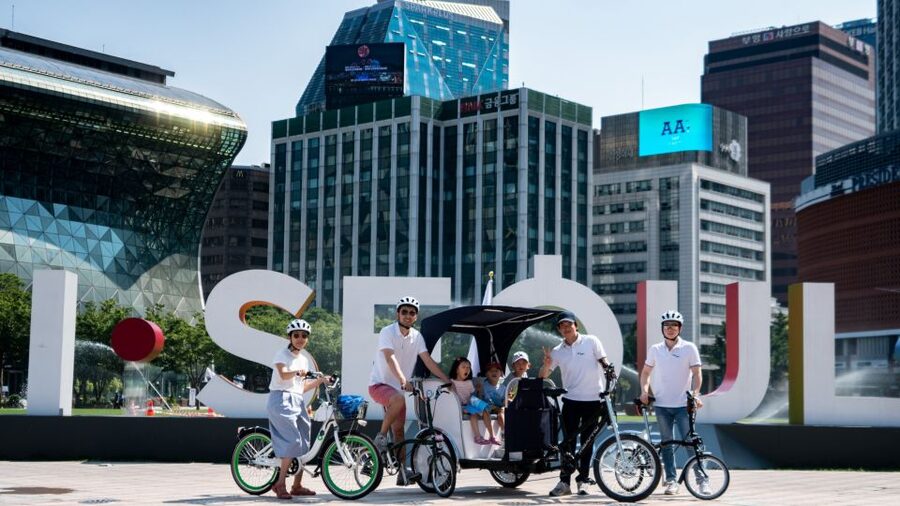
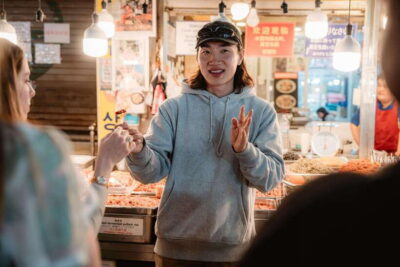
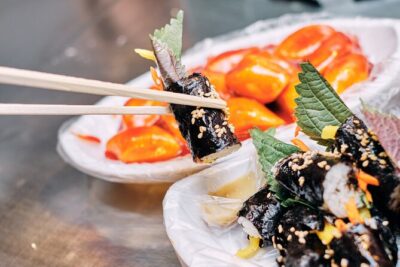
Now for the part you’ll likely remember later: Tongin Traditional Market. The tour includes a photo stop, guided touring through the market, street food time, and free time for tasting and shopping. You’re also given time to visit the food market area and try regional foods.
What I like about this setup is that it doesn’t treat the market like a quick photo vending machine. You get guidance so you’re not standing in the middle of the stalls wondering what’s worth trying. You also get free time, which keeps the experience from feeling forced.
If you’ve ever done a walking tour that ends at a market and then basically says, Good luck, this is more helpful. The pacing is built for sampling, not just viewing. Bring your appetite. You’ll probably walk away with at least a couple of local favorites, plus an understanding of what people actually buy and eat in a traditional market setting.
One practical mindset: markets are sensory places. Go in ready for smells, crowds, and small spaces. The reward is that you get Seoul beyond the postcard look.
Blue House Area Views and the Photo Moment Mindset
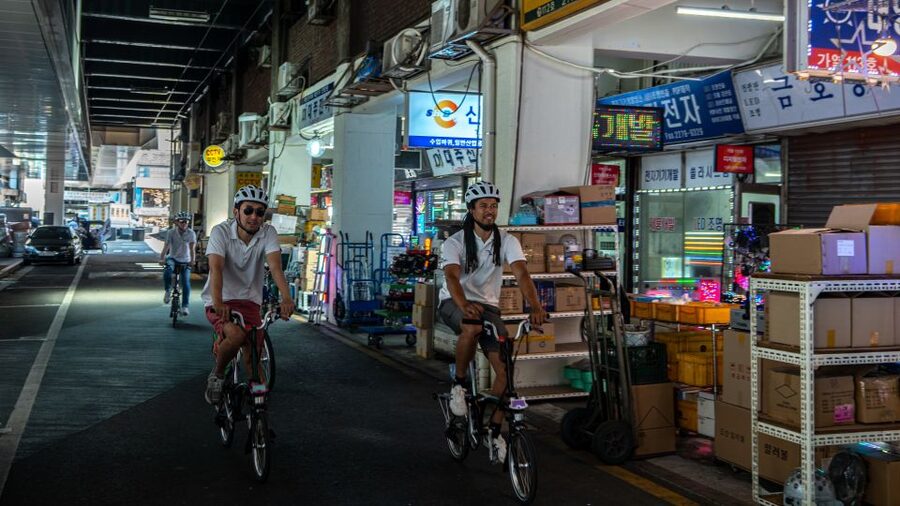
Next up is the Blue House area. The tour includes guided sightseeing and riding time, with a short stop built into the route. The Blue House is a symbol with a lot of attention attached, so a guided explanation helps you interpret what you see and what you might not be able to fully access.
Because your time is limited, the photo stop approach is again important. You’re not trying to capture everything. You’re getting the key “I was here” viewpoint, plus the context that prevents the visit from feeling like a blur of barriers and signage.
If you care about understanding modern Korean governance and history, this segment does a good job of adding narrative rather than just pointing at a landmark.
Bukchon Hanok Village Photos From the Road, Not a Random Shuffle
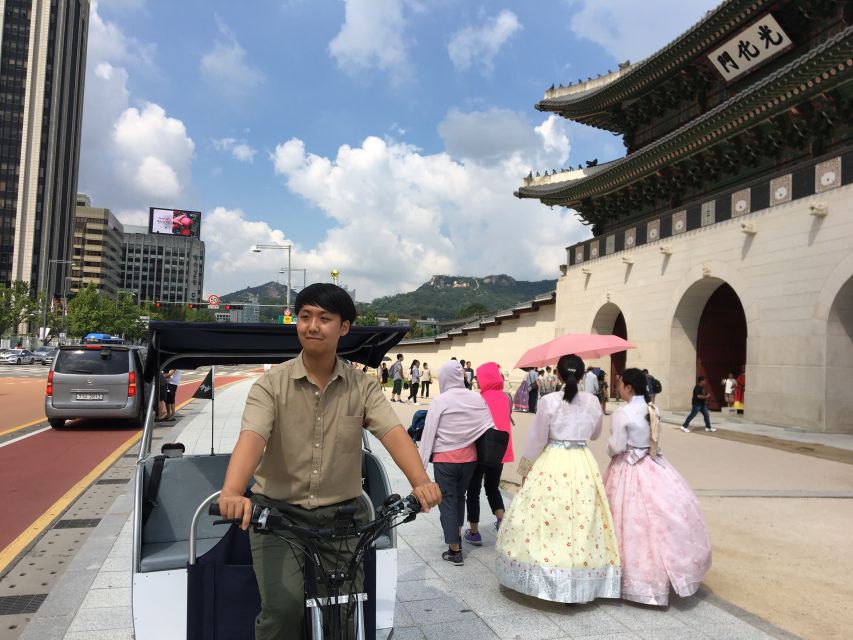
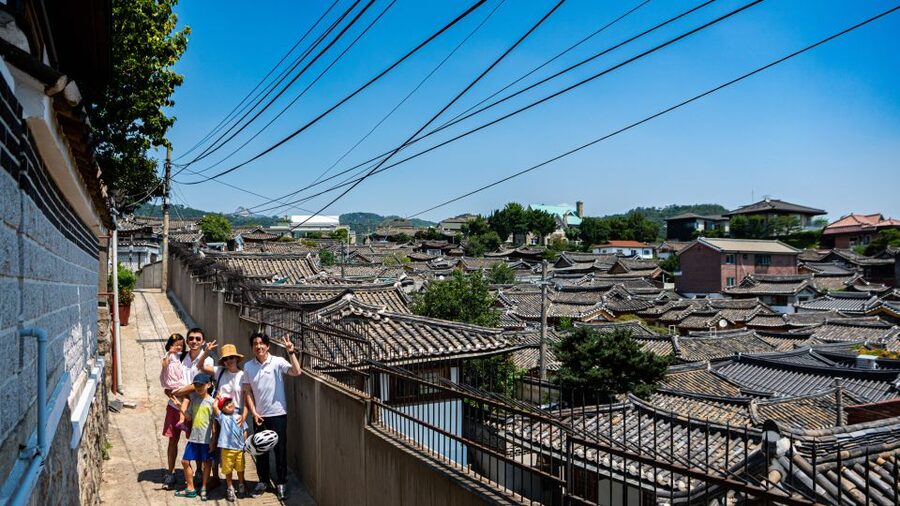
Then you reach Bukchon Hanok Village, one of Seoul’s most iconic hanok areas. This stop includes a photo stop, guided sightseeing, and additional bike or ride time. It’s a classic place to photograph because the streets and rooflines create a whole scene, not just a single building.
The value of doing it on a guided pedicab tour is timing and direction. Bukchon can be visually overwhelming because there’s so much to look at and you can easily get turned around among similar streets. The route you follow helps you see more in less time, and your guide can point out what details matter so your photos end up feeling intentional.
Expect a strong contrast here. Bukchon feels “historic Seoul,” while the ride between sites feels like “real Seoul,” with traffic sounds, morning movement, and everyday storefront life.
Jogyesa Temple Calm and a Quick Buddhism Primer
Later you visit Jogyesa Temple, with a photo stop and guided sightseeing time. Your guide shares a brief history of Buddhism in Korea, and then you get to take in the quiet atmosphere.
This is a good emotional reset after palace architecture and dense hanok streets. The temple segment is short, but it gives you a sense of why people come here, beyond the scenery. If you’re new to Korean culture, the guide’s explanation helps you understand what you’re seeing instead of treating it as purely decorative.
Even if you don’t know much about Buddhism, the space tends to feel naturally grounding. Give yourself permission to slow down for a few minutes, even if you have to return to the ride soon after.
A Smart Pace, and Why Some Stops Feel Brief
Here’s the honest tradeoff. With a 3-hour overall duration, the tour is designed to hit major highlights, not to become a deep, slow day. That means each site gets a focused visit and photo time, then you move on. If you want long wandering time in each place, you may feel like the stops are short.
One clear example from the experience’s pacing is that major landmarks like Gyeongbokgung, Bukchon, and Jogyesa each have a quick guided block. That’s not a flaw for many people. It’s what allows the tour to cover the whole Old Town arc, from waterways to gates to hanoks to temple calm.
My practical advice: use this tour as your “first map of Seoul history.” Then, choose one or two places from your route to revisit later at a slower pace.
Who This Tour Fits Best (And Who Might Want to Skip It)
This Seoul morning pedicab tour is ideal if you want:
- a tight route that connects several must-see areas without exhausting walking
- photo-friendly stops where a guide helps you frame what to look at
- a market experience where you can sample Korean snacks instead of eating only at restaurants
- an English-speaking guide who explains so you leave with understanding, not just photos
It’s also a solid choice for families, since the pedicab can seat up to two adults and one child, or three children. The ride style can feel more playful than a bus tour, especially for kids who like movement.
On the other hand, the tour notes it is not suitable for people with mobility impairments, even though it also lists wheelchair accessibility. If you have mobility needs, I’d treat that as a “confirm with the operator first” situation. Also, intoxication is not allowed, so save the late-night plans for after your ride.
Price, Value, and How to Get Your Money’s Worth
At $219 per group up to 3, this is priced like a small private experience, not a big group bus tour. That can feel steep if you’re traveling solo. But the moment you split it among 2 or 3 people, the value starts to make sense, especially because the tour includes the pedicab, a professional guide, and comfort extras like Wi-Fi, a blanket, and power bank.
What you’re really paying for is efficiency plus support. You’re getting:
- a planned route across multiple historic neighborhoods
- guided explanations during key moments
- photo stops built into the schedule
- a market segment that saves you time figuring out what to eat
If you only have one morning in Seoul and you want the “best-of” Old Town storyline, this tour is often the type of purchase that saves you frustration.
If you have multiple days and you love wandering, you might get the same landmarks later, but you’ll spend more time navigating and doing guesswork. For many first-timers, that guesswork is exactly what this tour removes.
Should You Book This Seoul Morning Pedicab Tour?
I’d book it if you like the idea of a guided, small-group sweep of Seoul’s old core, with comfort perks and real cultural context. It’s a great way to set your bearings fast, especially if this is your first visit and you want to understand the city’s layout through major sites like Cheonggyecheon, Gwanghwamun, Gyeongbokgung, Bukchon, and Jogyesa.
I might hesitate if your top goal is slow immersion at one site, or if you know you need lots of mobility support. Also, if you get cranky when things move quickly, remember the time per stop is intentionally tight.
Best move: treat this tour as your “morning blueprint.” Then schedule deeper time on the places that sparked your curiosity most during the ride.
FAQ
How long is the Seoul morning pedicab tour?
It runs for 3 hours.
How much does the tour cost, and how many people can be in a group?
The price is $219 per group, and the small group limit is up to 3 participants.
Where is the meeting point for We Ride Korea?
Meet at the 2nd floor of the Le Meiller Jongno Town building at 19 Jong-ro Boulevard, between Jonggak Station (Line 1, Exit 1) and Gwanghwamun Station (Line 5, Exit 4). Enter through the glass doors with the number 19 above, then take the escalator to the 2nd floor.
What’s included in the tour?
Included are the rickshaw, professional local guide, bottle of water, Wi-Fi and a power bank during the ride, insurance, and a safety helmet (optional).
What should I bring or wear?
Wear comfortable shoes. A safety helmet is available if you want one.
What happens if weather is extreme or my travel plans change?
The tour runs in most weather conditions. In extreme cases, you’ll be offered either a refund or an alternative date. You can cancel up to 24 hours in advance for a full refund.
Let a Guide Run the Day
Keep Browsing Seoul
More Seoul Write-Ups
Fresh on the Seoul pile
- Unique Native Experience : Han River Picnic, Board game, BBQ★ 5.0 · 3 reviews
- 2-Hour Private Kayaking and Paddleboarding Experience in Hanriver★ 5.0 · 3 reviews
- Korean Folk Village & Suwon Hwaseong Fortress Private Tour★ 5.0 · 3 reviews
- Seoul Korean BBQ Dinner Experience with Secret Food Tours★ 5.0 · 3 reviews
- Seoul Highlights & Hidden Gems – Private Tour with Photo Service★ 5.0 · 3 reviews
- Night Food Tour in Seoul with Traditional and Modern Cuisine★ 5.0 · 3 reviews
Morning you might have missed.
 ★ 5.0Mt. Seorak+Nami Island+Garden of Morning Calm Day Trip from SeoulFrom $95959 reviews
 ★ 4.6Seoul: Nami Island and Garden of Morning Calm opt RailbikeFrom $51907 reviews
 ★ 4.5Day Trip to Nami Island with Rail bike and The Garden of Morning CalmFrom $76459 reviews
 ★ 4.5Trip to Nami Island with Petite France & Italian Village, Garden of Morning CalmFrom $78373 reviews
 ★ 4.5Nami Island & Garden of Morning Calm & Gangchon Railbike TourFrom $75370 reviews
 ★ 5.0Nami+Alpaca+Garden of Morning Calm (+Rail Bike Option)From $92300 reviews
 ★ 4.9Seoul: Alpaca, Nami, Morning Calm or Eobi (+Rail Bike)From $90233 reviews
 ★ 4.5Day Trip to Nami Island with The Garden of Morning CalmFrom $50215 reviews