
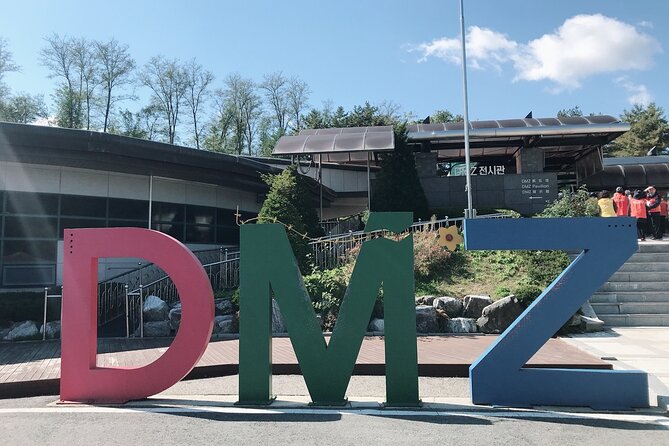
REVIEW · DMZ & BORDER TOURS
Half-Day South Korea DMZ Small-Group Tour from Seoul
War and silence start early at 8:00 in Seoul. This half-day small-group DMZ tour strings together Imjingak memorial sights, Freedom Bridge, a walk through the 3rd Tunnel, and views from Dora Observatory, all with English commentary and smooth transport. It is one of the few places in South Korea where division is not a theory, it is a location.
What I really love is how the 3rd Tunnel walk gives you a physical sense of how close the two sides once were, with a tight size that makes you slow down and pay attention. I also like the English-speaking guide approach, especially when a guide like Henry Park brings clear explanations and steady time management to the day.
One consideration: you must bring your original passport for DMZ entry, and the DMZ tickets are limited and handled as first come, first served, plus the whole outing depends on weather.
In This Review
- Key things that make this DMZ tour worth your time
- DMZ Morning Timing: Why a 6h 30m day still feels full
- Passport and mobile ticket basics for DMZ entry
- Imjingak Pyeonghoa-Nuri Park: Memorials 7 km from the demarcation line
- Freedom Bridge in Paju: A short stop with major emotional weight
- 3rd Tunnel: The walk where the dimensions hit you
- Dora Observatory: Public views toward Gaeseong and beyond
- Ginseng Museum and duty free stop in Seoul: A practical final hour
- The guide matters: Henry Park style explanations and time management
- Price and ticket timing: Getting value from $500 per group
- Who this DMZ tour suits best (and who should skip it)
- Should you book this half-day South Korea DMZ tour?
- FAQ
- How long is the Half-Day South Korea DMZ Small-Group Tour?
- What time does the tour start, and where does it meet?
- Do I need an original passport for DMZ entry?
- How many people are in the group?
- Is the DMZ entrance ticket guaranteed?
- What is included in the price?
- What happens if the tour is canceled due to poor weather?
Key things that make this DMZ tour worth your time
- Small group size (max 10 people): easier questions, less chaos on crowded checkpoints
- Real DMZ stops, not just viewpoints: you visit a memorial park, a major bridge stop, the tunnel, and an observatory
- 3rd Tunnel scale you can feel: about 1,635 meters long, with very tight dimensions that affect how you move
- Dora Observatory access: overlooking North Korea from an official public viewing area
- Guide-led pacing: English commentary plus a focus on keeping the day on schedule
- Good value when split: price is per group, up to 4, with transport and key admissions handled
Other routes to the border, side by side
DMZ Morning Timing: Why a 6h 30m day still feels full
This is a half-day format, about 6 hours 30 minutes, with an 8:00 am start from Seoul City Hall (subway Line 1). That schedule matters because DMZ days are not just sightseeing. You are moving through a system of timing, security, and distance, so the early departure helps you actually reach each planned stop without the day turning into a scramble.
The small-group cap (up to 10 people) is also a big deal for this kind of outing. Fewer people means the guide can keep an eye on your timing, answer questions without repeating themselves all day, and help you understand what you are seeing as you go.
A typical day like this also works for mixed interests. You get memorial and viewpoint stops, but the tunnel stop gives it a hands-on, unforgettable element. If you only want a quick bus photo stop, this might feel like more than you asked for. If you want meaning plus logistics handled, this format is practical.
Passport and mobile ticket basics for DMZ entry
If you remember just one rule, make it this: the DMZ requires your original passport. No copies, no photos, and it is mandatory for entry. That is the kind of detail that can ruin a morning fast, so handle it like a checklist item, not a maybe.
You also use a mobile ticket, which is convenient for keeping your travel day simple. Still, I would treat your phone battery like it is part of your kit. If anything happens to your ticket access, you will lose time while everyone else is moving.
Weather is another real variable. The tour needs good weather, and if it gets canceled due to poor conditions, you will be offered a different date or a full refund. That means you should try to plan this trip on a day you can be flexible.
Imjingak Pyeonghoa-Nuri Park: Memorials 7 km from the demarcation line
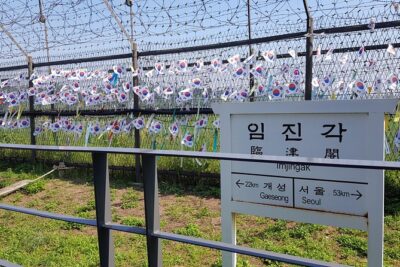
The day opens at Imjingak Pyeonghoa-Nuri Park, around 45 minutes, with the admission ticket included. The park sits about 7 km from the military demarcation line, so it is already in a zone where the separation theme is not abstract.
This is a monument-heavy place. You will see statues and war-related memorials, and you will also notice the unification message built into the park’s purpose. It was built in 1972, with the hope that someday the two Koreas could be united. Even if you know the general outline of the war, I find these memorial spaces do something different. They force you to slow down and read the signals in stone.
A practical note: plan to stand and walk at a memorial pace. This stop is included and timed, so you should not feel rushed, but you also should expect a quieter, more reflective mood than a normal city attraction.
Freedom Bridge in Paju: A short stop with major emotional weight
Next comes Paju and the Freedom Bridge, about 20 minutes, with admission free. The bridge is described as a temporary structure, not an architectural masterpiece. But it earned its name because it symbolizes returning to the South through this route.
That contrast is important. You are not going there for design details. You are going for meaning. In a half-day itinerary, even a brief stop can work if it is focused, and this one is. It is quick, it sets the emotional tone, and then the day moves toward the more physical experiences.
Because the time here is short, I recommend using the moment to get your bearings. Look around, understand the direction of travel implied by the route, and then prepare yourself for the tunnel walk, where the day gets more intense.
Other half-days in Seoul
- Half-Day DMZ Tour Led by a Retired Military Officer from Seoul
★ 5.0 · 1,774 reviews - Seoul: Half-Day DMZ Tour Led by a Retired Military Officer
★ 4.9 · 1,399 reviews - Korean Folk Village Half-day Guided Tour from Seoul
★ 5.0 · 13 reviews
3rd Tunnel: The walk where the dimensions hit you
The highlight for many people is the 3rd Tunnel stop in Paju. You get about 45 minutes, and admission is free. It is located about 52 km from Seoul, and it was discovered in 1978 by South Korean forces.
The numbers are striking: the tunnel stretches about 1,635 meters, and the documented interior dimensions are roughly 2 meters wide and 2 meters high. That means the space is tight. You will likely need to adjust how you walk, and you will feel the constraints immediately, even if you never thought about tunnel geometry before.
There is also a human-scale estimate attached to the site: it is described as a tunnel used for around 30,000 soldiers. Whether you focus on the engineering fact, the military estimate, or the sheer physical discomfort of moving through a space like this, the walk changes how you understand the DMZ. This is not a distant story anymore.
Because the tour also includes a Dora Observatory stop afterward, the tunnel is a good moment to mentally reset. You may want a few minutes after to let the day catch up to you before looking toward North Korea from an outlook point.
Dora Observatory: Public views toward Gaeseong and beyond
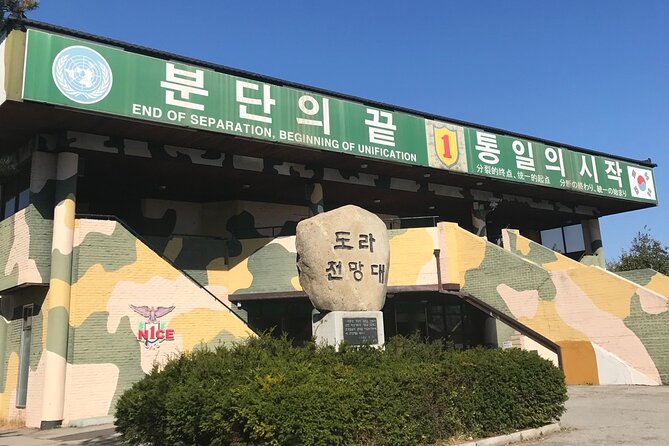
After the tunnel, the itinerary brings you to Dora Observatory, about 45 minutes, with admission included. It is open to the public and was first opened in 1987, located nearby the 3rd Tunnel.
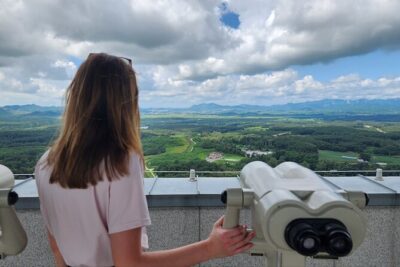
Dora Observatory is about official viewing. You overlook North Korea and can see named locations such as Gaeseong and Songaksan, along with references to figures connected to Kim Il-Sung. Even without perfect visibility, this is the kind of stop that helps you connect map names to actual sightlines.
A quiet truth about DMZ viewing points: your experience depends on conditions. If the air is clear, you might feel like you can almost place yourself in the geography. If conditions are less ideal, you still get the structure of the place, the official framing, and the sense of what these viewpoints are designed to show.
If you are sensitive to strong emotions, take your time here. The day has already been heavy, and an outlook toward another side of a divided country can land in a different way than war memorials did.
Ginseng Museum and duty free stop in Seoul: A practical final hour
To close the day, you return to Seoul for about 30 minutes, including a Ginseng Museum stop and a duty free shop opportunity. Admission here is free.
The museum portion focuses on the history of ginseng, different types, and the positive effects of ginseng. The duty free segment is basically a convenient retail stop with access to luxury fashion boutiques, giving you a chance to shop without having to plan a separate detour.
This last block is not the DMZ theme, but it is practical. After a half-day of security checks and long drives, having a structured, time-limited final stop keeps you from wandering around downtown hungry or confused about what to do next.
If you are not interested in shopping, think of this as your decompression moment. Use it for a quick browse and then get back to Seoul with time to eat on your own schedule.
The guide matters: Henry Park style explanations and time management
This tour relies on an English-speaking guide with commentary and all transportations included. That is the backbone of making DMZ sites understandable without turning them into a lecture.
The reviews highlight a particular pattern: a guide named Henry Park gets praised for being professional, friendly, and willing to answer questions with clear cultural context. He is also noted for time management, which matters a lot on a day with multiple timed stops and limited DMZ access.
A good DMZ guide does two things for you. First, they help you read what you are seeing beyond headlines. Second, they manage expectations when not everything is accessible. In a setting shaped by politics and security, that calm guidance can be the difference between frustration and understanding.
If you get a guide like Henry Park, you will likely feel like the day has a thread, not just a list of locations.
Price and ticket timing: Getting value from $500 per group
The price is $500 per group (up to 4 people). That pricing model is actually a value lever. If you are traveling as a couple or small group and can split the cost, the per-person value tends to become more reasonable for an itinerary that includes transport and multiple admissions.
Also, this tour includes all fees and taxes, plus the transportation and an English guide. On DMZ days, that matters because the “hidden costs” are often time and logistics, not just admission prices.
The big scheduling reality is the DMZ ticket situation. DMZ entrance tickets are limited and sold on a first come, first served basis. A suggested booking time is about one month before. You can book later, but last minute options can be available only at random, which means you should not treat close-in booking as guaranteed.
On top of that, confirmation happens within 48 hours of booking, subject to availability. If your travel dates are strict, earlier booking is the safer move. In other words, plan your DMZ day like you are planning an appointment, not a casual stop.
Who this DMZ tour suits best (and who should skip it)
This tour suits you if you:
- want a structured DMZ day with multiple specific stops, not just one viewpoint
- prefer a small group and English commentary
- care about understanding the physical reality of the DMZ, especially with the 3rd Tunnel walk
It might not suit you if:
- you cannot travel with an original passport
- you dislike mornings that start early and run on a tight schedule
- you need guaranteed access on very short notice, because DMZ tickets are limited and handled first come, first served
If you are short on time in Seoul, this half-day format is a strong fit. If you have plenty of time and want slower pacing, you might choose a full-day option instead, but this one is focused and efficient.
Should you book this half-day South Korea DMZ tour?
Book it if DMZ access, the tunnel walk, and an observatory viewpoint are on your must-do list, and you can handle the basics like bringing your original passport and being ready for weather dependence. The cost can be fair when split, and the schedule is built to hit the key sites without wasting the day.
Skip it only if your plans are too tight for limited ticket availability, or if the idea of a narrow tunnel walk and strong separation messaging will be too heavy for your comfort level.
If you do book, treat it like your priority day. Keep your passport safe and accessible, charge your phone for the mobile ticket, and plan to stay flexible if the weather needs a date change.
FAQ
How long is the Half-Day South Korea DMZ Small-Group Tour?
It runs for about 6 hours 30 minutes (approx.).
What time does the tour start, and where does it meet?
The tour starts at 8:00 am and meets at Seoul City Hall (Subway Line 1), 110 Sejong-daero, Jung District, Seoul.
Do I need an original passport for DMZ entry?
Yes. An original passport is mandatory for DMZ entrance. The tour data specifies no copies and no photos.
How many people are in the group?
The tour has a maximum of 10 travelers.
Is the DMZ entrance ticket guaranteed?
No. DMZ entrance tickets are described as limited and sold on a first come, first served basis.
What is included in the price?
The price includes all fees and taxes, an English speaking guide with commentary, and all transportation.
What happens if the tour is canceled due to poor weather?
If it is canceled due to poor weather, you will be offered a different date or a full refund.
Keep Browsing Seoul

More Seoul Write-Ups
The Border, Other Routes In
Fresh on the Seoul pile
- Unique Native Experience : Han River Picnic, Board game, BBQ★ 5.0 · 3 reviews
- 2-Hour Private Kayaking and Paddleboarding Experience in Hanriver★ 5.0 · 3 reviews
- Korean Folk Village & Suwon Hwaseong Fortress Private Tour★ 5.0 · 3 reviews
- Seoul Korean BBQ Dinner Experience with Secret Food Tours★ 5.0 · 3 reviews
- Seoul Highlights & Hidden Gems – Private Tour with Photo Service★ 5.0 · 3 reviews
- Night Food Tour in Seoul with Traditional and Modern Cuisine★ 5.0 · 3 reviews
DMZ & Border Tours you might have missed.
 ★ 5.0Best DMZ Tour Korea from Seoul (Red Suspension Bridge Optional)From $2941,422 reviews
 ★ 5.0DMZ Tour: 3rd Tunnel, Option(Suspension Bridge, Boat) from SeoulFrom $3521,373 reviews
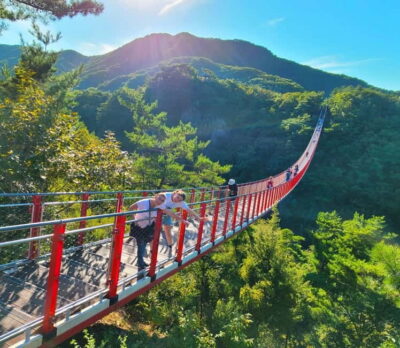
 ★ 5.0DMZ tour south Korea from Seoul (NK experience hall, defector)From $2620,599 reviews
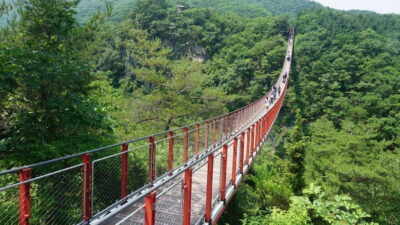
 ★ 4.9DMZ Insider Tour: 3rd Tunnel, NK Defector Meet & Red BridgeFrom $5015,214 reviews
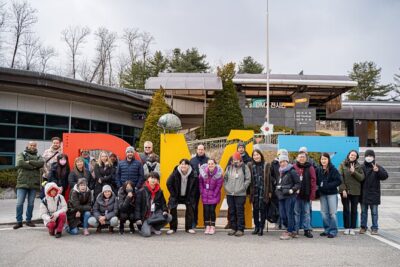
 ★ 4.8Seoul: DMZ Tour with Optional Suspension BridgeFrom $455,277 reviews
 ★ 5.0Signature DMZ Tour: Exclusive Defector Talk & Suspension BridgeFrom $274,459 reviews
 ★ 5.0Thrilling Korean DMZ 3rd Tunnel Tour from Seoul + Red Bridge RushFrom $353,097 reviews
 ★ 5.0DMZ Past and Present: Korean Demilitarized Zone Tour from SeoulFrom $372,481 reviews
Where this tour also appears