
REVIEW · SEOUL ROYAL PALACES
Half day Morning Seoul City Tour(Temple & Gyeongbok Palace)
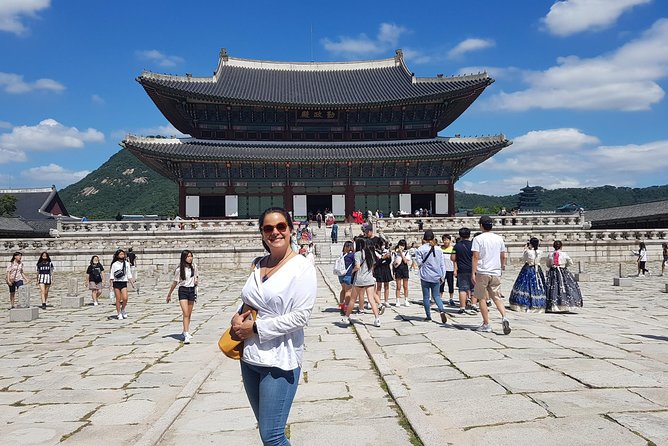
Four hours. Big Seoul energy. This half-day morning route strings together Jogyesa Temple, Gyeongbokgung Palace, and the National Folk Museum in a way that’s easy to repeat later on your own. You also get hotel pickup and a drop-off in Insadong, so you can start sightseeing immediately and keep your afternoon free.
What I really like is the mix of places, not just photos. You see a living Buddhist temple in central Seoul, then you switch gears to Joseon-era court life at the palace, and you finish with a museum that focuses on everyday Korean life. I also like that admission fees are included for the palace and museum, so you are not hunting for tickets mid-queue.
One caution: the schedule is packed. If you want to linger, you might feel pushed for time, and the last stop includes a ginseng museum with shopping, which can take more time than you planned.
In This Review
- Key things to know before you go
- A fast, focused route through Seoul’s palace district
- Start at Gwanghwamun Square, Seoul’s civic center
- Jogyesa Temple, Buddhism still practiced in downtown Seoul
- Gyeongbokgung Palace and the royal guard changing ceremony
- National Folk Museum of Korea, everyday life you can picture
- Cheongwadae Sarangchae pass-by, plus a ginseng museum stop
- Guides, pacing, and how to keep it from feeling rushed
- Price and value: what you get for $32 per person
- Who should book this morning Seoul tour
- Should you book it or plan your own morning?
- FAQ
- How long is the Half Day Morning Seoul City Tour?
- What does the price include?
- Is hotel pickup offered?
- Where is the tour dropped off at the end?
- What are the main stops on the itinerary?
- Is admission included for Gyeongbokgung Palace and the Folk Museum?
- What happens if it rains during the royal guard changing ceremony?
- What if Gyeongbokgung Palace is closed on Tuesdays?
- Can you always pass by the Presidential Blue House area?
- What is the cancellation policy?
Key things to know before you go
- Hotel pickup plus Insadong drop-off keeps transit stress low and helps you start fast
- Jogyesa Temple (free, 30 minutes) shows Buddhist practice inside busy downtown Seoul
- Gyeongbokgung Palace (1 hour, admission included) includes a royal guard changing ceremony viewpoint
- National Folk Museum (45 minutes, admission included) focuses on everyday life artifacts, not just royal scenes
- Cheongwadae Sarangchae pass-by and ginseng museum add context, plus a bit of shopping time
More palace mornings in Seoul, compared
A fast, focused route through Seoul’s palace district
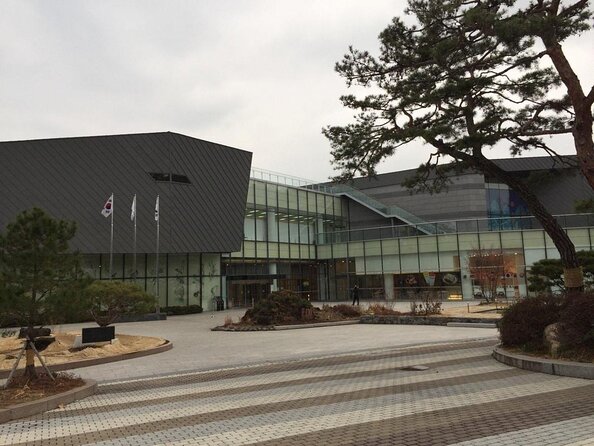
This is a half-day tour built for the first morning in Seoul, or for any day when your time is tight. It runs about 4 hours, starting at 8:30 am, and it keeps you moving between major landmarks with organized transportation.
I like the rhythm of it. You start where you can understand the city’s power story, then you move into sacred space, then you end in cultural context. It makes Seoul feel less like a random pile of buildings and more like a timeline you can actually follow.
The group size is capped at 44 travelers, which usually means you get the guide’s attention without feeling like you are stuck in a human conveyor belt. Also, you get a professional English-speaking guide and a mobile ticket, both of which cut down on hassle once you arrive.
This tour is also designed so you can keep exploring after it ends. Instead of dropping you back at your hotel, it ends in Insadong, which is handy if you want to turn your afternoon into shopping, browsing, or simply walking at your own pace.
Start at Gwanghwamun Square, Seoul’s civic center
The route begins at Gwanghwamun Square, which is one of Seoul’s most recognizable civic landmarks. It’s a natural starting point because you can feel how the city’s cultural and political heritage is placed right in the open.
This matters because the next big moment, the royal guard changing ceremony, is tied to the palace area. Standing around Gwanghwamun Square first helps you connect the ceremony to the location, instead of treating it like a standalone show.
You should also expect the day to be photo-focused around this zone. In practice, the guide’s job is to get you into a good viewing spot while keeping the group moving. A number of guides are praised for doing exactly that, including getting people to the palace early enough for photos before crowds swell.
One practical note, since this tour is time-based: wear comfortable shoes. Even with transportation between stops, you will still walk between viewpoints, gates, and indoor areas.
Jogyesa Temple, Buddhism still practiced in downtown Seoul
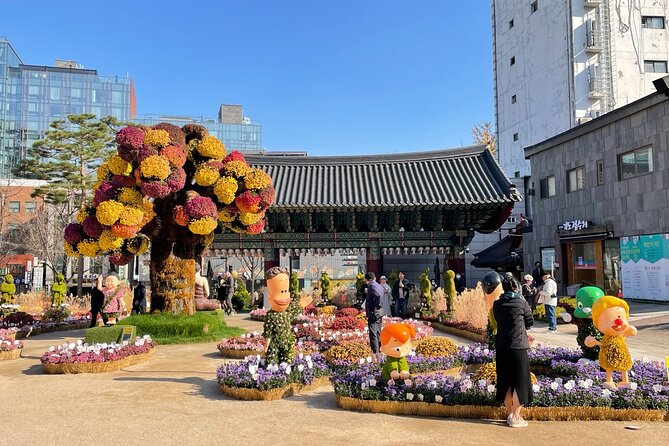
Next up is Jogyesa Temple, and it’s a smart contrast with the rest of the itinerary. This temple is described as a living Buddhist tradition, and it was founded in 1935, which gives it a modern layer compared with the older palace sites.
You only have about 30 minutes here, so it’s not a slow, long meditation session. Instead, it’s a calm breather, tucked inside the busy city. That contrast is the point: you go from streets and crowds to a quieter interior space where the culture feels active, not staged.
Admission is free, which is always a nice bonus. Still, don’t treat it like an extra you can skip. Jogyesa helps you understand Seoul as a place people practice religion and tradition in daily life, not only as a set of monuments.
If you like details, pause for a minute and notice how the temple’s mood changes your pace. It’s one of those stops where your mind stops sprinting, and that makes the palace sections later feel even more meaningful.
Gyeongbokgung Palace and the royal guard changing ceremony
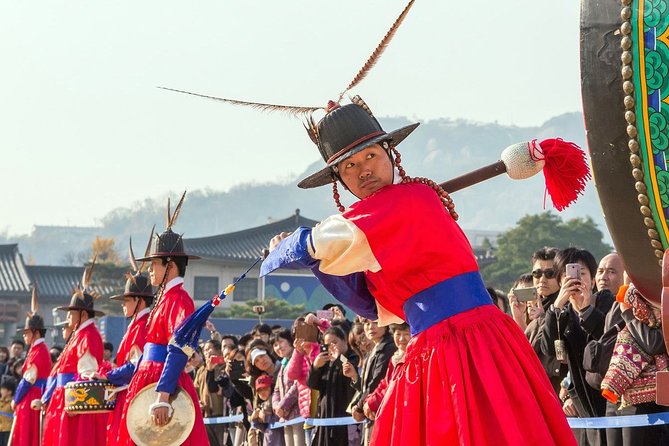
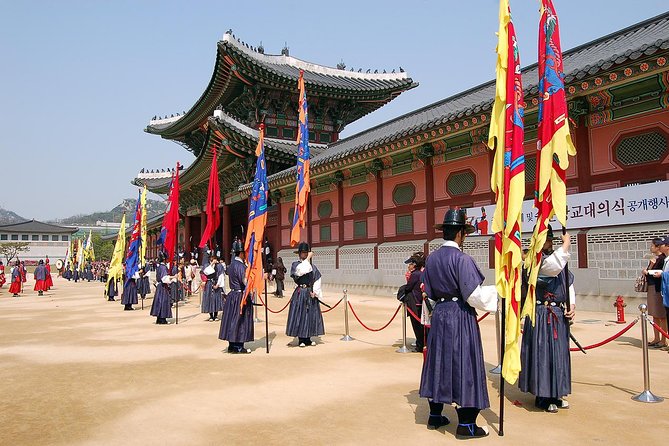
This is the centerpiece: Gyeongbokgung Palace for about 1 hour, with admission included. You’ll also see the royal guard changing ceremony as part of the palace experience, tied to the Gwanghwamun Gate area.
In simple terms, the ceremony is a key cultural performance where the guards’ identities are confirmed and the routine shifts from one set to the next. The guide plays an important role here by explaining what you are seeing, so it does not feel like just a choreographed parade.
I also like that this tour builds in the proper context. Before you get into the palace grounds and museum, you are positioned near the ceremony site. That makes the palace feel like a working court space, not just walls and courtyards.
There are a couple of real-world considerations you should plan for:
- The royal guard changing ceremony can be canceled when it is rainy.
- If Gyeongbok Palace is closed on Tuesdays, the tour will swap it for another tourist attraction.
So if your dates include rain, keep expectations flexible. If you are visiting on a Tuesday, it is still worth doing, but you should be mentally prepared that the exact palace plan could change.
Other quiet mornings in Seoul
- Best Things to Do – Half Day Seoul Trip (Seoul Palace & Temple)
★ 5.0 · 190 reviews - Day Tour of Suwon Hwaseong Fortress Starfield Waujeongsa Temple
★ 5.0 · 61 reviews - Half day Morning Seoul City Tour(Temple & Gyeongbok Palace)
★ 5.0 · 54 reviews - Seoul Mountain Hike: Temples, Folklore & Traditional Meal
★ 5.0 · 42 reviews - Korean Palace and Temple Tour in Seoul: Gyeongbokgung Palace and Jogyesa Temple
★ 4.5 · 38 reviews
National Folk Museum of Korea, everyday life you can picture
After the palace, you move into the National Folk Museum of Korea, located within the palace grounds. You get about 45 minutes, and admission is included.
This museum section is a strong counterweight to all the royal pageantry. Instead of focusing only on kings, ceremonies, and guards, the museum highlights the everyday lives of Korean people throughout history using thousands of artifacts.
That shift is what makes the half-day feel complete. Without it, palace visits can turn into a blur of architecture and uniforms. With it, you start connecting court culture to daily routines, materials, and how people actually lived.
Because your time is limited, I suggest using the guide’s explanations as your map. Listen for what to look at, then spend your minutes on the objects the guide points to. It’s the fastest way to get the most value from a short museum visit.
Also, location helps. Being inside the palace grounds means you are already in the right setting. You do not lose time with extra transit or searching for the museum entrance.
Cheongwadae Sarangchae pass-by, plus a ginseng museum stop
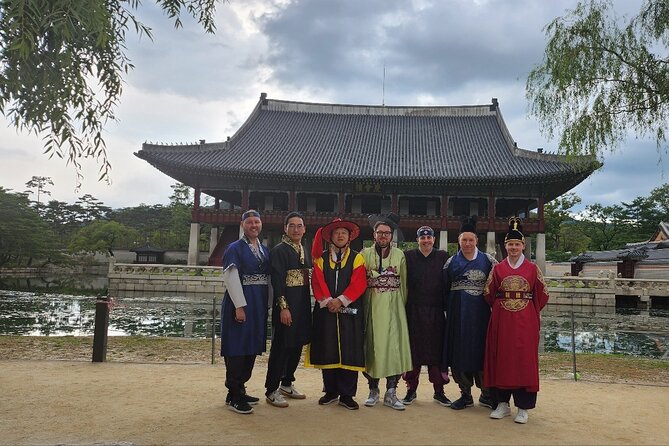
The itinerary then includes a pass by Cheongwadae Sarangchae, described as the area of the Presidential Blue House. This stop is only about 15 minutes, and admission is free.
It is a classic “context” stop. Even without going deep, you get a sense that modern Korea’s leadership is still tied into carefully guarded spaces with strict security rules.
You should know one practical limitation: you might not be allowed to pass by the Presidential Blue House for security. That is not a tour failure, it’s just how security works in real time. The guide should adjust on the spot if access is restricted.
Then comes the final cultural and shopping moment: the Cheongha Korea Ginseng Museum. You get about 20 minutes here, and admission is free. The stop is described as a ginseng museum plus shopping.
Here’s the honest trade-off. This segment can feel like time you did not plan to spend if you came for temples and palace architecture only. But if you are curious about ginseng as a Korean product and you are open to quick shopping browsing, it can be a useful cultural add-on before you head into Insadong on your own.
Guides, pacing, and how to keep it from feeling rushed
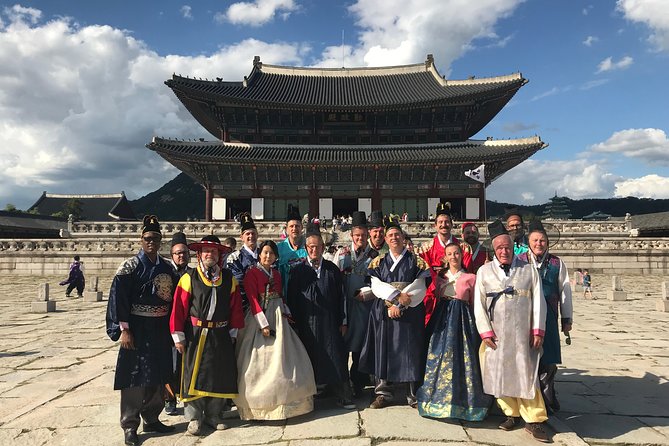
The best part of this kind of tour is the guide. This one includes a professional English-speaking guide, and the guide quality shows up in the praise: people call out guides who are friendly, fun, and able to answer questions. Names that come up include Molly, Cathy, Rose, JJ, KC, Moon, and June.
A few guide strengths are especially useful for this itinerary:
- Clear explanations of Korean history and architecture, including the Joseon dynasty
- Keeping the group moving in 4 hours without losing the key sights
- Adjusting timing to help with crowds, and getting people to the palace early enough for better photos
- Making the experience inclusive, including families and kids
There is one thing to keep in mind. In one case, microphone clarity was mentioned as a possible issue. If you are sensitive to audio, you may want to sit closer to the guide when possible.
As for pacing, the tour is built to cover five major blocks. That is great if you like momentum. It can feel rushed if you want slow sightseeing, and that’s the core “should I book this” question for you.
If you do book, you can reduce the rushed feeling by doing two things:
- Decide what matters most to you before you go. If your priority is palace details, focus your attention there.
- Treat the ginseng museum as a quick stop, not a full extra attraction, so you do not feel like the day drifted.
Price and value: what you get for $32 per person
At $32.00 per person, this tour is priced as a practical value for visitors who do not want to map transit and tickets for each site.
Here’s where the value comes from:
- You get professional English-speaking guidance
- You get transportation
- You get hotel pickup
- You get admission fees included for Gyeongbokgung Palace and the National Folk Museum of Korea
- You get free-entry stops too, like Jogyesa Temple and the Cheongha Korea Ginseng Museum
So you are not paying extra for the biggest paid segments, and you are not losing half a morning figuring out logistics. For a city like Seoul, that convenience is worth real money when your time is limited.
Also, the tour lasts about 4 hours, so it does not eat your whole day. In many itineraries, that means you can still add another neighborhood later without forcing a schedule reset.
The only value-limiter is the packed pacing. If you hate short visits and shopping time, you might find the day spent in transit and brief segments, even though the price is fair.
Who should book this morning Seoul tour
I’d book this if you fit one of these profiles:
- You are on a short visit and want a guided route to major highlights fast
- You want the palace experience with a guide explaining what you are seeing, including the guard changing moment
- You like religion and culture beyond palaces, since Jogyesa Temple is part of the mix
- You want museum context on daily life, not only royal spectacle
- You are traveling as a family, because the short, varied stops are a good structure for keeping kids engaged
- You are a K-drama fan, because seeing the palace up close is a very real emotional payoff, not just a sightseeing checkbox
I would be more cautious if:
- You prefer slow sightseeing and deep time at one site
- You do not want any shopping component, since the ginseng museum stop includes shopping time
- You are visiting during rain, since the royal guard ceremony can be canceled
Should you book it or plan your own morning?
Book it if you want a guided sampler that gets you from palace to temple to museum without spending your day on logistics. The combination of hotel pickup, included admissions, and a guide who helps you understand what matters makes the $32 price feel reasonable.
Skip or adjust your expectations if you want lingering time and quiet pacing. This is a half-day tour designed to move. If your priority is maximum time inside the palace and museum, you may want to add extra hours on your own after drop-off in Insadong.
If you go, do it with the mindset of a guided intro. Then use the rest of your day to revisit what grabbed you most, whether that is the palace courtyards, the museum artifacts, or the calmer feeling of Jogyesa.
FAQ
How long is the Half Day Morning Seoul City Tour?
It runs for about 4 hours.
What does the price include?
The price includes a professional English-speaking guide, transportation, admission fees, and hotel pickup service.
Is hotel pickup offered?
Yes. Hotel pickup is included.
Where is the tour dropped off at the end?
The tour ends with drop-off in Insadong.
What are the main stops on the itinerary?
The tour includes Gwanghwamun Square, Jogyesa Temple, Gyeongbokgung Palace, the National Folk Museum of Korea, a pass by Cheongwadae Sarangchae, and the Cheongha Korea Ginseng Museum.
Is admission included for Gyeongbokgung Palace and the Folk Museum?
Yes. Admission fees are included for both Gyeongbokgung Palace and the National Folk Museum of Korea.
What happens if it rains during the royal guard changing ceremony?
The royal guard changing ceremony can be canceled when it is rainy.
What if Gyeongbokgung Palace is closed on Tuesdays?
When it is closed on Tuesdays, Gyeongbok Palace will be replaced by another tourist attraction.
Can you always pass by the Presidential Blue House area?
You might not be allowed to pass by the Presidential Blue House due to security.
What is the cancellation policy?
You can cancel for free up to 24 hours in advance for a full refund.
More Seoul Write-Ups
Other Temples, Other Mornings
Palaces, Three More Ways
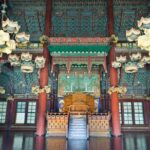
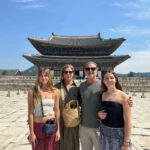
Fresh on the Seoul pile
- Unique Native Experience : Han River Picnic, Board game, BBQ★ 5.0 · 3 reviews
- 2-Hour Private Kayaking and Paddleboarding Experience in Hanriver★ 5.0 · 3 reviews
- Korean Folk Village & Suwon Hwaseong Fortress Private Tour★ 5.0 · 3 reviews
- Seoul Korean BBQ Dinner Experience with Secret Food Tours★ 5.0 · 3 reviews
- Seoul Highlights & Hidden Gems – Private Tour with Photo Service★ 5.0 · 3 reviews
- Night Food Tour in Seoul with Traditional and Modern Cuisine★ 5.0 · 3 reviews
Seoul Royal Palaces you might have missed.
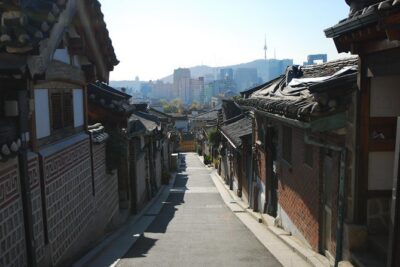 ★ 4.9Seoul: Gyeongbok Palace, Bukchon Village, and Gwangjang TourFrom $322,321 reviews
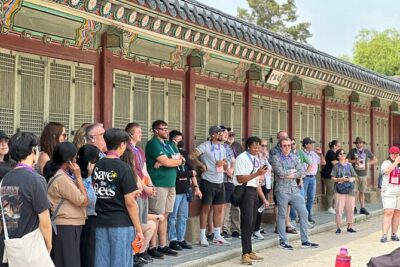 ★ 5.0Best Seoul City Tour (Gyeongbokgung Palace,Insadong,Namsan Tower)From $581,647 reviews
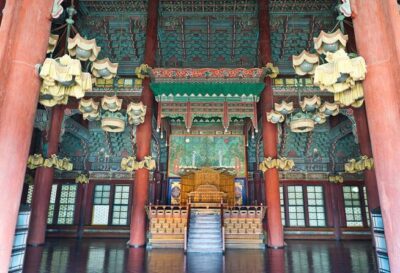 ★ 5.0Small-Group Royal Palace and Seoul City Tour (hotel pick-up)From $561,474 reviews
★ 5.0Seoul: Gyeongbok Palace, Bukchon Village, and Gwangjang TourFrom $321,044 reviews
★ 5.0Small-Group Royal Palace and Seoul City Tour (hotel pick-up)From $561,474 reviews
★ 5.0Seoul: Gyeongbok Palace, Bukchon Village, and Gwangjang TourFrom $321,044 reviews
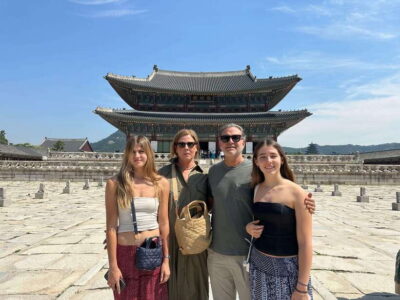 ★ 4.7Seoul Highlights: Gyeongbok Palace, Insadong & N Seoul TowerFrom $26726 reviews
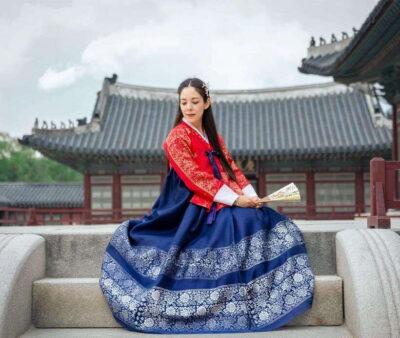 ★ 4.6Seoul: Hanbok Rental with Gyeongbokgung Palace EntryFrom $6611 reviews
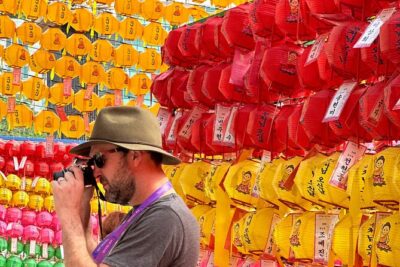 ★ 4.5Seoul City Half Day Tour-Gyeongbok Palace Guard Changing CeremonyFrom $38357 reviews
 ★ 4.5Seoul: Gyeongbok Palace with Gigibebe Hanbok RentalFrom $9289 reviews
Where this tour also appears