
REVIEW · SEOUL ROYAL PALACES
Seoul City Half Day Tour-Gyeongbok Palace Guard Changing Ceremony
A palace guard dance, in real time. This Seoul City Half Day Tour strings together temple calm, presidential-history stops, and the Changing of the Guard at Gwanghwamun, all in one tight morning. I like that it is planned like a best-of Seoul sampler, with coach pickup and a guide who helps you place each sight in context, the way guides like Kelly and Ray did for their groups.
I also really love the way the timing is built around the palace show, so you are not just watching from wherever you happen to land. People highlighted guides like Judy for getting the group into a strong viewing spot, which matters because the best photos depend on where you stand, not just arriving.
One heads-up: the final stop tends to be ginseng shopping, and some guests felt it turned into a sales pitch more than a museum visit. If you dislike hard selling, treat that stop as optional browsing, not part of the core experience.
In This Review
- Key Things That Make This Tour Worth Your Time
- Why This Half-Day Seoul Plan Works for First Timers
- Coach Pickup and Getting Your Bearings Fast
- Jogyesa Temple: Seoul’s Quiet Start With Big Visual Payoff
- Cheongwadae Sarangchae and the Blue House Area: The Modern Story Behind the Power
- Gyeongbokgung Palace and the Guard Changing at Gwanghwamun Gate
- National Folk Museum of Korea: A Helpful Stop Between the Big Stages
- Ginseng Center Shopping Stop: Know What You’re Signing Up For
- Tuesday Changes: How Your Palace Day Can Switch Without Ruining the Morning
- Price and Value: Is $38 a Good Deal for This Mix?
- Guides and What Their Best Reviews Suggest You Will Get
- Practical Tips That Make the Day Smoother
- FAQ
- FAQ
- What does the tour price include?
- How long is the Seoul City Half Day Tour?
- Is lunch included?
- What sights will I visit on this tour?
- What happens if I travel on a Tuesday?
- Do I get a mobile ticket?
- Where do I meet and where do I end?
- Is the tour weather dependent?
- Should You Book This Tour?
Key Things That Make This Tour Worth Your Time
- A morning playlist of Seoul essentials: Jogyesa Temple, Cheongwadae area, Gyeongbokgung Palace, and more
- Changing of the Guard built around Gwanghwamun Gate for the classic palace front-row vibe
- Strong guide support with clear answers and practical tips on where to stand for photos
- Cheongwadae Sarangchae exhibition hall adds modern political context to the royal sites
- A last stop that is shopping-focused, so decide in advance how much time and budget you want to spend
More palace mornings in Seoul, compared
Why This Half-Day Seoul Plan Works for First Timers
If you only have a few hours in Seoul, this type of tour is a smart use of time. You get a lot of “shape” for the city fast, not just a list of monuments. You start with spiritual Seoul at Jogyesa, then shift to national-storytelling at Cheongwadae Sarangchae, then land in the big visual stage of Joseon-era power at Gyeongbokgung.
It also helps that the day is paced for mobility. Most of your effort is sightseeing on foot at the stops, but the coach handles the jumping between areas. That matters on a morning when you would otherwise be figuring out transit routes, walking distances, and which sights are actually realistic in the same day.
Coach Pickup and Getting Your Bearings Fast
The tour runs on hotel pickup in Seoul, which is an underrated convenience. Instead of losing time assembling yourself at the subway, you meet the group and get transported in an air-conditioned coach.
A few guide names came up repeatedly in great reviews, including Kelly, Ray, Crystal, Emily, and Sunny. The common theme is not just facts, but organization: clear meet-up points, answers during the ride, and practical guidance once you’re outside. For your first morning in Korea, that kind of structure can shave off stress.
Group size is capped at 40 travelers, which usually keeps it from feeling like a cattle-car tour. You may still be in a larger crowd than a private guide, but you are not dealing with huge bus loads where you spend the whole day waiting for your spot in line.
Jogyesa Temple: Seoul’s Quiet Start With Big Visual Payoff
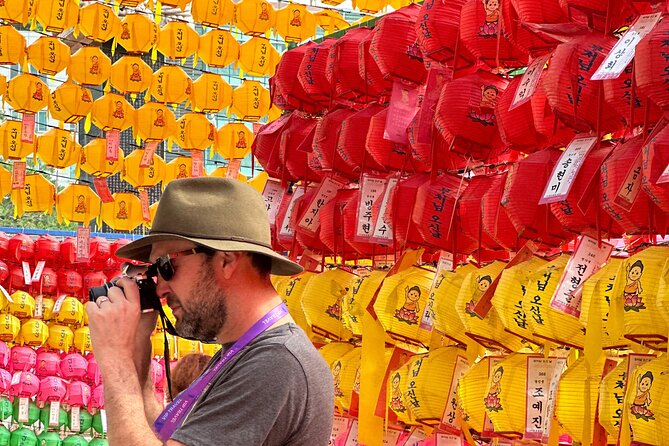
The morning begins at Jogyesa Temple, Korea’s leading Buddhist temple located right in downtown Seoul. You get about 40 minutes here, with free admission.
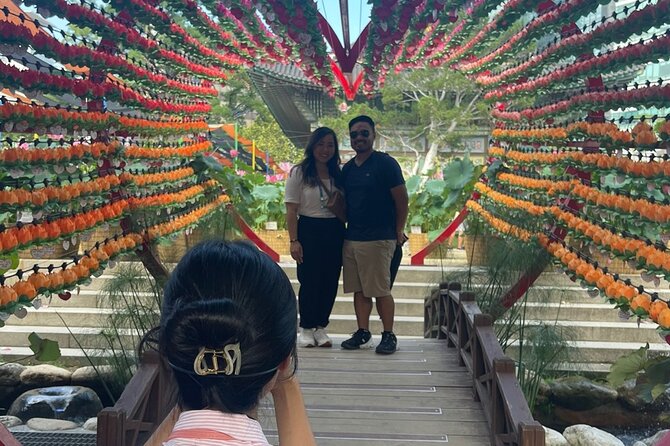
What makes Jogyesa such a good first stop is the change in atmosphere. You go from city noise to a tree-lined entryway that slows your pace. The guide typically leads you to key sights on site, like the seven-story pagoda and an important Buddha statue inside the temple buildings.
Practical takeaway: this is a great moment to reset before the more formal, outdoor-heavy palace portion. Even if you are not a temple person, Jogyesa is visually straightforward and easy to enjoy in a short window.
If you travel with kids, this is also a nice stop because it does not demand museum-level patience. It is more like walking through a peaceful courtyard and seeing landmark objects with story context.
Cheongwadae Sarangchae and the Blue House Area: The Modern Story Behind the Power
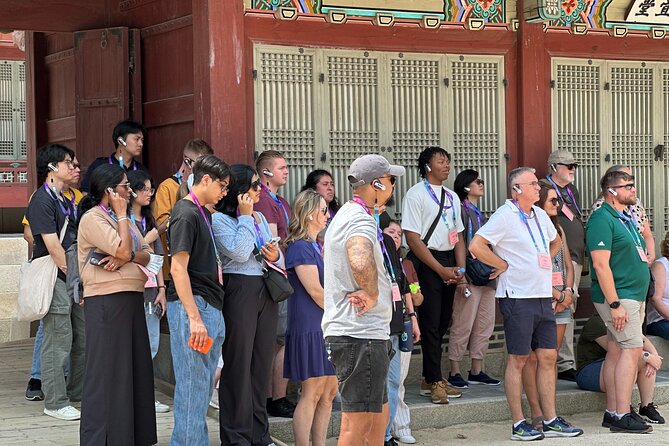
After the temple, you head to Cheongwadae Sarangchae, an exhibition hall connected to Korea’s presidential home, known as the Blue House. Here, the tour focuses on displays about Korea’s presidents, Korean cultural traditions, and UNESCO World Heritage Sites in Korea.
This is an important bridge. Gyeongbokgung Palace can feel like pure pageantry unless you understand that Korea’s public life has a modern parallel. This stop gives you that connective tissue, so the royal symbolism at the palace does not land in a vacuum.
Time-wise, you get enough flexibility to look through exhibits at your own pace while your guide offers explanations along the way. The Blue House itself may be more about passing by and seeing the area context than a long entry museum visit.
More city routes in Seoul
- Best Seoul City Tour (Gyeongbokgung Palace,Insadong,Namsan Tower)
★ 5.0 · 1,647 reviews - Small-Group Royal Palace and Seoul City Tour (hotel pick-up)
★ 5.0 · 1,474 reviews - Seoul City Private Full-Day Tour Including Lunch
★ 5.0 · 469 reviews - Seoul City Half Day Tour-Gyeongbok Palace Guard Changing Ceremony
★ 4.5 · 357 reviews - Seoul: Guided City Wall Sunset Hike with Korean Dinner
★ 4.9 · 227 reviews
Gyeongbokgung Palace and the Guard Changing at Gwanghwamun Gate
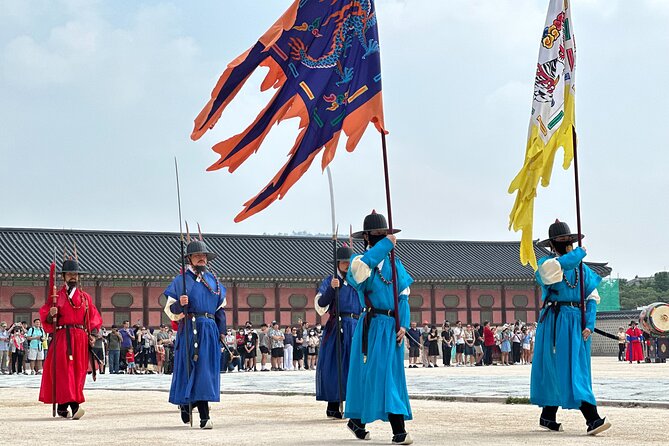
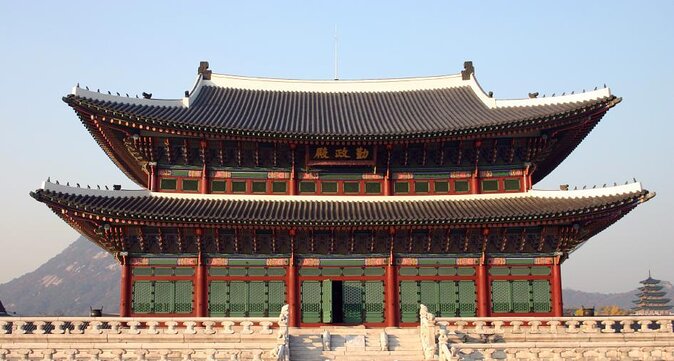
This is the main event, and it is why many people book. Gyeongbokgung Palace is the primary royal residence from the Joseon Dynasty era, built in 1394. It is the largest of the Five Grand Palaces and often considered the most beautiful in Seoul.
Your highlight is the Changing of the Guard ceremony, staged at the front of Gyeongbokgung near Gwanghwamun Gate. This is a choreographed tradition that you can photograph and watch as a real performance, not just a static landmark.
The biggest advantage of doing this with a guide is placement. Several reviews pointed out that guides helped their groups stand in a strong position so they could see the full movement of the guards. Ray specifically helped people with photo spot choices, and Judy’s group praise mentioned front-row viewing.
Practical advice for you: arrive ready to watch for the full show. Keep your phone powered up and your camera lens clean. Also wear shoes you can stand in for a while, because good palace photos often mean staying put rather than rushing around.
National Folk Museum of Korea: A Helpful Stop Between the Big Stages
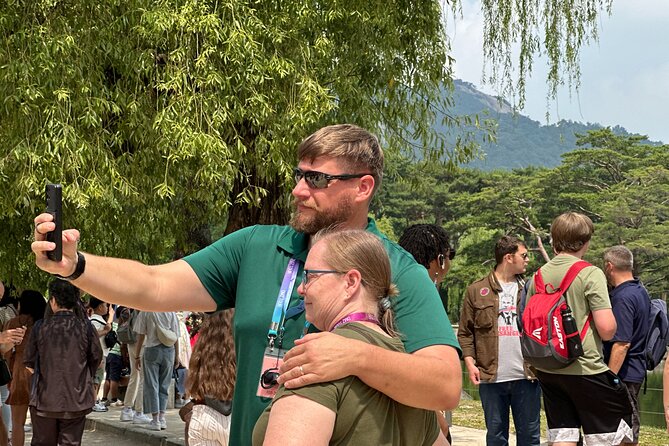
After the palace ceremony, you move to the National Folk Museum of Korea for about 30 minutes. Admission is included.
This museum adds a different lens. Palaces show royal power and architecture. Folk collections show everyday life traditions, which balances the day and helps the “what you’re seeing” feel less like separate attractions.
The museum’s background is also interesting. It traces back to an earlier institution called the Korean Imperial Museum, established in 1908, then renamed and relocated through its history. That gives the museum a layered feel, not just a modern collection dumped into a building.
It is not a full-day museum experience, but that is kind of the point. This tour is designed for orientation and highlights, so 30 minutes here is a “taste,” not a deep study.
Ginseng Center Shopping Stop: Know What You’re Signing Up For
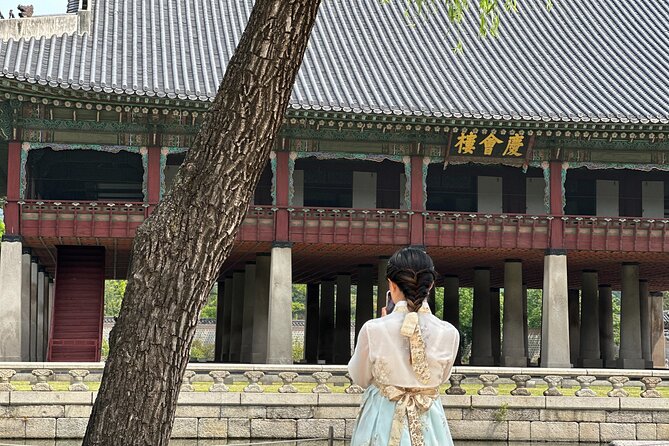
The last scheduled stop is a ginseng center and shopping time (about 30 minutes, with free admission). This is where the experience can split, depending on what you want from the tour.
Some people liked the education angle, getting a brief look at the history of Korean ginseng. Others felt the visit turned into a hard sell, more like a shop appointment than a true museum experience. There were even comments calling it a sales pitch that felt unnecessary.
Here is how I would handle it if I were you:
- If you enjoy specialty products and browsing, see it as a cultural product stop with a chance to buy something local.
- If you do not, stay polite, look around quickly, and decide early how much time you will tolerate.
- Do not plan to treat this as a learning museum moment. The tour clearly includes shopping as part of the flow.
Also note: the tour description mentions a possible amethyst factory option in this general area. That means the exact shop flavor can vary, but the structure stays similar, product-focused with time to browse.
Tuesday Changes: How Your Palace Day Can Switch Without Ruining the Morning
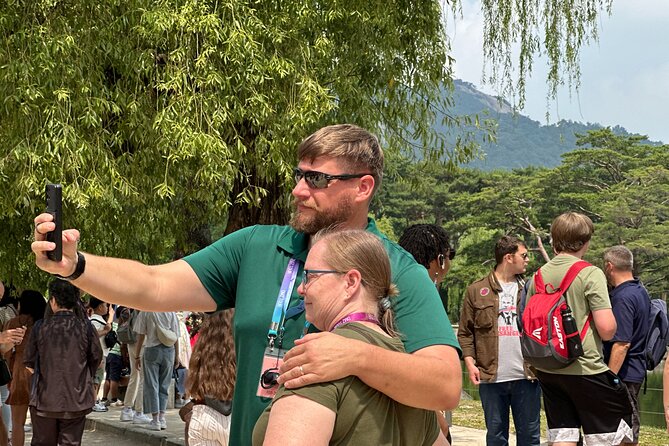
A key detail: the tour adjusts when Gyeongbokgung Palace is closed on Tuesdays.
When Gyeongbokgung and the National Folk Museum are closed, the plan shifts to other palace options. The information you are given says Tuesday can mean Deoksugung Palace instead, and it also references a swap involving Changdeok Palace and Bukchon Hanok Village.
What that means for you: if you are visiting on a Tuesday, do not assume you will see the exact same palace lineup. But you still should get the palace experience category and a historic neighborhood feel through the alternative sites.
If your heart is set on the Gyeongbokgung Guard Changing specifically, check the day you book. Otherwise, think of this as a “palaces and culture in motion” morning, with Tuesday substitutions that keep you from missing everything.
Price and Value: Is $38 a Good Deal for This Mix?
At $38 per person for about a 3-hour morning, the value comes from how much is packed in with included access and guided logistics. You are paying for:
- Hotel pickup and transport by coach
- A guide in English or Chinese
- Included admission for the ceremony site portion and the museum stop
- Time-saving route planning across multiple neighborhoods
The guard ceremony at Gyeongbokgung is a high-demand, high-visibility event. If you tried to do it independently, you would still be paying for transit time and likely timing stress. The guide helps you hit the right window and stand where you can actually see.
Where value can feel uneven is that final shopping stop. If you end up disliking the sales vibe, you might wish the tour allocated that time to an extra walk, another view, or a less commercial stop. That does not change the quality of the palace and temple components, but it changes how satisfied you feel with the full package.
Bottom line: this is good value if you mainly want a structured sampler of Seoul highlights. It is less ideal if you hate shopping stops or want a museum-only style itinerary.
Guides and What Their Best Reviews Suggest You Will Get
Even with the same route, the tour outcome often depends on your guide. The best reviews repeatedly credited guides for being:
- Clear about what you were seeing and why it mattered
- Helpful when guests had questions
- Practical about where to stand for views and photos
Names that appeared in strong reviews include Kelly, Ray, Judy, Crystal, Emily, Lynn, Yuna, Hana, Gabby, Sunny, Jenny, Henry, and Nancy, plus others. That mix matters because it suggests the service is not a one-off story. You can reasonably expect your guide to do more than read a script.
My advice: show up early enough to settle in. If you have questions, ask them during the ride. That is when a guide has the best chance to answer without rushing.
Practical Tips That Make the Day Smoother
- Wear comfortable shoes. Palace grounds and temple paths require real standing and walking time.
- Bring a hat or sunscreen in hot weather. One review mentioned sunburn prevention needs during the day.
- Dress in layers. Seoul mornings and palace courtyards can feel cooler or colder than you expect, especially in weather changes.
- Be ready for outdoor waiting during the ceremony window. If you have mobility constraints, plan to use the guide’s positioning tips.
- Decide your ginseng strategy before you arrive. If you are not buying, treat it as a quick browse.
FAQ
FAQ
What does the tour price include?
The tour includes hotel pickup, a professional guide in English or Chinese, and all taxes, fees, and handling charges. Changing of the Guard at Gyeongbokgung Palace and the National Folk Museum stop are listed as included.
How long is the Seoul City Half Day Tour?
It is approximately 3 hours.
Is lunch included?
No. Lunch is not included.
What sights will I visit on this tour?
You’ll visit Jogyesa Temple, Cheongwadae Sarangchae, the Blue House area (passing by), Gyeongbokgung Palace for the Changing of the Guard ceremony, and the National Folk Museum of Korea. You will also stop at a ginseng center and shopping.
What happens if I travel on a Tuesday?
Because Gyeongbokgung Palace and the National Folk Museum are closed on Tuesdays, the tour swaps in other sites. The information provided says you will visit Deoksugung Palace instead, and it also references Changdeok Palace and Bukchon Hanok Village as part of the Tuesday replacement.
Do I get a mobile ticket?
Yes. A mobile ticket is mentioned as a tour feature.
Where do I meet and where do I end?
The start point is City Hall Station (Seoul, South Korea). The tour ends at Seoul City Hall, 110 Sejong-daero, Jung District, Seoul, South Korea.
Is the tour weather dependent?
Yes. The experience requires good weather. If it is canceled due to poor weather, you are offered a different date or a full refund.
Should You Book This Tour?
Book it if you want a fast, guided Seoul morning that hits the big recognizable sights, especially Gyeongbokgung Palace and the Changing of the Guard. It is also a good fit if you like having someone else handle timing and movement between neighborhoods.
Skip or rethink it if shopping stops are a deal-breaker for you, because the ginseng center visit is part of the structure and it can feel sales-heavy for some people. If you are okay browsing, or you plan to ignore the pitch, you can still get a lot from the temple and palace portions.
If you are traveling on a Tuesday and the guard ceremony at Gyeongbokgung is your must-see, check your expectations. The tour swaps sites, so you still get palaces and history, but not the same exact lineup.
Keep Browsing Seoul
More Seoul Write-Ups
Palaces, Three More Ways
Fresh on the Seoul pile
- Unique Native Experience : Han River Picnic, Board game, BBQ★ 5.0 · 3 reviews
- 2-Hour Private Kayaking and Paddleboarding Experience in Hanriver★ 5.0 · 3 reviews
- Korean Folk Village & Suwon Hwaseong Fortress Private Tour★ 5.0 · 3 reviews
- Seoul Korean BBQ Dinner Experience with Secret Food Tours★ 5.0 · 3 reviews
- Seoul Highlights & Hidden Gems – Private Tour with Photo Service★ 5.0 · 3 reviews
- Night Food Tour in Seoul with Traditional and Modern Cuisine★ 5.0 · 3 reviews
Seoul Royal Palaces you might have missed.
 ★ 4.9Seoul: Gyeongbok Palace, Bukchon Village, and Gwangjang TourFrom $322,321 reviews
 ★ 5.0Best Seoul City Tour (Gyeongbokgung Palace,Insadong,Namsan Tower)From $581,647 reviews
 ★ 5.0Small-Group Royal Palace and Seoul City Tour (hotel pick-up)From $561,474 reviews
★ 5.0Seoul: Gyeongbok Palace, Bukchon Village, and Gwangjang TourFrom $321,044 reviews
★ 5.0Small-Group Royal Palace and Seoul City Tour (hotel pick-up)From $561,474 reviews
★ 5.0Seoul: Gyeongbok Palace, Bukchon Village, and Gwangjang TourFrom $321,044 reviews
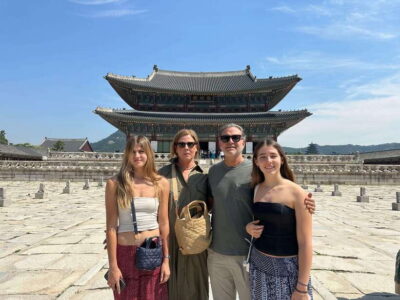 ★ 4.7Seoul Highlights: Gyeongbok Palace, Insadong & N Seoul TowerFrom $26726 reviews
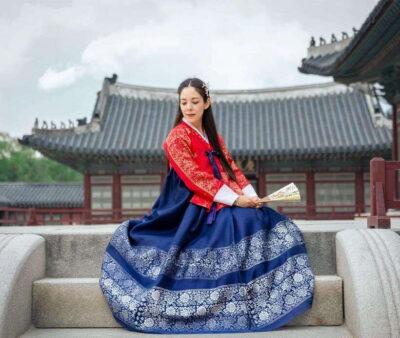 ★ 4.6Seoul: Hanbok Rental with Gyeongbokgung Palace EntryFrom $6611 reviews
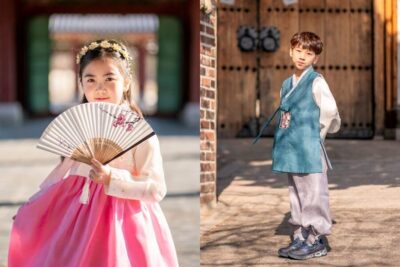 ★ 4.5Seoul: Gyeongbok Palace with Gigibebe Hanbok RentalFrom $9289 reviews
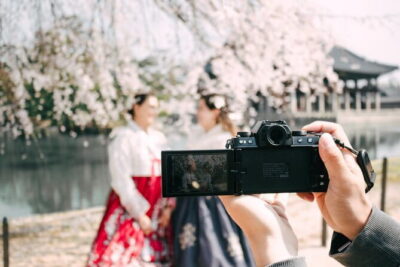 ★ 5.0Hanbok Photoshoot and History Tour at Gyeongbokgung PalaceFrom $60276 reviews
Where this tour also appears