
REVIEW · KOREAN MOUNTAIN HIKES
Bukhansan National Park: The Summit Course
Seoul’s tallest peak feels worlds away. Bukhansan National Park puts you on the highest point in the city, with seasonal changes you can feel as you climb, and a route designed to reach the summit in about 4 hours instead of the usual longer hike.
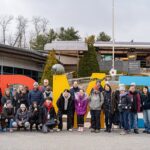
I love how the guide-led approach keeps things straightforward and safety-first, especially on the steeper moments. I also like the small group vibe, with up to 20 people, where Koa and Sam can keep an eye on the pace and help everyone stay together.
One consideration: this is a real uphill workout, with big elevation gain and a ropes-assisted summit section. It is not recommended for knee issues, and if you get spooked by heights, you’ll want to plan your comfort level for that final climb.
In This Review
- Key highlights to know before you go
- Why Baek-un-dae feels like a Seoul escape
- Meeting at Bukhansan UiSeoul and the real half-day rhythm
- The climb: 600 meters up, about 2 kilometers in
- Baek-un-dae’s ropes section: thrilling, but optional for some
- The view payoff and the seasonal feel you can actually notice
- Optional tofu lunch after the hike, vegan friendly and locally focused
- Price and what makes $64.89 feel worth it
- What’s included, what costs extra, and how to avoid surprises
- Who this hike suits best, and who should think twice
- Weather rules, and the one thing you can control
- Should you book the Bukhansan Summit Course?
- FAQ
- Where does the hike start?
- How long is the hike?
- What does it cost?
- Is a mobile ticket used?
- What fitness level do I need?
- Are hiking poles included?
- Is lunch included?
- Is the tour suitable for people with knee issues?
- What happens if weather is bad?
- Can I change or get a refund if I cancel?
Key highlights to know before you go
- Summit in roughly 4 hours on a faster, simplified route (not the long 6-hour standard)
- Up to 20 people, so the hike stays manageable and the guide can actually help
- Ropes on the Baek-un-dae highlight, with an option to pause or avoid the steepest exposure
- A big test of fitness, around 600 meters of climbing gain in a short distance
- Optional tofu lunch after, vegan/vegetarian friendly and paid separately
More climbs we have reviewed in Seoul
Why Baek-un-dae feels like a Seoul escape
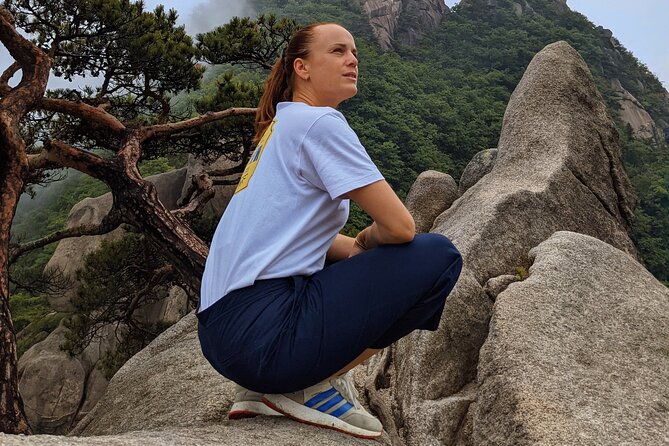
If your idea of Seoul is skyscrapers and subway lines, Bukhansan National Park gives you a sharp reset. The park sits right on the city’s boundary, so you start the morning in the urban orbit and soon trade it for rocky trails and mountain air.
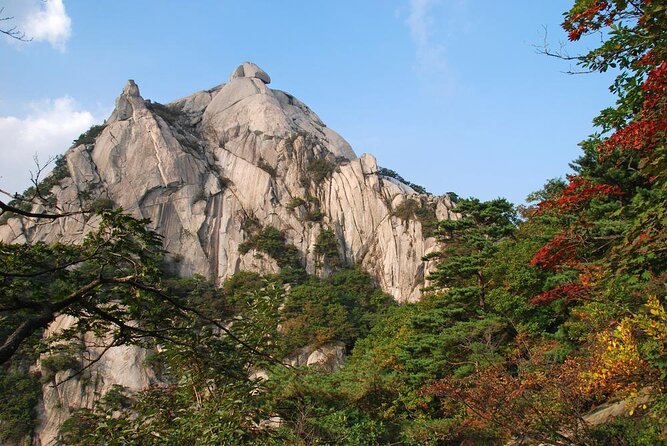
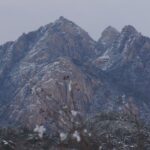
The payoff is the peak itself: Baek-un-dae, at 836 m (2,743 ft), the highest point in Seoul. This isn’t a gentle viewpoint walk. You’re hiking up, and the seasonal shifts become part of the experience. In colder months you’ll likely notice crisp air and harder footing. In warmer seasons, the climb can feel much more demanding because the mountain adds heat and exposure quickly.
What I like most is the way the tour frames the whole day as a climb to a single goal, not a rambling circuit. That focus makes it easier to decide if you can handle it.
Meeting at Bukhansan UiSeoul and the real half-day rhythm
You start at Bukhansan UiSeoul, South Korea at 8:00 am, and the tour ends back at the same meeting point. Total time is about 4 hours 30 minutes. That timing matters because it tells you what kind of hike this is, punchy and goal-driven, not a slow sightseeing stroll.
You’ll also be glad it’s a mobile ticket day. Less fumbling, more moving. And since the meeting point is described as near public transportation, you can plan to arrive without needing a private car or a complicated transfer.
This start time is also practical. Earlier hiking tends to mean cooler temperatures and better trail footing, especially if the weather swings during the day. If you’re the kind of person who likes to avoid crowds on the trail, an 8:00 am start is a quiet advantage.
The climb: 600 meters up, about 2 kilometers in
Here’s the fitness reality check. The ascent includes about 600 meters (2,000 ft) of elevation gain within 2.1 km (1.3 miles). That normally takes around 100 to 120 minutes, and it maps closely to the tour’s total “fast summit” promise.
Think of it like walking up roughly 200 floors of stairs, in a shorter, more intense chunk. It’s not just the height. It’s how quickly you gain it. That steep feel is what makes the route exciting, and also what makes it a workout you should respect.
If you’re moderately fit, this is doable, especially because the experience is guided and designed for efficiency. But if you usually hike casually on flat ground, you may feel it in your legs and lungs. I’d treat this as an effort level you should train for a bit before you show up.
A smart approach is to keep your pace steady. Don’t sprint the early meters. The route is built to get you up and over in a tight time window, but your goal is finishing strong, not burning out halfway.
Baek-un-dae’s ropes section: thrilling, but optional for some
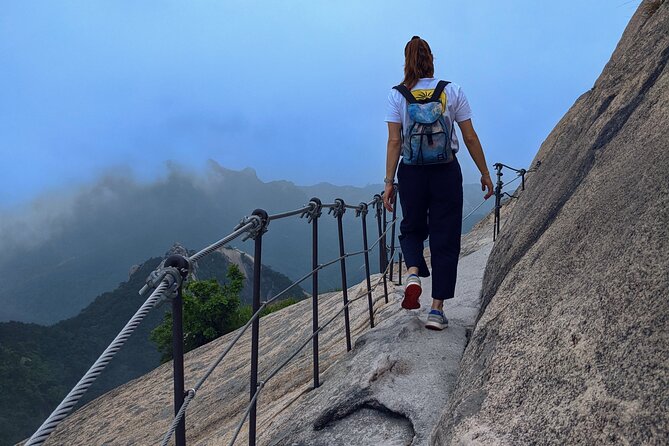
The highlight is Baek-un-dae’s steeper climb. Expect a 25 to 45 degree angle section, helped by ropes. The time window for that part is about 20 to 30 minutes.
This is where your comfort level matters most. If you feel uneasy with heights, you should know this specific section is described as avoidable by taking a break. That means you might be able to manage your own pacing and reduce the pressure on you.
Still, the ropes are there for a reason: grip and stability on steeper ground. Use them the way they’re meant to be used. Keep three points of contact when possible, move slowly, and don’t rush the part that feels exposed.
Also, keep your expectations realistic. Even if the ropes make it possible, the angle still works your core and legs. It’s not just “follow the rope and you’re done.” It’s a short technical feel layered on top of a steep hike.
If you want a scenic win without fear taking over, plan to arrive with a calm mindset and don’t treat the ropes section like a dare. You’ll enjoy the summit much more when you’re focused, not fighting panic.
- Best DMZ Tour Korea from Seoul (Red Suspension Bridge Optional)
★ 5.0 · 41,422 reviews - DMZ Tour: 3rd Tunnel, Option(Suspension Bridge, Boat) from Seoul
★ 5.0 · 21,373 reviews - DMZ tour south Korea from Seoul (NK experience hall, defector)
★ 5.0 · 20,599 reviews - Seoul: DMZ Tour with Optional Suspension Bridge
★ 4.8 · 5,277 reviews - Signature DMZ Tour: Exclusive Defector Talk & Suspension Bridge
★ 5.0 · 4,459 reviews
The view payoff and the seasonal feel you can actually notice
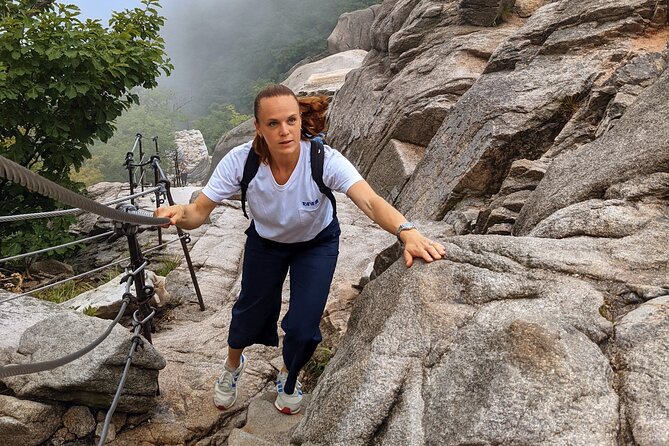
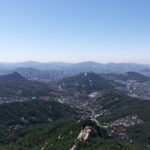
Once you reach the top, the view is the reason you did the hard parts. The climb is steep enough that the summit doesn’t feel like an instant photo stop. It feels like a finish line.
And because this hike runs through different seasons, the mountain experience changes. You won’t get the same feeling in summer heat versus crisp autumn or winter air. The tour description points out you can sense seasonal changes, and that matches how Bukhansan trails typically feel as the light and temperature shift.
The best way to make this worth it is to give yourself a little time at the top to reset. Don’t rush your photos and snacks so fast that you skip the moment of relief. The guides (Koa and Sam are specifically named in the information you’re working from) are there to keep the group safe, so you can take that small breath without losing your place.
Optional tofu lunch after the hike, vegan friendly and locally focused
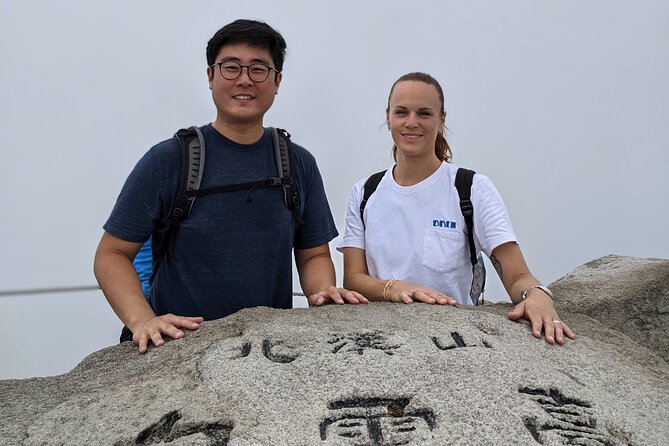
After the hike, you have an optional lunch at a place specializing in tofu dishes. The price range is 9,000 to 15,000 KRW, and you pay individually.
What stands out here is that the restaurant is described as making everything from scratch, with both meat options and vegan/vegetarian friendly choices. If you eat vegetarian or just want something lighter after the climb, this kind of meal slot can be the difference between feeling great and feeling stuck with a heavy post-hike regret.
Because lunch is optional, you can also decide based on your energy level. If you feel cooked, you might want to prioritize a quick meal and head back at a comfortable pace. If you feel good, this tofu lunch becomes part of the reason to pick this specific tour over a DIY hike.
Either way, budget for it. The main tour price covers the hike and guiding, not the meal.
Price and what makes $64.89 feel worth it
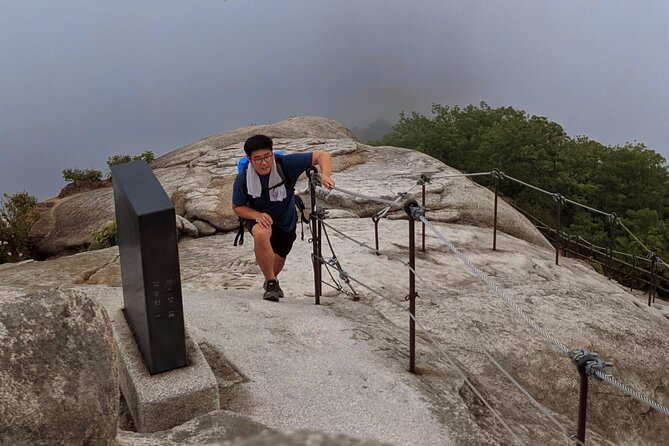
The price is $64.89 per person for a tour that runs about 4 hours 30 minutes. That might sound simple on paper, but the value comes from what you are buying: a faster route, guided safety management, and help with the harder technical stretch.
This is not a generic walk. You’re tackling a steep ascent and a rope-assisted peak section. Without guidance, you’d spend time figuring out the “fastest simplest” approach, and you’d likely face more uncertainty on where to slow down.
Also, the group size cap of 20 travelers matters. Smaller groups usually mean better attention and more flexible pacing. The information you have names guides Koa and Sam as working as a team, with emphasis on keeping participants safe first while still enjoying the experience.
One more note: the tour is described as being booked on average 14 days in advance. That’s a clue this is popular for a reason. If you have a specific date window, don’t wait until the last minute.
What’s included, what costs extra, and how to avoid surprises
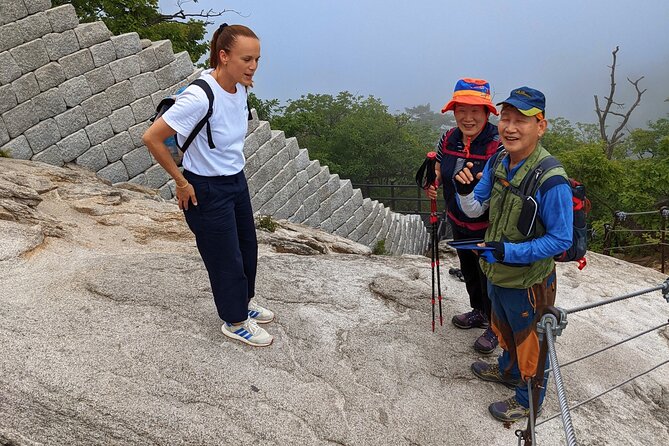
Included in the tour is help and guidance, plus an option for hiking poles. But here’s the catch: poles can be rented for an extra cost, and it’s stated that they can only be rented out if you inform the provider in advance. If you want poles, plan ahead rather than hoping they’ll be available last minute.
Lunch is not included. The tofu lunch is optional and paid separately at 9,000 to 15,000 KRW.
Other practical details that matter: the tour confirmation happens at booking time, and it uses a mobile ticket. That’s a small thing, but it makes the morning smoother, especially when you’re arriving early and your brain is still waking up.
Who this hike suits best, and who should think twice
This hike is designed for people with moderate physical fitness. It’s also explicitly noted as not recommended for knee issues. That makes sense given the steep climbing and the steeper rope-assisted segment.
So who is it for?
- You hike regularly, even if not super long distances
- You’re comfortable with a sustained uphill effort
- You can handle short steeper sections with ropes or you can manage your comfort level during that part
Who should think twice?
- Anyone dealing with knee pain or unstable knees
- Anyone who expects an easy, mostly flat walk
- Anyone who gets anxious about heights without the ability to take breaks and adjust
If you fall into a gray area fitness-wise, don’t ignore that caution. A “moderate” hike is still a climb with real elevation pressure. Better to be honest about what your body can do today than to gamble on willpower.
Weather rules, and the one thing you can control
The experience requires good weather. If it’s canceled due to poor weather, you’ll be offered either a different date or a full refund. That’s important because mountains change fast. Wet or icy conditions can make steep sections more risky.
What you can control is your plan B. If your schedule is tight, check forecasts the day before. Pack for quick changes in temperature, and remember that your effort will spike your heat while the mountain can still cool you down fast.
Should you book the Bukhansan Summit Course?
Book it if you want a guided hike to Seoul’s highest peak with a faster, simpler route that aims for the summit in about 4 hours. I think it’s a great fit for hikers who like structure, value safety support, and want the best payoff per hour without turning the day into an all-day ordeal.
Skip it or reconsider if your knees are a problem, or if you want a low-intensity experience. The climb is vertical by design, and the ropes-assisted segment is part of what makes Baek-un-dae memorable.
If you can handle steep climbs and you’re up for an early start, this is one of the most satisfying ways to get real nature time right next to Seoul.
FAQ
Where does the hike start?
The tour starts at Bukhansan UiSeoul, South Korea, at 8:00 am. It ends back at the same meeting point.
How long is the hike?
The duration is about 4 hours 30 minutes (approx.).
What does it cost?
The price is $64.89 per person.
Is a mobile ticket used?
Yes, the tour includes a mobile ticket.
What fitness level do I need?
You should have a moderate physical fitness level to finish the hike.
Are hiking poles included?
Hiking poles are not included, but you can rent them for an extra cost. Rental is only available if you inform the provider in advance.
Is lunch included?
Lunch is optional and paid by individuals. It costs about 9,000 to 15,000 KRW and you will eat at a tofu-specialty place after the hike.
Is the tour suitable for people with knee issues?
No. It is not recommended for people with knee issues.
What happens if weather is bad?
The experience requires good weather. If it’s canceled due to poor weather, you will be offered a different date or a full refund.
Can I change or get a refund if I cancel?
This experience is non-refundable and cannot be changed for any reason. If you cancel, the amount you paid will not be refunded.
More Seoul Write-Ups
More Korean Peaks We Have Walked
Fresh on the Seoul pile
- Unique Native Experience : Han River Picnic, Board game, BBQ★ 5.0 · 3 reviews
- 2-Hour Private Kayaking and Paddleboarding Experience in Hanriver★ 5.0 · 3 reviews
- Korean Folk Village & Suwon Hwaseong Fortress Private Tour★ 5.0 · 3 reviews
- Seoul Korean BBQ Dinner Experience with Secret Food Tours★ 5.0 · 3 reviews
- Seoul Highlights & Hidden Gems – Private Tour with Photo Service★ 5.0 · 3 reviews
- Night Food Tour in Seoul with Traditional and Modern Cuisine★ 5.0 · 3 reviews
Korean Mountain Hikes you might have missed.
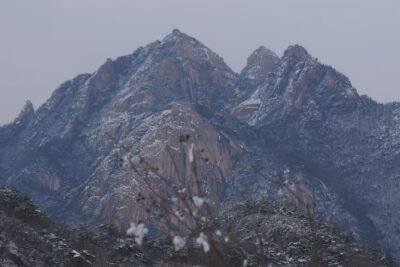 ★ 5.0Private Hiking tour to Bukhansan Peak(Baegundae: 836.5m) with Mountain ExpertFrom $168113 reviews
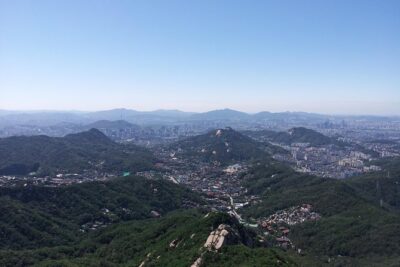 ★ 5.0Private Hiking to Bukhansan & Korean Style Spa(Include Lunch)From $18232 reviews
 ★ 5.0Namhansanseong UNESCO Historical Sites and Korean Folk Village-Private TourFrom $19829 reviews
 ★ 5.0Bukhansan Mountain Private Hike with LunchFrom $17026 reviews
 ★ 5.0Spiritual Adventure : Into Inwangsan and Korean ShamanismFrom $2825 reviews
 ★ 4.9Bukhansan National Park- The Summit CourseFrom $6720 reviews
 ★ 4.5Private Bukhansan Hiking Tour (More Members Less Cost per Person)From $16813 reviews
 ★ 5.0Inwangsan hike & historical sitesFrom $6910 reviews
Where this tour also appears