
REVIEW · JEONJU & ANDONG HANOK VILLAGES
Korean Green Tea Tour – from Boseong to Gangjin (Private)
Green tea grows like a moving sea. This private day links two of Korea’s tea powerhouses, Boseong and Gangjin, and turns your tasting from a vague idea into three clear styles: leaf tea, powdered tea, and rice cake tea. You also get a real tea ceremony experience plus time in historic gardens and tea sites you would be hard-pressed to find on your own.
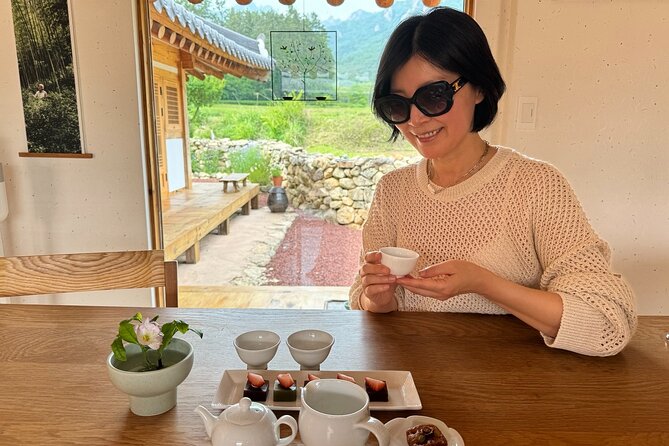
I especially like the hands-on learning: the Korean tea ceremony class in Boseong makes the flavors feel understandable, not mysterious. I also love the focus on tradition in Gangjin, where you’ll taste historical rice cake tea tied to a long-running tea culture, and you’ll walk through the calm, garden-style space of Baegundong Hermitage Garden. That combination is rare in a single 9 to 10 hour outing.
One consideration is simple: it’s a full day, and lunch isn’t included, so you’ll want a plan for food in Boseong-eup. It also needs good weather, since the day depends on outdoor tea fields and viewpoints.
In This Review
- Key highlights worth planning for
- Why the Boseong to Gangjin route is a smart tea day
- Price and what you truly get for $195 per person
- Timing, travel, and how the day feels from start to finish
- Stop 1 in Boseong: Daehan Dawon and why organic hills matter
- Boseong-eup break: lunch time with local options
- Korea Tea Museum: the plant science and tea categories you actually need
- Nokcha-ro viewpoint: a quick pause with a big payoff
- Gangjin Dawon: tea cultivation at the foot of Mt. Wolchulsan
- Baegundong Hermitage Garden: Joseon-era calm and tea culture revival
- Seongjeon-myeon and Baeg-un Tea House: the story behind Korea’s first tea brand
- Tasting highlights: matcha affogato, powdered tea, and rice cake tea
- What the private guide adds beyond the stops
- What to bring so the day stays comfortable
- Who should book this Korean green tea tour
- Should you book it?
- FAQ
- Is this tour private?
- What is included in the price?
- Where does the tour start and what are the drive times?
- How long is the tour?
- Is lunch included?
- What happens if the weather is poor?
Key highlights worth planning for
- Three tea types, not just photos: leaf tea, powdered tea, and rice cake tea in one flow
- Korean tea ceremony class in Boseong: you get method, not just a sample
- Korea Tea Museum context: learn how tea plants and tea categories connect to what you taste
- Gangjin’s heritage stops: Baegundong Hermitage Garden and a tea-house story tied to Korea’s early tea brand
- Private transportation from Gwangju area: real door-to-door time savings (about 70 minutes to Boseong)
Other village stays in South Korea
Why the Boseong to Gangjin route is a smart tea day
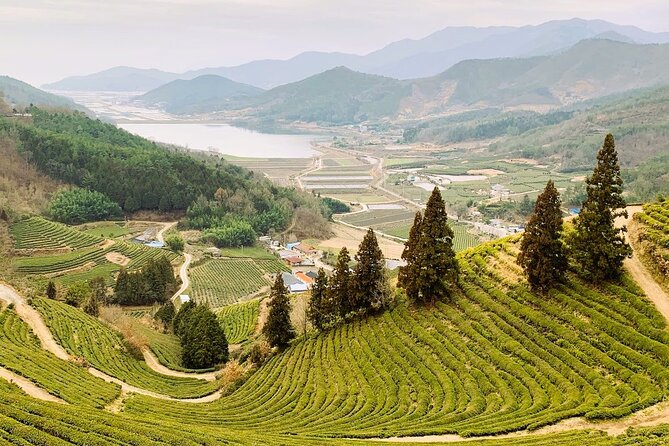
A lot of tea tours pick one area and call it done. This one connects Boseong, known for rolling organic green tea hills, with Gangjin, which stays quieter for most foreign visitors but has deep roots in tea culture. That back-to-back pairing helps you see how the same plant identity can turn into different tasting traditions and ways of life.
The value here is not only scenic time, it is the way the day builds. You start with tea fields and the basics of the tea plant, then you move into cultural spaces where tea becomes ritual and story. By the time you hit the garden and the tea brand legacy in Gangjin, the tasting makes more sense.
Price and what you truly get for $195 per person
At $195 per person, you should judge this as a “guided day of admissions plus tasting,” not as a basic transfer. This price includes private transportation, all fees and taxes, and specific food-and-drink tastings such as matcha affogato and historical rice cake tea. It also includes a Korean tea ceremony experience in Boseong, which is usually where a self-guided day feels thin.
Lunch is not included, and that matters. You’ll have a designated lunch time in Boseong-eup, but you are paying for that meal separately. Still, the rest of the day includes enough paid entry and organized experiences that you are not piecing together tickets and timing yourself.
Timing, travel, and how the day feels from start to finish
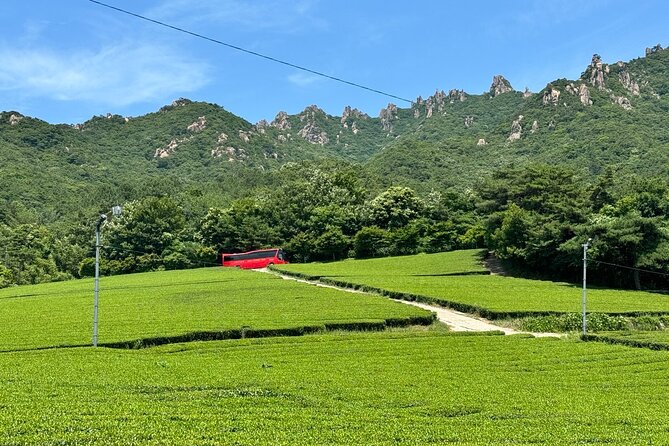
The day starts at 9:30 am. From the Gwangju Metropolitan City area, you’re looking at about 70 minutes to Boseong, and then about 50 minutes from Boseong to Gangjin, with roughly 70 minutes back toward Gwangju. The tour overall runs about 9 to 10 hours, which is a solid full-day commitment, not a quick half-day tea stroll.
Because it is private, you are not waiting on a mixed group. That usually means fewer delays and more flexibility if the timing of a tea field visit runs long or you want extra time at a viewpoint. The tradeoff is that you should come with the stamina for a full day, especially if you are visiting in warmer months.
Stop 1 in Boseong: Daehan Dawon and why organic hills matter
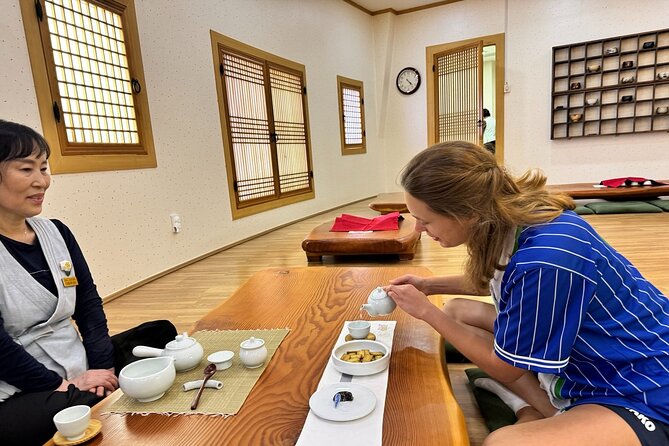
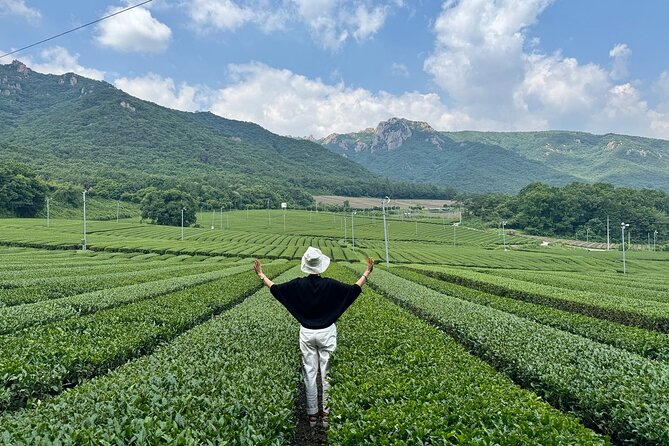
Your first tea-field stop is Boseong Green Tea Field Daehan Dawon. The core idea here is place: Boseong’s climate and soil are described as a strong match for green tea growth, and the tea there is grown organically. That matters because organic farming often connects to the flavor consistency tea lovers look for, even if you are not a chemistry nerd.
What you’ll take away is the “field to cup” feel. You are not only tasting later, you are seeing the slope, the cultivation style, and the way the tea rows fill the hills. Even a 90-minute visit can shift your appreciation, because you connect aroma and taste to how the leaves are grown and handled.
- DMZ Insider Tour: 3rd Tunnel, NK Defector Meet & Red Bridge
★ 4.9 · 15,214 reviews - Korean Cemetery and Folklore Trek
★ 5.0 · 41 reviews - Jeju: Private Tour with an English Guide and a Vehicle
★ 5.0 · 32 reviews - Jeju Island: Full-Day Customizable Private Guided Car Tour
★ 4.6 · 31 reviews - Jeju: Customized Private Vehicle Day Tour
★ 4.9 · 22 reviews
Boseong-eup break: lunch time with local options
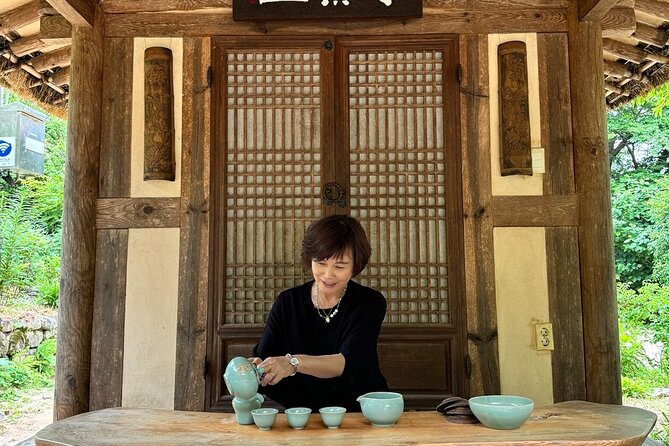
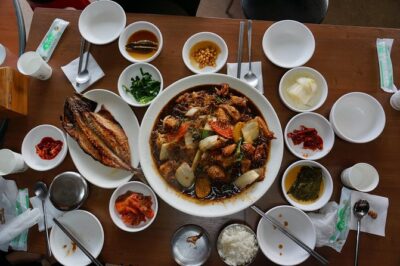
Next comes Boseong-eup, and this is your planned lunch window. Lunch is not included, but the tour provides time to choose popular local dishes and pay at the restaurant. This is one of those practical setups that helps you avoid the common problem of tea tours that skip real food or shove you into a single option.
The best approach here is to use the time efficiently. If you know you’ll be hungry, pick something fast to order and then return to the day with energy. If you want to browse, do it quickly, because the rest of the schedule keeps moving.
Korea Tea Museum: the plant science and tea categories you actually need
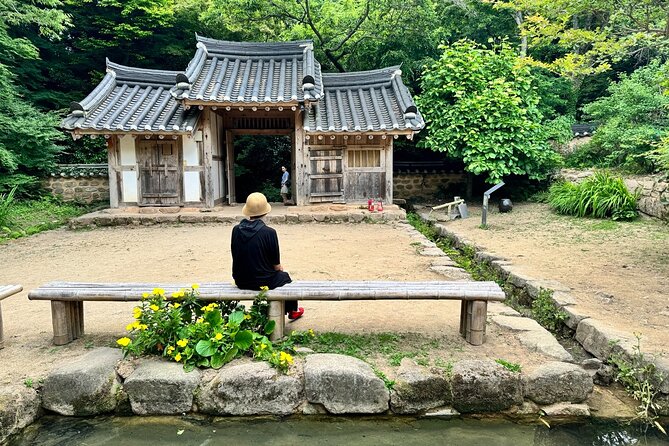
After the lunch break, you head to Korea Tea Museum. This stop is less about views and more about building a framework: it introduces the tea plant, explains six types of tea that can be produced, and covers the history of Korean tea and green tea production. Even if you are already into matcha or green tea, this kind of background helps you understand what you taste later.
Why this museum stop is valuable is that it keeps the day from becoming purely scenic. You will see how tea categories connect to processing and use, which makes the tea ceremony experience in Boseong feel more grounded. If you like learning while you travel, this is the “teacher” stop that makes the tasting stick.
Nokcha-ro viewpoint: a quick pause with a big payoff
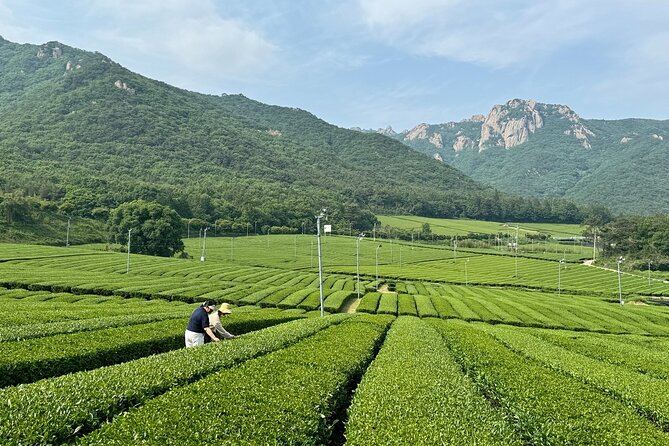
You get a shorter stop at Nokcha-ro (Choroknip tea farm), which is described as a beautiful tea-field viewpoint. This is one of those add-on moments that can refresh the day: you’re on a terrace with a strong view over the rolling tea fields below.
Because the time here is about 40 minutes and the admission is free, treat it like a reset. Wear shoes you can stand in comfortably, and take a few slow minutes to look around before you rush to photos. The viewpoints are where you start to notice how the tea hills shape the entire pace of the region.
Gangjin Dawon: tea cultivation at the foot of Mt. Wolchulsan
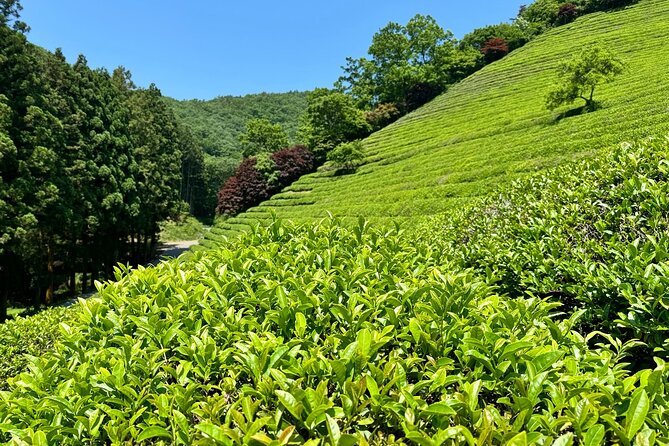
In Gangjin Dawon, you switch from “Boseong’s famous hills” to “Gangjin’s continuing cultivation.” This tea field sits at the foot of Mt. Wolchulsan, and the cultivation mentioned here goes back to 1980 by Osulloc, one of Korea’s leading tea producers. What’s interesting is that the tour doesn’t frame Gangjin as a new scene, it frames it as a continuation with a longer story behind it.
The visit lasts about 30 minutes, so don’t expect a long sit-down lesson. Instead, use this stop to connect what you learned earlier with what you see now: the same green tea culture, expressed through a different regional setting. If you love comparing how places feel, this is the part of the day that scratches that itch.
Baegundong Hermitage Garden: Joseon-era calm and tea culture revival
Next is Baegundong Hermitage Garden, described as one of Korea’s most beautiful private gardens. It was built in the late 17th century during the Joseon Dynasty, and the site was chosen carefully to harmonize with the natural surroundings.
This is not a tea-field stop, but it matters just as much. Tea culture is not only about leaves, it’s about how people pace life around those leaves. A garden like this gives you a quiet “in-between” moment, so your later tasting does not feel rushed or purely commercial.
Seongjeon-myeon and Baeg-un Tea House: the story behind Korea’s first tea brand
Your final cultural stop centers on Seongjeon-myeon and Baeg-un Tea House, tied to Korea’s first tea brand. The tour connects this to Baegun Okpan Tea, created in the 1920s by Lee Han-young, a descendant of one of Jeong Yak-yong’s disciples. While exiled in Gangjin, the legacy behind this brand is part of what you’re walking through.
This stop helps you understand why Gangjin has meaning beyond scenery. You’re learning that tea isn’t only a beverage, it’s a name, a lineage, and a set of practices tied to local history. Even if you only catch part of the story, the way it connects people to tea will sharpen your tasting memory.
Tasting highlights: matcha affogato, powdered tea, and rice cake tea
This tour is built around tasting three green-tea styles. Leaf tea and powdered tea are part of the experience, and the day also includes historical rice cake tea in Gangjin. You’ll also get a featured included treat: matcha affogato, described as powdered green tea with green tea ice-cream.
Here’s why I think these specific tastings work well for you. Matcha affogato gives you a familiar ice-cream anchor while still tasting the powdered tea character. Rice cake tea, on the other hand, shifts you into a more traditional pairing that feels different from the typical cafe matcha run, so it gives your palate a new reference point.
If you are the type who likes to compare flavors, pay attention to texture as well as taste. Powdered teas often feel different on the tongue than leaf teas, and rice cake tea adds a chewy, filling element that changes how the tea flavor lands.
What the private guide adds beyond the stops
The biggest reason I’d choose a private tour here is not speed, it is interpretation. A good guide can explain why a tea farm looks the way it does, what tea ceremony steps are doing for flavor and aroma, and how the Gangjin brand story connects to the way people handled tea historically.
From what I’ve seen in guide notes and trip write-ups, guides for this tour like Veronica (and sometimes listings like Vicky show up) are praised for clear explanations. The practical extra value also shows up when guides go beyond the route, like helping solve transportation problems during the rest of your trip. You shouldn’t expect that every time, but it’s a sign that the guiding approach can be more than just reading facts.
What to bring so the day stays comfortable
This is a long day with tea fields and a garden. Bring comfortable walking shoes, water, and a light layer, since weather can change your comfort level even when the day is running. If you want photos, your best shots will likely be at viewpoints, so consider a camera strap or stable stance for terraces.
Also plan for lunch as a separate cost. If you’re sensitive to crowds, consider ordering something easy to eat so you don’t lose time when the schedule moves again.
Who should book this Korean green tea tour
Book this if you want a tea day with structure. It’s ideal if you like pairing practical learning with actual tastings, especially when a tea ceremony class and tea museum are part of the plan.
It also fits well if you are not traveling with a car. The day is built around transportation timing between Boseong and Gangjin, and private transport makes the route feel doable without stress.
If you’re only chasing a quick photo tour, this might be slower than you want. But if you care about why the tea tastes the way it does, and you enjoy culture stops like gardens and historic brand stories, you’ll likely get more out of it.
Should you book it?
If you’re willing to spend a full day and you care about more than tasting green tea at random cafes, I’d say yes. The combination of tea ceremony, a tea-focused museum, and multiple tastings including matcha affogato and historical rice cake tea is exactly the kind of value that turns a “nice day out” into a standout travel memory.
The decision mainly comes down to two things: your appetite for learning and your schedule flexibility for good weather. If both work for you, this is a strong choice for a Korean green tea tour that feels grounded in place, not just on a checklist.
FAQ
Is this tour private?
Yes. It is a private tour/activity, meaning only your group participates.
What is included in the price?
Included items are matcha affogato (powdered green tea with green tea ice-cream), a Korean tea ceremony experience in Boseong, historical rice cake tea in Gangjin, all fees and taxes, and private transportation.
Where does the tour start and what are the drive times?
It starts from Gwangju Metropolitan City. Travel time from Gwangju to Boseong is around 70 minutes, Boseong to Gangjin is around 50 minutes, and Gangjin back to Gwangju is around 70 minutes.
How long is the tour?
The duration is about 9 to 10 hours.
Is lunch included?
No. Lunch is not included, but there is a lunch time stop in Boseong-eup where you choose and pay for your meal.
What happens if the weather is poor?
This experience requires good weather. If it’s canceled due to poor weather, you’ll be offered a different date or a full refund.
More South Korea Write-Ups



Tea, Craft and Slower Hours
Other Hanok Village Days
Fresh on the South Korea pile
- Jeju: BTS Are You Sure?! Filming Locations Private Taxi Tour★ 5.0 · 3 reviews
- Pohang Highlights & Private Tour with a Licensed guide★ 5.0 · 4 reviews
- Seoul: DMZ, 3rd Tunnel, Odusan or Suspension Private Tour★ 5.0 · 4 reviews
- Jeju: Western Jeju K-Drama Spots Tour with Hotel Pickup★ 5.0 · 4 reviews
- Hantan Canyon & Goseokjeong Flower Garden & Pink Muhly Park★ 5.0 · 4 reviews
- Small Group Guided Tour in Pohang★ 4.5 · 6 reviews
Jeonju & Andong Hanok Villages you might have missed.
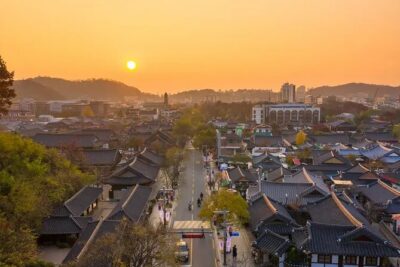 ★ 4.7Jeonju Hanok Village Full-Day Tour:Jangtaesan Autumn FoliageFrom $7445 reviews
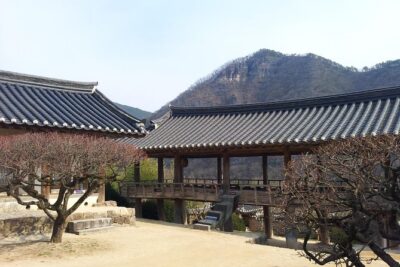 ★ 5.0Andong Hahoe Village [UNESCO site] Premium Private Tour from SeoulFrom $27424 reviews
★ 5.0Jeonju Hanok Village Full-Day Tour: Jangtaesan Autumn FoliageFrom $6016 reviews
★ 5.0Andong Hahoe Village [UNESCO site] Premium Private Tour from SeoulFrom $27424 reviews
★ 5.0Jeonju Hanok Village Full-Day Tour: Jangtaesan Autumn FoliageFrom $6016 reviews
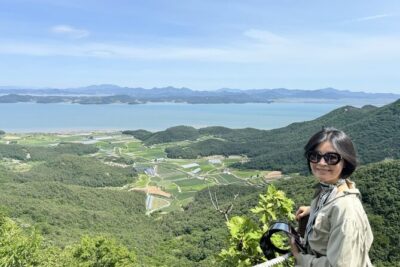 ★ 5.0Boseong Tour : Green Tea Field, Mountain & Lake Trail (Private)From $19012 reviews
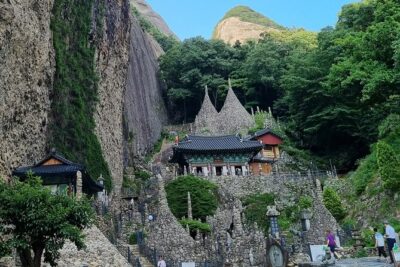 ★ 5.0Jeonju Hanok Village and Maisan Tapsa Temple Day Tour From SeoulFrom $6012 reviews
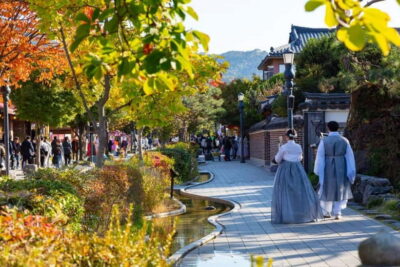 ★ 4.8Jeonju: Private Taxi Tour Car CharterFrom $1528 reviews
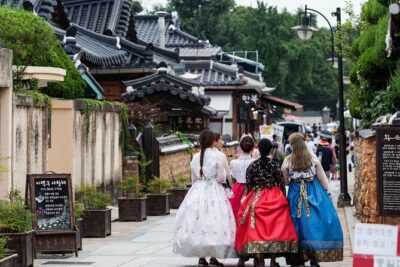 ★ 5.0Maisan Cherry Blossom and Jeonju Hanok VillageFrom $718 reviews
 ★ 4.0Andong Hahoe Folk Village [UNESCO World Heritage] Private Tour from SeoulFrom $2867 reviews
Where this tour also appears