
REVIEW · JEJU ISLAND TOURS
Jeju Island UNESCO Heritage Bus Tour
Three days on Jeju, nonstop highlights.
I like the licensed guide approach and the way this route piles in major Jeju sights with mostly free admissions, so you feel like you are seeing a lot without constantly paying entrance fees. The best part for me is the balance of nature stops plus culture, from Seongeup Folk Village to Seogwipo markets, and I also like that the women Haenyeo show at Seongsan Ilchulbong is built in at a set time. One catch to consider: the schedule can shift with weather and sea conditions, and a few signature items have extra costs.
You get an air-conditioned vehicle, round-trip transfers, parking and fuel handled, plus a mobile ticket. Group size max is 40, and the tour is designed for most people, but you should still plan for long seated travel, timed show slots, and walking at each stop.
In This Review
- Key points that make this Jeju bus tour worth considering
- How the Jeju UNESCO bus route feels: packed days, smart pacing
- Day 1 Eastern Jeju: Saryeoni Forest Path, Seongeup Folk Village, Seopjikoji
- Seongsan Ilchulbong and Hamdeok Beach: UNESCO views plus a timed show
- Day 2 Western Jeju: Mt. Halla trail viewpoints, Jusangjeolli cliffs, Camellia Hill
- Bomunsa Temple and O’sulloc Tea Museum: calm history and tea tastings
- Day 3 South Jeju: 1100 Wetlands or oreum, Seogwipo market lunch, Jeongbang waterfall
- Price and what you really get for $56 per person
- Seasonal timing: when April blooms and winter oranges can shape your day
- A few practical notes that affect your comfort
- Should you book this Jeju Island UNESCO Heritage Bus Tour?
- FAQ
- How much is the Jeju Island UNESCO Heritage Bus Tour?
- How long is the tour?
- Do I get a mobile ticket?
- What is included in the price?
- Are entrance fees included at each stop?
- Do I need to pay extra for the Seongsan Ilchulbong Haenyeo show?
- Is tangerine picking included?
- What happens if it rains or sea conditions are bad?
- Is there a drop-off location near Dongmun Market?
Key points that make this Jeju bus tour worth considering
- A fast East-to-South route in 3 days, built around Jeju UNESCO sites and iconic coastline views
- Mostly free admissions at major stops like Saryeoni Forest Path, Seongeup Folk Village, Seopjikoji, and the folk and garden time slots
- Seongsan Ilchulbong includes a timed Haenyeo show, but the show ticket is extra (₩5,000)
- Tea country plus a real market stop, with O’sulloc Tea Museum and time at Seogwipo Maeil Olle Market
- Weather-based substitutions are planned, like Hamdeok Beach replaced by the Haenyeo Museum on rainy days
- Seasonal flower viewing options, including canola, hydrangea, pink muhly, silver grass, and camellias
More of Jeju, reviewed
How the Jeju UNESCO bus route feels: packed days, smart pacing
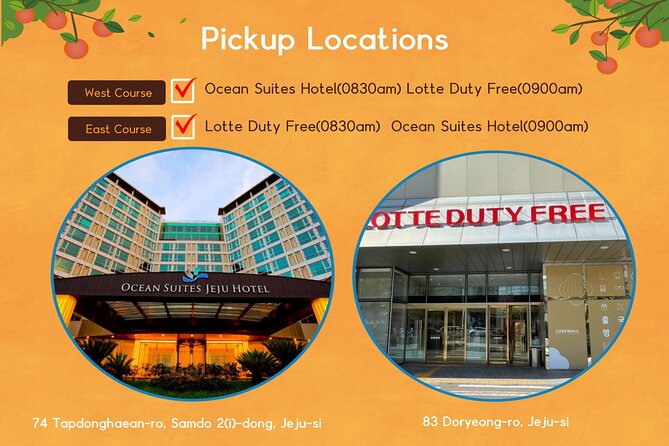
This tour is set up for people who want Jeju highlights without doing the logistics math all on your own. You ride in an air-conditioned bus, meet at a pickup point, and then hop between sights in a structured flow, with a licensed guide keeping things moving.
The pacing is the real personality of the tour. You get short-to-medium stops (often around 40 to 70 minutes) at each place, so you can see a lot, but you will not have a slow, wander-at-your-own-pace day. If you are the type who gets antsy when a schedule feels tight, you might find this style tiring.
Where it shines is that the route mixes outdoor and culture, so you are not stuck doing only viewpoints. On a good day, you rack up UNESCO-related geology at Seongsan Ilchulbong and cliff scenery at Jusangjeolli, then switch to village history and tea country calm.
Day 1 Eastern Jeju: Saryeoni Forest Path, Seongeup Folk Village, Seopjikoji
Day 1 is all about East Jeju’s outdoors plus heritage, starting with Saryeoni Forest Path. The trail is known as one of Jeju’s top lesser-known nature walks, and the standout here is that it feels protected and cared for. You get about 50 minutes, and with the admission listed as free, it is a low-cost, high-reward start.
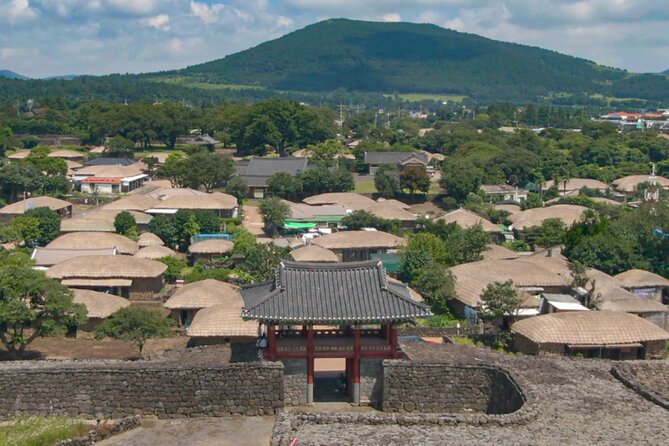
Next comes Seongeup Folk Village, where the stone-stacking tradition is the star. Those piled stones were built to protect roofs from strong winds, and the preserved village setup makes it feel like stepping into how people lived rather than just looking at a single monument. The time is again about 50 minutes, so you will have enough room to read the basics, take photos, and still move on.
Then you hit Seopjikoji, a coastal spot famous for big views and flower-season energy. It is especially rewarding in April when canola flowers bloom, turning the coastline area into a yellow-and-sea photo set. Expect about 40 minutes, and admission is free.
What to consider: East Jeju can be breezy and visually busy. If you are prone to photo fatigue, focus on fewer angles and give yourself time to actually look at the coastline, not just shoot from the first spot you reach.
Seongsan Ilchulbong and Hamdeok Beach: UNESCO views plus a timed show
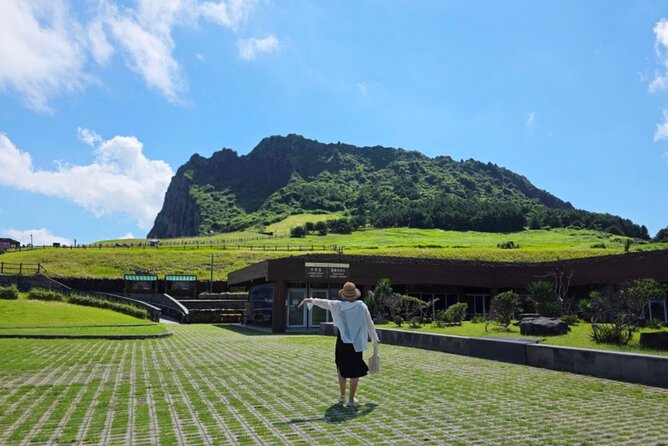
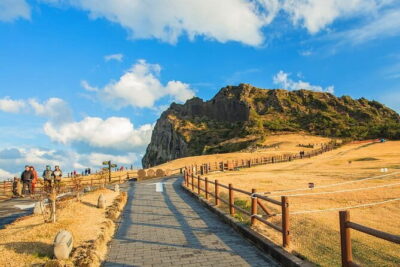
Seongsan Ilchulbong, also called Sunrise Peak, is a highlight stop with a strict visit style. The guidance here is straightforward: picture viewing only, no hiking, and you will need a ticket to access the area. The Haenyeo show is the center of gravity at this stop, scheduled for 2:00 p.m., and the show ticket is listed as not included.
So budget for that show ticket. It is priced at ₩5,000 per person, and the tour provides the slot time so you do not have to hunt for tickets on the ground. If you love cultural performance moments, this is the kind of stop that turns your day into something more than sightseeing.
From there, Hamdeok Beach closes out Day 1, and it is one of the easier transitions because you have time for the shoreline mood. But the tour also plans for reality: on rainy days, Hamdeok Beach is replaced by visiting the Haenyeo Museum.
There is another practical weather note that matters: Manjang Cave, marked as UNESCO, is currently closed due to anti-falling construction, with a reopening scheduled for August 2. That is the kind of detail that can change what you see, so it is worth keeping an eye on updated local status close to your dates.
My advice: if the Haenyeo show is one of your must-dos, arrive early enough to reduce stress. Timed shows plus transit can make you feel rushed if you are always trying to squeeze in one more photo.
Day 2 Western Jeju: Mt. Halla trail viewpoints, Jusangjeolli cliffs, Camellia Hill
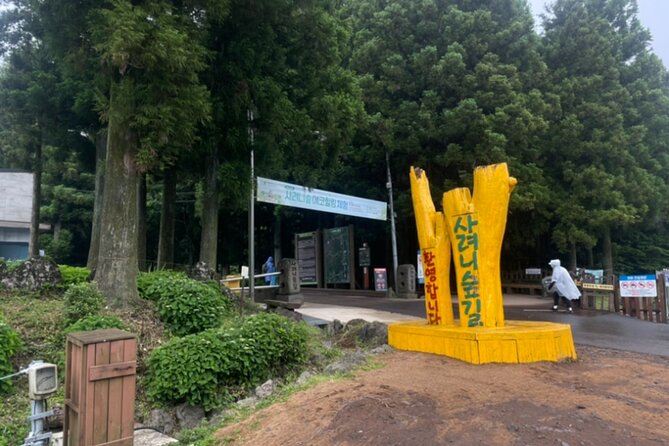
Day 2 turns toward big geology and garden season. The first stop is Mt. Halla’s Eoseungsaengak Trail, listed as free admission and about 1 hour 10 minutes. The route around Mt. Halla can shift based on timing, and there is a specific note that from April 11, 2026 the main course changes to the 1100 Altitude Wetlands.
That matters for what you will actually experience. A wetlands-focused route tends to feel softer and more “walk-and-look,” while a trail route can feel more structured and scenic in a different way. If you are traveling around spring dates, it is worth checking which version you are getting so you are not surprised.
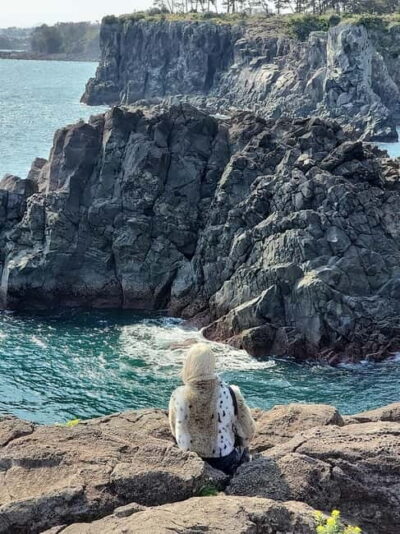
Next is Daepo Haean Jusangjeolli Cliff, the famous black hexagon stone pillars that look like nature built a giant folding screen. This is a great stop when you want to feel small next to geology. The time is about 40 minutes, and it is built for quick awe.
There is also an optional winter-season tangerine picking experience at this stage, listed as optional and paid on-site at ₩5,000 per person. If you are traveling in winter, ask your guide about availability so you can decide without feeling pressured.
After the cliffs, Camellia Hill brings the color shift. You get about 1 hour 10 minutes, and it is home to over 500 species of camellias. The seasons matter here, because the garden timing changes what you see, with red blooms in winter, hydrangeas in summer, and golden reeds in autumn. Admission is listed as included at this stop, which makes it a straightforward value play.
Other listed sites we have written up
- Jeju Island UNESCO Heritage Bus Tour
★ 5.0 · 54 reviews - Jeju: UNESCO-Listed Southern Authentic Day Tour
★ 4.5 · 22 reviews
Bomunsa Temple and O’sulloc Tea Museum: calm history and tea tastings
Bomunsa Temple is the next mood change, described as a serene cliffside temple with ocean views and historic Buddha carvings. The stop is shorter at about 40 minutes, but the setting makes it feel like more than a checkbox. It is also connected to route planning changes, because from April 11, 2026 the Bomunsa Temple course follows the Sinchang Windmill Coastal Road.
That coastal road note is not just trivia. It can change your sightline from straight temple viewing to more of a scenic ride through coastal windmill areas, which tends to make photos easier.
Then the tour heads to O’sulloc Tea Museum, around 50 minutes. This is one of the easiest places to enjoy without needing to be outdoors all day. You walk through tea rows and get tastings, desserts, and exhibitions, and it is described as Korea’s premier tea museum.
There is also an upcoming change from April 11, 2026: the course adds a stop at Aewol Café Street as a Hop-On Hop-Off style option. That can be a fun add-on if you like dessert and coffee breaks, and it also gives flexibility if you want to buy something instead of sitting with the group.
Day 3 South Jeju: 1100 Wetlands or oreum, Seogwipo market lunch, Jeongbang waterfall
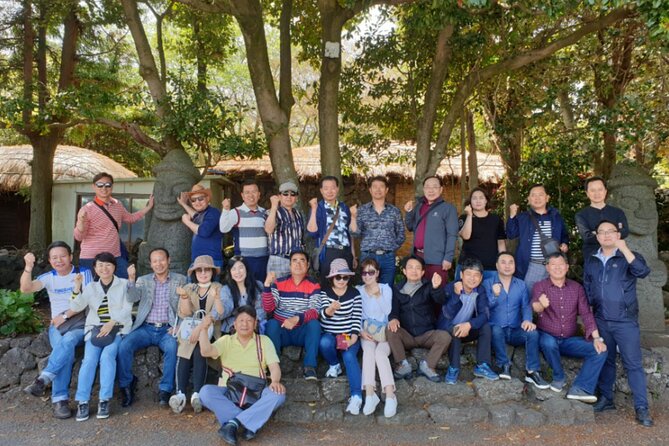
Day 3 starts again at Mt. Halla, with visit options depending on weather and site decisions. The base stop is the Eoseungsaengak Trail again, but it may be replaced with either the 1100 Wetland (Eorimok) or Saebyeol Oreum. The stop duration is about 1 hour 15 minutes, and admission is free.
This repetition sounds odd until you realize the point. It is a backup system for conditions. If the trail version is not working for the day, you still get an Mt. Halla experience through one of the other scenic alternatives.
Next is O’sulloc Tea Museum again, then Seogwipo Maeil Olle Market. The market stop is about 1 hour, and you can choose your preferred meal for lunch while also picking up souvenirs. This is a smart inclusion because it is one of the few parts of the tour where you can control what you eat rather than relying on one set meal.
Jeongbang Waterfall follows at about 40 minutes. It is described as rare because the waterfall flows directly into the sea. That direct connection is exactly what makes it a “stop, look, and remember” location.
If access is restricted due to adverse weather, the tour swaps in Cheonjiyeon Waterfall instead. That is another example of the tour working around conditions rather than cancelling the whole day.
Finally, Hueree Natural Life Park closes out the day with seasonal flowers and easy walking paths, lasting about 1 hour 10 minutes. You can end your tour here, which is helpful if you prefer to keep your evening flexible rather than getting dropped late in traffic.
Price and what you really get for $56 per person
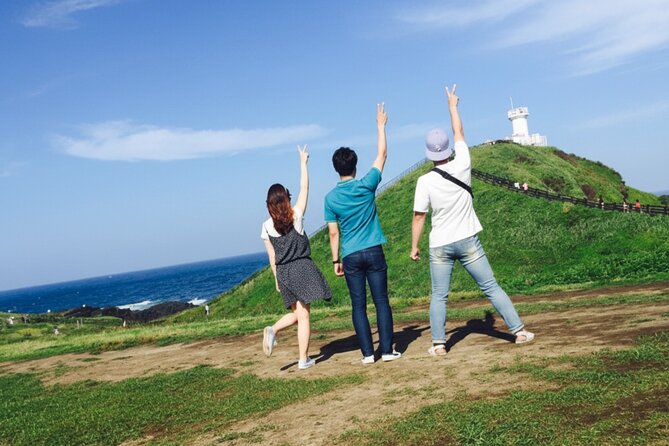
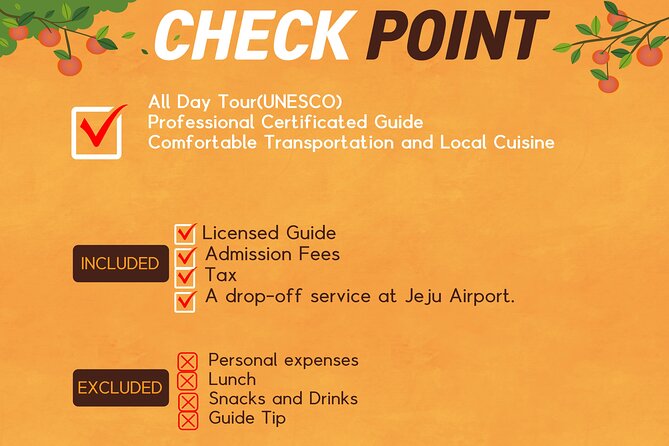
At about $56 per person for a 3-day experience, the value is strongest because so much is bundled. You get an air-conditioned vehicle, parking and fuel, round-trip transfers from your meet-up point, an English guide, and even airport drop-off services.
That is a big deal on Jeju, where distances add up fast. If you were to piece together transfers and admission entry one by one, the costs can creep up quickly even without fancy upgrades.
Now for the extras, so you can budget without surprises. The Haenyeo women show at Seongsan Ilchulbong is not included, and the ticket is ₩5,000 per person. The tangerine picking experience is optional in the winter season and also costs ₩5,000 per person on-site. Personal expenses, drinks, and meals are not included, and gratuities are recommended but not compulsory.
My practical takeaway: this tour is good value if you are fine paying those two add-ons only if you want them. If you plan to skip both, you still get plenty of included sights and attractions.
Seasonal timing: when April blooms and winter oranges can shape your day
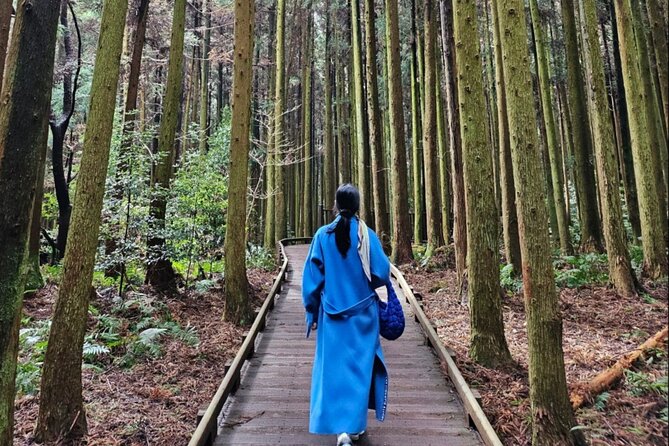
Seasonal flowers are built into how the route feels. April is a standout time, especially with canola flowers at Seopjikoji and cherry blossom periods that can influence which garden moments look best during your visit.
Camellia Hill is the most season-dependent stop in the route because it is designed around changing bloom cycles. You might see red blooms in winter, hydrangeas in summer, and golden reeds in autumn, so what you get in photos will vary a lot by month.
The broader flower seasons listed also include pink muhly and silver grass. That means your camera plans should be flexible, since a “perfect bloom” day depends on conditions and timing.
A few practical notes that affect your comfort
This is a group tour with a maximum of 40 people. On a full day, it can feel busy at entrances, and you will want to keep your phone ready for ticket and meeting details.
Also, the tour schedule says it can vary depending on on-site conditions. That is normal on Jeju, and it is especially true for coastal spots and waterfalls.
One more detail that could matter if you are traveling with a small group: the provider indicates that up to four individuals can join at the same price with a regular taxi driver who has advanced English skills. For small parties, the experience can feel less like a full bus day and more like a flexible ride between stops, so manage expectations if you were picturing a large-vehicle setup.
Should you book this Jeju Island UNESCO Heritage Bus Tour?
Book it if you want a structured 3-day Jeju plan that covers East to South, with a mix of UNESCO-related geology, traditional village culture, tea tastings, and one market where you control your lunch. The fact that many key stops list free admissions helps keep the budget predictable, and the included transport removes the biggest hassle on the island.
Skip or reconsider if you hate tight timing, need long independent wandering, or your trip is centered on one specific site that could be affected by closure or weather. Also, if you dislike paying add-on tickets, remember the Seongsan Ilchulbong Haenyeo show ticket is not included, and it is scheduled at a set time.
Overall, this tour is a strong fit for first-time Jeju visitors, couples, and anyone who wants a lot of high-impact stops without turning the trip into an operations project.
FAQ
How much is the Jeju Island UNESCO Heritage Bus Tour?
It costs $56.00 per person.
How long is the tour?
It runs for 3 days (approximately).
Do I get a mobile ticket?
Yes, the tour uses a mobile ticket.
What is included in the price?
Included items are an air-conditioned vehicle, round-trip transfers from the meet-up location, a licensed guide, parking fees and fuel fee, and airport drop-off services.
Are entrance fees included at each stop?
Many stops list free admission. Some items are not included, like the Haenyeo women show ticket at Seongsan Ilchulbong, and Jeongbang Waterfall and Hueree Natural Life Park are listed as included admission in the schedule.
Do I need to pay extra for the Seongsan Ilchulbong Haenyeo show?
Yes. The Haenyeo show ticket is not included, and it costs ₩5,000 per person. It is scheduled at 2:00 p.m.
Is tangerine picking included?
No, it is optional in the winter season. If available, you pay on-site at ₩5,000 per person.
What happens if it rains or sea conditions are bad?
On rainy days, Hamdeok Beach is replaced by visiting the Haenyeo Museum. If access is restricted at Jeongbang Waterfall due to adverse weather, the stop is replaced by Cheonjiyeon Waterfall.
Is there a drop-off location near Dongmun Market?
Yes, drop-off near Dongmun Market is available after the tour.
More Jeju Island Write-Ups
More Listed Sites in Jeju Island

Jeju, Keep Going
Fresh on the Jeju Island pile
- Seogwipo(the southern city of Jeju) Art Museum Walking Tour★ 5.0 · 3 reviews
- Private Tour in South Jeju including Yacht Cruise★ 5.0 · 3 reviews
- Seogwipo(The southern city of Jeju)City Walking Tours with Sunset★ 5.0 · 4 reviews
- Jeju Hidden Gem Sea Boat Fishing Tour with Lunch★ 5.0 · 6 reviews
- Jeju Western and Southern Routes Sightseeing Day Tour★ 4.5 · 7 reviews
- JEJU Cooking Class _Class & Dinner at Jeju Seaside Sunset Terrace★ 5.0 · 7 reviews
Jeju Island Tours you might have missed.
 ★ 4.9Jeju: Eastern Jeju UNESCO Spots Day TourFrom $551,148 reviews
 ★ 4.8Jeju: Western and Southern Sightseeing Day TourFrom $55972 reviews
 ★ 5.0East Jeju Essentials – Seongsan Ilchulbong (UNESCO) & HaenyeoFrom $56939 reviews
 ★ 4.9Jeju: Southern Top UNESCO Spots Bus TourFrom $55648 reviews
 ★ 5.0South-West Jeju Essentials: Hallasan & Signature HighlightsFrom $56620 reviews
 ★ 5.0Jeju Island English Private & Flexible Tour any number anywhereFrom $230561 reviews
 ★ 4.9East Jeju: Day Tour with Seongsan Peak & Haenyeo PerformanceFrom $55478 reviews
★ 5.0South-West Jeju Essentials: Hallasan & Signature HighlightsFrom $55443 reviews
★ 4.9East Jeju: Day Tour with Seongsan Peak & Haenyeo PerformanceFrom $55478 reviews
★ 5.0South-West Jeju Essentials: Hallasan & Signature HighlightsFrom $55443 reviews
Where this tour also appears