
REVIEW · JEJU ISLAND TOURS
JEJU Cooking Class _Class & Dinner at Jeju Seaside Sunset Terrace
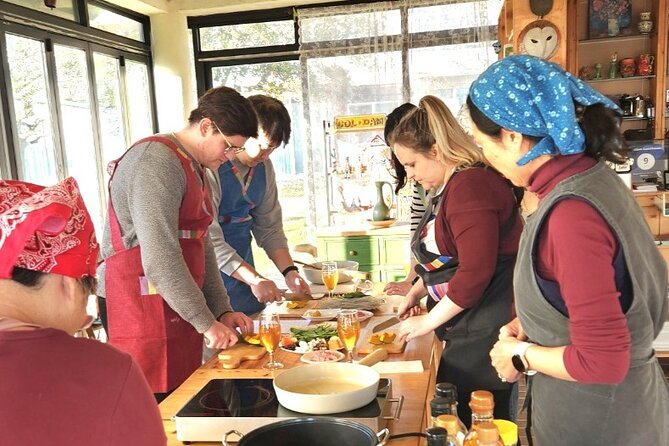
Cooking in Jeju feels like dinner with a view. You’ll learn Korean home-cooking skills at the Jeju Seaside Sunset Terrace, with chef Sue guiding you as the ocean light changes. It’s a small-group class (up to 6), and the setting makes even basic cooking feel special.
I love how practical the teaching is, with step-by-step help you can actually copy at home. I also like that every dish can be made vegetarian or vegan if you tell them what you prefer in advance.
One thing to consider is timing and logistics: it starts at 5:00 pm, and private transportation is not included, so you’ll want to plan your ride to the meeting point.
In This Review
- Key highlights you should know
- Why This Cooking Class Works at Sunset in Jeju
- The Dishes You’ll Cook, and How They Translate to Home Cooking
- Chopsticks, Spoons, and the Culture Lesson You Actually Use
- A Quick Look at Jeju’s Route Spots Before You Cook
- Jeju Olle Trail Routes: the island walking spirit
- Jungmun Saekdal Beach: ocean color and salty air
- Sanbangsan Mountain and O’sulloc Tea Museum Stops
- Sanbangsan Mountain: dramatic form, calmer pace
- O’sulloc Tea Museum: flavor culture, not just tea
- Inside the Kitchen: What Sue Teaches Step by Step
- Dinner on the Traditional Table, With Mageoli or Bokbunza
- Price and Value: Is $139 Reasonable for 3 Hours?
- Who Should Book This Cooking Class on Jeju
- Practical Tips for Your 5:00 pm Start
- Should You Book JEJU Cooking Class and Seaside Sunset Dinner?
- FAQ
- How long is the Jeju cooking class and dinner?
- What time does the tour start?
- Where is the meeting point?
- Where does the experience end?
- What dishes will I cook and eat?
- Can the class accommodate vegetarian or vegan preferences?
- What drinks are included with the dinner?
- Is private transportation included?
- What is the cancellation policy?
- How many people are in the group?
Key highlights you should know
- Ocean sunset dinner setting right where you cook and eat
- Chef Sue’s step-by-step approach for basic recipes and seasonings
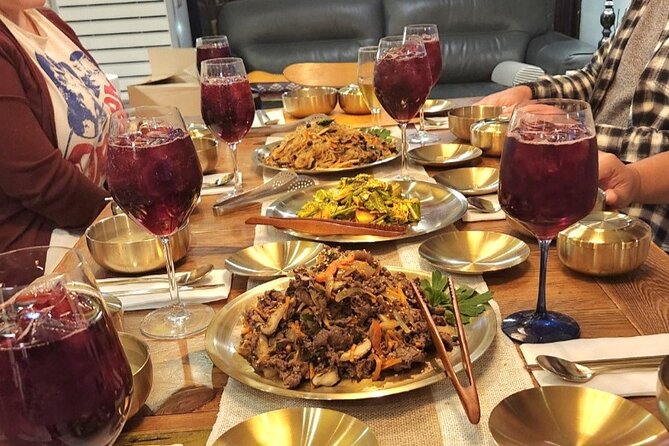
- Bulgogi, Japchae, Geotjeoli, plus dessert all included
- Vegetarian or vegan versions available for every dish
- Small group size (max 6) for better hands-on help
- Mobile ticket for a smoother arrival
More of Jeju, reviewed
Why This Cooking Class Works at Sunset in Jeju
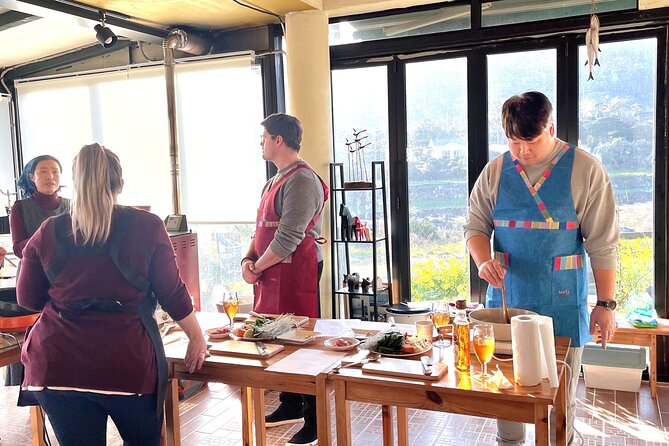
If you think cooking classes are just about recipes, this one surprises you. The whole experience is built around the idea that Korean food is more than taste, it is also rhythm, tools, and culture. You cook first, then you sit down for a traditional-style meal with the ocean sunset playing the main background.
You’ll be with a small group of up to 6 people, which matters more than you might expect. In a larger class, you can spend half your time watching. Here, you get real guidance while you’re learning the basic moves, like how to handle seasonings and how to think in chopsticks.
The best part is the payoff. After cooking, you eat what you made, right there on the seaside terrace, with a Korean drink option. That turns a class into a meal you can taste all over again later, when you repeat the dishes at home.
The Dishes You’ll Cook, and How They Translate to Home Cooking
This class focuses on three main dishes plus one dessert. The main dishes are Bulgogi, Japchae, and Geotjeoli. On paper that looks simple, but what you’re really learning is the backbone of Korean flavor: how marinades work, how noodles and vegetables are balanced, and how salads get their kick.
Here’s what these dishes teach you in practical terms:
- Bulgogi (stir-fried marinated beef) teaches you marinade thinking, how sweet, salty, and savory notes come together, and how to cook without overcomplicating it.
- Japchae teaches texture control, the way glass noodles absorb flavor, and how vegetables and seasoning stay lively.
- Geotjeoli (Korean vegetable salad) is your crash course in dressing and freshness, so the salad does not feel like an afterthought.
The class is also designed so you don’t need special equipment or hard-to-find techniques. The tour description is clear about using ingredients you can repeat where you live. That matters because the best souvenir from Jeju is not a photo, it is a dish you can make for friends without hunting down an obscure ingredient.
And yes, you can keep it vegetarian or vegan. The experience says every dish can be vegetarian or vegan if you tell them what you need. That’s a big deal for anyone who eats that way, because Korean cooking often includes meat-based building blocks. In this class, you’re supposed to be able to adapt the recipes rather than just sit out.
Chopsticks, Spoons, and the Culture Lesson You Actually Use
Korean food has a logic to it. Even when you are holding chopsticks, the flavors and textures are built to work with the way you eat. This class connects cooking to that culture, specifically the idea of Korean traditional cooking methods based on chopsticks and spoons, not Western knives and forks.
In practice, that cultural talk does not stay theoretical. It shows up while you learn the recipes. You’ll be cooking dishes meant to be eaten comfortably with chopsticks, so you learn how the food should feel in the bowl and on the plate, not just how it should taste.
This is where chef Sue’s approach shines. The reviews mention Sue as knowledgeable and enthusiastic, and that energy usually turns into clearer teaching. When the steps are explained in a calm, repeatable way, you end up with confidence, not just a plate of food.
A Quick Look at Jeju’s Route Spots Before You Cook
Your 5:00 pm start means you’re seeing Jeju in that late-day light, when everything looks a little more dramatic and the ocean feels louder. Before the cooking and dinner portion, you visit several Jeju landmarks, including scenic spots tied to the island’s outdoors and food culture.
- Hwaseong Fortress/Folk Village/Starfield Library Suwon
★ 5.0 · 67 reviews - Jeju Island UNESCO Heritage Bus Tour
★ 5.0 · 54 reviews - Jeju Private Taxi Tour with a Licenced English Guide-Driver
★ 5.0 · 31 reviews - PRIVATE Flexible Tour Cruise Ship international ferry terminal
★ 5.0 · 29 reviews - Jeju Cruise Ship gangjung Port PRIVATE tour for all group sizes
★ 5.0 · 25 reviews
Jeju Olle Trail Routes: the island walking spirit
Jeju Olle trails are about the slow way of traveling. Even if you only get a limited taste of the route areas during your time together, you get the idea: Jeju is made for walking, breathing in sea air, and noticing how quickly scenery changes from coast to hills.
For a cooking class, this may sound random. It is not. It sets a mood: you are on Jeju, not in a kitchen classroom. You’re about to cook dishes that belong to a place with strong food habits and strong local rhythms.
Jungmun Saekdal Beach: ocean color and salty air
Next up is Jungmun Saekdal Beach. This is one of those coastal stops that does more for your appetite than you might think. You get the sea view that makes dinner feel like part of the landscape, not a separate activity you squeezed in.
Also, being by the ocean helps you understand why Korean meals often value balance. Coastal freshness influences how people think about vegetables, salads, and lighter sides. Even if you do not make that connection consciously, your Geotjeoli will click faster afterward.
Sanbangsan Mountain and O’sulloc Tea Museum Stops
After the beach, the route includes Sanbangsan Mountain and O’sulloc Tea Museum. These are different moods, which is exactly what you want before a hands-on food experience. You go from sea air to mountain views, then toward tea culture, and suddenly your brain is ready to learn flavors instead of just taking in sights.
Sanbangsan Mountain: dramatic form, calmer pace
Sanbangsan is known for its striking presence, the kind of mountain you notice from far away. Even if your time is limited, you get that Jeju sense of scale. The value here is less about details you must remember, and more about feeling like the island is part of your evening.
O’sulloc Tea Museum: flavor culture, not just tea
O’sulloc is a tea-focused stop, and tea culture connects neatly to Korean dining. Tea is often a quiet partner to meals, and it can help you notice sweetness and bitterness in food more clearly. When you later taste your own cooking, you’ll likely be more aware of balance, not just salt and heat.
Inside the Kitchen: What Sue Teaches Step by Step
The class is built for beginners. The tour description specifically says you should not worry if you have little experience cooking. That promise is important, because you are learning both technique and seasoning at the same time.
You will learn basic recipes and seasonings of Korean cuisine while making those three signature dishes. Then you cook one dessert. The order matters here: main dishes first so you can build flavor logic, then dessert to end on a lighter note.
Here’s the kind of skill you should walk away with:
- How to approach a marinade or seasoning mix without guessing
- How to handle noodles and vegetables so everything tastes connected
- How to make a salad dressing that gives flavor without making it heavy
Because it is hands-on and small-group friendly, you can ask questions while you cook. That beats taking notes and hoping you remember later.
One more point I appreciate: the description emphasizes recreating dishes at home with ingredients available in your place. That’s a real-world focus. It is not cooking as performance, it is cooking as a repeatable habit.
Dinner on the Traditional Table, With Mageoli or Bokbunza
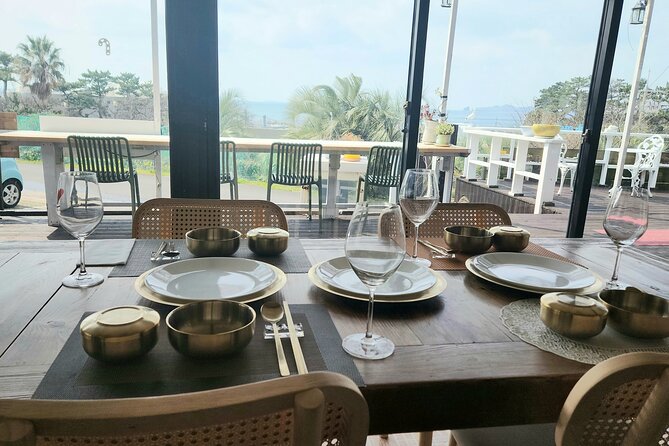
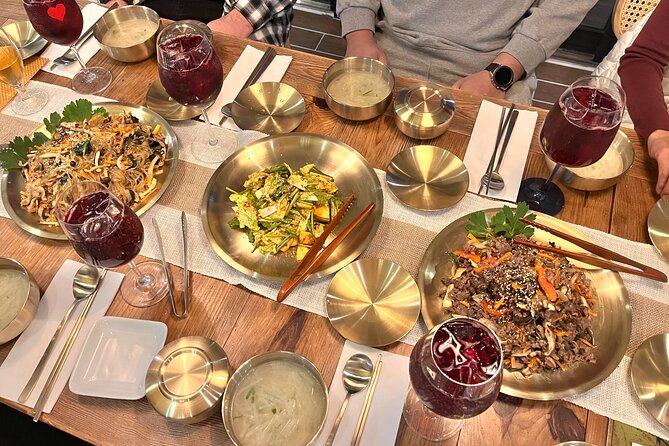
After you cook, you sit down to eat your meal. The dinner is described as a traditional Korean setup, served at the seaside terrace with the sunset. That is not just pretty, it changes how the food lands. Warm food, sea air, and ocean light make Korean flavors feel extra vivid.
You’ll enjoy the three main dishes plus the dessert you made. Drinks are included too, with options for Korean rice wine Mageoli or Korean mulberry wine Bokbunza. Non-alcoholic options are also available.
If you prefer not to drink alcohol, ask for the non-alcoholic version when you order your drink on site. Korean desserts and savory dishes both work with tea-like or non-alcoholic pairings, and you will still get the full meal experience.
Price and Value: Is $139 Reasonable for 3 Hours?
At $139 per person, this is not a cheap activity. But you should judge value by what’s included, not just what it costs.
Here’s what you get for that price:
- A cooking class with a professional chef who teaches step by step
- Three main dishes and one dessert, plus dinner service
- A Korean drink option with alcohol or non-alcohol choice
- A seaside sunset terrace meal setting
- A small group size, max 6
Add it up and the price starts making sense, especially if you want more than a quick tasting. You are learning how to cook several dishes, not just sampling them. For couples and small groups, it can be a smart alternative to paying for separate dinner and a separate class.
The main value question is whether you care about actually cooking. If you just want food without the teaching, you might find other tastings. But if you want skills you can use again at home, this is priced like a real experience, not a snack tour.
Who Should Book This Cooking Class on Jeju
This tour is a great fit if you:
- Want a hands-on cooking lesson, even if you are a beginner
- Prefer a small group setting where you can get help
- Eat vegetarian or vegan, and want dishes adjusted for you
- Like cultural context, not just plating and photos
- Are in Jeju around the late afternoon and want a sunset-based plan
It is also a solid choice for families or small groups, since the experience is available for 2 or more people. The setting is social, but the teaching can still be personal because the group stays small.
If you hate cooking classes, or you only want quick sightseeing, you may feel rushed. The experience is roughly 3 hours, so it’s focused, not slow and leisurely.
Practical Tips for Your 5:00 pm Start
Plan for this to be a late-afternoon to early-evening plan. It starts at 5:00 pm and ends back at the meeting point, so you’ll want dinner logistics solved by the end of the experience.
A few tips to make it smoother:
- Bring a light layer. Sea air can feel cooler once the sun drops.
- If you want vegetarian or vegan versions, mention it when you book, so the chef can prepare properly.
- If you plan to try Mageoli or Bokbunza, eat slowly during the meal. You’ll be tasting your own cooking, so enjoy the flavors rather than racing through.
- Since private transportation is not included, decide how you will reach 46 Daepyeong-ro, Andeok-myeon, Seogwipo ahead of time. The activity is described as near public transportation, so it should be manageable.
Also, keep your mobile ticket handy. It usually saves time at check-in.
Should You Book JEJU Cooking Class and Seaside Sunset Dinner?
I’d book this if you want an evening in Jeju that mixes cooking skills with a real meal and a dramatic ocean setting. The biggest wins are the step-by-step teaching and the fact that you get to eat what you cooked on a traditional table setup by the sea. Chef Sue’s enthusiastic, knowledgeable presence shows up in the experience design, and it matters when you are learning something practical.
I would think twice only if you are not interested in cooking at all, or if you need private transportation handled for you. Starting at 5:00 pm also means this should fit into your schedule, not replace an earlier sightseeing block.
If your goal is to leave Jeju with dishes you can actually make again, this is one of the better ways to spend a focused evening.
FAQ
How long is the Jeju cooking class and dinner?
The experience is approximately 3 hours.
What time does the tour start?
The start time is 5:00 pm.
Where is the meeting point?
The meeting point is 46 Daepyeong-ro, Andeok-myeon, Seogwipo, Jeju-do, South Korea.
Where does the experience end?
It ends back at the meeting point.
What dishes will I cook and eat?
You will make Bulgogi, Japchae, and Geotjeoli, plus you will cook one dessert. Dinner includes these dishes.
Can the class accommodate vegetarian or vegan preferences?
Yes. Every dish can be made vegetarian or vegan if you let the provider know.
What drinks are included with the dinner?
You can choose a Korean drink such as Mageoli or Bokbunza, and non-alcoholic options are also available.
Is private transportation included?
No, private transportation is not included.
What is the cancellation policy?
Free cancellation is available. You can cancel up to 24 hours in advance for a full refund, and cancellations within 24 hours of the experience start time are not refunded.
How many people are in the group?
The maximum group size is 6 travelers.
More Jeju Island Write-Ups

Jeju, Keep Going

Fresh on the Jeju Island pile
- Seogwipo(the southern city of Jeju) Art Museum Walking Tour★ 5.0 · 3 reviews
- Private Tour in South Jeju including Yacht Cruise★ 5.0 · 3 reviews
- Seogwipo(The southern city of Jeju)City Walking Tours with Sunset★ 5.0 · 4 reviews
- Jeju Hidden Gem Sea Boat Fishing Tour with Lunch★ 5.0 · 6 reviews
- Jeju Western and Southern Routes Sightseeing Day Tour★ 4.5 · 7 reviews
- JEJU Cooking Class _Class & Dinner at Jeju Seaside Sunset Terrace★ 5.0 · 7 reviews
Jeju Island Tours you might have missed.
 ★ 4.9Jeju: Eastern Jeju UNESCO Spots Day TourFrom $551,148 reviews
 ★ 4.8Jeju: Western and Southern Sightseeing Day TourFrom $55972 reviews
 ★ 5.0East Jeju Essentials – Seongsan Ilchulbong (UNESCO) & HaenyeoFrom $56939 reviews
 ★ 4.9Jeju: Southern Top UNESCO Spots Bus TourFrom $55648 reviews
 ★ 5.0South-West Jeju Essentials: Hallasan & Signature HighlightsFrom $56620 reviews
 ★ 5.0Jeju Island English Private & Flexible Tour any number anywhereFrom $230561 reviews
 ★ 4.9East Jeju: Day Tour with Seongsan Peak & Haenyeo PerformanceFrom $55478 reviews
★ 5.0South-West Jeju Essentials: Hallasan & Signature HighlightsFrom $55443 reviews
★ 4.9East Jeju: Day Tour with Seongsan Peak & Haenyeo PerformanceFrom $55478 reviews
★ 5.0South-West Jeju Essentials: Hallasan & Signature HighlightsFrom $55443 reviews