
REVIEW · JEJU ISLAND TOURS
Explore Spirited Garden a Cultural Gem in Jeju
Quiet corners beat loud attractions. Spirited Garden, or 생각하는정원, is a 43,000-square-meter garden in Jeju City shaped by farmer Sung Beom-Young, and it earned top-garden attention from CNN, The Guardian, and National Geographic. What makes it special is the way it rarely explains itself, so you’re left to notice patterns and meaning in trees, stone walls, streams, and inscriptions. I especially love the bonsai focus, and I also like how the calm layout supports real meditation without any classroom vibe.
My only caution is value. At about $8 admission for an experience that’s roughly 1 hour, it’s worth going in with the right mindset: slow walking, reading small details, and letting the place do its work. If you want a big “see everything” checklist or lots of flower variety, you may finish quicker than you hoped.
In This Review
- Key highlights to know before you go
- Spirited Garden is a philosophical walk, not a loud attraction
- Where it starts: ticket office to your first slow loop
- Seven sub-gardens, one gentle rhythm
- Basalt gates, stone walls, and the calm of volcanic material
- Bonsai and native trees: the main reason to slow down
- Ponds, koi, and waterfalls for a break you can actually feel
- Reading the signboards: hidden messages and your own meaning
- Photography and meditation tips that make the visit better
- Price and time: when $8 feels like a steal, and when it might not
- Timing, opening hours, and how to fit it into your Jeju day
- Who should book Spirited Garden
- Should you book Spirited Garden on Jeju?
- FAQ
- How long is the Spirited Garden visit?
- What does the ticket include?
- What is the price per person?
- Where does the activity start and end?
- What are the opening hours?
- Can I cancel and get a refund?
Key highlights to know before you go
- No heavy interpretation: the garden doesn’t spell things out for you, so your own reading matters
- Seven sub-gardens: each area uses ponds, lawns, small oreum hills, and stonework for a quiet rhythm
- Basalt gates, bridges, and walls: volcanic material keeps the design cohesive and grounded
- Bonsai and native trees: the tree collection is the main event, including fruit trees mentioned in feedback
- Signboards with hidden messages: look closely, including the bottoms of boards, if you like puzzles
- A calm photo walk: still water, koi ponds, and patient stone details make great shots
More of Jeju, reviewed

Spirited Garden is a philosophical walk, not a loud attraction

Spirited Garden feels different from most paid stops. Instead of pushing facts at you, it gives you design clues, then lets you connect the dots. The result is a place you can visit like a museum, or you can visit like a retreat. Either way, the pacing nudges you toward slower thinking.
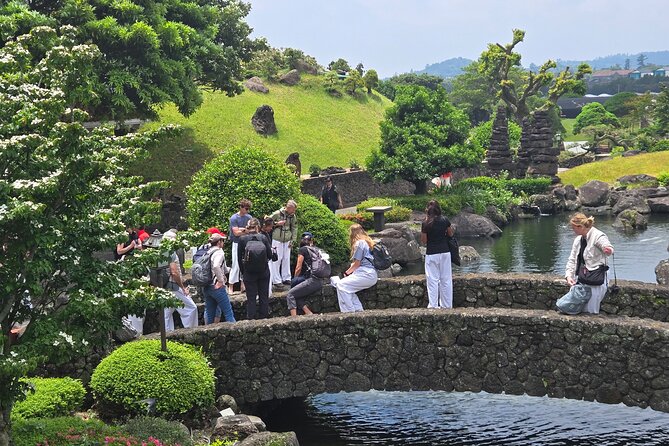
The “philosophical” angle isn’t in a script. It comes from physical structure: stone walls that guide your route, bridges that break your view into chapters, ponds that reflect light back at you, and small hills (oreum) that create gentle changes in perspective. Even if you don’t read every inscription, the walk itself encourages contemplation.
I like that it’s tied to a real person and real work. Farmer Sung Beom-Young is the creative force behind the garden, and the place has drawn attention not just from media but also from leaders from more than 10 nations as Korea’s representative garden. That kind of recognition matters, but what you’ll feel is simpler: a quiet sense of care.
Where it starts: ticket office to your first slow loop
Your visit begins at the ticket office area for 생각하는정원. From there, you enter the main grounds and start the “choose your pace” part of the experience. The garden spans about 12,000 pyeong, which is roughly 40,000 square meters, and the overall grounds are much larger when you include auxiliary spaces.
In practical terms, plan to arrive with comfortable shoes and a bit of patience. There’s no need to rush. The whole idea is that you notice things over time: how stonework lines up with water, how bonsai and native trees are spaced, and how your path keeps redirecting your attention.
One helpful mindset: treat the garden like you’re learning to read a page without a teacher. If you try to “finish” it like a checklist, you can miss the best parts.
Seven sub-gardens, one gentle rhythm
Spirited Garden is organized into seven themed sub-gardens. Even without knowing the theme names, you can understand the structure because each area shares a set of design tools: a pond, open lawns, small oreum hills, and stone walls, gates, and bridges made from volcanic basalt.
That repetition is good for you. It means your brain relaxes. You’re not constantly re-orienting from scratch. Instead, you notice the differences. The best way to enjoy this is to stop for a minute or two at each new pocket of scenery.
Here’s what to look for as you move from area to area:
- Water first: watch how ponds sit relative to lawns and how reflections change with your angle
- Stone geometry: gates and walls can feel like quiet punctuation marks
- Small elevation: oreum hills shift sightlines, so even short climbs create big changes in view
- Tree spacing: bonsai and native trees are placed with intention, not crowding
Because the garden’s approach is more indirect than educational, you’ll get more out of it if you give yourself permission to interpret. Some people come for photos. Others come to meditate. The design supports both.
Basalt gates, stone walls, and the calm of volcanic material
A big part of the garden’s mood comes from the materials. Basalt appears in gates, bridges, and stone structures. In Jeju, basalt is a local signature, and here it’s used to make the entire site feel unified.
Basalt also helps with atmosphere. Dark stone under soft light makes ponds look deeper. Stone walls create shade pockets where you can sit without thinking too much. And the bridges frame water views in a way that feels controlled, almost like an outdoor camera.
If you’re the kind of person who likes architecture but hates big crowds, this is a good match. It’s not about monumental scale. It’s about how small details guide your eyes.
- Hwaseong Fortress/Folk Village/Starfield Library Suwon
★ 5.0 · 67 reviews - Jeju Island UNESCO Heritage Bus Tour
★ 5.0 · 54 reviews - Jeju Private Taxi Tour with a Licenced English Guide-Driver
★ 5.0 · 31 reviews - PRIVATE Flexible Tour Cruise Ship international ferry terminal
★ 5.0 · 29 reviews - Jeju Cruise Ship gangjung Port PRIVATE tour for all group sizes
★ 5.0 · 25 reviews
Bonsai and native trees: the main reason to slow down
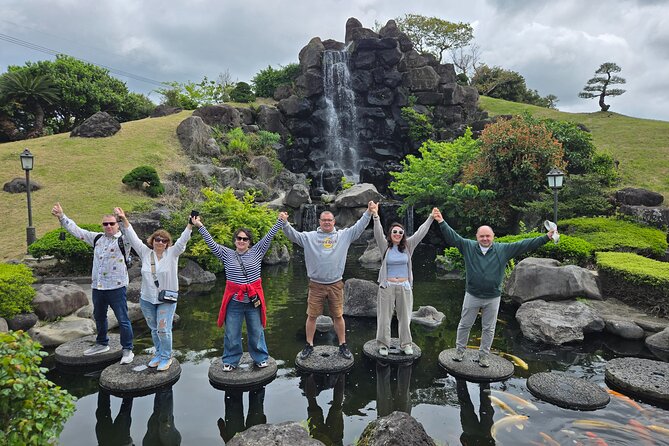
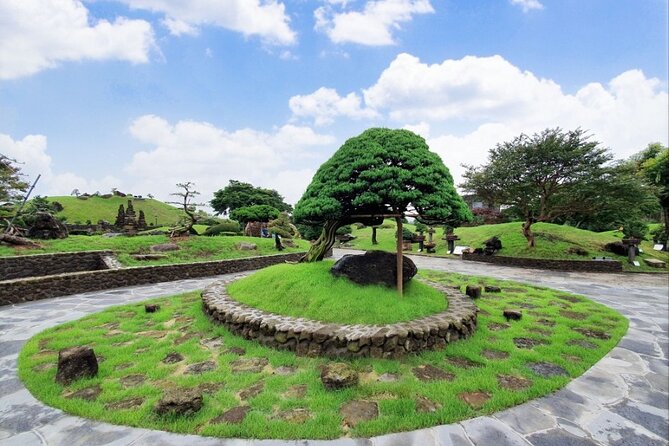
The tree collection is the heart of Spirited Garden. You’ll see Korea’s native garden trees and bonsai, and some feedback highlights fruit trees too. The trees aren’t treated like decoration. They’re treated like characters.
Here’s the best practical way to enjoy this section:
- Pause at each tree long enough to notice its shape and how it’s framed by stones and water.
- Check spacing between trunks, not just the trees themselves.
- Look for the way ponds and streams act like a backdrop for the bonsai silhouettes.
I like that the garden doesn’t rely on flashy flowerbeds. Instead, it leans on form, texture, and patience. That’s why it can feel relaxing even when it’s busy outside the garden.
Ponds, koi, and waterfalls for a break you can actually feel
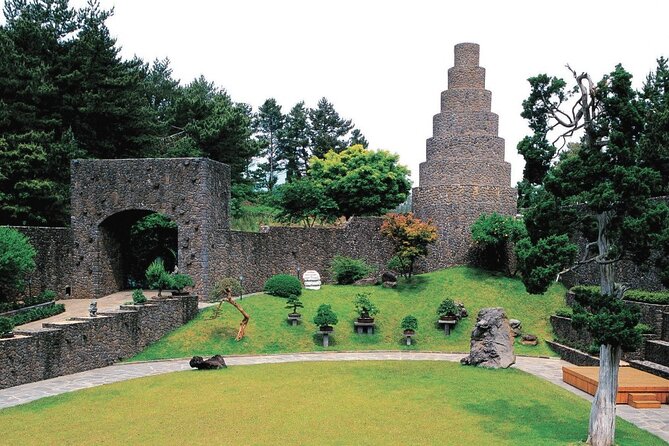
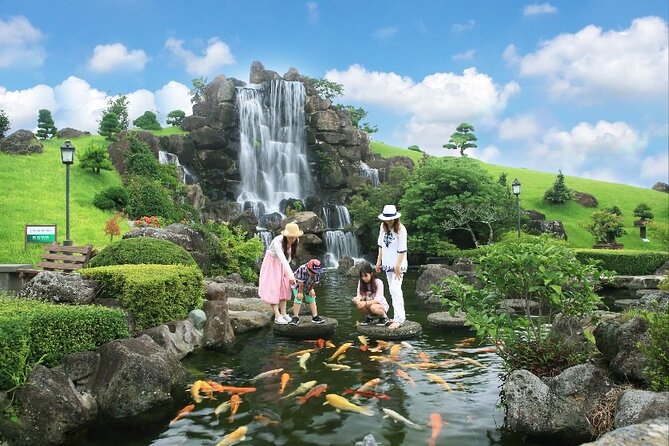
Water elements are everywhere: clear ponds, streams, and auxiliary features that some visitors associate with waterfalls and koi carp. The koi make sense here. They add gentle motion, and motion is what your brain often needs when you’re trying to settle.
Even if you don’t focus on the koi, the ponds help you slow your breathing. Stand near the water long enough and you’ll notice how the place becomes less “something you’re doing” and more “somewhere you’re sitting.”
If you’re into photography, water is a gift. Still surfaces help you capture mirror-like reflections, and bridges plus stone walls give you strong framing lines.
Reading the signboards: hidden messages and your own meaning
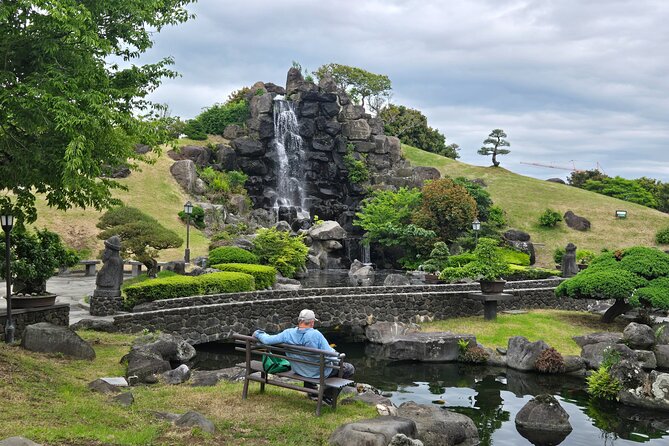
One of the most talked-about features is the garden’s signage style. Instead of a standard “tour guide” explanation, the signs can include hidden messages, even down at the bottom of signboards.
This changes how you explore. If you like reading small details, take your time with the boards. If you don’t, you can still enjoy the walk, because the overall design is doing much of the communication.
A practical trick: choose a few points to read closely, rather than trying to read everything. Pick one area early and one area later. That way, you’ll feel the shift in your interpretation as you get oriented.
Photography and meditation tips that make the visit better
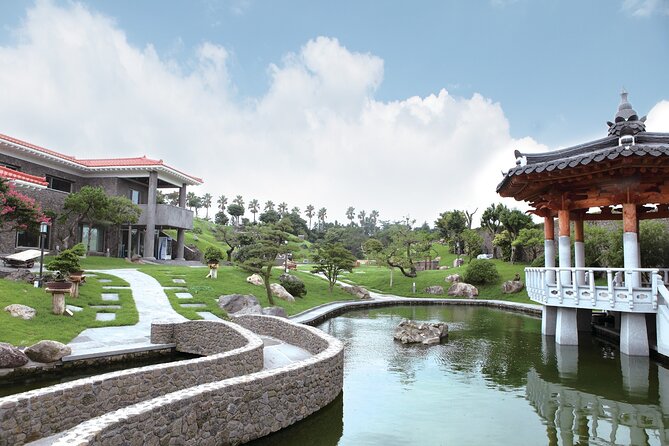
Spirited Garden is well suited for photography because the design naturally creates compositions: basalt frames, pond reflections, stone textures, and bonsai silhouettes.
For photos, the best results come from slow movement:
- Take a first look, then come back to the same spot from a slightly different angle.
- Use bridges and stone walls as foreground framing.
- Let water be your anchor, then compose around the trees.
For meditation, you don’t need any official activity. The quiet layout does it for you. Find a shaded stone bench or a calm pond-side view, then give yourself 5 to 10 minutes with no phone scrolling. The garden’s vibe supports a mind-set like that, even on a travel day.
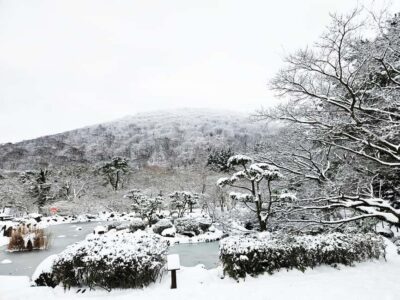
Some people also mention that snow in winter adds charm. If you’re going in colder months, dress warmly, because calm photos often happen while you’re standing still.
Price and time: when $8 feels like a steal, and when it might not
The admission price is listed at $8.00 per person, and the visit runs about 1 hour. That combination is part of the value equation. If you treat the garden like a focused stop, it can feel fair, even memorable.
If, however, you expect a larger “full attraction” experience with lots of variety beyond trees and stone, the time can feel short. One caution worth taking seriously: the garden can be on the compact side for how long the walk takes, and some people report they didn’t spend long inside.
So, who wins here?
- You’ll love it if you want a quiet walk, bonsai, and places to sit.
- You’ll be less happy if you want lots of flowers and constant visual changes.
My advice is simple: schedule it as a mental pause, not a ticking clock item.
Timing, opening hours, and how to fit it into your Jeju day
The garden is open daily, with hours listed as 9:00 AM to 5:00 PM for the stated season. A mobile ticket is available, and the activity is set up as a private experience for your group, so you’re not sharing the pace with strangers inside your time slot.
Because it’s about an hour, you can slot it in between busier sights. I like placing it before lunch or mid-afternoon, when you still have energy for a calm walk. If you go when you’re already tired, you might rush and miss what the garden is trying to teach you without teaching.
Also note that it’s near public transportation and the meeting point is 1534 Jeoji-ri, Hangyeong-myeon, Cheju, Jeju-do, South Korea. The route ends back at the meeting point, which makes planning easier.
If you want extra comfort, bring water. Lunch and coffee or tea are not included with admission.
Who should book Spirited Garden
Book this if you like calm places, trees, and thoughtful design you can read at your own speed. It’s ideal for:
- couples who want a quiet, shared stroll
- solo travelers who need a reset day
- anyone into bonsai photography or meditation-style visiting
- people who prefer reflection over lectures
Skip it or adjust expectations if:
- you’re chasing big, flower-heavy gardens
- you dislike small-scale sites that require patience
- you need constant novelty every few minutes
Should you book Spirited Garden on Jeju?
Yes, if you want a gentle break that feels different from typical sightseeing. For $8, the value is strong when you approach it as a slow walk through seven sub-gardens focused on bonsai, native trees, stonework, and quiet water. It’s also a good pick if you like reading signboards closely and letting hidden messages shape your own interpretation.
No, if you’re expecting a long, “see everything” attraction with lots of changing displays. The garden’s power is in its pace, and that can feel too short if your goal is maximum volume.
If you’re on Jeju and your schedule has room for 1 hour of calm, Spirited Garden is the kind of stop that can leave your brain quieter for the rest of the day.
FAQ
How long is the Spirited Garden visit?
The experience lasts about 1 hour.
What does the ticket include?
Admission to Spirited Garden is included. Lunch and coffee or tea are not included.
What is the price per person?
The listed price is $8.00 per person.
Where does the activity start and end?
It starts at 1534 Jeoji-ri, Hangyeong-myeon, Cheju, Jeju-do, South Korea, and ends back at the same meeting point.
What are the opening hours?
The opening hours are 9:00 AM to 5:00 PM, Monday through Sunday, for the stated season.
Can I cancel and get a refund?
Yes. Free cancellation is available up to 24 hours in advance for a full refund. Canceling less than 24 hours before start time is not refunded.
More Jeju Island Write-Ups




Jeju, Keep Going

Fresh on the Jeju Island pile
- Seogwipo(the southern city of Jeju) Art Museum Walking Tour★ 5.0 · 3 reviews
- Private Tour in South Jeju including Yacht Cruise★ 5.0 · 3 reviews
- Seogwipo(The southern city of Jeju)City Walking Tours with Sunset★ 5.0 · 4 reviews
- Jeju Hidden Gem Sea Boat Fishing Tour with Lunch★ 5.0 · 6 reviews
- Jeju Western and Southern Routes Sightseeing Day Tour★ 4.5 · 7 reviews
- JEJU Cooking Class _Class & Dinner at Jeju Seaside Sunset Terrace★ 5.0 · 7 reviews
Jeju Island Tours you might have missed.
 ★ 4.9Jeju: Eastern Jeju UNESCO Spots Day TourFrom $551,148 reviews
 ★ 4.8Jeju: Western and Southern Sightseeing Day TourFrom $55972 reviews
 ★ 5.0East Jeju Essentials – Seongsan Ilchulbong (UNESCO) & HaenyeoFrom $56939 reviews
 ★ 4.9Jeju: Southern Top UNESCO Spots Bus TourFrom $55648 reviews
 ★ 5.0South-West Jeju Essentials: Hallasan & Signature HighlightsFrom $56620 reviews
 ★ 5.0Jeju Island English Private & Flexible Tour any number anywhereFrom $230561 reviews
 ★ 4.9East Jeju: Day Tour with Seongsan Peak & Haenyeo PerformanceFrom $55478 reviews
★ 5.0South-West Jeju Essentials: Hallasan & Signature HighlightsFrom $55443 reviews
★ 4.9East Jeju: Day Tour with Seongsan Peak & Haenyeo PerformanceFrom $55478 reviews
★ 5.0South-West Jeju Essentials: Hallasan & Signature HighlightsFrom $55443 reviews
Where this tour also appears