
REVIEW · DMZ & BORDER TOURS
DMZ Highlights & Exclusive Defector Interview – True Human Story
You might think you know the DMZ. Then you hear a defector’s story and the place stops being abstract. This DMZ highlights tour from Seoul strings together major sites like Imjingak Park and Dora Observatory with a real North Korean escape perspective, guided by SP Hong and powered by an interview and Q&A with a North Korean defector (including Ms Cho in past sessions).
What I love most is how the day packs the key checkpoints into one route, so you are not bouncing between half-measures. I also like the delivery: SP Hong is punctual, funny in a smart way, and easy to follow in English, with frequent chances to ask questions.
The main consideration is pace and comfort. It is a long day with a lot of walking, the tour does not include lunch, and the tunnel portion is demanding if you are not used to stairs and uneven steps.
In This Review
- Key things to notice before you go
- From Seoul at 7:30am, here is the real rhythm
- Imjingak Park and the Freedom Bridge memory work
- Entering the DMZ area, what you will actually notice
- Tunnel 3: the workout stop that changes how you picture the war
- Dora Observatory: binocular viewing and a close, unsettling perspective
- Tongilchon-gil and the idea of daily life under reunification
- The optional Gamaksan suspension bridge, extra views with extra stairs
- SP Hong and the defector interview, how to get the most value
- Price and what makes $27 feel fair
- Who should book this DMZ highlights tour
- Should you book this DMZ tour?
- FAQ
- How long is the DMZ Highlights tour from Seoul?
- Is lunch included?
- Do I need a passport?
- Where do you meet and where do you end?
- Is the Gamaksan Suspension Bridge part of the main tour?
- What if the DMZ is closed suddenly?
- How big are the tour groups?
Key things to notice before you go
- Defector interview with Q&A that adds human stakes to every checkpoint
- SP Hong’s guided context that turns visible sites into a clear story of division and desire for reunification
- Tunnel 3 effort plus a documentary stop that helps you understand what you are seeing
- Dora Observatory viewpoint tools like binocular viewing, aimed at specific locations across the border
- Snack planning matters since lunch is not included and timing can feel tight
Other routes to the border, side by side
From Seoul at 7:30am, here is the real rhythm
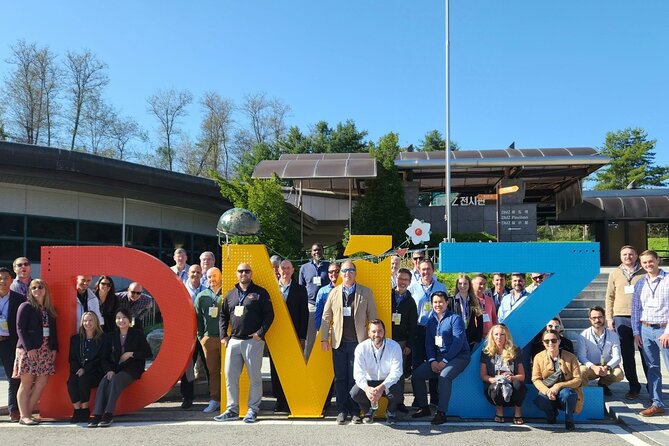
This starts early in Seoul, with meeting at 92 Sejong-daero, Jung District, and departure around 7:30am. Expect a full morning drive and a day structured around security timing. The tour runs about 7 to 9 hours, and you get back to the meeting point area at the end.
You will ride in an air-conditioned vehicle, and the group size can be up to 90 people. That means the day can feel busy, but it is also efficient: you see the major DMZ highlights in one go, without having to stitch together separate tickets and transport.
One practical thing: bring your passport. Everyone must have it for entry. Wear comfortable sneakers, and be ready for walks that add up. If you choose the suspension bridge option later in the day, plan extra uphill steps.
Imjingak Park and the Freedom Bridge memory work
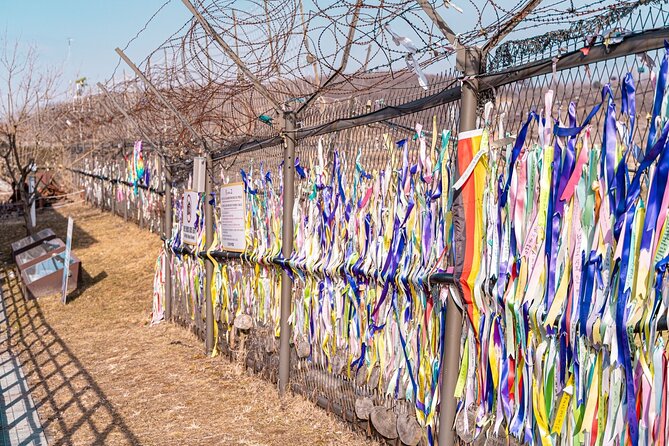
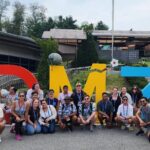
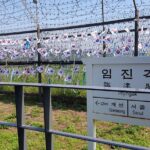
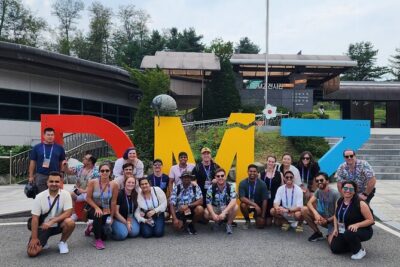
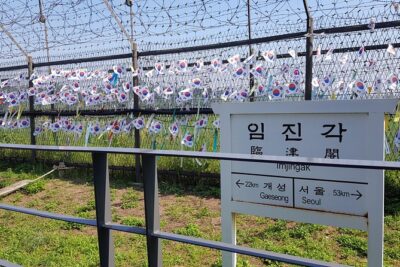
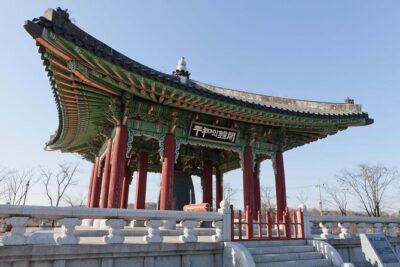
The first big stop off the road is Imjingak Pyeonghoa-Nuri Park. This is not a theme park in the usual sense, more like a carefully curated set of reminders: you see rides and playful elements, but you also see barbed-wire symbolism and memorial-style exhibits that keep the reunification message front and center.
Two elements worth paying attention to are the Freedom Bridge and the POW story attached to it. The bridge is tied to 13,000 POWs who crossed in 1953, which turns the idea of crossing into something personal, not just political. The vibe here is quiet for a place that still has visitors snapping photos.
You will also pass Mangbaedan Bridge on the Imjing River. It is another 1953 marker for POWs who crossed to return to freedom. I like this pairing because it gives you a timeline in your head: war, captivity, and then the long, unresolved wait for reunification.
Entering the DMZ area, what you will actually notice
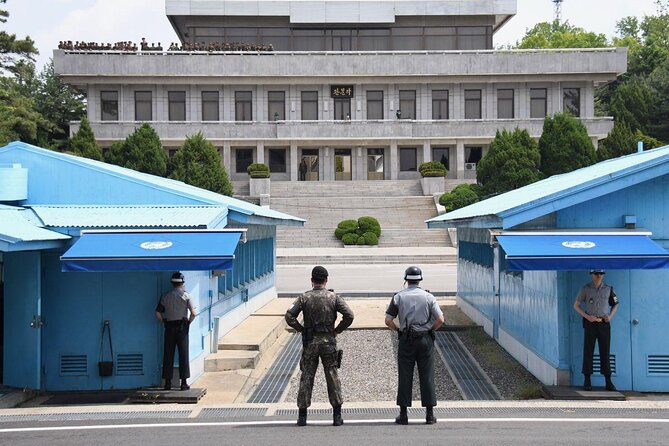
Once you reach the DMZ area, the pace tightens. You spend around 40 minutes at the DMZ stop, which is enough to walk, look, and absorb the key viewpoints your guide points out.
The DMZ is a military demarcation zone where activities are prohibited, so the big thing you will feel is restriction. Even without any drama, the place has rules baked in. You are seeing not just scenery but a system built to prevent certain events from happening.
Because access depends on security, know that the DMZ can close suddenly. If that happens, you still get an alternative tour, and refunds are not offered. Plan your expectations around that. It is rare, but it is part of reality when you visit controlled border territory.
Tunnel 3: the workout stop that changes how you picture the war
The highlight for many people is The Third Tunnel. This is the part where the tour stops being classroom-like and starts becoming physical. You go to a tunnel site connected to the idea of infiltration, with the third tunnel stretching 435 meters into South Korea.
You should be ready for a challenging experience. The tunnel walk takes effort, and it can feel tougher if you are shorter, since it is a cramped route. It is also not ideal for mobility limitations, because the route is demanding and the group moves as a unit.
What I like here is the way the stop usually comes with context, such as documentaries and exhibits at the tunnel area. Seeing a tunnel in person is one thing, but pairing it with visuals and explanation makes it easier to connect the tunnel to strategy, fear, and the broader military posture of the peninsula.
Also, if you come in with curiosity, this is where your questions land best. After you have walked that tunnel, you can ask much sharper follow-ups about what made such efforts possible.
- Best DMZ Tour Korea from Seoul (Red Suspension Bridge Optional)
★ 5.0 · 41,422 reviews - DMZ Tour: 3rd Tunnel, Option(Suspension Bridge, Boat) from Seoul
★ 5.0 · 21,373 reviews - DMZ tour south Korea from Seoul (NK experience hall, defector)
★ 5.0 · 20,599 reviews - Seoul: DMZ Tour with Optional Suspension Bridge
★ 4.8 · 5,277 reviews - Signature DMZ Tour: Exclusive Defector Talk & Suspension Bridge
★ 5.0 · 4,459 reviews
Dora Observatory: binocular viewing and a close, unsettling perspective
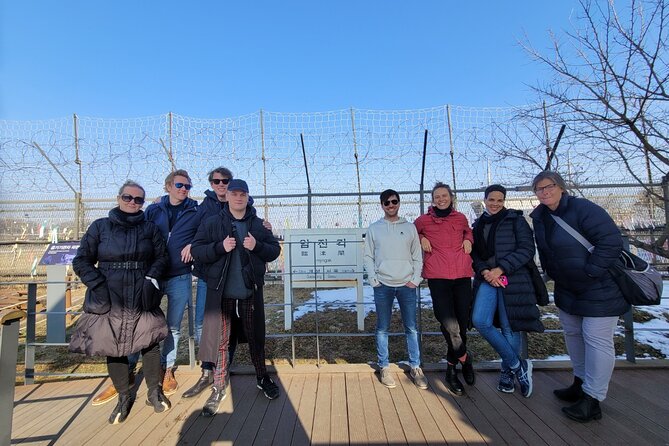
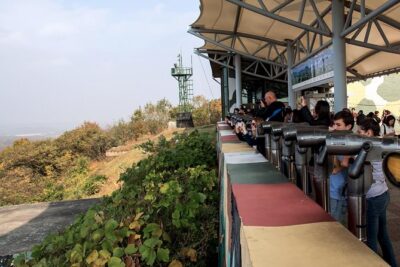
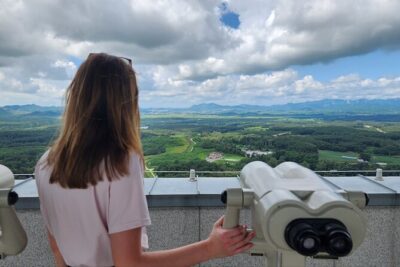
Next up is Dora Observatory. This is where you get one of the closest authorized looks at North Korea-related areas, including Gaeseong City and the Gaeseong Industrial Complex. It also gives you the chance to see the so-called Propaganda Village, described as a fake border village used in messaging.
The key here is the tools and framing. Your guide points out what you are looking at, and you can use binoculars to view sites discussed during the stop. That turns the distant border into something you can track with your eyes.
This is also a stop where the emotional tone can shift. You are not just looking at buildings. You are looking at the way information is staged and controlled. Dora makes that easier to grasp because it gives you a direct line of sight.
If you are sensitive to the political weight of the peninsula, this might be the moment you feel it most. I find that helpful, because the tour never lets you stay at the level of generic facts.
Tongilchon-gil and the idea of daily life under reunification
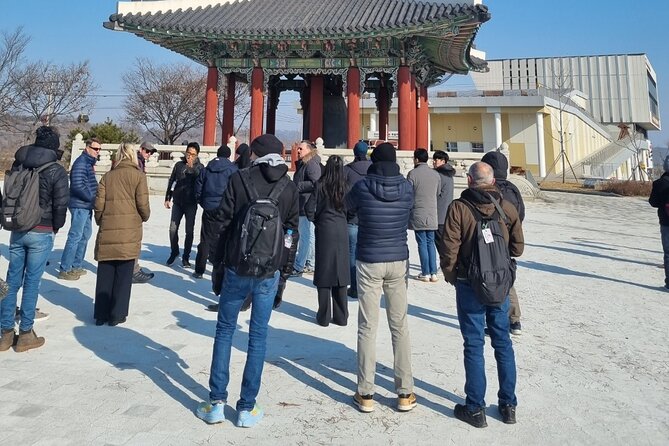
Between the big military sites, there is a small reset at Tongilchon-gil (Unification Village). This area is located north of the Civilian Control Line, and it is known for agricultural products such as Jangdan ginseng and Jangdan soybeans.
This stop matters because it is a different angle. Instead of only focusing on war infrastructure, you get a glimpse of the kind of everyday economy that reunification narratives often lean on. You are still in a controlled zone, but the emphasis shifts toward what people might grow and trade in a future that is not here yet.
It is a short stop, around 10 minutes, so it is not a shopping spree. Treat it as a quick perspective change so the day does not become one long stream of conflict imagery.
The optional Gamaksan suspension bridge, extra views with extra stairs
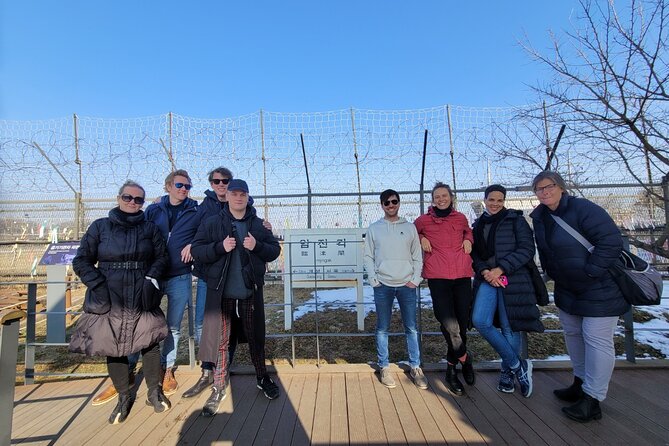
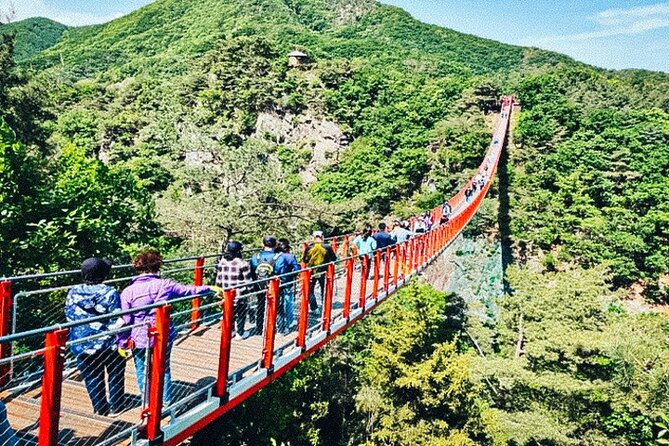
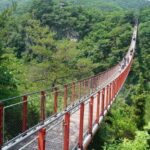
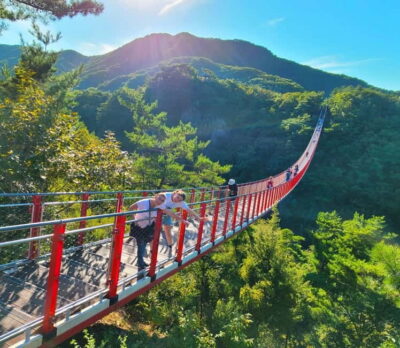
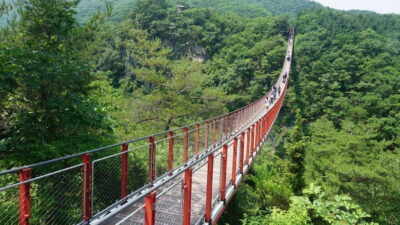
There is an optional add-on for the Gamaksan Chulleong Bridge (a suspension bridge opened in 2016). It is described as offering views over Silmari Valley, and it is noted as Korea’s longest suspension bridge at 220 meters in its earlier claim.
If you choose this option, be ready for the walk. You are looking at a 20 to 30 minute uphill walk, so wear shoes with grip and good support. The bridge experience is meant to be scenic, but the route is real exertion.
One detail to watch: this option can depend on participant numbers. If the minimum is not met, you may need to change your tour plan. And if you care about the bridge specifically, I recommend confirming the course you booked before the day starts, so there is no confusion about what is included.
SP Hong and the defector interview, how to get the most value
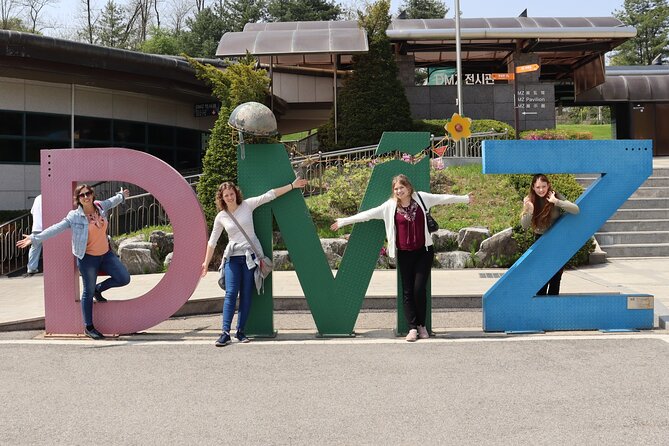
The thing that most strongly lifts this tour above the standard DMZ checklist is the interview with a North Korean defector. In previous sessions, the defector has included Ms Cho, and the guide role in that moment is key.
SP Hong is often praised for strong English and a balanced tone: serious where it matters, light enough to keep the group comfortable. He tends to set up questions and then translate in a way that lets you follow along without losing the thread.
What you can do to maximize the value:
- Go in with questions that connect your DMZ visuals to lived realities. For example, ask how daily life felt compared to what propaganda showed.
- Listen for what she emphasizes: fear, family separation, access to information, and hopes for the future.
- If the Q&A feels fast, ask one clear question rather than three smaller ones.
This is also why the DMZ can feel different after the interview. You stop thinking about the peninsula as a map of policies and start thinking about it as a story made of choices, coercion, and survival.
In practical terms, this tour includes the interview and the major DMZ stops plus Dora and Tunnel 3, and that combination is the core value proposition.
Price and what makes $27 feel fair
At $27 per person, this can feel like a bargain, especially if you compare it to how expensive individual day tours around Seoul can become. The price gets you:
- A certified English guide
- The defector interview
- Entry fees for paid stops (DMZ, Tunnel 3, Dora Observatory)
- An air-conditioned vehicle
- All fees and taxes
- A mobile ticket
And because the day is built to hit multiple major checkpoints, you are paying for efficiency. The value is less about luxury and more about access and context.
The main tradeoff is time and comfort, not cost. You need an early start, and you should plan for the fact that lunch is not included. Based on past comments, it helps to bring snacks so you are not trying to make decisions when you are hungry and tired.
Who should book this DMZ highlights tour
This is a great fit if you want:
- A single-day DMZ route that covers major stops like Imjingak, Tunnel 3, and Dora
- The chance to hear North Korea from the voice of a defector, with live Q&A
- A guide who can explain what you are seeing, without drowning you in jargon
It may be less ideal if you:
- Have mobility limitations, especially for Tunnel 3 and any suspension bridge uphill walk
- Expect lots of free time at each site, since the schedule is structured
- Strongly prefer a day with lunch built in, since you will need snacks
If you are traveling solo, this tour is still workable. The group format keeps the day organized, and the Q&A style gives you a way to engage without having to talk endlessly in a new group.
Should you book this DMZ tour?
I think you should book it if you want the DMZ experience to have a human spine. The defector interview and translation, paired with high-impact stops like Tunnel 3 and Dora Observatory, makes this tour more than a photo day.
You should hesitate if you hate early mornings, do not like walking-heavy days, or you only want the scenic side with minimal effort. In that case, you might prefer a lighter option.
If you do book, go prepared: sneakers, passport, and snacks. Also, if the Gamaksan suspension bridge is important to you, double-check the exact option details tied to your booking before you arrive.
FAQ
How long is the DMZ Highlights tour from Seoul?
The tour lasts about 7 to 9 hours.
Is lunch included?
No. Lunch is not included, so plan to bring snacks.
Do I need a passport?
Yes. All participants must bring a passport.
Where do you meet and where do you end?
You meet at 92 Sejong-daero, Jung District, Seoul, and the tour ends back at the same meeting point.
Is the Gamaksan Suspension Bridge part of the main tour?
It is listed as an option. The visit requires a 20 to 30 minute uphill walk, and it can depend on a minimum number of participants.
What if the DMZ is closed suddenly?
The tour notes that the DMZ can close without notice. If that happens, an alternative tour will be provided, and no refunds are offered.
How big are the tour groups?
This tour can have a maximum of 90 people.
More Seoul Write-Ups
The Border, Other Routes In
Fresh on the Seoul pile
- Unique Native Experience : Han River Picnic, Board game, BBQ★ 5.0 · 3 reviews
- 2-Hour Private Kayaking and Paddleboarding Experience in Hanriver★ 5.0 · 3 reviews
- Korean Folk Village & Suwon Hwaseong Fortress Private Tour★ 5.0 · 3 reviews
- Seoul Korean BBQ Dinner Experience with Secret Food Tours★ 5.0 · 3 reviews
- Seoul Highlights & Hidden Gems – Private Tour with Photo Service★ 5.0 · 3 reviews
- Night Food Tour in Seoul with Traditional and Modern Cuisine★ 5.0 · 3 reviews
DMZ & Border Tours you might have missed.
 ★ 5.0Best DMZ Tour Korea from Seoul (Red Suspension Bridge Optional)From $2941,422 reviews
 ★ 5.0DMZ Tour: 3rd Tunnel, Option(Suspension Bridge, Boat) from SeoulFrom $3521,373 reviews
 ★ 5.0DMZ tour south Korea from Seoul (NK experience hall, defector)From $2620,599 reviews
 ★ 4.9DMZ Insider Tour: 3rd Tunnel, NK Defector Meet & Red BridgeFrom $5015,214 reviews
 ★ 4.8Seoul: DMZ Tour with Optional Suspension BridgeFrom $455,277 reviews
 ★ 5.0Signature DMZ Tour: Exclusive Defector Talk & Suspension BridgeFrom $274,459 reviews
 ★ 5.0Thrilling Korean DMZ 3rd Tunnel Tour from Seoul + Red Bridge RushFrom $353,097 reviews
 ★ 5.0DMZ Past and Present: Korean Demilitarized Zone Tour from SeoulFrom $372,481 reviews
Where this tour also appears