
REVIEW · DMZ & BORDER TOURS
DMZ 2nd Tunnel and Cheorwon Peace Observatory with Admission
A quiet place with loud history. This DMZ-focused outing blends 2nd Tunnel access, sweeping views, and real artifacts like the train wreck at Woljeongri Station. You start with vehicle registration, then move through a day that feels part classroom, part reality check.
I especially love that you stay in your own group’s ride. The tour uses an air-conditioned vehicle, and you enter the civilian controlled area by following a lead vehicle in single file, not by switching to another group bus. That alone makes the day feel smoother and less hectic.
Second, the Cheorwon Observatory experience is built for pacing. You can take the monorail up to the viewpoint, so you still get the big-picture views without burning energy on a long climb. One thing to consider is that lunch is not included, so you’ll want to plan for a KRW 15,000 meal break during the roughly 8-hour schedule.
In This Review
- Key highlights at a glance
- A private DMZ day that actually feels organized
- DMZ Crane Peace Center registration: the first lesson is procedure
- The 2nd Tunnel: March 24, 1975, and 300 meters from the line
- Cheorwon Peace Observatory: monorail views and memory mapped to place
- Woljeongri Station: a train wreck you can see close up
- What the tour includes, and what it doesn’t
- Price and value: is $245.29 worth it?
- Who should book this DMZ 2nd Tunnel and Cheorwon day
- Should you book this DMZ tour
- FAQ
- FAQ
- What is the duration of the DMZ 2nd Tunnel and Cheorwon Peace Observatory tour?
- Is pickup offered for this tour?
- Do I need to switch into another group bus?
- What admission is included?
- Is lunch included in the tour price?
- How far can you go into the 2nd Tunnel?
- How do you reach the top of the Cheorwon Peace Observatory?
- Is free cancellation available?
Key highlights at a glance
- Vehicle-first DMZ registration at the DMZ Crane Peace Center, including vehicle license number and visitor names
- 2nd Tunnel entry to a point about 300 meters from the military demarcation line
- March 24, 1975 discovery story plus how excavation began after soldiers reported explosions
- Cheorwon Observatory monorail round trip, saving your legs for the viewpoints
- Battle of Blood Ridge viewpoint themes, with numbers for both sides explained during the visit
- Woljeongri Station train wreck, a Korean War artifact tied to UN and North Korean forces
Other routes to the border, side by side
A private DMZ day that actually feels organized
DMZ days can feel like controlled chaos. This one has a clearer rhythm because it’s designed around your group and your transport, with an orderly flow into the civilian controlled area. Expect single file movement behind a lead vehicle, which helps reduce the stress of moving in restricted space.
You’ll also have a built-in comfort factor. The tour includes an air-conditioned vehicle and bottled water, so you can focus on what you’re seeing, not on basic logistics. It’s also private, meaning only your group participates, so you get more consistent guiding as you move between stops.
If you’re coming from Seoul, it’s helpful to know you’re committing to about 8 hours. That matters because you’ll want to eat before you start, wear layers, and keep expectations realistic about walking inside restricted areas.
DMZ Crane Peace Center registration: the first lesson is procedure
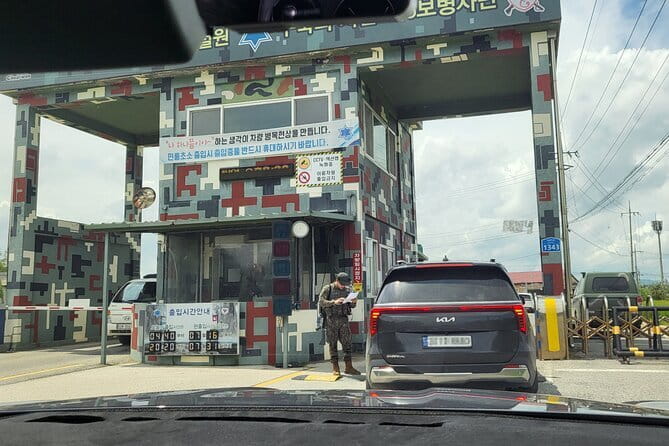
Before you go anywhere near the DMZ sites, you register at the DMZ Crane Peace Center. You’ll provide your name and your vehicle license number as part of the entry process. This is not busywork. It’s the first reminder that access is tightly controlled and that details matter.
I like this part because it shifts the day from sightseeing to attention. You can feel the seriousness right away, even before you see the tunnel. And if you’re traveling with kids, it gives you a practical way to talk about rules, boundaries, and why the DMZ is treated differently.
There’s also a modern convenience to this tour style. You receive a mobile ticket, which can make check-in feel more straightforward on the day.
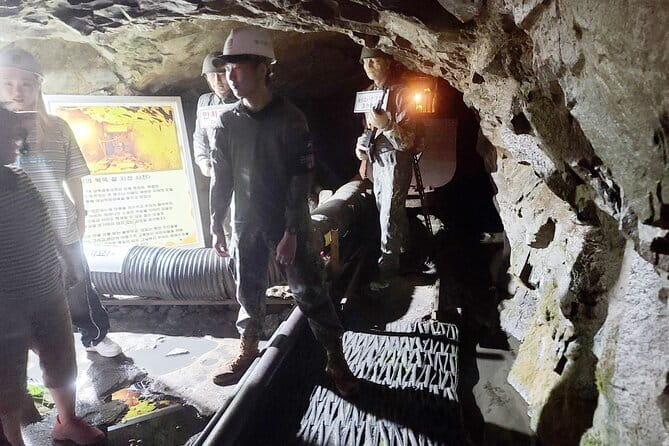
The 2nd Tunnel: March 24, 1975, and 300 meters from the line
The 2nd Tunnel is the headline for a reason. It was discovered on March 24, 1975, and the excavation began after two soldiers reported hearing explosions during their sentry duty on Nov. 20, 1973. When your guide frames it like this, the tunnel stops being just a bunker and becomes a timeline you can hold in your head.
This tunnel is described as twice longer and deeper than the 3rd Tunnel, so you get a sense that North Korea’s tunnel effort was not a small one-off. You also learn what visitors are allowed to do, which is where the experience feels more grounded.
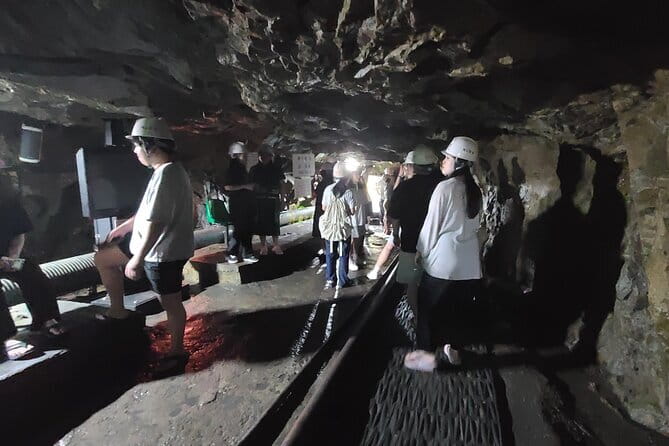
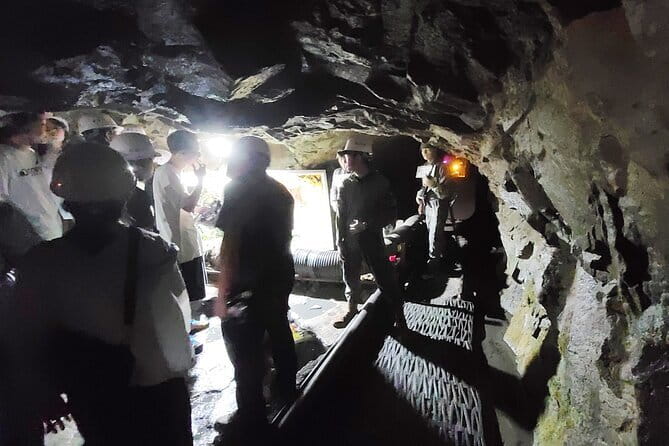
Here’s the practical limit to plan for. You can explore inside the 2nd Tunnel up to an ending point about 300 meters away from the military demarcation line. That means you get the inside experience without it turning into a long, wandering walk. It’s also a good cue that even inside the tunnel, your access is controlled for safety and security.
What I find powerful is how the tunnel connects Cold War imagination to physical space. You’re walking into a system meant for stealth and surprise, and then leaving with the weight of what that effort could have caused.
Cheorwon Peace Observatory: monorail views and memory mapped to place
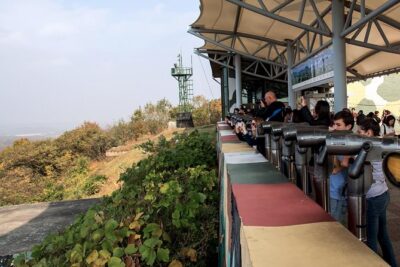
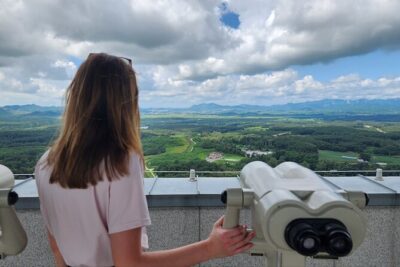
Cheorwon Peace Observatory is where the day becomes scenic, but in a serious way. The viewpoint themes include the ecosystem and wildlife of the area, plus several mapped references tied to the Korean War and divided peninsula history.
You’ll also have the option to save energy with the monorail. Taking it up helps you arrive at the top looking fresh enough to absorb the information, rather than arriving winded and focused only on getting your breath back. The monorail ticket is included as a round trip, so you don’t have to think about extra costs.
The observatory experience includes specific story points. You’ll hear about the Battle of Blood Ridge, where 1,250 North Korean soldiers and 1,030 South Korean soldiers sacrificed their lives in a fierce battle. You’ll also hear the account of Kim Il Sung’s high land, including the claim that he cried for three days after losing Cheorwon land.
Other themed areas you may spot from the viewpoint include Fortress of Gung-Ye Castle town, Pyeonggang tableland, and a propaganda town of North Korea. Even if you already know the basic conflict, these themed stops help you connect the labels to the geography you’re looking at.
I also like the wildlife angle. The DMZ has been left largely untouched by people for over 70 years, and that has helped it become habitat for migratory birds, cranes, and other animals. That contrast, humans made war here, then nature kept going, is one of the most unsettling parts of the whole day.
- Best DMZ Tour Korea from Seoul (Red Suspension Bridge Optional)
★ 5.0 · 41,422 reviews - DMZ Tour: 3rd Tunnel, Option(Suspension Bridge, Boat) from Seoul
★ 5.0 · 21,373 reviews - DMZ tour south Korea from Seoul (NK experience hall, defector)
★ 5.0 · 20,599 reviews - Seoul: DMZ Tour with Optional Suspension Bridge
★ 4.8 · 5,277 reviews - Signature DMZ Tour: Exclusive Defector Talk & Suspension Bridge
★ 5.0 · 4,459 reviews
Woljeongri Station: a train wreck you can see close up
Woljeongri Station is the stop that feels most like a direct artifact, not just a view. Behind the station building, there remains the wreck of a train bombed during the Korean War. The train was used by the North Korean army and was bombed by UN forces.
This is where the experience becomes less theoretical. Seeing the wreck form in real space gives you a better sense of what it means when history is not behind glass. It’s still there, present, and turned into a lesson that visitors can walk through.
If you’re traveling with kids, this can actually work well. It gives them something concrete to point at while you explain the broader story. Just be prepared for a more emotional tone, because the site is directly tied to violence and wartime logistics.
What the tour includes, and what it doesn’t

The headline value is access plus transport. Your price includes an air-conditioned vehicle, private transportation, bottled water, the DMZ admission fee, and a monorail ticket for round trip. That’s not a small bundle for a day that is otherwise heavy on restricted-site permissions.
The only clear cost outside the package is lunch. Lunch is listed as 15,000 KRW per person. Since the tour runs about 8 hours, I’d plan for a simple meal that won’t slow you down too much, and keep some flexibility if the day runs in a tight schedule.
The other practical detail is timing. On average, this is booked about 11 days in advance. That suggests demand is real, so if you have a specific travel date in mind, don’t wait until the last minute.
Price and value: is $245.29 worth it?

At $245.29 per person, you’re paying for three things that are hard to DIY: permission, transportation, and guided interpretation. DMZ access is not the same as a typical sightseeing ticket. The admission fee is part of the package, and the monorail ticket is included too, so you avoid add-ons that can quietly inflate other trips.
You’re also paying for a smoother format. This is a private tour, and only your group participates, which often matters more on a controlled itinerary than it does on open-ended city days. Fewer people mean fewer coordination headaches, and it’s easier to keep everyone informed as rules and movement requirements kick in.
Is it for everyone? If your main goal is casual photos, the DMZ day will feel intense. But if you want a structured education visit with clear historical framing and the real locations that go with it, the value is easier to justify.
Who should book this DMZ 2nd Tunnel and Cheorwon day
This is a strong fit if you want education with context, not just landmarks. The tour is described as memorable and emotionally resonant, with a clear focus on reunification hopes that many Koreans feel. It’s also educational for adults and children, and the idea of young Korean students visiting the DMZ to learn from the Cold War past comes through in the way the day is structured.
You’ll likely enjoy it most if you like history, geography, and guided storytelling. The observatory stop especially rewards people who like to make sense of what they’re seeing, since the viewpoint themes connect to battle history and named places.
It may be less ideal if you dislike guided schedules or you want free time for wandering. This is a day with set stops: Crane Peace Center registration, 2nd Tunnel, Cheorwon Peace Observatory, and Woljeongri Station. You can still take in photos, but it’s not a flexible hop-on hop-off kind of outing.
Should you book this DMZ tour
Book it if you want the DMZ done in a controlled, guided way that gives you the main access points in one day. The combination of 2nd Tunnel exploration (with the 300 meter limitation), Cheorwon Observatory by monorail, and the Woljeongri Station train wreck gives you three very different ways to understand the same tension: war plans, contested ground, and real-world remains.
Skip it or consider another option if you’re not ready for a heavy, emotionally serious day or if lunch not being included would stress you. Also, if you’re the type who hates any rules at all, you might find the registration and controlled movement less comfortable than a typical museum visit.
FAQ
FAQ
What is the duration of the DMZ 2nd Tunnel and Cheorwon Peace Observatory tour?
It runs about 8 hours.
Is pickup offered for this tour?
Yes, pickup is offered.
Do I need to switch into another group bus?
No. You do not need to switch into a group tourist bus. You enter the civilian controlled area with your own vehicle and follow the lead vehicle in single file.
What admission is included?
The price includes DMZ admission fees and the monorail ticket for round trip at Cheorwon Peace Observatory.
Is lunch included in the tour price?
No. Lunch is not included, and it is listed as 15,000 KRW per person.
How far can you go into the 2nd Tunnel?
You can explore inside up to the ending point about 300 meters away from the military demarcation line.
How do you reach the top of the Cheorwon Peace Observatory?
You can take the monorail to the top of the mountain.
Is free cancellation available?
Yes, you can cancel for a full refund up to 24 hours in advance of the experience’s start time.
More Seoul Write-Ups
The Border, Other Routes In
Fresh on the Seoul pile
- Unique Native Experience : Han River Picnic, Board game, BBQ★ 5.0 · 3 reviews
- 2-Hour Private Kayaking and Paddleboarding Experience in Hanriver★ 5.0 · 3 reviews
- Korean Folk Village & Suwon Hwaseong Fortress Private Tour★ 5.0 · 3 reviews
- Seoul Korean BBQ Dinner Experience with Secret Food Tours★ 5.0 · 3 reviews
- Seoul Highlights & Hidden Gems – Private Tour with Photo Service★ 5.0 · 3 reviews
- Night Food Tour in Seoul with Traditional and Modern Cuisine★ 5.0 · 3 reviews
DMZ & Border Tours you might have missed.
 ★ 5.0Best DMZ Tour Korea from Seoul (Red Suspension Bridge Optional)From $2941,422 reviews
 ★ 5.0DMZ Tour: 3rd Tunnel, Option(Suspension Bridge, Boat) from SeoulFrom $3521,373 reviews
 ★ 5.0DMZ tour south Korea from Seoul (NK experience hall, defector)From $2620,599 reviews
 ★ 4.9DMZ Insider Tour: 3rd Tunnel, NK Defector Meet & Red BridgeFrom $5015,214 reviews
 ★ 4.8Seoul: DMZ Tour with Optional Suspension BridgeFrom $455,277 reviews
 ★ 5.0Signature DMZ Tour: Exclusive Defector Talk & Suspension BridgeFrom $274,459 reviews
 ★ 5.0Thrilling Korean DMZ 3rd Tunnel Tour from Seoul + Red Bridge RushFrom $353,097 reviews
 ★ 5.0DMZ Past and Present: Korean Demilitarized Zone Tour from SeoulFrom $372,481 reviews
Where this tour also appears