
REVIEW · WALKING TOURS
(Closed) Korea’s White House Walking Tour Blue House
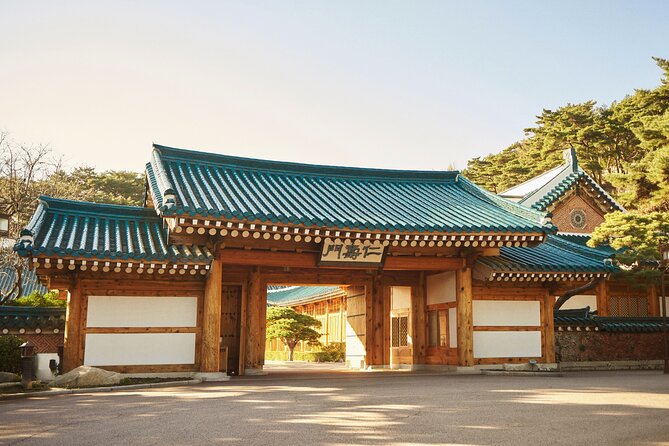
Seoul’s Blue House tour is a rare window into power. This is one of the few chances you can see Cheong Wa Dae grounds with reserved entrance, while public access is winding down before June. I love the small-group setup, because the guide can slow down and explain what you’re actually looking at, not just point and move on.
Two things I like a lot: you get a licensed English-speaking guide, and you visit multiple meaningful buildings, from guest halls to the old press center. The one practical catch is you have to get yourself to the meeting point at Gyeongbokgung Station, because hotel pickup and drop-off are not included.
If you care about how politics, architecture, and everyday life connect in South Korea, this tour gives you the context to read the site. The grounds are visited in a tight loop over about 2 hours 30 minutes, with short stops where the stories behind each building matter.
In This Review
- Key Highlights You’ll Actually Notice
- Korea’s White House Access Ends in June, So Time Matters
- Small Group Size Means Better Explanations (And More Questions)
- Meeting at Gyeongbokgung Station and the 2.5-Hour Walking Loop
- The Itinerary: What Each Blue House Area Teaches You
- Stop 1: Yeongbingwan, Guest Welcoming and State Ceremonies
- Stop 2: Blue House Main Building, the Blue Roof Symbol
- Stop 3: The Old Main Office Area Before the Current Building
- Stop 4: The President’s Residence Area, Separate for Privacy
- Stop 5: Chimnyugak House, a Peaceful Pavilion Break
- Stop 6: Sangchunjae, Beautiful Traditional Guest and Quiet Meetings
- Stop 7: Chunchugwan, the Former Press Center Announcements
- Why the Guide Makes This Tour Feel Worth It
- Price and Value: Is $199 Reasonable?
- Practical Tips for Your Day at Cheong Wa Dae
- Who This Blue House Tour Is Best For
- Should You Book? My Decision Guide
- FAQ
- How long is the Blue House walking tour?
- Where does the tour start, and what time is it?
- How many people are in the group?
- What’s included in the tour price?
- Is hotel pickup and drop-off included?
- Are service animals allowed?
- Can I get a full refund if I cancel?
Key Highlights You’ll Actually Notice
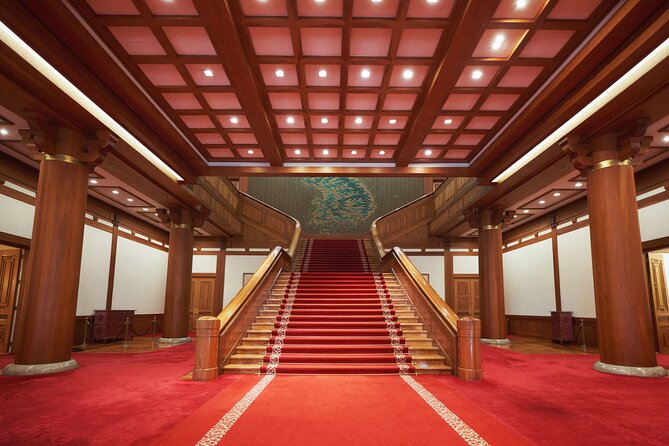
- Reserved entrance to Cheong Wa Dae during the limited access window before June
- Max 9 travelers, which makes questions and pacing feel human
- English-speaking licensed guide with strong storytelling (Jungho is repeatedly praised)
- Stop-by-stop meaning, from the main office to the president’s residence separation concept
- Architectural and cultural context at places like Chimnyugak and Sangchunjae
- Former press center visit at Chunchugwan, where announcements shaped the news cycle
Other walks we have covered in Seoul
Korea’s White House Access Ends in June, So Time Matters
The biggest reason this tour feels special is timing. The Blue House, also called Korea’s White House, has long been closed to regular visitors for decades. After a change in government, access opened, but it is not staying open forever, with the cutoff tied to June.
That’s why I see this as more than a sightseeing ticket. You’re showing up for a short-lived chance to experience an active symbol of the Korean state, not just a museum. When something like that is available only briefly, booking earlier gives you more options, and the tour tends to be in demand. The tour is noted as averaging 38 days booked in advance, which lines up with the limited access window.
Small Group Size Means Better Explanations (And More Questions)
This is capped at 9 travelers, which changes the whole feel of the walk. In a larger crowd, you’d hear facts but miss the meaning. In a small group, you get time to ask follow-ups and get clear direction for where to stand and what to watch for.
The guide also makes a measurable difference here. Reviews highlight a guide named Jungho for exceptional, engaging storytelling and clear instructions at the meeting point. One reviewer even said Jungho walked them back to the metro station, which is the kind of small courtesy that matters when you’re navigating Seoul.
You can also expect the guide to tie themes together, because this tour is built around history, politics, and culture, not only architecture trivia. If you enjoy learning while walking and you like a guide who can explain things in plain English, this group size helps you get that.
Meeting at Gyeongbokgung Station and the 2.5-Hour Walking Loop
The tour starts at 10:00 am at Gyeongbokgung Station in Seoul, and it ends back at the same meeting point. There is no hotel pickup, so plan your day around transit. The good news is that the start point is near public transportation, so you are not locked into a taxi plan.
Duration is listed as about 2 hours 30 minutes. The official stop times are shorter than that total because you also need time to walk between locations, gather as a group, and hear explanations. Practically, I’d treat it as an on-your-feet morning or early afternoon block, with several brief “look and listen” moments rather than one long inside visit.
The Itinerary: What Each Blue House Area Teaches You
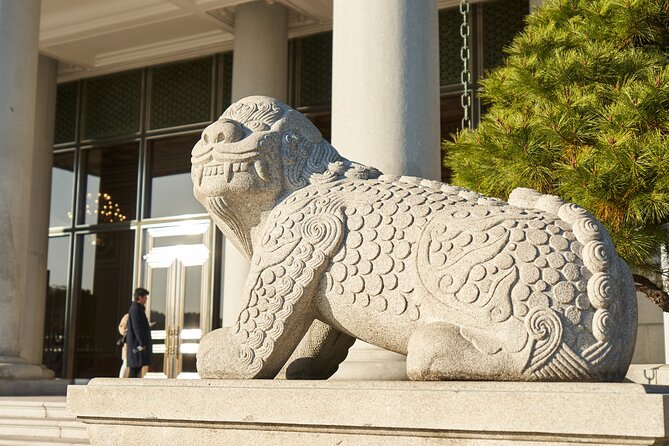
Here’s what the loop is designed to do: each stop adds a layer. You start with a guest-focused building, then move to the president’s working spaces, then to family privacy, and finally to supporting buildings that show how the government hosted visitors and delivered official messages.
- Best DMZ Tour Korea from Seoul (Red Suspension Bridge Optional)
★ 5.0 · 41,422 reviews - DMZ Tour: 3rd Tunnel, Option(Suspension Bridge, Boat) from Seoul
★ 5.0 · 21,373 reviews - DMZ tour south Korea from Seoul (NK experience hall, defector)
★ 5.0 · 20,599 reviews - Seoul: DMZ Tour with Optional Suspension Bridge
★ 4.8 · 5,277 reviews - Signature DMZ Tour: Exclusive Defector Talk & Suspension Bridge
★ 5.0 · 4,459 reviews
Stop 1: Yeongbingwan, Guest Welcoming and State Ceremonies
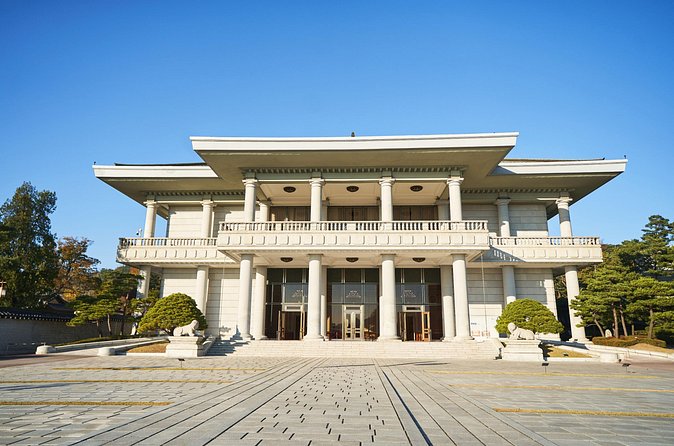
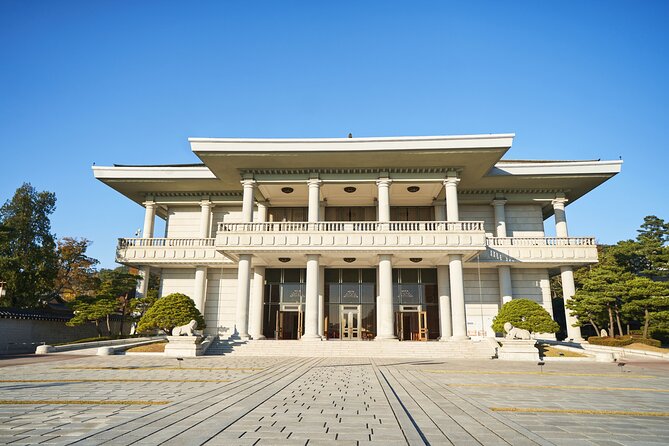
You begin at Cheong Wa Dae Yeongbingwan. This building was used to welcome important guests from other countries, and presidents met foreign leaders there. You’ll also hear how major dinners and meetings took place inside.
What I like about starting here is the perspective shift. If you begin with the president’s office, it can feel like politics equals paperwork. Starting with guest hosting helps you understand the Blue House as a stage for diplomacy, where the setting matters as much as the conversation.
Stop 2: Blue House Main Building, the Blue Roof Symbol
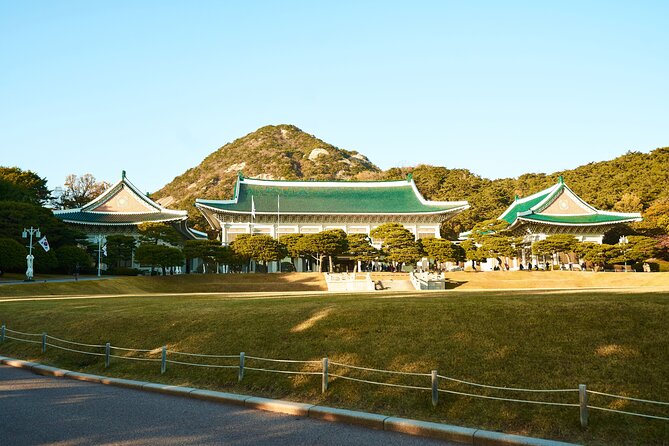
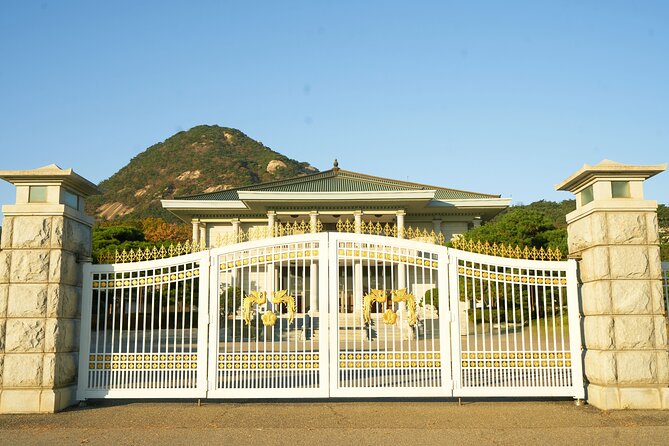
Next is the Blue House (Cheong Wa Dae) main building. This is where the president worked, and big decisions were made inside. You’ll also hear why the blue roof became a symbol of the Korean government.
This is one of those spots where a guided explanation pays off. Without context, you might see a famous building. With context, you notice how symbolism, design, and function fit together. The roof symbol is not random style, it represents identity and authority.
Stop 3: The Old Main Office Area Before the Current Building
Then you move to the area of the former main office, described as where older presidential work spaces stood before the current main building was built. Korean presidents worked here and held important meetings.
This stop gives you a sense of continuity. You are not only seeing one era, you’re seeing the idea of leadership spaces evolving over time. It’s especially helpful if you’re visiting Seoul and trying to keep modern Korea and its history in the same mental frame.
Stop 4: The President’s Residence Area, Separate for Privacy
Stop 4 is the area where the president and family lived. It’s separate from the office to protect privacy, and the setting is described as quiet and surrounded by trees.
I like this stop because it reminds you that government is made of people, not just institutions. The separation of residence and office is a key concept, and the guide’s framing helps you understand why layout and distance mattered in daily life, not only on official schedule days.
Stop 5: Chimnyugak House, a Peaceful Pavilion Break
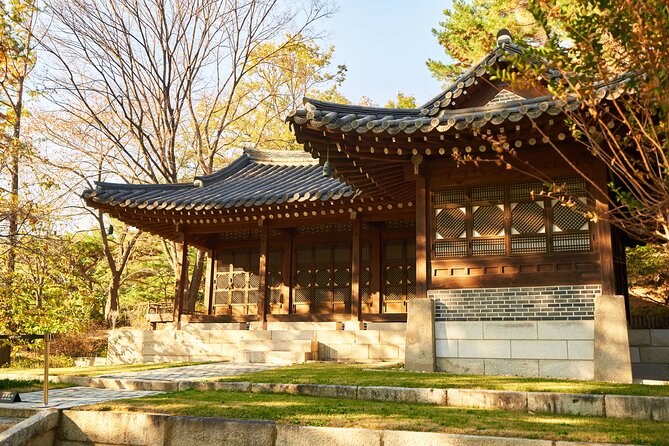
You’ll then visit Chimnyugak House, a small traditional pavilion surrounded by trees. The tour notes that you’ll enjoy a peaceful atmosphere and take a short break while the guide explains architecture and history.
This is the “slow your brain down” stop. In a tour centered on power, a quiet pavilion helps you process what you just heard. It also gives a visual contrast between guest hosting, office function, and a calmer space meant for atmosphere and reflection.
Stop 6: Sangchunjae, Beautiful Traditional Guest and Quiet Meetings
Next is Sangchunjae, described as one of the most beautiful traditional buildings on the Blue House grounds. The tour frames it as a place used for special guests and quiet meetings, with a focus on walking around the wooden structure.
If you’re drawn to traditional Korean architecture, this is where it becomes more than a story. You get to look at the way the building is constructed and how the space likely supported ceremonial and informal government interactions.
Stop 7: Chunchugwan, the Former Press Center Announcements
Your final stop is Chunchugwan, the former press center where official announcements were made. Reporters from Korea and around the world came here to hear the president speak.
This last stop is smart because it connects leadership to media. A press center is where decisions stop being private and start shaping public reality. You walk away understanding that public communication was built into the site’s design, not added later.
Why the Guide Makes This Tour Feel Worth It
With big sites like this, there are two kinds of tours: ones that list what exists, and ones that teach you how to see it. The strongest praise for this experience focuses on the second kind, especially around Jungho.
Multiple reviews mention that Jungho’s English is excellent and his delivery is engaging. Clear meeting instructions show up more than once, and so does the sense of confidence that you’re in good hands, from start to finish. One reviewer even described a mini quiz vibe, which tells me the guide is not just talking at you. He’s interacting, checking comprehension, and keeping the pace lively.
That matters because many visitors will otherwise miss what makes each building distinct. A guest building, an office, a residence, and a press center can all blur together visually if you only get surface-level descriptions. On this tour, the guide’s job is to give you an internal map of the Blue House’s roles, and that turns photographs into something more meaningful.
Price and Value: Is $199 Reasonable?
The price is $199 per person for about 2.5 hours with reserved entrance and an English-speaking licensed guide. The itinerary notes admission tickets as free for each stop, so you’re not paying separate entry fees during the walk. What you are paying for is the access, the reserved entry arrangement, and the guide time spent making meaning out of what you see.
For me, the best value argument is the limited access window before June. If you’re traveling during that period, this is a direct way to take advantage of a moment that many people will only ever hear about. Also, with only 9 people max, you’re not splitting guide attention across a huge crowd.
The main value tradeoff is the lack of hotel pickup. If your hotel is far from Gyeongbokgung Station, you’ll spend extra time or money getting there. Still, the meeting point is near public transportation, so it’s manageable if you plan your Seoul routing.
Practical Tips for Your Day at Cheong Wa Dae
I’ll keep these practical, because they’re the difference between a smooth experience and a mildly stressful one.
Plan to arrive at Gyeongbokgung Station early enough to meet the group calmly. The tour is built for a timed start at 10:00 am, and small delays can ripple through short stops.
Wear comfortable walking shoes. Even though each building stop is brief, this is still a guided walk on active grounds, and you’ll likely move between multiple structures in one stretch.
If you’re someone who likes to learn, bring curiosity. The guide’s style is praised for clear explanations, so if you ask straightforward questions about what you’re seeing, you’re likely to get answers that connect architecture to Korean political and cultural life.
Who This Blue House Tour Is Best For
This tour is a strong fit if you:
- Want Korea’s White House access without waiting for generic public hours
- Like history and politics, especially when it’s explained through real spaces
- Prefer a small-group experience with English-speaking licensed guidance
- Care about understanding the site’s different roles, guest diplomacy, office work, family privacy, and media announcements
It may not be your best match if you:
- Need hotel pickup as part of your routine
- Want a long, unstructured wander. This is a guided loop with short stops, not open-ended roaming
Good news: service animals are allowed, and it notes that most people can participate. If you have specific mobility needs, you might still want to plan around the fact that it is a walking tour with multiple exterior areas.
Should You Book? My Decision Guide
Yes, I’d book this if you’re visiting Seoul during the access window and you want more than a photo stop. The reserved entry plus the small-group pacing plus the guide’s proven ability to explain the Blue House’s architecture and meaning is a winning combo.
I’d hesitate only if you hate planning transit or you need pickup to make tours easy. Otherwise, the timing element alone makes it worth serious consideration. When access is limited and the experience is designed for a short window until June, waiting can cost you the chance.
If you want a Seoul day that blends politics, place, and culture in a way you can actually remember, this Blue House walking tour is one of the best ways to do it.
FAQ
How long is the Blue House walking tour?
It lasts about 2 hours 30 minutes.
Where does the tour start, and what time is it?
The meeting point is Gyeongbokgung Station in Seoul, and the start time is 10:00 am. The tour ends back at the meeting point.
How many people are in the group?
The tour has a maximum of 9 travelers.
What’s included in the tour price?
You get reserved entrance to Korea’s White House (Cheong Wa Dae) and an English-speaking licensed tour guide.
Is hotel pickup and drop-off included?
No. Hotel pickup and drop-off are not included.
Are service animals allowed?
Yes, service animals are allowed.
Can I get a full refund if I cancel?
Yes. Free cancellation is available if you cancel at least 24 hours before the experience’s start time for a full refund.
Shoe Leather Around Seoul
Keep Browsing Seoul

More Seoul Write-Ups
Fresh on the Seoul pile
- Unique Native Experience : Han River Picnic, Board game, BBQ★ 5.0 · 3 reviews
- 2-Hour Private Kayaking and Paddleboarding Experience in Hanriver★ 5.0 · 3 reviews
- Korean Folk Village & Suwon Hwaseong Fortress Private Tour★ 5.0 · 3 reviews
- Seoul Korean BBQ Dinner Experience with Secret Food Tours★ 5.0 · 3 reviews
- Seoul Highlights & Hidden Gems – Private Tour with Photo Service★ 5.0 · 3 reviews
- Night Food Tour in Seoul with Traditional and Modern Cuisine★ 5.0 · 3 reviews
Walking Tours you might have missed.
 ★ 5.0Seoul moonlight walking tour with local historianFrom $31940 reviews
 ★ 5.0Seoul: Nighttime Hidden Gems Walking TourFrom $33775 reviews
 ★ 5.0Seoul: Evening Dark History, Folklore & Ghost Story Walking TourFrom $42593 reviews
 ★ 4.8Seoul: Dark Side of the City and Ghost Stories Walking TourFrom $42484 reviews
 ★ 5.0Gangnam Walking Tour on Youth and Society in Seoul KoreaFrom $31401 reviews
 ★ 4.8Seoul: Gyeongbok Palace and Bukchon Hanok Walking TourFrom $88157 reviews
 ★ 5.0Best Walking Tour to Gyeongbok Palace Bukchon Hanok VillageFrom $88138 reviews
 ★ 4.5Highlights & Hidden Gems With Locals: Best of Seoul Private Walking TourFrom $12383 reviews
Where this tour also appears