
REVIEW · DMZ & BORDER TOURS
365-day DMZ Special Tour including Monday & Public Holiday
DMZ day trips can be heavy, but good ones matter. This 9-hour Seoul outing puts wartime sites and border-view moments into one tight, well-explained schedule. You’ll see places tied to the Korean War like Imjingak Peace Nuri Park and Dora Observatory, plus option days that switch routes on Mondays and public holidays.
Two things I really like: first, the early pickup system from several Seoul subway stations means you do not waste the morning hunting for a meeting point. Second, the guide-led storytelling is the main event. Names like Sookhee, Veronica, and Mr Young show up in past groups, and the common thread is clear explanations paired with a sense of humor.
One thing to consider: the day depends on access. If the DMZ tightens up due to weather or security rules, you may get alternate stops, and sometimes time at each place feels quick because the schedule is designed to fit everything in.
In This Review
- Key highlights worth your attention
- Why this DMZ day tour from Seoul is worth it
- Pickup points, mobile tickets, and how to start without stress
- Monday and public holidays: the route when the Third Tunnel is closed
- Tuesday to Sunday: Third Tunnel access, Dorasan, and Unification Village
- Imjingak Peace Nuri Park: the Freedom Bridge moment
- The Third Tunnel visit: why it’s intense and what to expect
- Dora Observatory and border views that make the map real
- Gloster Hill Memorial Park and Heroes Suspension Bridge
- Tongilchon-gil: the Civilian Control Zone flavor
- Timing, group size, and why the day feels packed
- Weather and access rules: how to plan like a pro
- Price and value: is $59 fair for this kind of day?
- Who should book this, and who might skip it
- Should you book the 365-day DMZ Special Tour?
- FAQ
- What does the tour cost and how long is it?
- Where do I get picked up and where do I end?
- Is a mobile ticket included?
- Do I need to bring lunch?
- What is included besides the guide?
- When is the Third Tunnel visited?
- What happens on Monday and public holidays if the Third Tunnel is closed?
- What is the maximum group size?
- Does the tour operate every day of the year?
- Are there cancellation rules tied to timing and weather?
Key highlights worth your attention
- Pickup from multiple Seoul subway stations so you can start fast without a long taxi scramble
- Monday and holiday route options with DMZ Peace Gondola and memorial sites when the Third Tunnel is off-limits
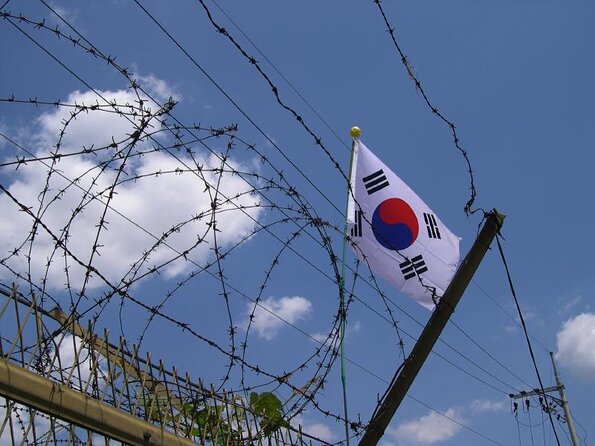
- Third Tunnel visit on Tuesday to Sunday for a rare, physically demanding look at the DMZ battle plans
- Border views from Dora Observatory that turn the war’s geography into something you can actually see
- Gloster Hill Memorial and Heroes Suspension Bridge on certain days, both emotionally heavy and visually striking
- Tight timing with short stops, so bring comfy shoes and a ready-to-move mindset
Other routes to the border, side by side
Why this DMZ day tour from Seoul is worth it
The DMZ is only about an hour from Seoul by road, but getting there without your own transport is the hard part. This tour solves the big friction point: it runs as a guided day out, with pickup and a plan that fits within the allowed touring windows.
The real value is not just that you see the famous spots. It’s that you get the “why” behind each location. A guide keeps the story anchored while you’re standing in the right place. That matters in the DMZ, where the scenery can look calm, but the history is anything but.
At $59 per person for an around-9-hour day, it’s also a practical spend. You are paying for transportation, timed access to DMZ-area sites, and an English-speaking guide who coordinates what can be a fussy schedule.
Pickup points, mobile tickets, and how to start without stress
This is a full-day operation with a clear “be early” rhythm. You’ll meet for pickup at City Hall Station area in Seoul, with pickup offered from options based on the start time window. Early-season departures can start around 6:00 to 6:50 am, while other periods can shift closer to about 7:00 to 7:50 am.
You also get a mobile ticket, which is handy for a day where your focus should be on getting to the DMZ, not printing paperwork.
Two practical tips that help a lot:
- Plan to arrive at the pickup spot 10 minutes before your listed time. The tour departs on time.
- Wear shoes you can walk in. Several stops involve quick walking between sites, and some parts are described as physically demanding.
Monday and public holidays: the route when the Third Tunnel is closed
If you can only go on a Monday, this tour is built for you. On Mondays and national holidays, the itinerary switches to avoid closures, especially when the Third Tunnel is not available.
On Monday-style days, you’ll focus on sites that still connect to division and war:
- Imjingak Peace Nuri Park as your first anchor point
- DMZ Peace Gondola along the Imjin River area, tied to the sorrow of division and hope for reunification
- Jangsan Natural Observatory or Odusan Unification Observatory, depending on the day’s access
- Gloster Hill Memorial Park and the Heroes Suspension Bridge on days when those are open
- Drop-off back at City Hall Station (unless ending there becomes difficult due to city traffic and events)
What I like about the Monday logic is that you still get “big meaning” stops, not just filler. The bridge and memorial focus on a specific battle story, and the observatory viewpoints help you keep orienting yourself geographically, even when the tunnel is unavailable.
One small caution: Monday can mean fewer commercial options. One guide strategy that shows up in real-world experiences is people arriving underfed, so bring snacks just in case lunch timing is awkward.
Tuesday to Sunday: Third Tunnel access, Dorasan, and Unification Village
From Tuesday through Sunday, the day shifts into the classic tunnel-and-view structure.
You start again at the Imjingak area, then head toward the DMZ corridor:
- The Third Infiltration Tunnel visit, included on Tuesday to Sunday
- A Theater or Exhibition Hall stop, where you can watch an about 8-minute short film about the Korean conflict
- Dorasân area viewpoints, including Dorasan Observatory
- Unification Village as part of the day’s final border-facing context
This route is often the one people are chasing because the Third Tunnel is one of those places where the “war planning” idea becomes real. You are not just looking at a map.
That said, the tour clearly flags the physical side. Visiting the Third Tunnel and the Heroes Suspension Bridge is described as physically demanding. If you have a heart condition, serious medical issues, or are pregnant, this tour is not recommended.
- Best DMZ Tour Korea from Seoul (Red Suspension Bridge Optional)
★ 5.0 · 41,422 reviews - DMZ Tour: 3rd Tunnel, Option(Suspension Bridge, Boat) from Seoul
★ 5.0 · 21,373 reviews - DMZ tour south Korea from Seoul (NK experience hall, defector)
★ 5.0 · 20,599 reviews - Seoul: DMZ Tour with Optional Suspension Bridge
★ 4.8 · 5,277 reviews - Signature DMZ Tour: Exclusive Defector Talk & Suspension Bridge
★ 5.0 · 4,459 reviews
Imjingak Peace Nuri Park: the Freedom Bridge moment
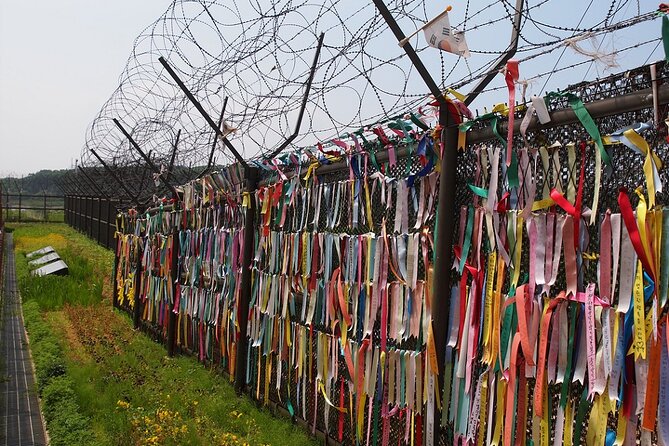
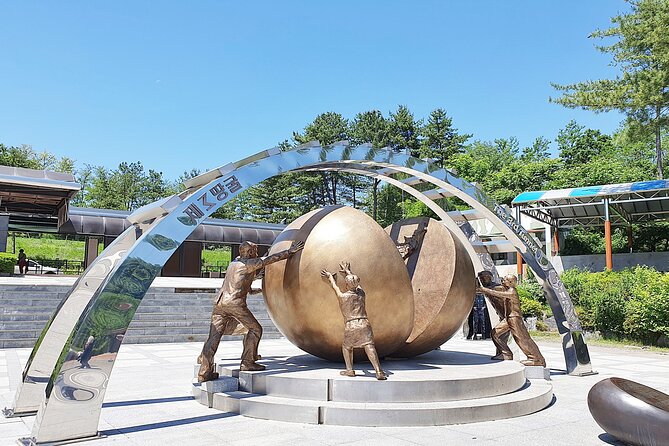
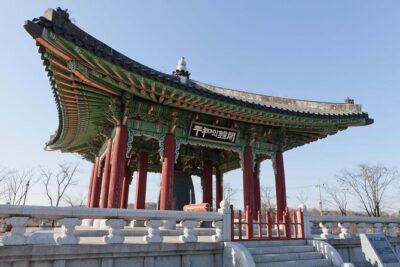
Most DMZ tours hit Imjingak, but this one gives you a useful amount of time there before you move deeper into the day. Imjingak Peace Nuri Park is where you start to understand the DMZ as a human story, not just a military line.
You’ll see symbolic monuments tied to the Korean War era, including the:
- Freedom Bridge
- Soldiers’ Memorial
- Other monuments that frame the refugee and division narrative
This is also where you can get your bearings. Once you’ve walked this area, the later viewpoints make more sense, because you start to “see the system” of how the DMZ is laid out.
On top of that, there is a stop for Imjingak-ro with the North Korea Experience Hall. The hall is presented as a newer, education-focused stop that helps satisfy curiosity in a structured way, rather than just guessing based on headlines.
The Third Tunnel visit: why it’s intense and what to expect
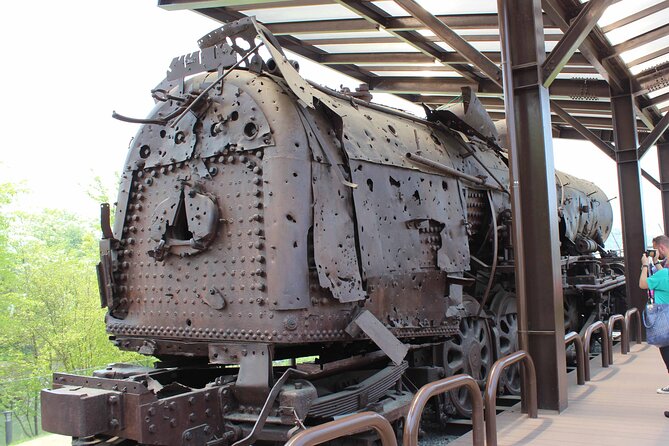
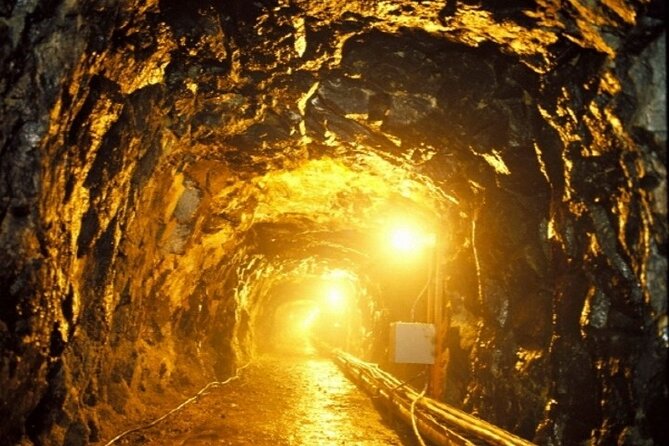
On Tuesday to Sunday days, the Third Tunnel is a short stop in time, but not in intensity. The information given is specific: the tunnel was discovered in 1978, is about 1,635 meters long, and was built with invading South Korea in mind. It’s also physically demanding enough that the tour warns about health limitations.
So what does “intense” mean in practice? You should expect a tight window, movement, and a setting that naturally makes you slow down. You’re in a place designed for war, and you’ll feel that as soon as you’re inside.
If you’re prone to claustrophobia or you dislike physically demanding heritage sites, consider that the tour is not billed as gentle. The upside is that the explanations from your guide connect the tunnel to what you saw outside earlier that day.
Dora Observatory and border views that make the map real
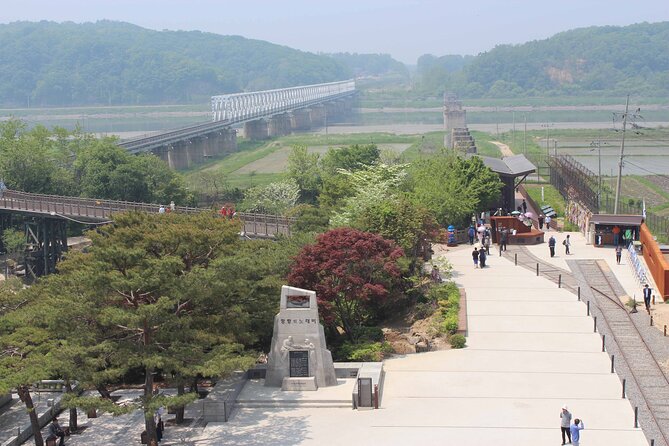
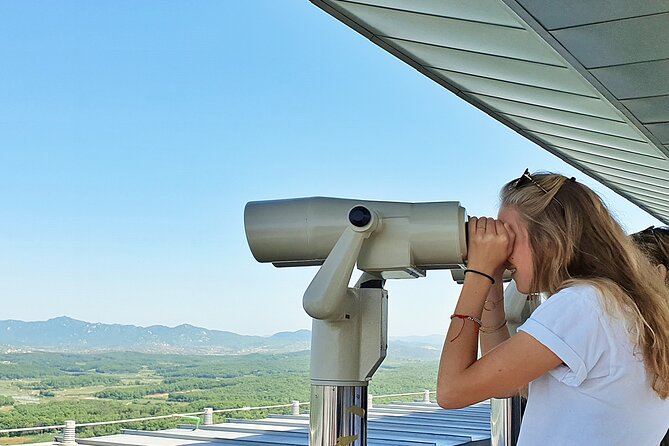
For a lot of people, the emotional peak comes with Dora Observatory. It sits on Dorasan Mountain and is described as a spot to gaze across the border from the northernmost point on the western front.
This is not a museum stop. It’s a viewpoint stop. That means your guide can talk for a bit, but you’ll also spend time simply looking. Even when weather limits what you can see, a clear day makes the geography click.
On days when the tunnel is closed, the tour still tries to give you equivalent “view and context” value using alternative observatories like Jangsan Natural Observatory or Odusan Unification Observatory. So you still get that border-facing anchor, even if the tunnel is off-limits.
Gloster Hill Memorial Park and Heroes Suspension Bridge
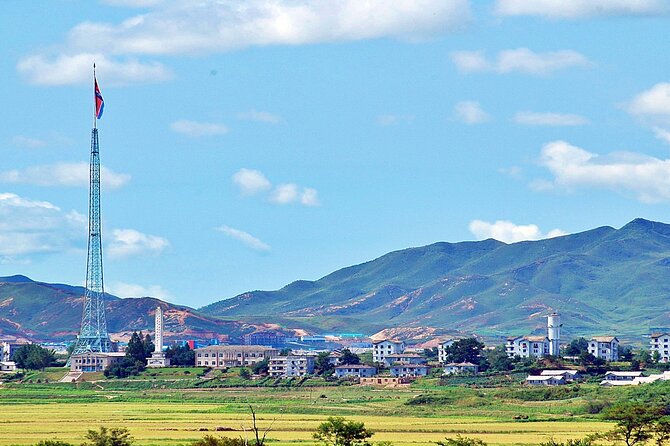
On Monday and national holiday routes, and when access allows, you’ll visit Gloster Hill Memorial Park and the Heroes Suspension Bridge.
Gloster Hill is tied to a specific battle story: it honors soldiers of the British Army Gloucester Regiment. The bridge is described as having once been Korea’s longest suspension bridge at the time of construction, and it became a battlefield during the Korean War.
These are the stops that tend to land hardest. They also explain why the DMZ is not just “a sight.” It’s a memorial zone. If you can handle emotional weight and you like understanding conflict through physical place, this part is a strong reason to book.
If the weather is bad or access is restricted, these may close. The tour has contingency plans, including swapping in Odusan Unification Observatory or the War Memorial of Korea instead.
Tongilchon-gil: the Civilian Control Zone flavor
Another stop that adds texture is Tongilchon-gil, a settlement in the Civilian Control Zone (CCZ) on the western front of the DMZ. It’s described as not shown on most maps, and there is also mention of Jangdan soybeans grown there.
This is not just a “look at a field” moment. It helps you understand the DMZ as something that affects everyday life, not only soldiers and tunnels. Even though the stop is short, it’s the kind of context that prevents the day from feeling like only one long memorial walk.
Timing, group size, and why the day feels packed
The tour runs for about 9 hours. That’s a long day, but the number of stops means it will feel busy.
A recurring practical theme is limited time at each stop and quick transitions. The upside is you see a lot. The downside is you will not wander slowly. Think of it as a guided highlights reel, not a relaxed museum day.
Group size also matters. The tour has a maximum of 40 travelers, which typically keeps the logistics manageable but still means you’ll experience some crowding at popular points.
Also note that the DMZ can close suddenly without prior notice. The tour states it may adjust to similar sites in that case, and refunds would not be provided. That is the reality of the DMZ. If you’re the kind of traveler who needs a perfectly predictable itinerary no matter what, you should mentally prepare for alternatives.
Weather and access rules: how to plan like a pro
The tour requires decent weather. Fog, heavy rain, or snow can reduce what you see and can also trigger closures of specific sites like Gloster Hill and Heroes Suspension Bridge.
What you can do:
- Check the forecast the night before and in the morning.
- Pack layers. Even in warmer months, DMZ-area viewpoints can feel cooler.
- Bring snacks. Lunch is not included, and if you’re on a Monday route, food options can be limited.
If it’s foggy, you can still have a good day, but expect visibility to be uncertain at the border viewpoints. Your guide usually keeps the educational parts going with videos and explanations in whichever stops remain open.
Price and value: is $59 fair for this kind of day?
Let’s talk value in plain terms.
You’re paying $59 for:
- Pickup from set Seoul subway options
- A professional English-speaking guide
- Entry or admission for included sites like the Third Tunnel
- A DMZ-area itinerary that depends on access rules
- A mobile ticket for smooth check-in
Lunch and drinks are not included. That’s the main “watch your budget” item.
If you factor in transportation costs and the practical challenge of reaching the DMZ from Seoul on your own, this pricing starts to make sense. You’re not just paying for sightseeing, you’re paying for someone else to manage the schedule and access while you focus on the experience.
Who should book this, and who might skip it
This tour is a strong fit if you:
- Want one guided day with major DMZ sites without renting a car
- Prefer English explanations and clear context on wartime sites
- Can handle emotionally heavy memorial and war-history locations
- Are okay with a packed schedule and short stop times
Consider skipping or choosing a different format if:
- You have heart conditions, serious medical issues, or are pregnant, since tunnel and bridge visits are described as physically demanding
- You need a fully flexible itinerary with no sensitivity to closures. The DMZ can change rules quickly
Should you book the 365-day DMZ Special Tour?
I’d book it if you want a well-structured DMZ day from Seoul, especially if your travel dates land on a Monday or national holiday. The Monday routing matters, because a lot of DMZ access varies by day, and this tour is set up to keep the day meaningful even when the Third Tunnel is closed.
I’d also book it if you value guide-led context. The repeated emphasis on guide quality, including named examples like Sookhee and Veronica, points to a tour where explanations are not an afterthought.
Just go in with realistic expectations: you’ll be moving, the schedule is time-tight, and weather or security rules can shift which sites you see. If you can roll with that, you’ll come away with a much clearer sense of how division shaped real places.
FAQ
What does the tour cost and how long is it?
The price is $59.00 per person, and the duration is about 9 hours.
Where do I get picked up and where do I end?
Pickup varies based on your selected option, with pickups from limited places listed for Seoul. The tour starts at City Hall Station and ends back at City Hall Station, with drop-off around 3:30pm. If entry near City Hall is difficult due to crowds and traffic, the tour may end at Hongik Univ. Station.
Is a mobile ticket included?
Yes, the tour uses a mobile ticket.
Do I need to bring lunch?
Lunch is not included. Food and drinks are also not included, so you may want to plan ahead.
What is included besides the guide?
The tour includes a professional English-speaking guide and pickup from the listed limited places. The Third Tunnel admission is included on the days it is visited.
When is the Third Tunnel visited?
The Third Tunnel is visited Tuesday through Sunday.
What happens on Monday and public holidays if the Third Tunnel is closed?
On Monday and national holidays, the itinerary is different. It includes Imjingak Peace Nuri Park, DMZ Peace Gondola, and either Jangsan Natural Observatory or Odusan Unification Observatory, plus stops such as Gloster Hill Memorial Park and Heroes Suspension Bridge when available. If the Third Tunnel is closed only, the Monday-style alternatives may still apply.
What is the maximum group size?
The tour has a maximum of 40 travelers.
Does the tour operate every day of the year?
It does not operate on regular safety inspection days, including the first Monday of March, June, September, and December.
Are there cancellation rules tied to timing and weather?
You can cancel for a full refund up to 24 hours before the experience’s start time. If it’s canceled due to poor weather, you’ll be offered a different date or a full refund.
Keep Browsing Seoul
More Seoul Write-Ups
The Border, Other Routes In
Fresh on the Seoul pile
- Unique Native Experience : Han River Picnic, Board game, BBQ★ 5.0 · 3 reviews
- 2-Hour Private Kayaking and Paddleboarding Experience in Hanriver★ 5.0 · 3 reviews
- Korean Folk Village & Suwon Hwaseong Fortress Private Tour★ 5.0 · 3 reviews
- Seoul Korean BBQ Dinner Experience with Secret Food Tours★ 5.0 · 3 reviews
- Seoul Highlights & Hidden Gems – Private Tour with Photo Service★ 5.0 · 3 reviews
- Night Food Tour in Seoul with Traditional and Modern Cuisine★ 5.0 · 3 reviews
DMZ & Border Tours you might have missed.
 ★ 5.0Best DMZ Tour Korea from Seoul (Red Suspension Bridge Optional)From $2941,422 reviews
 ★ 5.0DMZ Tour: 3rd Tunnel, Option(Suspension Bridge, Boat) from SeoulFrom $3521,373 reviews
 ★ 5.0DMZ tour south Korea from Seoul (NK experience hall, defector)From $2620,599 reviews
 ★ 4.9DMZ Insider Tour: 3rd Tunnel, NK Defector Meet & Red BridgeFrom $5015,214 reviews
 ★ 4.8Seoul: DMZ Tour with Optional Suspension BridgeFrom $455,277 reviews
 ★ 5.0Signature DMZ Tour: Exclusive Defector Talk & Suspension BridgeFrom $274,459 reviews
 ★ 5.0Thrilling Korean DMZ 3rd Tunnel Tour from Seoul + Red Bridge RushFrom $353,097 reviews
 ★ 5.0DMZ Past and Present: Korean Demilitarized Zone Tour from SeoulFrom $372,481 reviews
Where this tour also appears