
REVIEW · SEOUL ROYAL PALACES
Seoul Palace Morning Tour
A royal morning, packed into three easy hours. You get hotel pickup plus admission handled, so you can focus on stories at Jogyesa and the big-palace sights, ending with the changing of the guard. The main catch is the pace, it is built to fit a lot in, so you may not have long, slow time at every photo spot.
This is a family-friendly group outing with a cap of 30 people, and it works well if you like your sightseeing with a guide who keeps things moving but still explains what you are seeing. If you care most about Jogyesa Temple details and the palace halls, you’ll enjoy the morning structure and clear stop sequence.
In This Review
- Key Highlights You Should Know Before You Go
- What You Get on the Seoul Palace Morning Tour (And Why It Works)
- Timing, Hotel Pickup, and How the 3 Hours Usually Feel
- Jogyesa Temple: Ancient Trees, Painted Color, and Stone Pagoda Details
- Blue House on the Road: What You Can See and Why You Cannot Stop
- Entering Gyeongbok Palace: The Joseon Spaces You Actually Want to See
- The Korean National Folk Museum Inside the Palace Grounds
- Gwanghwamun Changing of the Guard: The Final Moment That Usually Lands
- The Ginseng Center Stop: Shop Time, Not Palace Time
- Price and Value: Is This $40 Morning Tour a Good Deal?
- Who This Tour Fits Best (And Who Might Be Happier Elsewhere)
- Should You Book the Seoul Palace Morning Tour?
- FAQ
- What time does the Seoul Palace Morning Tour start?
- How long is the tour?
- Is hotel pickup included?
- Where do you end the tour?
- Are entrance fees included?
- Is lunch included?
- Do you stop at the Blue House?
- Do you see the changing of the guard?
- How many people are in the group?
- Can I cancel and get a full refund?
Key Highlights You Should Know Before You Go
- Jogyesa’s ancient trees: locust and baeksong trees said to be about 500 years old, plus the baeksong tree is designated a Natural Monument
- Daeungjeon Hall specifics: built in 1938, with colorful painting and a statue of Seokgamoni inside
- Blue House only as a pass-by: you see it from the road, since the security area prevents stopping
- Gyeongbok Palace must-see halls: Geunjeongjeon throne hall, Sajeongjeon office, and living quarters areas
- Gwanghwamun changing of the guard: your finale happens at the south gate area
- One ginseng center stop: shopping is part of the flow, which can be great for some and annoying for others
More palace mornings in Seoul, compared
What You Get on the Seoul Palace Morning Tour (And Why It Works)
This is a morning-style history tour that tries to hit several top Seoul landmarks before the midday crowds and before your energy tanks. For about $40 per person, you’re paying for three big things at once: local transport, a guide, and admission to the key places on your route. That combination is the real value, especially if you do not want to plan routes and ticket timing yourself.
What makes the morning route satisfying is the mix of settings. You start in a living Buddhist center at Jogyesa, then you swing into a royal, palace-centered world at Gyeongbok Palace. Between them, you get a quick window of Seoul’s modern power with a pass by the Blue House, even though you cannot stop there.
The tour is built for group sightseeing. That means you will spend more time listening and moving than wandering on your own. If you like to linger, you should treat this as a “great overview first, then come back later” kind of experience.
Timing, Hotel Pickup, and How the 3 Hours Usually Feel
The tour starts at 9:00 am, with pickup from your Seoul hotel. You’re in an air-conditioned vehicle, which matters in summer heat or winter cold. The overall duration is listed at about 3 hours, and that time pressure shapes everything about how the tour feels.
In practice, you should expect an efficient pace. The best parts are the moments when your guide points out specific details, like what you are looking at inside a hall or why a particular area mattered during the Joseon Dynasty. The downside is that if you want extra time to read every sign or take dozens of photos from the same exact angle, you may feel slightly rushed.
A smart strategy is to decide your top priorities before you go. If it is palace ceremony and major halls, focus there. If it is temple architecture and trees, set expectations that you will learn the highlights but not do a full, slow self-guided session.
Jogyesa Temple: Ancient Trees, Painted Color, and Stone Pagoda Details
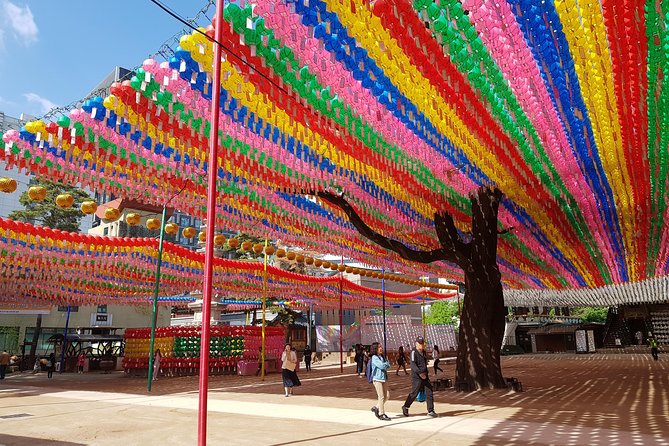
Jogyesa is the kind of place where the visual hits you immediately. The tour begins with a look at the locust trees and the baeksong trees in front of the main building, the Daeungjeon. The trees are described as being around 500 years old, and the baeksong tree is designated as a Natural Monument. That gives the stop more weight than a quick photo moment, because you are seeing living landmarks tied to the temple’s continued presence.
Inside, the Daeungjeon building is described as being built in 1938. Even the outside is emphasized with its different painted colors. Then your guide directs your attention to the statue of Seokgamoni inside the main building, which helps you understand what you are looking at instead of just walking past it.
One more detail you get here is a seven-storey stone pagoda in front of the Daeungjeon building. The tour notes that it contains Jinsinsari. Whether you are religious or not, those specific, “here is what this object is and why it matters” explanations make Jogyesa easier to appreciate.
If you are traveling with kids, Jogyesa is a strong start. It is active and human-sized compared with palace grounds. You get a calmer rhythm before the bigger palace walk.
Blue House on the Road: What You Can See and Why You Cannot Stop
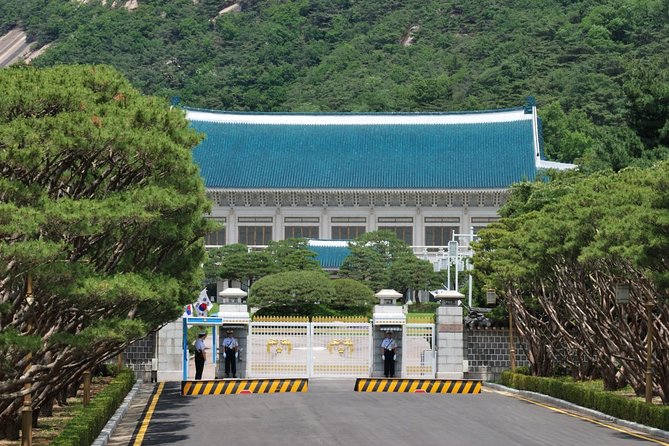
After Jogyesa, you head toward Gyeongbok Palace. Along the way, you pass the Blue House, the residence and workplace connected to South Korea’s leadership. Here is the honest expectation: the security area does not allow stopping in front of it.
So instead of a dramatic “stand here and look at it” moment, you get a sighting from the transportation window or roadside. This still has value, because it places the palace stop in context. You go from a centuries-old religious and royal world into modern Seoul’s political center, and you get a sense of how the city is layered.
If you care most about maximizing time at the palace itself, the pass-by is fine. If you were hoping for a full Blue House visit, you will want to know up front that this tour is not that type of access.
More pre-dawn pickups in Seoul
- Mt. Seorak+Nami Island+Garden of Morning Calm Day Trip from Seoul
★ 5.0 · 959 reviews - Seoul: Nami Island and Garden of Morning Calm opt Railbike
★ 4.6 · 907 reviews - Day Trip to Nami Island with Rail bike and The Garden of Morning Calm
★ 4.5 · 459 reviews - Trip to Nami Island with Petite France & Italian Village, Garden of Morning Calm
★ 4.5 · 373 reviews - Nami Island & Garden of Morning Calm & Gangchon Railbike Tour
★ 4.5 · 370 reviews
Entering Gyeongbok Palace: The Joseon Spaces You Actually Want to See
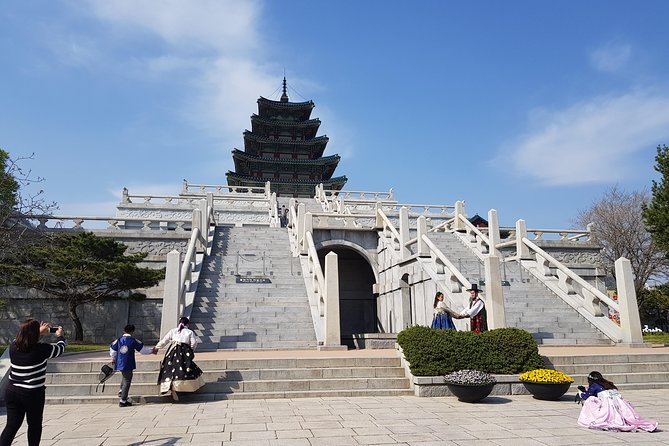
Gyeongbok Palace is the centerpiece of the morning, and it is one of the most important places to visit in Seoul for Joseon Dynasty-era architecture and royal life. The tour takes you through several named areas, so you are not just wandering among buildings without direction.
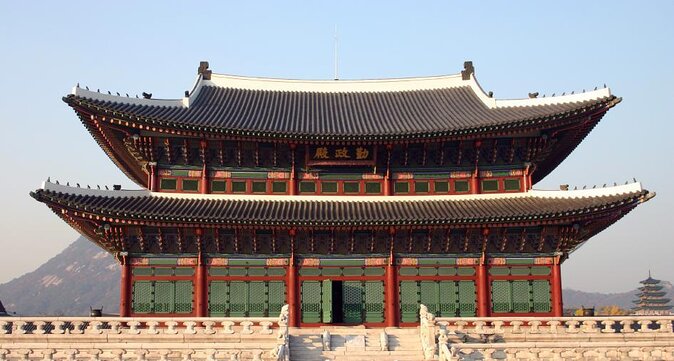
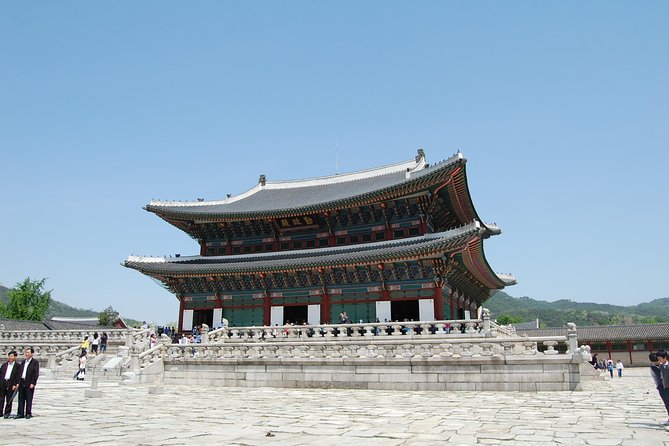
You will look around Geunjeongjeon, the main throne hall of Gyeongbok Palace. This is the symbolic core, the room tied to formal authority and public ritual. Then you move to Sajeongjeon, where the king’s office area is associated with governance. After that come living and ceremonial spaces, including Gangnyeongjeon for the king’s living quarters and Gyotaejeon for the queen’s living quarters.
One particularly interesting stop in the palace complex is Gyeonghoeru, described as the place where the king held formal banquets for foreign envoys. Even if you only catch it as part of a short guided sweep, it helps you see the palace as a stage for diplomacy, not just a fortress of power.
The way the tour works inside Gyeongbok Palace is all about context. A guide points out what each hall was for, and that makes the architecture feel more purposeful. Without that kind of explanation, palace buildings can blur together, especially when you are surrounded by crowds.
The Korean National Folk Museum Inside the Palace Grounds
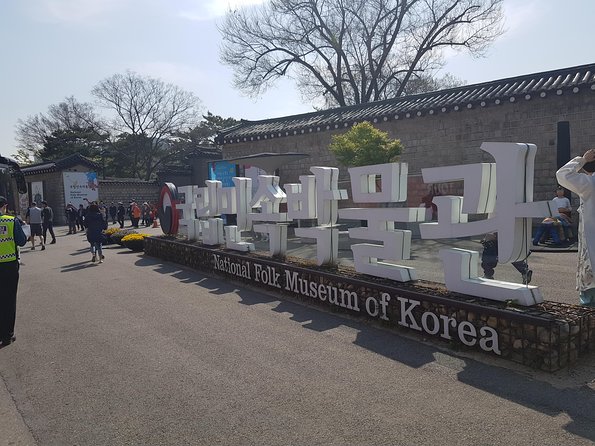
After the major palace buildings, the tour includes a stop at the Korean National Folk Museum, which is part of the Gyeongbok Palace area. The focus here is on daily life and culture, aimed at helping you understand traditional Korean lifestyle rather than only royal administration.
Because the tour includes admission as part of the overall package, you get a museum break that can be a relief if the palace grounds feel tiring. The museum stop also complements the earlier sights: temple spirituality, royal governance, then everyday cultural patterns.
If you prefer tactile, indoor learning, this is where the tour shifts from outdoor walking to slow down mode. If you prefer outdoors, treat the museum as an organized add-on, a way to make the historical setting feel grounded.
Gwanghwamun Changing of the Guard: The Final Moment That Usually Lands
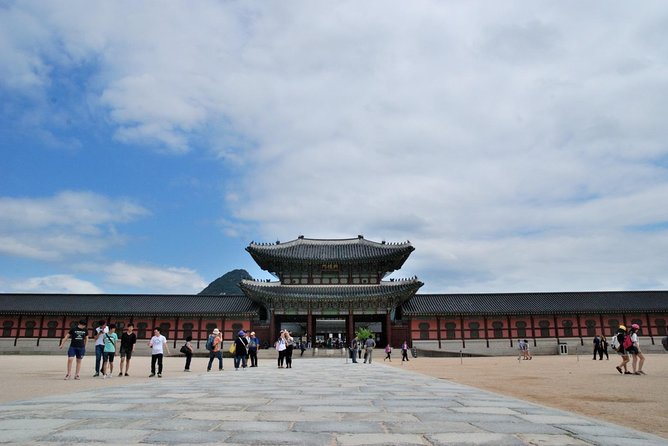
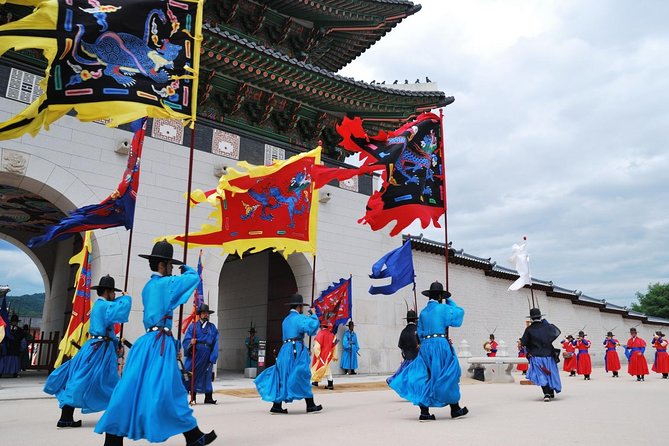
You end at Gwanghwamun Gate, described as the south gate of Gyeongbok Palace, and you get to see the changing of the Royal Guard ceremony. This is the moment many people remember because it is visible, rhythmic, and easy to understand even if you are not fluent in local history.
As a finale, it works well. By the time you reach it, you already understand the palace context from earlier stops. Now the ceremony feels like a living tradition rather than a random performance. It is also a practical way to wrap up a morning because you can plan your next activity after the tour ends.
One caution: ceremonies are time-based events. With a group schedule, you should be ready when your guide says it is time to gather and move.
The Ginseng Center Stop: Shop Time, Not Palace Time
A single shopping stop is included, the ginseng center. The tour flow includes it near the end, after the palace and museum portions. This is where opinions often diverge.
If you like buying souvenirs that are connected to local products, you might find the ginseng stop interesting. If you do not want shopping detours, you should treat it as a short, structured pause. The most useful mindset is to decide what you want from it ahead of time: either walk through and move on, or skip it as much as possible while staying with the group.
The key point is that this stop does affect your time allocation. You are booking a palace-focused morning, so if shopping is a low priority for you, you might feel the tradeoff.
Price and Value: Is This $40 Morning Tour a Good Deal?
At $40 per person, the question is not just the number. It is what that number buys you during a limited half-morning window.
Here is what you are getting:
- Hotel pickup in Seoul
- An air-conditioned vehicle
- A professional guide
- Admission fees included for the top stops
- A route that combines temple, palace, museum, and the guard ceremony
That is a lot of “logistics work” taken off your plate. If you were doing it on your own, you would still need local transit, ticket planning, and the effort of figuring out what to look for at each major stop. The guide helps compress that learning time into a short morning.
Still, this is a group tour, and the pace can feel fast. So the value depends on your style. If you enjoy structured sightseeing and want the highlights without extra planning, it is a solid deal. If you hate being rushed or you dislike shopping stops, you may feel like you paid to spend more time following a schedule than exploring freely.
Who This Tour Fits Best (And Who Might Be Happier Elsewhere)
This tour is a great match for:
- First-time visitors who want multiple Seoul icons in one morning
- Families who want a clear, kid-friendly sequence
- People who like guided explanations at places like Jogyesa and the palace halls
- Travelers who want the guard ceremony without hunting down the best viewing flow
It is not the best match if:
- You strongly prefer slow, self-guided time at each site
- You want major modern landmarks beyond a pass-by view
- You dislike shopping stops and want a pure palace-and-temple morning only
If you are the type who likes to return later for deeper exploration, this tour can act like an orientation. You come away knowing where to focus during your next trip to Gyeongbok Palace.
Should You Book the Seoul Palace Morning Tour?
I think it is worth booking if your priority is a guided highlights run with hotel pickup and entrance fees included, ending with the changing of the guard at Gwanghwamun. The temple and palace stops are the kind of places that become far more meaningful when someone explains the specific halls, objects, and why they mattered.
Before you book, decide how you feel about two potential friction points: the efficient pace and the included ginseng center stop. If you can handle a structured schedule and you are okay with a short shopping detour, you are likely to leave with exactly what you came for, a smart morning tour of Seoul’s major heritage sites.
FAQ
What time does the Seoul Palace Morning Tour start?
The tour starts at 9:00 am.
How long is the tour?
The duration is listed as about 3 hours.
Is hotel pickup included?
Yes. Pickup is included from your Seoul hotel.
Where do you end the tour?
The tour ends back in Seoul at City Hall, after a stop at a ginseng center.
Are entrance fees included?
Yes. All entrance fees are included, and admission to top local attractions is included.
Is lunch included?
No. Lunch is not included.
Do you stop at the Blue House?
You pass by the Blue House on the way to Gyeongbok Palace. The tour notes you cannot stop there because it is a security area.
Do you see the changing of the guard?
Yes. The tour ends at Gwanghwamun Gate where you can see the changing of the Royal Guard ceremony.
How many people are in the group?
The tour has a maximum of 30 travelers.
Can I cancel and get a full refund?
Yes. You can cancel up to 24 hours in advance of the experience for a full refund.
Keep Browsing Seoul

More Seoul Write-Ups
Palaces, Three More Ways
Fresh on the Seoul pile
- Unique Native Experience : Han River Picnic, Board game, BBQ★ 5.0 · 3 reviews
- 2-Hour Private Kayaking and Paddleboarding Experience in Hanriver★ 5.0 · 3 reviews
- Korean Folk Village & Suwon Hwaseong Fortress Private Tour★ 5.0 · 3 reviews
- Seoul Korean BBQ Dinner Experience with Secret Food Tours★ 5.0 · 3 reviews
- Seoul Highlights & Hidden Gems – Private Tour with Photo Service★ 5.0 · 3 reviews
- Night Food Tour in Seoul with Traditional and Modern Cuisine★ 5.0 · 3 reviews
Seoul Royal Palaces you might have missed.
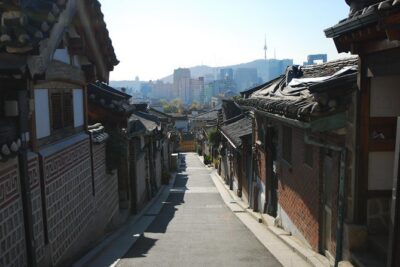 ★ 4.9Seoul: Gyeongbok Palace, Bukchon Village, and Gwangjang TourFrom $322,321 reviews
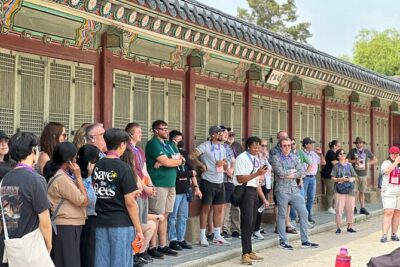 ★ 5.0Best Seoul City Tour (Gyeongbokgung Palace,Insadong,Namsan Tower)From $581,647 reviews
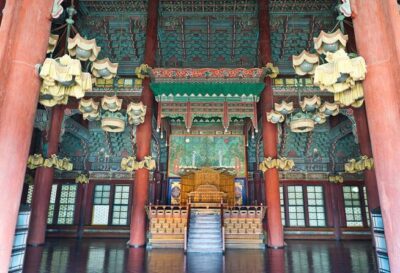 ★ 5.0Small-Group Royal Palace and Seoul City Tour (hotel pick-up)From $561,474 reviews
★ 5.0Seoul: Gyeongbok Palace, Bukchon Village, and Gwangjang TourFrom $321,044 reviews
★ 5.0Small-Group Royal Palace and Seoul City Tour (hotel pick-up)From $561,474 reviews
★ 5.0Seoul: Gyeongbok Palace, Bukchon Village, and Gwangjang TourFrom $321,044 reviews
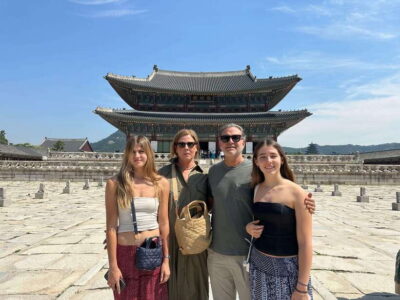 ★ 4.7Seoul Highlights: Gyeongbok Palace, Insadong & N Seoul TowerFrom $26726 reviews
 ★ 4.6Seoul: Hanbok Rental with Gyeongbokgung Palace EntryFrom $6611 reviews
 ★ 4.5Seoul City Half Day Tour-Gyeongbok Palace Guard Changing CeremonyFrom $38357 reviews
 ★ 4.5Seoul: Gyeongbok Palace with Gigibebe Hanbok RentalFrom $9289 reviews
Where this tour also appears