
REVIEW · SUWON & HWASEONG FORTRESS
Hwaseong Fortress and Korean Folk Village Tour from Seoul
Suwon’s walls feel like real living stone. This day trip layers UNESCO Hwaseong Fortress with the hands-on atmosphere of the Korean Folk Village, so you see Joseon-era life from two angles. One thing to watch is the schedule, since weather can trim performances and show time.
I especially like that you get a guided walk through the fortress gates and artillery towers, not just a quick photo stop. And in the folk village, the museum and craft workshops help everything click, from household items to traditional making skills. The day runs about 8 hours, so build in energy for walking and standing.
If you want lots of free wandering time to shop or roam solo, this format may feel a bit “tight.” Also, lunch rules can be confusing because the description talks about a meal at the marketplace, while the provided details list lunch as not included.
In This Review
- Key highlights to know before you go
- Getting to Suwon at 8:30, without turning it into a chore
- Hwaseong Fortress: gates, battlements, and why it was built
- Where the guide really makes the difference
- The afternoon pivot: Korean Folk Village and Joseon daily life
- Hands-on crafts you can actually picture at home
- Lunch at the marketplace, and the one detail worth double-checking
- What a coach tour does well, and what it can limit
- Who this tour is for, and who should choose a different plan
- Value check: Is $91 a smart way to do Suwon and the Folk Village?
- Weather, timing, and how to make the day smoother
- Should you book this Hwaseong Fortress and Korean Folk Village tour?
- FAQ
- How long is the tour?
- What time does the tour start?
- Where is the pickup from?
- Is admission included for Hwaseong Fortress and the Folk Village?
- Is lunch included?
- Where do they drop you off on the way back?
- Does the tour require any walking?
- How many people are in a group?
- Can I cancel for a full refund?
Key highlights to know before you go
- Hwaseong Fortress first, UNESCO-listed and focused on Joseon-era design and purpose
- Small group feel, with a maximum of 9 travelers and professional English-speaking guidance
- Korean Folk Village houses and workshops, including pottery, bamboo items, paper, brass wares, and embroidery
- Performances depend on the day, with things like nongak and jultagi tied to seasonal schedules
- Coach comfort matters on this route, since Suwon is about 30 km from Seoul
Other fortress walks near Seoul
Getting to Suwon at 8:30, without turning it into a chore
This starts early, with a pickup arranged for an 8:30 am departure. You ride in a climate-controlled coach, which is a big deal on a full-day outing because you are not wasting energy on transit stress. The tour is set up so your guide briefs you along the scenic drive, which helps you arrive already knowing what you are about to see.
The trip is about 30 km from Seoul to Hwaseong Fortress in Suwon. In practice, that distance is perfect for a day trip, short enough to keep the timing sane, long enough that you feel like you actually left the city. You are also issued a mobile ticket, so you should have an easier time checking in.
One detail I care about: the included return drop-off is listed as at Myeongdong station. The trip overview also talks about drop-off at your hotel, so I’d treat this as something to confirm when you book. If your lodging is far from Myeongdong, that small mismatch can matter.
Hwaseong Fortress: gates, battlements, and why it was built
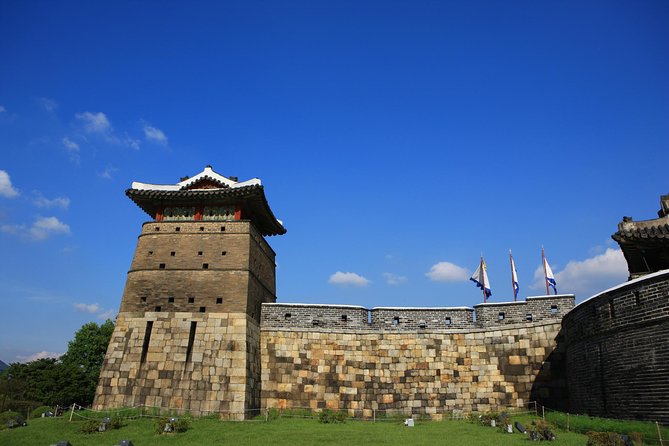
The morning centers on Hwaseong Fortress, a UNESCO World Heritage site designated in 1997. The fortress was constructed from 1794 to 1796, during the late Joseon Dynasty period, and the guide is there to connect the architecture to its purpose. You are not just looking at stonework, you are learning why it was built and what it was meant to protect.
Suwon played a major role as one of four main regional government centers in the Joseon era. Hwaseong Fortress was designed to protect the city, and the story includes King Jeongjo’s filial piety as a motivation, along with the plan for a new pioneer city with its own economic power. Hearing that background makes the fortress feel less like a monument and more like a big, organized project.
Expect to walk through the fortress area with stops at gates and artillery towers. The tour materials describe the wall length as 5,700 kilometers, with Paldalsan Mountain in the center. Even if the number sounds wild at first, the core point is simple: you will see a lot of defensive design, not just one viewpoint.
A practical note: this is listed as requiring a moderate physical fitness level. Fortress walking means uneven surfaces and steady standing, especially if you keep stopping for photos. Wear comfortable shoes. If you are carrying a bag, keep it light, because your time is split between multiple outdoor areas.
Where the guide really makes the difference
This is the kind of site where the guide’s depth shows. In one group led by Richard, the explanation was described as clear, attentive, and firmly grounded in the fortress itself. That sort of guidance helps you understand the logic of gates, walls, and towers without getting lost in details.
In other cases, the fortress portion has felt less supported when the guide lacked specific fortress knowledge. So my advice is straightforward: if you’re booking because you want to understand the architecture, bring curiosity, and don’t be shy asking a question early. Even a quick follow-up like what you should focus on at the next gate can help.
The afternoon pivot: Korean Folk Village and Joseon daily life
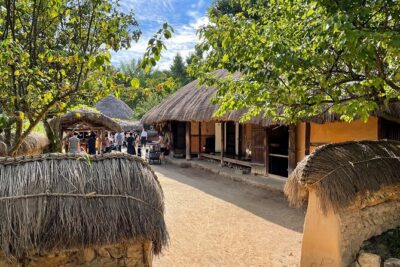
After the fortress, you head to the Korean Folk Village, with the day turning from defensive architecture to everyday culture. The village opened in 1974 after more than 260 traditional houses were carefully renovated, and it showcases late Joseon-era elements. You can expect over 200 restored traditional homes, plus household goods and artifacts from different regions.
The setup is designed for learning through place. You walk through the village and observe how people lived: interiors, tools, and the rhythms of daily life. There are also cultural classes and seasonal customs woven into the visit, which is one reason this stop can feel more alive than a static museum.
I like that the folk village also connects culture to performance. You may see things such as nongak farmer’s music, jultagi tightrope acrobatics, martial arts on horseback, and traditional wedding ceremony style events. The schedule is seasonal, though, and not every performance is guaranteed on the day you go.
More slow-craft afternoons in Seoul
- Small Group Seoul Highlight Tour opt. Hanbok & Tea Ceremony
★ 5.0 · 318 reviews - Seoul: Suwon Hwaseong Fortress & Korean Folk Village Tour
★ 4.7 · 214 reviews - Korean Folk Village and Suwon Hwaseong Fortress Day Tour(EG Tour)
★ 4.5 · 80 reviews - Seoul: Suwon Hwaseong, Folk Village, & Starfield Library
★ 4.8 · 55 reviews - Traditional Korean folk village Afternoon tour
★ 5.0 · 52 reviews
Hands-on crafts you can actually picture at home
One of the strongest parts here is the craft focus. Inside workshops, artisans make traditional handicrafts such as pottery, baskets, bamboo wares, paper, brass wares, fans, musical instruments, embroidery, and more. Seeing these made in front of you changes how you interpret the village homes, because you start thinking about who used these objects and why.
The folk village market street is another key piece of the experience. It gives you a more grounded, everyday vibe, and it ties into the food portion of the day. You can also try Korean rice cakes and traditional liquor if you want, but those are additional expenses.
The “museum part” has gotten praise in particular, which makes sense. If your interest is in how things were made and used, museums often organize the details that are scattered across rooms and workshops. Even if you are more of a walker than a reader, a museum stop helps you leave with a clearer mental map.
Lunch at the marketplace, and the one detail worth double-checking
The tour description points you toward a typical Korean lunch of bibimbap at the village market. Bibimbap is a rice dish with meat and vegetables, and it’s a comfortable choice if you’re trying to taste local food without ordering a long menu.
Here’s the only snag: the provided details list lunch as not included, even though the description mentions a lunch stop. So I’d treat lunch as something you may need to pay for unless your booking confirmation says otherwise. Bring a bit of spending money, just in case.
If you’re sensitive to dietary needs, this is also the time to plan. Bibimbap can be customized, but menus vary by vendor. Having a quick plan for what you can eat will keep you from getting stuck in decision mode while the group is moving.
What a coach tour does well, and what it can limit
This is a full-day format, about 8 hours. The upside is you get structure, and you don’t need to figure out timing between Suwon and the village on your own. The coach ride is comfortable, which helps you arrive ready to look closely instead of arriving tired.
The downside is freedom. One way this shows up is shopping and wandering time. If you want to browse at your own speed, you may feel the group pace is guiding where you go next. That is not a bad thing if you like guided flow, but it matters if you’re the type who wants long pauses.
Also, the tour can become more weather-dependent than you might expect. In at least one situation, sudden rain cut the day short. In another, performances at the folk village were cancelled and the guide stayed in a hurry mode. That doesn’t mean the trip is a waste, but it does mean you should keep expectations flexible about scheduled shows.
Who this tour is for, and who should choose a different plan
I think this tour is best for three types of travelers.
First, it’s great if you want Joseon-era culture without doing the research grind. Two guided stops help you learn fast, fortress in the morning and folk life in the afternoon.
Second, it works well if you like a “see it, then understand it” rhythm. Hwaseong Fortress gives you big structures and a historical reason for them. The folk village then turns those ideas into daily-life context, with workshops and restored homes.
Third, it suits people who would rather be in a small group than managing transit. With a maximum of 9 travelers, the experience can feel more personal than big-bus tourism, as long as the guide keeps the pace sensible.
You might skip it if you want lots of unscripted time. If your perfect day includes long browsing stops or you want to linger in one hall for an extra hour, this format may feel rushed. It’s also worth choosing carefully if you only care about one site, because the day is clearly balanced between fortress and folk village.
Value check: Is $91 a smart way to do Suwon and the Folk Village?
At $91 per person, this isn’t a bargain tour, but it also isn’t priced like a luxury private driver. You are paying for coordinated round-trip coach transport from Seoul, a professional English-speaking guide, and included admission tickets for both Hwaseong Fortress and the Korean Folk Village.
That combo is the value story. If you tried to do this independently, you’d spend time working out train or bus transfers, then buying tickets, then deciding how to structure your day. The tour compresses that effort into one plan with a guide actively interpreting the sites.
The only “value wobble” is lunch uncertainty. If lunch is not included for your specific booking, you’ll need to budget for food at the marketplace. Even so, bibimbap is not usually an expensive meal, and this is still a simple way to handle sustenance during a long day.
Weather, timing, and how to make the day smoother
Because this is outdoors-heavy, rain or low visibility can affect how much you see at the fortress and whether performances run at the folk village. I recommend planning for a day that may shift. If shows happen, you’ll feel grateful. If they don’t, you still get the core sites, homes, and workshops.
Timing matters too. The fortress part sets the tone, and it’s easy to feel rushed if you sprint for photos. Instead, pace yourself: pick one or two sections of walls to really look at, then move on. At the folk village, prioritize whichever workshop style is most interesting to you, since there are many craft possibilities.
Finally, bring the right mental gear. This trip is not just about seeing famous places. It’s about connecting Joseon architecture and everyday culture into one coherent picture.
Should you book this Hwaseong Fortress and Korean Folk Village tour?
Book it if you want a guided, efficient day trip that ties together UNESCO architecture and Joseon-era daily life. The combination of fortress design plus village workshops is a strong pairing, and the guided explanations are a major part of why this works.
Think twice if your priority is free time. Also consider skipping or planning differently if you only care about the fortress and you get a guide who focuses less on it. If you do book, come prepared to ask questions and move at the group pace, and you’ll get a lot out of the day.
FAQ
How long is the tour?
The tour runs for about 8 hours.
What time does the tour start?
The start time is 8:30 am.
Where is the pickup from?
Hotel pick up service is included.
Is admission included for Hwaseong Fortress and the Folk Village?
Yes. Admission tickets are included for both stops.
Is lunch included?
The tour description mentions a Korean lunch at the marketplace, but the provided details list lunch as not included. Check your booking confirmation to be sure, and plan to pay for lunch if needed.
Where do they drop you off on the way back?
The included details list drop off at Myeongdong station. Confirm your exact return drop-off point when booking.
Does the tour require any walking?
Yes. It requires moderate physical fitness, since you will spend time walking around the sites.
How many people are in a group?
The maximum group size is 9 travelers, and a minimum of 2 people is required per booking.
Can I cancel for a full refund?
Yes. You can cancel up to 24 hours in advance for a full refund.
More Seoul Write-Ups

Tea, Craft and Slower Hours


Hwaseong and Other Fortress Walks


Fresh on the Seoul pile
- Unique Native Experience : Han River Picnic, Board game, BBQ★ 5.0 · 3 reviews
- 2-Hour Private Kayaking and Paddleboarding Experience in Hanriver★ 5.0 · 3 reviews
- Korean Folk Village & Suwon Hwaseong Fortress Private Tour★ 5.0 · 3 reviews
- Seoul Korean BBQ Dinner Experience with Secret Food Tours★ 5.0 · 3 reviews
- Seoul Highlights & Hidden Gems – Private Tour with Photo Service★ 5.0 · 3 reviews
- Night Food Tour in Seoul with Traditional and Modern Cuisine★ 5.0 · 3 reviews
Suwon & Hwaseong Fortress you might have missed.
 ★ 4.7Seoul: Suwon Hwaseong Fortress & Korean Folk Village TourFrom $74214 reviews
 ★ 5.0Beyond Seoul: Starfield Library, Hwaseong Fortress & Cave QuestFrom $69177 reviews
 ★ 5.0From Seoul: Suwon Hwaseong Fortress TourFrom $52108 reviews
 ★ 5.0Suwon Hwaseong+Gwangmyeong Cave+Starfield Library from SeoulFrom $54104 reviews
 ★ 4.4Suwon Hwaseong, Gwangmyeong Cave, & Starfield Library TripFrom $5887 reviews
 ★ 4.5Korean Folk Village and Suwon Hwaseong Fortress Day Tour(EG Tour)From $6980 reviews
 ★ 5.0From Seoul: Suwon Hwaseong Fortress Night TourFrom $6978 reviews
 ★ 5.0Hwaseong Fortress/Folk Village/Starfield Library SuwonFrom $5867 reviews
Where this tour also appears