
REVIEW · SEOUL ROYAL PALACES
Gyeongbok Palace and Korean Folk Village Tour
Palaces, temples, and living history all day. This tour strings together some of the best-known cultural stops in Seoul plus an afternoon outside the city at Korean Folk Village. You get Gyeongbokgung Palace and the National Folk Museum as the centerpiece, then add a temple pause in the middle of urban life.
I like how smoothly the day is planned for you, with hotel pickup and drop-off plus a professional guide handling the timing. I also appreciate that lunch includes vegan and plant-based Korean dishes, so you are not forced into a bland fallback option.
The one thing to consider is that this is a highlights-style schedule, so you will only spend limited time at each major site, then move on. If you want long, slow study time, you may feel a bit rushed.
In This Review
- Key things worth knowing before you go
- Why $79 feels like good value for a full day
- The morning loop: pickup, Blue House, and getting oriented fast
- Gyeongbokgung Palace and the National Folk Museum: the core of the day
- Jogyesa Temple: your calm reset in the middle of the city
- Ginseng center and lunch: useful stops, with an asterisk
- Korean Folk Village in Yongin: turning history into everyday life
- How the pacing and walking level affect your comfort
- Who should book this tour, and who might skip it
- Should you book? My clear take
- FAQ
- What time does the tour start?
- How long is the tour?
- Is hotel pickup and drop-off included?
- What major sites are included?
- Are entrance fees included?
- Is lunch included, and are there vegan options?
- Is a mobile ticket used?
- Is walking involved?
- What happens on Tuesdays if Gyeongbokgung Palace or the National Folk Museum is closed?
- What is the maximum group size?
- Can I cancel for a full refund?
Key things worth knowing before you go
- Blue House pass-by gives context for modern Korea, even without going inside
- Gyeongbokgung Palace plus National Folk Museum is the strongest history block of the day
- Jogyesa Temple inside the city offers a real calm break
- Ginseng center stop includes shopping time, and it can feel sales-oriented
- Korean Folk Village in Yongin turns the afternoon into hands-on culture time
- Tube-and-ticket convenience with mobile ticketing and guided entry
More palace mornings in Seoul, compared
Why $79 feels like good value for a full day
For $79, the headline value is that you are not just paying for sightseeing. You are paying for the big practical stuff bundled together: round-trip travel from your Seoul hotel, a professional guide, lunch, and the main entrance fees that matter most during the day.
If you tried to piece this together on your own, the cost would start adding up fast. You would need separate transport between Seoul and Yongin, deal with individual tickets, and lose the time a guide saves by moving you through the best order. Here, you get an air-conditioned vehicle and a route that keeps your day efficient.
The other smart value piece is pacing. You spend about an hour at Gyeongbokgung Palace and its National Folk Museum, then you get a breather at Jogyesa Temple. After that, you still have time for lunch and a longer afternoon at Korean Folk Village. That mix works well if you want culture without turning the day into a marathon.
Group size is capped at up to 99 people. That is not tiny, but it is large enough to be organized without feeling like you are in a private car with one guide. Expect a typical tour-group feel, and plan to listen for what the guide highlights as you move from stop to stop.
The morning loop: pickup, Blue House, and getting oriented fast
The day starts with a hotel pickup, with the first momentum built in for you. Meeting at 9:00 am helps, because you are already heading out while the city is still waking up. If you hate losing time figuring out trains, this style of logistics is a win.
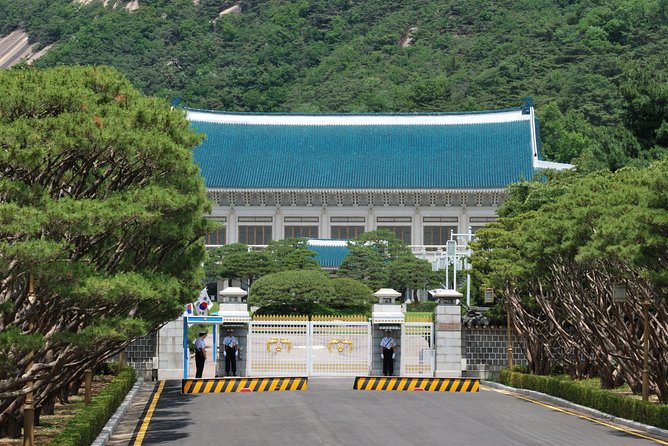
Soon after pickup, you pass the Blue House area. Even though you are not going inside, this stop matters because it frames the connection between South Korea’s modern governance and the country’s long cultural memory. Seeing a major landmark like the executive office and official residence of the head of state gives you context you would not get from palace-only sightseeing.
This is also where your guide’s role becomes most obvious. On a day like this, the guide is not just pointing directions. They help you understand why each place matters, and they cue you on what to look for when you arrive. From the tone of company messaging in one response, the team even tries to improve the way certain stops are handled, which suggests they think about your experience beyond just driving you around.
One practical tip: wear comfortable clothes for the early part of the day. You will move between vehicles and walking areas, and you want your shoes to be ready.
Gyeongbokgung Palace and the National Folk Museum: the core of the day
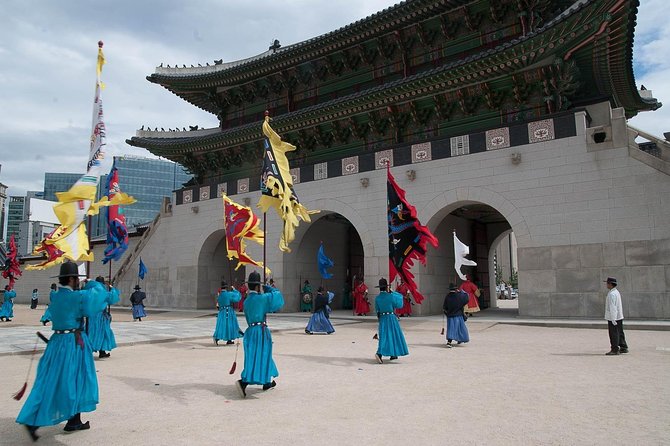
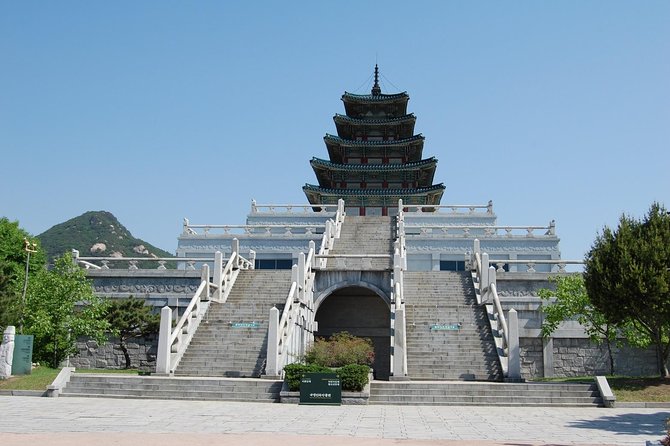
Gyeongbokgung Palace is the big anchor of the tour. It is the main and largest palace tied to the Joseon Dynasty, with a history dating back to the 14th century. Even in a limited time window, this is one of those places where you instantly feel the scale and importance of royal Korea.
You also have the National Folk Museum on-site. That pairing is smart, because it turns palace time into more than just architecture. Instead of only looking at royal spaces, you get a chance to connect the official world with everyday life and traditions. The guide helps translate what you are seeing, which is what makes a one-hour palace visit work for people who do not want to spend a whole day digging into background on their own.
About timing, you should know the day is efficient. You spend roughly an hour here. That is enough to get the big impressions and learn the story thread your guide provides, but it is not enough to become an expert or see everything in extreme detail. If you truly want slow wandering, plan to return later on your own when you can take your time.
What to do during that hour: focus on what looks significant in the moment, then let the guide’s explanation tell you where to pay attention next. If you try to read everything yourself, you will run out of time. Instead, use the guide as your shortcut to meaning.
Jogyesa Temple: your calm reset in the middle of the city
After the palace, you move to Jogyesa Temple, the largest temple in South Korea. The best part of this stop is the contrast. You go from royal grounds and museum exhibits to a temple environment, right inside the flow of a modern metropolis.
You are there for about 30 minutes, and it is a good length for what the stop is meant to do. You are not being asked to sit and study for hours. You get a brief taste of temple atmosphere, and you also get a breather from constant reading and looking.
Because admission is free for this stop, you do not feel like you are squeezing extra value out of your ticket. It is simply a moment built into the day, and it helps your overall experience feel more balanced. If you are the type who gets tired of “only museums,” this temple stop is a real relief.
Practical note: even though the time is short, you are still doing a moderate amount of walking across the day. Bring shoes that can handle uneven ground and standing breaks.
More slow-craft afternoons in Seoul
- Small Group Seoul Highlight Tour opt. Hanbok & Tea Ceremony
★ 5.0 · 318 reviews - Seoul: Suwon Hwaseong Fortress & Korean Folk Village Tour
★ 4.7 · 214 reviews - Korean Folk Village and Suwon Hwaseong Fortress Day Tour(EG Tour)
★ 4.5 · 80 reviews - Seoul: Suwon Hwaseong, Folk Village, & Starfield Library
★ 4.8 · 55 reviews - Traditional Korean folk village Afternoon tour
★ 5.0 · 52 reviews
Ginseng center and lunch: useful stops, with an asterisk
Between Jogyesa and lunch, the tour includes a ginseng center stop. This is positioned as an educational moment about Korea’s ginseng industry and the health benefits of ginseng, with time to browse and purchase if you want.
Here is the consideration: a ginseng center often functions as a retail stop, even when it is framed as educational. One company representative, Peter from Seoul City Tour, apologized in a response for a ginseng center issue and mentioned they would try to make it with no pressure next time. That tells you the team is aware the shopping element can be uncomfortable for some people.
So how do you handle it? Treat it like a cultural quick break. Ask any questions you want, then keep your decision simple. If you are not interested in buying, you can still learn the basics and move on. If you do buy, consider setting a price ceiling in your head before you walk in.
Lunch is about an hour at a traditional Korean restaurant, and that is a major comfort perk. The best part for many people is that vegan and plant-based Korean dishes are available. That means you do not have to hope the restaurant can accommodate your preferences at the last minute.
Also remember: the tour includes lunch, but food and drinks beyond that are not necessarily included. Plan to cover your own water or snacks during travel gaps, especially if you get thirsty easily.
Korean Folk Village in Yongin: turning history into everyday life
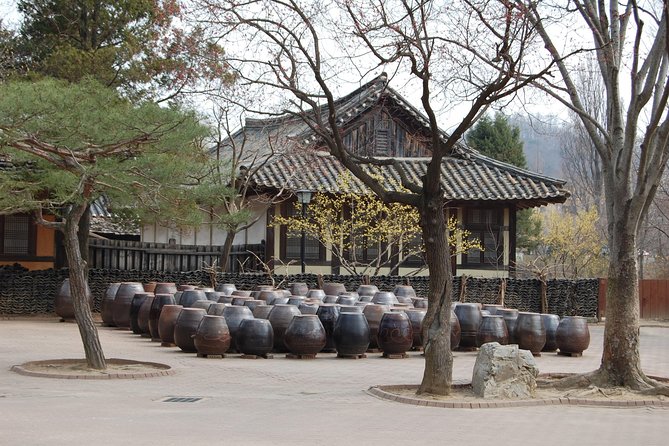
The afternoon shifts outside Seoul to Yongin, where you visit Korean Folk Village. This is where the day stops feeling like pure sightseeing and starts feeling like an experience.
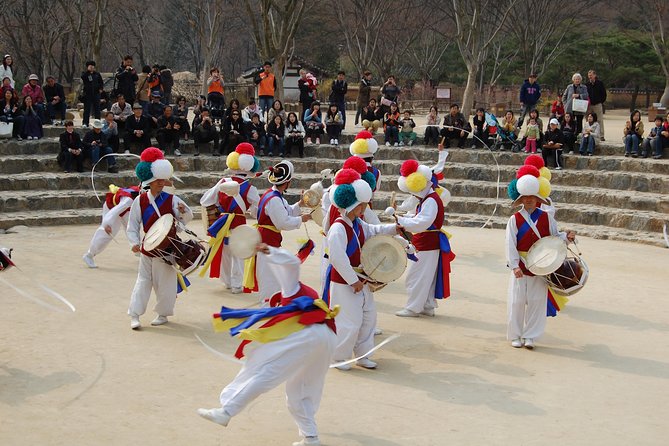
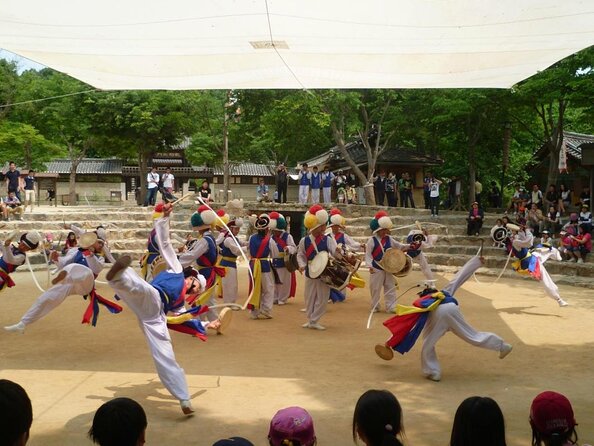
You spend about two hours here, which is a meaningful block. The point is to experience Korean ancestral life and culture through the various activities available on-site. Even if you do not know much Korean history beforehand, this type of venue helps you connect the dots through scenes, demonstrations, and interactive-style options rather than only facts on a page.
This is also one of the tour’s best value stretches, because it breaks up the city theme. You get fresh-air contrast, a slower rhythm than palace crowds, and a chance to see how ordinary life traditions shaped culture.
What to expect with your guide during this segment: they help you focus on what matters most inside the village, so you are not wandering aimlessly. Since this is a structured tour day, you are most successful when you go in ready to participate at least a little, even if you keep it casual.
How the pacing and walking level affect your comfort
This is a full day, around 8 hours. The schedule is built with short, purposeful blocks: Gyeongbokgung and National Folk Museum for about an hour, Jogyesa for about 30 minutes, ginseng center for about 30 minutes, lunch for about an hour, and Korean Folk Village for about two hours. Then you return to Seoul for drop-off.
That pacing has a benefit: you cover several major cultural themes without blowing your whole day. You see a royal context, a living religious space, and a countryside-style tradition experience.
The drawback is that time is fixed. You cannot linger indefinitely at Gyeongbokgung, and you cannot fully “do it all” at Korean Folk Village during a two-hour window. If you want deep photo time or extra stops, you might need a separate day.
For comfort, the tour recommends good walking shoes because there is a moderate amount of walking involved. I agree with that. Even short segments add up across a day that includes palace grounds and a village environment.
Who should book this tour, and who might skip it
I think this is a strong choice if you are:
- On a first trip to Seoul and want an efficient cultural checklist
- Short on time and tired of building routes and ticket plans
- Looking for a guided day where the order makes sense
- Traveling with dietary needs, since lunch includes vegan and plant-based options
- Interested in both royal Korea and everyday tradition, not just one side
You might consider skipping this specific tour if:
- You want long, slow time at one site, especially Gyeongbokgung
- You dislike any shopping stops, even framed as educational (the ginseng center is the only one like this on the day)
- You prefer independent pacing and do not like a fixed schedule
If you are on the fence, here is a simple rule: if you want structure and translation, this works. If you want total freedom and maximum time at fewer places, you will probably prefer splitting it into separate visits.
Should you book? My clear take
Book it if you want a well-organized day that connects multiple layers of Korean culture: royal history at Gyeongbokgung, a city temple reset at Jogyesa, and tradition-focused afternoon life at Korean Folk Village. The hotel pickup, lunch, and included admissions do most of the heavy lifting for you, and the vegan-friendly lunch is a standout practical detail.
Skip or adjust plans if you know you get impatient with packed schedules, or if the idea of a ginseng shopping moment would sour your day. You can still learn there without buying, but it is not a purely observational stop.
Given the $79 price point and the amount bundled in, I would call this a good value choice for many visitors who want an authentic taste of Korea without wrestling with logistics all day.
FAQ
What time does the tour start?
The tour starts at 9:00 am.
How long is the tour?
It runs for about 8 hours.
Is hotel pickup and drop-off included?
Yes. You get round-trip pickup and drop-off from your Seoul hotel.
What major sites are included?
You will visit Gyeongbokgung Palace and the National Folk Museum, Jogyesa Temple, and Korean Folk Village in Yongin. You also pass by the Blue House.
Are entrance fees included?
Yes. Entrance fees are included where applicable on the tour, including Gyeongbokgung Palace and Korean Folk Village.
Is lunch included, and are there vegan options?
Yes. Lunch is included at a traditional Korean restaurant, and vegan and plant-based Korean dishes are available.
Is a mobile ticket used?
Yes. The tour uses a mobile ticket.
Is walking involved?
Yes. There is a moderate amount of walking, so good walking shoes are recommended.
What happens on Tuesdays if Gyeongbokgung Palace or the National Folk Museum is closed?
On Tuesdays, Gyeongbokgung Palace and the National Folk Museum may be closed. If that happens, you will visit Deoksu Palace and the History Museum instead.
What is the maximum group size?
The tour has a maximum of 99 travelers.
Can I cancel for a full refund?
You can cancel for a full refund up to 24 hours in advance of the experience start time. If you cancel within 24 hours, the amount paid is not refunded.
More Seoul Write-Ups
Tea, Craft and Slower Hours

Palaces, Three More Ways
Fresh on the Seoul pile
- Unique Native Experience : Han River Picnic, Board game, BBQ★ 5.0 · 3 reviews
- 2-Hour Private Kayaking and Paddleboarding Experience in Hanriver★ 5.0 · 3 reviews
- Korean Folk Village & Suwon Hwaseong Fortress Private Tour★ 5.0 · 3 reviews
- Seoul Korean BBQ Dinner Experience with Secret Food Tours★ 5.0 · 3 reviews
- Seoul Highlights & Hidden Gems – Private Tour with Photo Service★ 5.0 · 3 reviews
- Night Food Tour in Seoul with Traditional and Modern Cuisine★ 5.0 · 3 reviews
Seoul Royal Palaces you might have missed.
 ★ 4.9Seoul: Gyeongbok Palace, Bukchon Village, and Gwangjang TourFrom $322,321 reviews
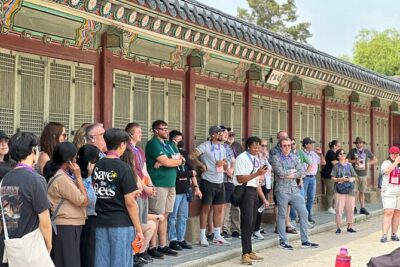 ★ 5.0Best Seoul City Tour (Gyeongbokgung Palace,Insadong,Namsan Tower)From $581,647 reviews
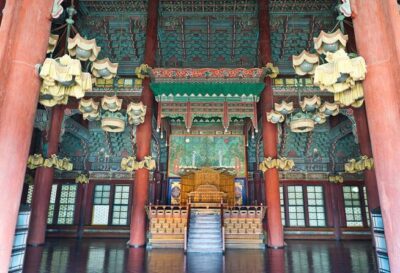 ★ 5.0Small-Group Royal Palace and Seoul City Tour (hotel pick-up)From $561,474 reviews
★ 5.0Seoul: Gyeongbok Palace, Bukchon Village, and Gwangjang TourFrom $321,044 reviews
★ 5.0Small-Group Royal Palace and Seoul City Tour (hotel pick-up)From $561,474 reviews
★ 5.0Seoul: Gyeongbok Palace, Bukchon Village, and Gwangjang TourFrom $321,044 reviews
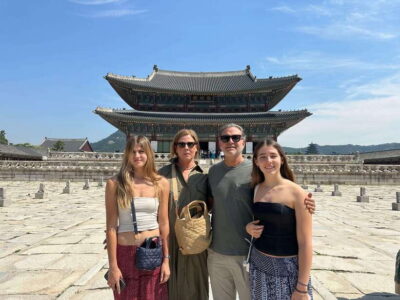 ★ 4.7Seoul Highlights: Gyeongbok Palace, Insadong & N Seoul TowerFrom $26726 reviews
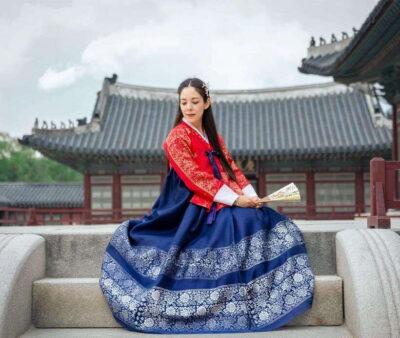 ★ 4.6Seoul: Hanbok Rental with Gyeongbokgung Palace EntryFrom $6611 reviews
 ★ 4.5Seoul City Half Day Tour-Gyeongbok Palace Guard Changing CeremonyFrom $38357 reviews
 ★ 4.5Seoul: Gyeongbok Palace with Gigibebe Hanbok RentalFrom $9289 reviews
Where this tour also appears