
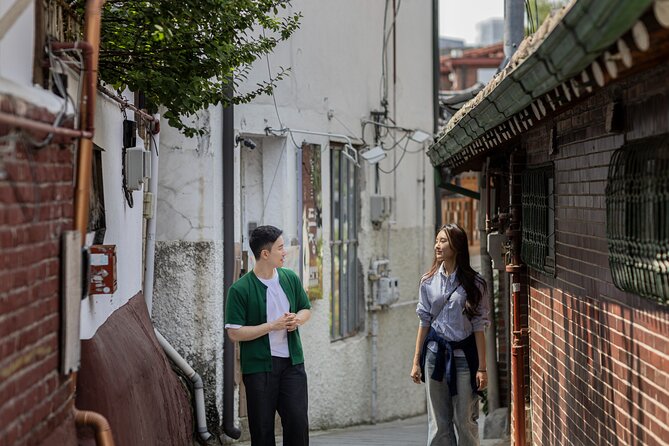
REVIEW · SEOUL ROYAL PALACES
Gwanghwamun Tour l 120 minutes to Understand Local Korean Society
History meets real Seoul in two hours. This Gwanghwamun tour, led by June, uses a 120-minute walk to connect big ideas like Confucian values and modern politics to everyday Korean life, from Gwanghwamun Square down to the Blue House area.
I love how the pacing stays focused, with a clear stop-by-stop flow. I also like the way June explains the dots between past and now, including topics like Korean age hierarchy, the coffee culture mindset, and even why spa culture matters.
One thing to consider: it is an easy walk overall, but there are some uphill stretches, so comfy shoes help.
In This Review
- Key things that make this tour click
- A fast 2-hour primer on Korean society, not just sightseeing
- Entering Gwanghwamun Square, where Joseon-era Seoul still echoes
- The U.S. Embassy and Consulate stop, learning how influence gets interpreted
- Samcheongdong-gil Road, where modern work culture meets older street character
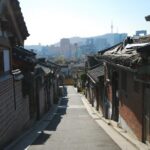
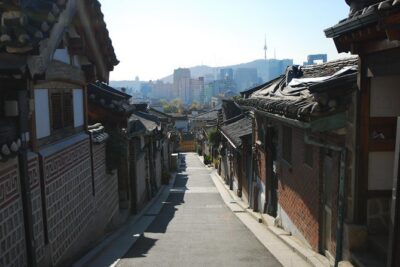
- Bukchon Hanok Village, the tension between preservation and development
- University of North Korean Studies, facing the North Korea topic with context
- Why finishing near the Blue House adds meaning
- What you pay, why it feels fair, and how the group size helps
- Walking logistics: what to expect on the ground
- How the June-led format improves your learning
- Who this tour suits best
- Practical tips before you go
- Should you book this 120-minute Gwanghwamun tour?
- FAQ
- How long is the Gwanghwamun Tour?
- How much does the tour cost?
- Where does the tour start?
- Where does the tour end?
- What time does the tour start?
- Is the ticket mobile?
- Are there admission fees at the stops?
- Is the walk difficult?
- What if the weather is bad?
- What is the cancellation policy?
Key things that make this tour click
- Up to 20 people, so you actually get time for questions instead of just watching
- June’s style is clear and structured, sometimes funny, and always tied to real places
- History plus present-day behavior, like how values still show up in daily life
- You cover both South Korea and the North Korea angle, with a stop at the University of North Korean Studies
- Great value for a short time, especially if you want context fast before you roam on your own
More palace mornings in Seoul, compared
A fast 2-hour primer on Korean society, not just sightseeing
Seoul can feel like nonstop motion. This tour is built for the part you usually skip: the why behind what you see. You start at the Gwanghwamun area, the city center tied to Joseon-era power for centuries, then you move through streets and neighborhoods that show how Korea developed, modernized, and argued with itself about change.
What I like most is that the tour does not treat politics like a separate topic. June connects big themes to ordinary life, including how Koreans think about hierarchy, how culture shows up in food and coffee habits, and how spa culture fits into social rhythm. In two hours, you get a framework. After that, your self-guided wandering makes more sense.
And yes, it is still a walk, with real stops you can point to on a map. You finish near the Blue House area, which means your last moments land right where many people link modern Korea to national identity.
Entering Gwanghwamun Square, where Joseon-era Seoul still echoes
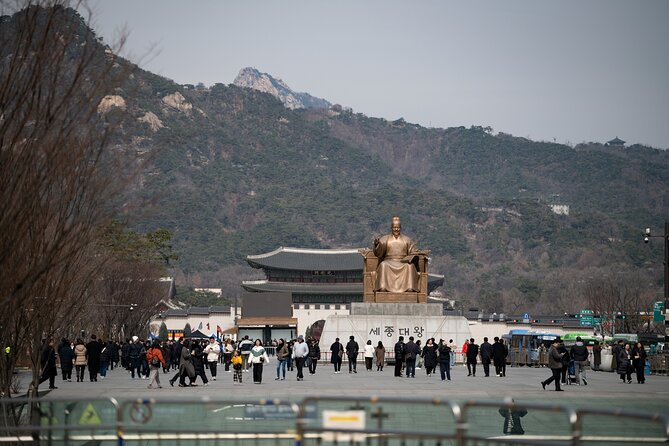
Gwanghwamun Square is the kind of place that helps you orient instantly. June frames it as the city center over roughly 600 years, not just a convenient landmark for photos. Instead of listing dates, the tour focuses on what power looked like in the Joseon kingdom and why that mindset can feel familiar in present-day social structure.
This stop works because it sets the tone. Seoul’s modern skyline can distract you. Starting here makes it easier to understand why certain symbols, street patterns, and public spaces carry meaning that locals still recognize.
Time on the ground is short here, about 15 minutes, so you will not feel stuck. But if you are the type who likes to stare and read everything slowly, you may want to come back later on your own.
The U.S. Embassy and Consulate stop, learning how influence gets interpreted
Next, you look at the U.S. Embassy and Consulate in the Republic of Korea area. This is not a lecture about America as a brand. The tour uses this location to discuss how U.S. influence has shaped Korea from establishment to today, and how Koreans may think about that relationship.
This matters because it connects geopolitics to real attitudes. If you have been in Korea only for K-pop, coffee shops, or shopping, you will miss the invisible layer: how people interpret alliances, history, and national direction.
You spend about 15 minutes at this stop. That is a good length for a topic this heavy. It is enough to understand the theme, but not so long that you feel worn out or stuck in a debate you did not ask for.
Samcheongdong-gil Road, where modern work culture meets older street character
Then you shift gears to Samcheongdong-gil Road, a retro-style street with shops and restaurants. This is a lighter moment, but it is not filler. June uses the street feel to talk about modern development, and the side effects that come with it.
For me, the value here is understanding how neighborhoods evolve. Korean working culture can feel intense, fast, and organized, and the tour connects that energy to what people built and normalized over time. Samcheongdong-gil gives you a human-scale view, where you can notice how commercial streets shape daily routines.
This stop is also around 15 minutes, which keeps the whole tour from turning into a long list of points. You get just enough time to soak in the vibe and learn what to look for while you keep walking.
If you are shopping-focused, this is not the place where you will lose an hour browsing. It is more about context than consumption.
- Best DMZ Tour Korea from Seoul (Red Suspension Bridge Optional)
★ 5.0 · 41,422 reviews - DMZ Tour: 3rd Tunnel, Option(Suspension Bridge, Boat) from Seoul
★ 5.0 · 21,373 reviews - DMZ tour south Korea from Seoul (NK experience hall, defector)
★ 5.0 · 20,599 reviews - Seoul: DMZ Tour with Optional Suspension Bridge
★ 4.8 · 5,277 reviews - Signature DMZ Tour: Exclusive Defector Talk & Suspension Bridge
★ 5.0 · 4,459 reviews
Bukchon Hanok Village, the tension between preservation and development
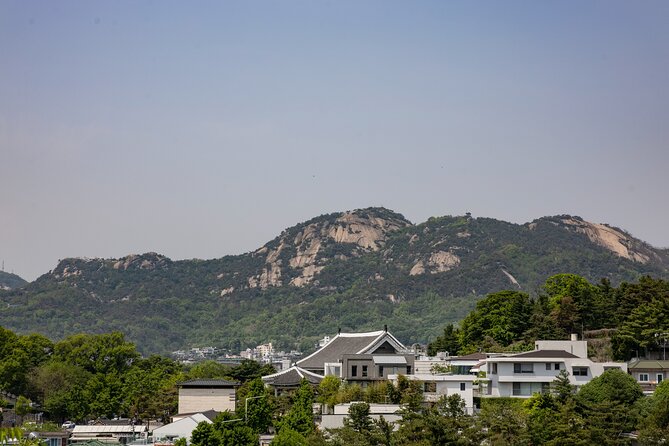
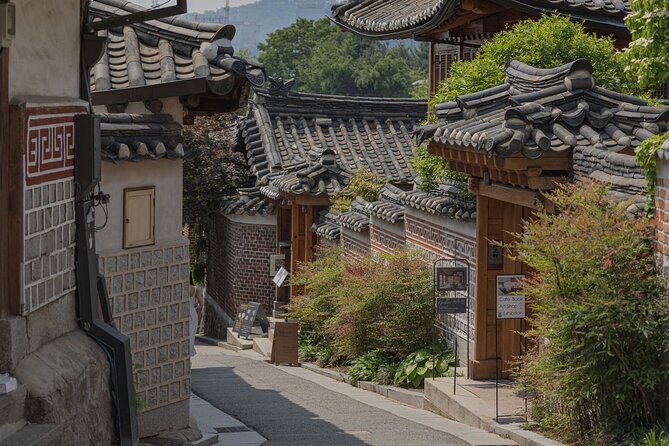
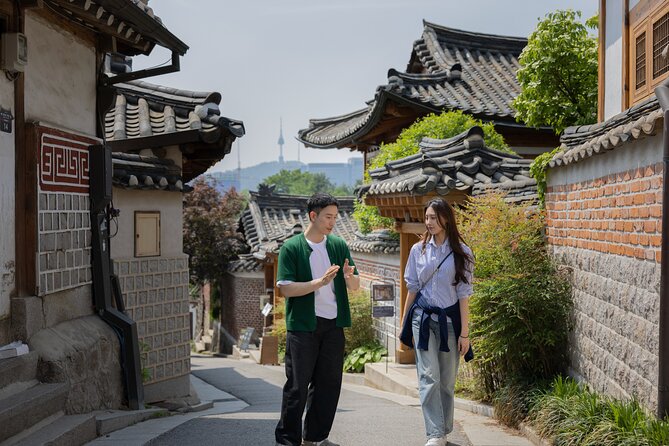
Bukchon Hanok Village is a classic name, but the tour uses it differently. Instead of treating the hanok houses like a museum backdrop, June explains the tensions between development and preservation. You listen to how the area represents history, while also living with the pressures of modern Seoul around it.
This is one of the stops that can change how you look at Korea. Many visitors see restored old houses and think, great, the past is preserved. But the preservation question is more complicated: who benefits, what gets maintained, and what changes when a place becomes a destination.
You spend about 25 minutes here, which is a solid chunk of time for a walking tour. You get a chance to notice the textures and layout, and you get a better sense of why restoration is never purely neutral.
One practical note: depending on how the streets feel that day, you may deal with more uneven walking than at the big squares. Go slow on corners and watch your step.
University of North Korean Studies, facing the North Korea topic with context
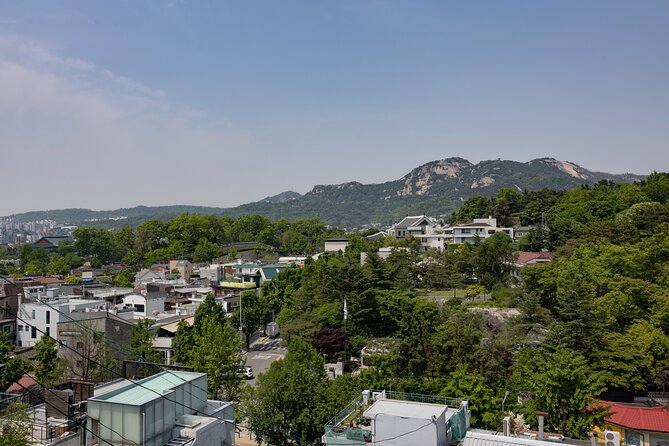
The most topic-heavy stop is the University of North Korean Studies, where the tour discusses the relationship against North Korea and how Koreans think about that divide. The tour frames it as a specialized institution for North Korea studies, and it uses the stop to address the questions that many visitors have trouble asking out loud.
June’s approach is to connect opinions about North Korea with the broader ways people evaluate the world, including what they think about Japan and America. The goal is not to score points. It is to help you understand what shapes Korean attitudes and decision-making.
This stop is about 20 minutes. That makes it manageable, but still meaningful. If you prefer politics kept to headlines, you might find it intense. If you are curious about how national identity is formed under pressure, this is a highlight.
Also, since this is one of the only stops in many Seoul itineraries that directly addresses the North Korea perspective, it gives you a contrast you cannot easily recreate on your own while still saving time.
Why finishing near the Blue House adds meaning
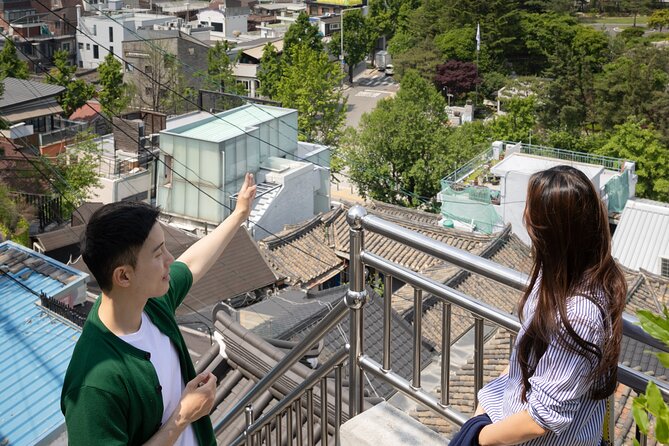
You end in front of the Blue House (Cheong Wa Dae) area. Even if you do not go inside, finishing here gives the whole route a payoff. It is a symbolic end point, and June’s framing helps you link earlier stops to modern society.
You are finishing where many people associate South Korea’s leadership and national direction. That makes the tour feel less like random walking and more like a coherent story.
Practical upside: you finish in a central, high-visibility area. From there, you can easily hop onto transit or choose the next neighborhood with more confidence.
What you pay, why it feels fair, and how the group size helps
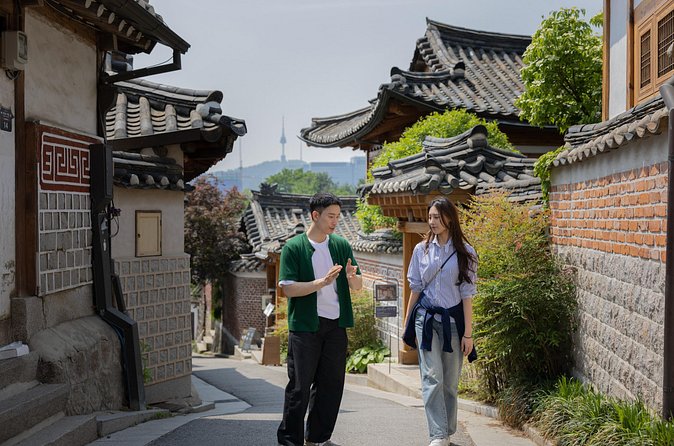
The price is $14.10 per person for about 2 hours, and that is a key part of the value equation. Most time-consuming Seoul experiences either cost more or eat up your day. This one is short enough to fit between bigger sights, yet structured enough to give you context fast.
The tour also has free entry at the stops listed, so you are not paying surprise admissions along the way. Add in the mobile ticket format, and it is fairly frictionless.
Group size is capped at 20. That matters more than it sounds. It keeps the walk moving, and it makes it easier to ask questions without feeling like you are competing for attention.
Timing note: this sort of tour tends to be booked about 18 days in advance on average. If you want a specific day, it is smart to reserve early instead of assuming you can grab the next slot.
Walking logistics: what to expect on the ground
The tour is described as an easy walk with some uphill sections on a few courses. That is normal for this part of Seoul, but it is worth planning for.
Bring comfortable walking shoes. If you have knee issues or you dislike inclines, plan for a slower pace and take breaks when needed. The overall route is built to be doable for most travelers, but “easy walk” does not mean “flat pavement the whole way.”
Also, it is near public transportation. That is useful because you can start without a long commute, and you can leave easily afterward if you need to change plans.
How the June-led format improves your learning
One of the most praised parts is the guide, June. The feedback highlights that his explanations are clear, structured, and sometimes funny. People also mention it can feel like a well-done lecture, but delivered in walking form.
That matters because Seoul is crowded with noise. A guide who organizes the story helps you remember what you heard. You are not just collecting photos. You are collecting connections.
June also welcomes questions. That is a big deal for topics like politics and national attitudes. When you can ask, you stop guessing. Instead of relying on rumors or guesswork, you can get the framing that matches what you are actually seeing around you.
Who this tour suits best
This is a strong fit if you:
- Want to understand Korean society beyond food and shopping
- Enjoy history, but prefer it tied to real-life behavior
- Like short tours that still feel structured
- Are curious about how Koreans think about major countries, including North Korea, Japan, and America
It is also a good option if you are traveling solo. A group walk can feel friendly without becoming a rigid class. And because it ends near a central landmark, you can keep your day flexible.
If you want a long, museum-style deep dive where you read every sign for hours, you may find this too short. But if your goal is context and orientation in two hours, it hits the target.
Practical tips before you go
You will learn more if you show up with a curious attitude. This is one of those walks where your brain stays engaged because the stops link to themes you will notice later.
Bring water. Even on an “easy” walk, two hours in Seoul’s weather can add up.
Wear shoes you trust on changing sidewalks and small slopes.
If politics feels personal or heavy for you, set that expectation ahead of time. The tour is designed to discuss perspectives in a grounded way, but the topic is inherently serious.
Should you book this 120-minute Gwanghwamun tour?
Yes, if you want a fast way to understand Korea’s mindset and how history still shapes daily life. The route makes sense geographically, and June’s structured explanations help you turn landmarks into real understanding. For $14.10, the balance of time, free stop entries, and focused themes is hard to beat.
I would skip it only if you have very limited mobility and cannot handle some uphill stretches, or if you strongly prefer sightseeing without politics and North Korea-related context. Otherwise, this is a smart “get your bearings fast” tour that pays off the moment you start exploring on your own.
FAQ
How long is the Gwanghwamun Tour?
The tour lasts about 2 hours.
How much does the tour cost?
It costs $14.10 per person.
Where does the tour start?
It starts at Gwanghwamun Square, 172 Sejong-daero, Jongno District, Seoul, South Korea.
Where does the tour end?
The tour ends in front of the Blue House (Cheong Wa Dae), 1 Cheongwadae-ro, Jongno District, Seoul, South Korea.
What time does the tour start?
The start time listed is 10:30 am.
Is the ticket mobile?
Yes, it includes a mobile ticket.
Are there admission fees at the stops?
The stops listed include admission ticket free.
Is the walk difficult?
It is described as an easy walk, but there are a few uphill sections on some courses.
What if the weather is bad?
This experience requires good weather. If it is canceled due to poor weather, you will be offered a different date or a full refund.
What is the cancellation policy?
You can cancel for a full refund up to 24 hours before the experience starts. If you cancel less than 24 hours before, you will not receive a refund.
Keep Browsing Seoul

More Seoul Write-Ups
Palaces, Three More Ways
Fresh on the Seoul pile
- Unique Native Experience : Han River Picnic, Board game, BBQ★ 5.0 · 3 reviews
- 2-Hour Private Kayaking and Paddleboarding Experience in Hanriver★ 5.0 · 3 reviews
- Korean Folk Village & Suwon Hwaseong Fortress Private Tour★ 5.0 · 3 reviews
- Seoul Korean BBQ Dinner Experience with Secret Food Tours★ 5.0 · 3 reviews
- Seoul Highlights & Hidden Gems – Private Tour with Photo Service★ 5.0 · 3 reviews
- Night Food Tour in Seoul with Traditional and Modern Cuisine★ 5.0 · 3 reviews
Seoul Royal Palaces you might have missed.
 ★ 4.9Seoul: Gyeongbok Palace, Bukchon Village, and Gwangjang TourFrom $322,321 reviews
 ★ 5.0Best Seoul City Tour (Gyeongbokgung Palace,Insadong,Namsan Tower)From $581,647 reviews
 ★ 5.0Small-Group Royal Palace and Seoul City Tour (hotel pick-up)From $561,474 reviews
★ 5.0Seoul: Gyeongbok Palace, Bukchon Village, and Gwangjang TourFrom $321,044 reviews
★ 5.0Small-Group Royal Palace and Seoul City Tour (hotel pick-up)From $561,474 reviews
★ 5.0Seoul: Gyeongbok Palace, Bukchon Village, and Gwangjang TourFrom $321,044 reviews
 ★ 4.7Seoul Highlights: Gyeongbok Palace, Insadong & N Seoul TowerFrom $26726 reviews
 ★ 4.6Seoul: Hanbok Rental with Gyeongbokgung Palace EntryFrom $6611 reviews
 ★ 4.5Seoul City Half Day Tour-Gyeongbok Palace Guard Changing CeremonyFrom $38357 reviews
 ★ 4.5Seoul: Gyeongbok Palace with Gigibebe Hanbok RentalFrom $9289 reviews
Where this tour also appears