
REVIEW · SEOUL ROYAL PALACES
Deoksugung & Jeongdong-gil: A Walk in Korea’s Rich Heritage
Seoul reads like a history book on your feet. This 3-hour walk stitches together Joseon-era palaces, an imperial-era hall, and a modern city centerpiece, all along Deoksugung and Jeongdong-gil. You get an English guide, a mobile ticket, and free admission at each stop.
I especially like how the route makes late 19th to early 20th century Korean history feel practical, not academic. Another big win is the guide, Sam, who brings it to life in a fun, clear way, so you leave with a strong sense of where you are in Seoul.
One thing to consider: this tour needs good weather and it is a walking day, so comfortable shoes matter, and there is no lunch included.
In This Review
- Key highlights of the Deoksugung & Jeongdong-gil walk
- Why this Seoul palace-and-street route feels worth $48
- Price and value: what you’re really paying for
- Start at Deoksugung Palace (Gyeongun-gung): the Joseon anchor
- Next to Gyeonghuigung Palace (Gyeonghui-gung): a second perspective
- Appenzeller Noble Memorial Museum: learning through a Western-era school story
- Jeongdong Theater: a coffee and restroom pause with cultural context
- Jungmyeongjeon Hall: imperial library, Emperor Gojong, and a major turning point
- Gwanghwamun Square to Cheonggyecheon: modern Seoul as your finishing line
- What the 3-hour structure does well (and what to watch for)
- Who should book this walk?
- Should you book Deoksugung & Jeongdong-gil?
- FAQ
- How long is the Deoksugung & Jeongdong-gil walk?
- How much does the tour cost?
- Is the guide available in English?
- Do I need to buy admission tickets for the stops?
- Where do I meet the guide?
- What time does the tour start?
- Where does the tour end?
- How big is the group?
- Is there a break for coffee or a restroom?
- What if the weather is bad or I need to cancel?
Key highlights of the Deoksugung & Jeongdong-gil walk
- An easy 3-hour pace from Deoksugung Palace to Cheonggyecheon, with frequent short stops
- English guidance with Sam that keeps the story flowing and the questions easy
- Free admission at every scheduled site so your money goes to the guide, not tickets
- A real mix of eras and influences from Joseon palaces to an imperial hall and a modern square
- A built-in reset at Jeongdong Theater for coffee or drinks and a restroom break
More palace mornings in Seoul, compared
Why this Seoul palace-and-street route feels worth $48
If you only have a morning and you want Seoul to make sense fast, this walk is a smart choice. You start at Deoksugung Palace and end at Cheonggyecheon Stream, so the day naturally moves from grand history to everyday city life.
I like that the tour is structured but not rushed. Each stop is short enough to stay fresh, and the guide’s job is to connect the dots, like explaining why an imperial library ended up tied to Emperor Gojong after a palace fire.
The value is also straightforward. You pay $48 per person for a professional English guide and a tight route, while admission is free at the scheduled sites. That means you are paying mostly for interpretation and flow, not for a pile of separate tickets.
Price and value: what you’re really paying for
$48 for about 3 hours in central Seoul is not cheap, but it is also not trying to sell you expensive extras. What you get is the “human map” part: someone fluent in English, leading a maximum group size of 15, and helping you understand why these specific places belong together.
Here is the practical math you can think about:
- You get a guided route across multiple major landmarks.
- Admission is listed as free for each scheduled stop.
- You do not have to plan the connections yourself.
The one cost you will still handle is food, because lunch is not included. If you want something more than coffee and a restroom stop, plan a snack strategy before you go or grab food after you finish near Cheonggyecheon.
Start at Deoksugung Palace (Gyeongun-gung): the Joseon anchor
You’ll begin at Deoksugung Palace, also known as Gyeongun-gung, right at 99 Sejong-daero in Jung District. This is a classic “big palace, central Seoul” location, so you are not far from transit and you are already in the part of town where you can keep exploring after the tour.
What makes Deoksugung a great first stop is that it anchors the whole story. You’re stepping into a Joseon Dynasty palace setting early, which helps the later stops click into place. And because the admission is listed as free, you can spend your energy on the explanation instead of working around ticket costs.
Even at a short visit length, a palace is not just scenery here. The guide can connect architectural space to how power was organized, and that matters because the rest of the route shifts from Joseon-era significance to the Korean Empire period and beyond.
Next to Gyeonghuigung Palace (Gyeonghui-gung): a second perspective
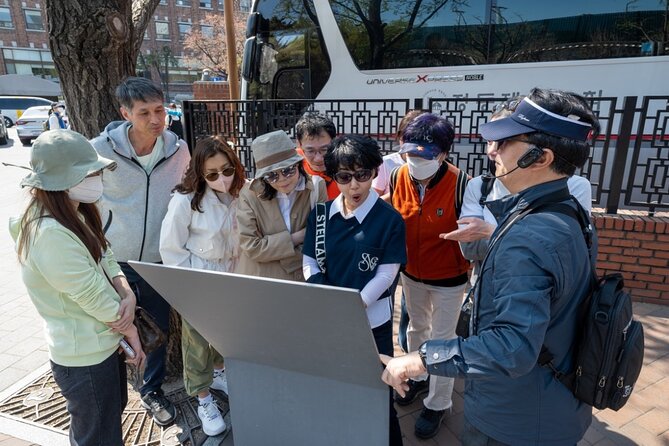
After Deoksugung, you move to Gyeonghuigung Palace, also known as Gyeonghui Palace, in Jongno-gu. It was built in 1623 during the Joseon Dynasty, and it originally served as a residence for a royal figure connected to the court, which you’ll hear tied into the bigger political timeline.
Why this stop is worth even a short visit: it gives you contrast. A first palace can make everything feel similar. Two palaces, both rooted in the Joseon Dynasty, let you notice how roles, spaces, and historical emphasis can shift even within the same broader era.
As with Deoksugung, the admission is listed as free here. That makes the pacing easy: you can focus on what the guide is pointing out, rather than on budgeting another ticket.
Other lanes worth walking in Seoul
- Seoul Highlights: Gyeongbok Palace, Insadong & N Seoul Tower
★ 4.7 · 726 reviews - Korean Palace and Market Tour in Seoul Including Insadong and Gyeongbokgung Palace
★ 4.0 · 174 reviews - Seoul: Gyeongbok Palace and Bukchon Hanok Walking Tour
★ 4.8 · 157 reviews - Best Walking Tour to Gyeongbok Palace Bukchon Hanok Village
★ 5.0 · 138 reviews - Carve Your Personal Korean Stone Seal with Jeongju in Insadong
★ 5.0 · 134 reviews
Appenzeller Noble Memorial Museum: learning through a Western-era school story
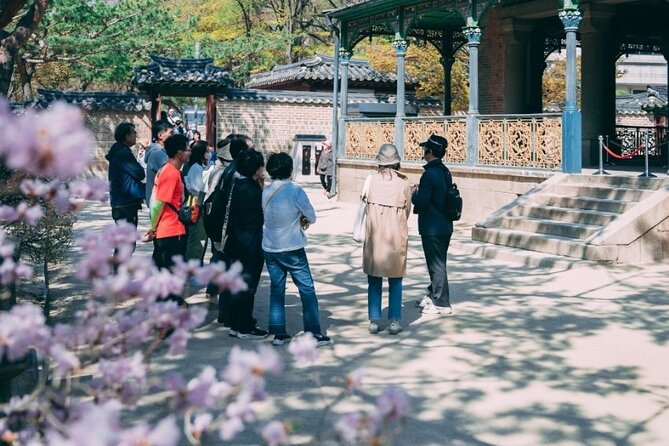
Then you head to Appenzeller Noble Memorial Museum, connected to the former home of Baekjae Hakdang, a missionary school. The museum explains how the school was later expanded into a university, which is known today as Pai Chai University in Daejeon.
This stop is a good break from palace grounds, and it matches the tour’s promise of seeing Seoul’s mixture of local tradition and Western-era influences. You’re not just walking past history. You are getting a specific education-related storyline, and it helps explain why Seoul’s modern development includes imported institutions alongside Korean ones.
Admission is listed as free, so it is a low-risk stop. If you like history that includes everyday institutions, like schools instead of only royal buildings, this is likely one of the most memorable parts of the route.
Jeongdong Theater: a coffee and restroom pause with cultural context
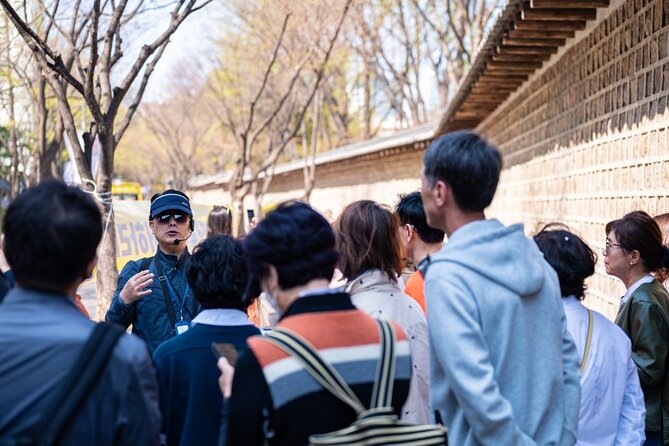
Next up is Jeongdong Theater, where the focus is performances that incorporate elements of traditional Korean culture, including concerts, plays, and musicals. The tour pauses here for about 25 minutes, which is useful because you can get coffee or another drink and use the restroom.
I like that this break is not tacked on as an afterthought. It gives your legs time to recover, and it also keeps the cultural thread going. You’re not only looking at monuments. You’re also getting a feel for how traditional elements show up in entertainment.
Admission is listed as free, and this segment is less about a ticketed attraction and more about comfort plus context. If you tend to get slow when a walking day runs long, the timing here helps you reset without derailing the schedule.
Jungmyeongjeon Hall: imperial library, Emperor Gojong, and a major turning point
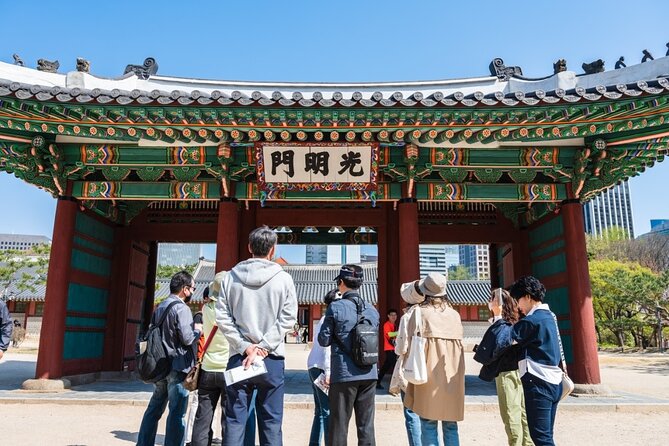
You’ll then visit Jungmyeongjeon Hall, built in 1899 as the imperial library of the Korean Empire. After Deoksugung Palace caught on fire in 1904, the hall became the temporary residence of Emperor Gojong.
This is the part of the walk where the story gets heavier, but in a meaningful way. You’re moving from palaces as seats of power into a space tied to scholarship and then into a residence tied to a national crisis and leadership continuity. That change helps you understand how physical buildings can shift roles during turbulent times.
The hall is also identified as the location associated with the infamous Eulsa T… (the tour materials reference this event connection), so the guide’s explanation here is likely to be the most story-dense moment of the day.
Admission is listed as free. That makes this an excellent stop for people who want context without extra ticket hassle.
Gwanghwamun Square to Cheonggyecheon: modern Seoul as your finishing line
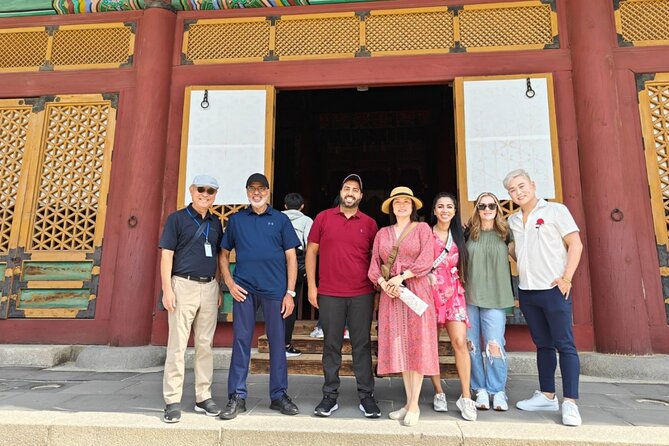
Finally, you end at Gwanghwamun Square, built in 2009. It’s a public gathering place with a large fountain and a statue of King Sejong the Great, among other attractions.
This is a smart finale because it reframes what you just learned. You went from palace grounds and imperial-era spaces to a modern civic square. The point is not that these are the same thing, but that Seoul’s identity keeps layering the past into everyday public life.
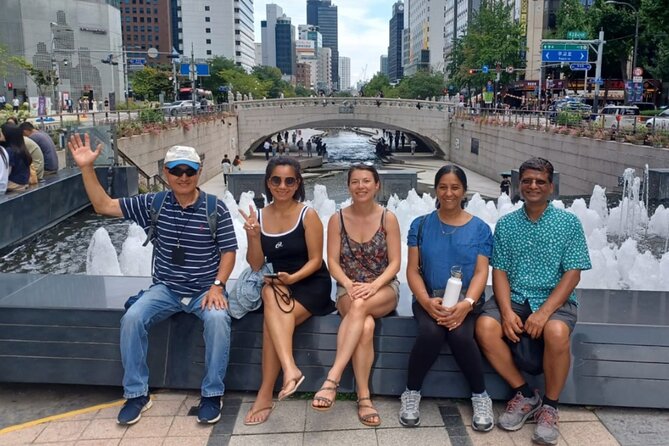
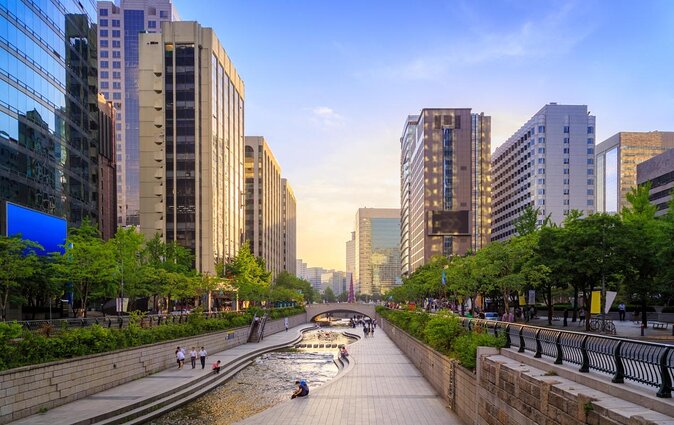
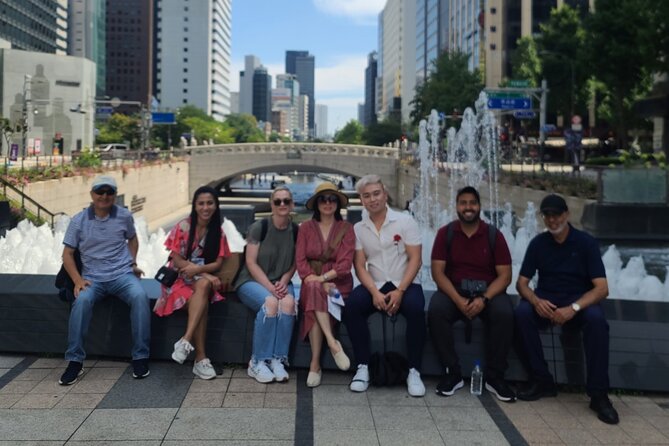
From there, the walk finishes near Cheonggyecheon Stream in Jongno District. Even if you keep your schedule tight, the stream area is a convenient place to continue your day, find a meal, or just wander without planning the next landmark from scratch.
Admission is listed as free at the square stop too, so you do not feel like you are spending the last segment of the tour chasing another paid experience.
What the 3-hour structure does well (and what to watch for)
This walk is about momentum. Stops are relatively short, and the guide’s explanations are doing the heavy lifting to keep the historical timeline coherent.
That pacing is great if:
- you are visiting Seoul for the first time and want an efficient introduction,
- you like walking through major sites instead of using only buses or taxis,
- you want a guide to connect palace locations to later events.
What to watch for:
- It runs on good weather, so plan around rain.
- Since lunch is not included, you may want a snack plan so you do not feel hungry during the later palace and hall segments.
- Wear comfortable shoes. This is still a walking tour with multiple sites.
Who should book this walk?
This is best for you if you want a guided, no-stress way to understand the shift from Joseon Dynasty palaces to the Korean Empire period, then end in a modern Seoul landmark area. It is also ideal if you enjoy places tied to institutions, not just royal halls, since the Baekjae Hakdang school story is built into the route.
It may not be your top pick if you prefer very long museum time or you want a tour focused heavily on food, shopping, or hands-on workshops. This one is about seeing, walking, and making meaning with a guide.
Should you book Deoksugung & Jeongdong-gil?
Yes, if you want a compact Seoul history walk that is easy to follow and good value for money. The strongest reasons to book are simple: free admission at the scheduled sites, a small group size (up to 15), and an English guide who can keep the story clear and enjoyable, like Sam did for the people who mentioned the tour.
I’d especially recommend it as your first or second day in central Seoul. Starting near Deoksugung and finishing at Cheonggyecheon gives you a natural “before and after” contrast, so the city feels less like a blur of buildings and more like a place with chapters.
FAQ
How long is the Deoksugung & Jeongdong-gil walk?
It runs for about 3 hours.
How much does the tour cost?
The price is $48.00 per person.
Is the guide available in English?
Yes. The tour includes a professional English tour guide.
Do I need to buy admission tickets for the stops?
Admission is listed as free for each scheduled stop.
Where do I meet the guide?
The tour starts at Deoksugung Palace, 99 Sejong-daero, Jung District, Seoul, South Korea.
What time does the tour start?
The start time is 9:30 am.
Where does the tour end?
The walk ends at Cheonggyecheon Stream, Jongno District, Seoul, South Korea.
How big is the group?
The tour has a maximum of 15 travelers.
Is there a break for coffee or a restroom?
Yes. You stop at Jeongdong Theater, where there is time to get coffee or drinks and use the restroom.
What if the weather is bad or I need to cancel?
The tour requires good weather. If it is canceled due to poor weather, you’ll be offered a different date or a full refund. You can cancel for a full refund up to 24 hours before the experience starts.
More Seoul Write-Ups

Keep Wandering the Hanok Lanes
Palaces, Three More Ways
Fresh on the Seoul pile
- Unique Native Experience : Han River Picnic, Board game, BBQ★ 5.0 · 3 reviews
- 2-Hour Private Kayaking and Paddleboarding Experience in Hanriver★ 5.0 · 3 reviews
- Korean Folk Village & Suwon Hwaseong Fortress Private Tour★ 5.0 · 3 reviews
- Seoul Korean BBQ Dinner Experience with Secret Food Tours★ 5.0 · 3 reviews
- Seoul Highlights & Hidden Gems – Private Tour with Photo Service★ 5.0 · 3 reviews
- Night Food Tour in Seoul with Traditional and Modern Cuisine★ 5.0 · 3 reviews
Seoul Royal Palaces you might have missed.
 ★ 4.9Seoul: Gyeongbok Palace, Bukchon Village, and Gwangjang TourFrom $322,321 reviews
 ★ 5.0Best Seoul City Tour (Gyeongbokgung Palace,Insadong,Namsan Tower)From $581,647 reviews
 ★ 5.0Small-Group Royal Palace and Seoul City Tour (hotel pick-up)From $561,474 reviews
★ 5.0Seoul: Gyeongbok Palace, Bukchon Village, and Gwangjang TourFrom $321,044 reviews
★ 5.0Small-Group Royal Palace and Seoul City Tour (hotel pick-up)From $561,474 reviews
★ 5.0Seoul: Gyeongbok Palace, Bukchon Village, and Gwangjang TourFrom $321,044 reviews
 ★ 4.7Seoul Highlights: Gyeongbok Palace, Insadong & N Seoul TowerFrom $26726 reviews
 ★ 4.6Seoul: Hanbok Rental with Gyeongbokgung Palace EntryFrom $6611 reviews
 ★ 4.5Seoul City Half Day Tour-Gyeongbok Palace Guard Changing CeremonyFrom $38357 reviews
 ★ 4.5Seoul: Gyeongbok Palace with Gigibebe Hanbok RentalFrom $9289 reviews
Where this tour also appears