
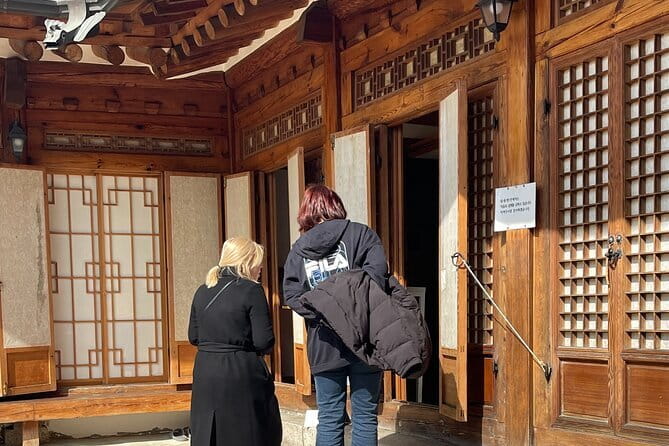
REVIEW · BUKCHON HANOK VILLAGE & INSADONG
Tour Seoul’s oldest district with a storyteller from Bukchon
Bukchon’s alleys have a way of talking. This 2 to 3 hour storytelling walk turns a neighborhood you think you know into a timeline, from the Joseon era to the 1980s, guided by a storyteller born and raised in Bukchon.
What I really like is the personal local perspective. Stops are connected by a narrative voice that does more than point, it explains why places matter. I also like the easy pace, with short breaks for questions as you move between key sites around Anguk and Bukchon.
One thing to consider: this is still an alley-walking route. If you or your kids have trouble with uneven ground, slopes, or winter cold, you may find it more tiring than a typical flat city stroll, and it’s recommended for age 12 and up.
In This Review
- Key things I’d use to decide
- Where it starts, how long you’ll be out, and what to expect
- The Bukchon storyteller approach, and why it makes the walk click
- Unhyeongung stop: the royal childhood story that started the timeline
- Cafe Onion Anguk: reading time in architecture (600, 100, 50 years)
- Bukchon Traditional Culture Center: hanoks through the Yangban lens
- Seokjeong Boreum Well: turning childhood stories into real history
- Choong Ang High School and Winter Sonata, plus the real historical angle
- Samcheongdong and Bukchon: feng shui, politics, and power on land
- Bukchon Hanok Village: the 1920s to 1930s change you’ll notice on foot
- Price and value: why $39.20 can feel fair here
- Who this tour fits best, and who might want to plan differently
- Should you book this Bukchon storytelling walk?
- FAQ
- Where does the tour start?
- What time does the tour begin?
- How long is the Bukchon storytelling tour?
- Is this a private tour?
- Is the tour good for children?
- What is included in the tour price?
- Are there admission fees at the stops?
- What is not included?
- Can the tour be canceled?
Key things I’d use to decide
- A storyteller from Bukchon, not a scripted lecture
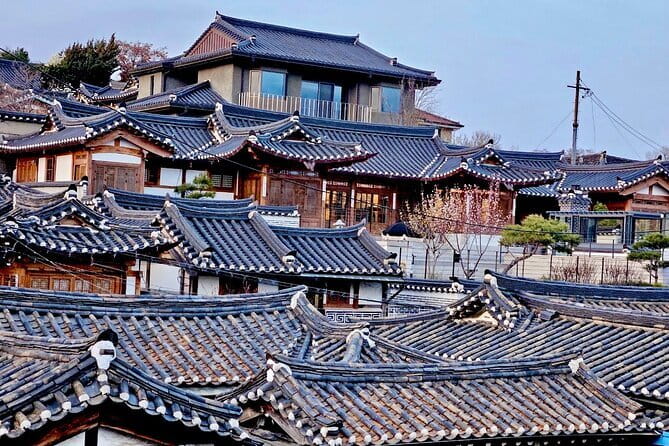
- Seven carefully timed stops, most with free entry
- A relaxed walking rhythm that doesn’t feel rushed
- Seoul history tied to real places, including feng shui and hanoks
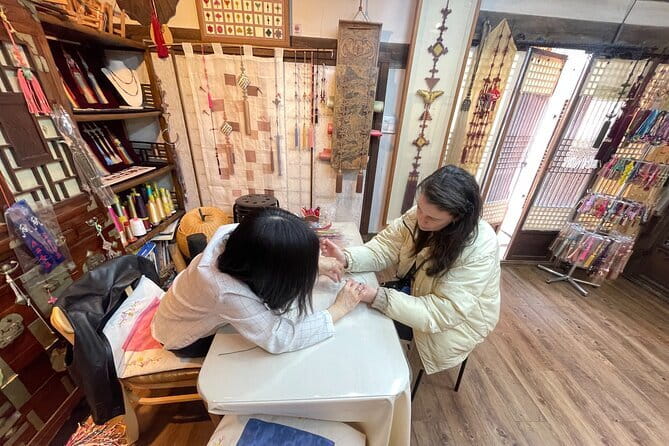
- Plus Tour option adds a traditional handicraft experience
Other lanes worth walking in Seoul
Where it starts, how long you’ll be out, and what to expect
This tour meets at Anguk Station, Exit 4, in Jongno District (10:00 am start). It runs about 2 to 3 hours, and it ends in a different location from where you begin, so plan your next activity with a little buffer.
It’s set up as a private tour/activity, meaning only your group participates. That matters because Bukchon is a maze. When you can ask questions without waiting for everyone to catch up, the storytelling lands better.
The pace is described as calm rather than sprint-like. Still, you should have moderate physical fitness, and you should expect to walk. Many stops are quick, so you’re moving through the neighborhood as a living museum, not sitting in one place for long stretches.
The Bukchon storyteller approach, and why it makes the walk click
The guide is a storyteller born and raised in Bukchon, now working as a filmmaker and university screenwriting professor. That background shows up in how the tour connects scenes: royal life, neighborhood rules, power and money, and the everyday details that tend to get overlooked.
What you get is local framing. Instead of treating Bukchon like a postcard set, you’re guided through how the area has changed, and how certain beliefs shaped choices long before modern Seoul existed.
You also get a lot of room for questions. People in past groups highlighted how the guide answers well and keeps the mood friendly. One review even mentioned practical help like tips for getting around and assistance to confirm an appointment, which is exactly the kind of thing that saves time when you’re juggling a full Seoul itinerary.
Unhyeongung stop: the royal childhood story that started the timeline
Unhyeongung is your first stop, and it sets the tone. You’ll hear the story of an 11-year-old royal boy who was born in this area and became the 26th king of Joseon. The key twist: it begins when a king dies without a crown prince, and the boy’s father rules from here for the next 10 years.
For you, this works because Bukchon is not just pretty houses. This is political geography. Once you understand that the neighborhood was part of the power system, everything else you see later has context.
The stop is about 20 minutes and free, which helps when you’re trying to fit a thoughtful walk into a packed travel schedule. Weather is the tradeoff. In cooler months, you’ll want layers, and in rain, you’ll want grippy shoes.
Cafe Onion Anguk: reading time in architecture (600, 100, 50 years)
Next is Cafe Onion Anguk, a short stop where you learn to look closely at the architecture. You’ll be shown details linked to different time layers, including structures described as about 600, 100, and 50 years old.
This is one of those stops that is brief, so your goal is not to spend forever staring. Your goal is to leave with a new habit: noticing how buildings hold clues. When you walk the alleys afterward, you’ll recognize patterns faster, like roof shapes, alignment, and how the street seems designed around homes.
Admission here is listed as free and the stop is about 10 minutes. If you’re the type who wants long pauses inside buildings, you might wish it were longer. But it’s still a good way to get your eyes calibrated.
- Best DMZ Tour Korea from Seoul (Red Suspension Bridge Optional)
★ 5.0 · 41,422 reviews - DMZ Tour: 3rd Tunnel, Option(Suspension Bridge, Boat) from Seoul
★ 5.0 · 21,373 reviews - DMZ tour south Korea from Seoul (NK experience hall, defector)
★ 5.0 · 20,599 reviews - Seoul: DMZ Tour with Optional Suspension Bridge
★ 4.8 · 5,277 reviews - Signature DMZ Tour: Exclusive Defector Talk & Suspension Bridge
★ 5.0 · 4,459 reviews
Bukchon Traditional Culture Center: hanoks through the Yangban lens
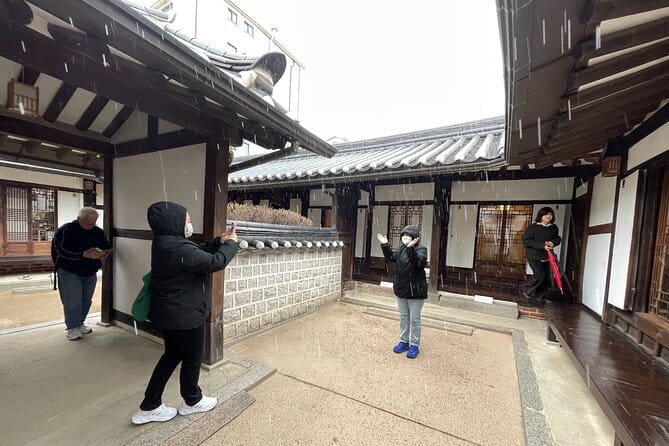
At the Bukchon Traditional Culture Center, the focus shifts to hanoks and who lived in them. You’ll learn about hanoks associated with the Yangban, the ruling class who typically lived in Seoul.
This matters because hanoks are easy to romanticize. A lot of visitors see the look, then move on. Here, you get a reason behind the style, and a sense that home design connected to social roles, status, and daily routines.
The stop is about 10 minutes and listed as free. That makes it a solid add-on, especially if you’re combining this with other Seoul neighborhoods. Just know it’s a quick touch, not a full museum session.
Seokjeong Boreum Well: turning childhood stories into real history
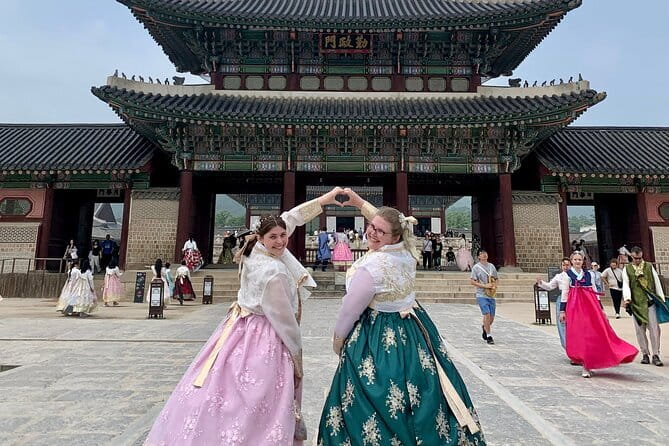
Seokjeong Boreum Well is where the tour leans into something more human. You’ll hear stories about wells, the kind of tales you might have heard as a child, and then you’ll learn what history has revealed.
Wells can sound like a small detail, but in older cities they were everything. Water shaped where people lived, how they gathered, and what daily life felt like. By the time you reach this stop, the tour already set you up to think in systems, not just snapshots.
Expect around 10 minutes and free entry. This stop also tends to be a natural “pause moment,” a chance to slow your pace after several short sites and catch up on the narrative.
Choong Ang High School and Winter Sonata, plus the real historical angle
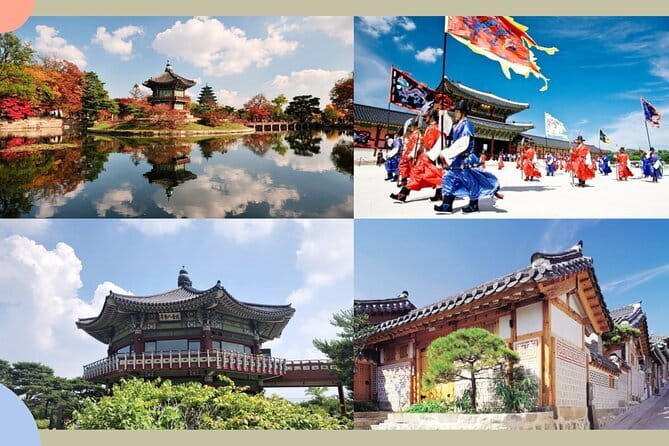
Choong Ang High School is known for filming countless dramas and music videos, and it’s especially linked in pop culture with Winter Sonata. But your guide ties that screen fame back to a real historic space that helped shape Korea into the country it became.
This is a smart move for you because it satisfies two travel types at once. If you’re here for TV, you get that connection. If you’re here for history, you get the reminder that locations used in filming often have deeper roots.
The stop is about 10 minutes and free. A quick reality check: in these places, you might not be able to roam freely like you would in an open square. Plan to focus on what your guide shows you from the accessible areas.
Samcheongdong and Bukchon: feng shui, politics, and power on land
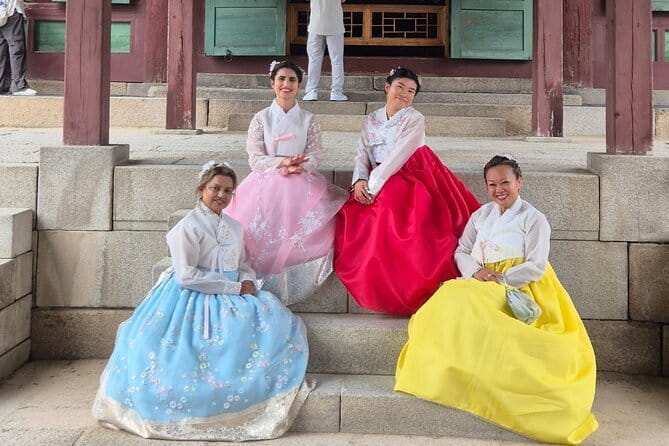
Then you move into Samcheongdong and Bukchon, where the tour traces the dramatic rise and fall of powerful politicians and business tycoons who once held land here. The neighborhood is described as chosen as the capital under feng shui principles, and you’ll learn why it was treated as an auspicious place.
This is a key part of the experience if you want to understand Seoul beyond “sightseeing.” Feng shui is not just a quirky belief. It’s a lens that helped elites justify where things should be built and how power should be positioned.
This stop runs about 20 minutes, which is longer than several others. That extra time is useful because it gives your guide room to connect architecture, place naming, and power dynamics in a way that actually sticks.
Bukchon Hanok Village: the 1920s to 1930s change you’ll notice on foot
The final stop is Bukchon Hanok Village, with a story about the man who changed the face of Bukchon in the 1920s and 1930s.
The exact name is not provided in the tour details you shared, but the takeaway is clear: Bukchon did not stay frozen in one era. It evolved, and people reshaped the neighborhood so it could function in a new period of Korean life.
This stop is about 15 minutes and free. It’s a good closing point because by then you’ve learned how to read the neighborhood like a map of ideas: politics, architecture, daily life, and belief systems.
Price and value: why $39.20 can feel fair here
At $39.20 per person, the price sits in the “does this buy me something real?” category. In this case, it does, mainly because you’re paying for a professional guide from Bukchon with storytelling skills, plus a route built around short, meaningful stops.
Several stops are listed as free admission in the tour breakdown, which reduces add-on surprises. You’re also likely to appreciate the value of a small-group style format, since the tour is private and only your group participates. That tends to matter a lot in Bukchon, where questions and direction need to happen fast.
Two notes on value tradeoffs:
- The traditional Korean handicraft experience is available only with the Plus Tour option, so the base tour price may not include it.
- Coffee and tea are not included, so if you get thirsty, you’ll be relying on what you find on your own.
You’ll also want to handle any personal expenses and you won’t get hotel pickup service. A mobile ticket is provided, which simplifies entry and keeps things streamlined.
Who this tour fits best, and who might want to plan differently
This is strongly recommended for age 12 and above. The tour notes that the storytelling walking route may be challenging for children aged 12 and under, so if you’re traveling with young kids, you may want to skip this one or choose something more stop-and-go.
For adults, it’s a great fit if you want:
- A Seoul neighborhood with context, not just photos
- A relaxed walking pace that still feels structured
- A guide who can answer questions and connect past and present
For people with moderate mobility limitations, you should still consider it carefully. The tour emphasizes moderate physical fitness, and Bukchon’s streets are not designed like accessible boardwalks.
Should you book this Bukchon storytelling walk?
Book it if you want the fastest way to understand Bukchon as a real neighborhood shaped by politics, class life, and belief systems. The local storyteller approach is the main selling point, and the mix of places like Unhyeongung, Yangban hanoks at the Culture Center, and feng shui-linked Samcheongdong makes the neighborhood feel coherent.
Skip it if you need a fully seated experience, if you’re traveling with very young children, or if you prefer long visits inside attractions instead of a short-stop walking format.
If your Seoul trip has room for one thoughtful, walkable block that helps you see the city’s “why,” this tour is an easy yes.
FAQ
Where does the tour start?
The tour starts at Anguk Station Exit 4, in Unni-dong, Jongno District, Seoul.
What time does the tour begin?
The start time is listed as 10:00 am.
How long is the Bukchon storytelling tour?
It runs about 2 to 3 hours.
Is this a private tour?
Yes. Only your group will participate.
Is the tour good for children?
It’s strongly recommended for ages 12 and above. The route may be challenging for children aged 12 and under, so it’s kindly recommended they refrain.
What is included in the tour price?
You get a professional guide from Bukchon. Also, a traditional Korean handicraft experience is available with the Plus Tour option.
Are there admission fees at the stops?
The stops listed in the tour description show free admission tickets for each location mentioned.
What is not included?
Travel insurance, hotel pick-up service, personal expenses, and coffee or tea are not included.
Can the tour be canceled?
Yes. The tour may be canceled if fewer than 2 guests join. You can cancel up to 24 hours in advance for a full refund.
Keep Browsing Seoul


More Seoul Write-Ups
Keep Wandering the Hanok Lanes
Fresh on the Seoul pile
- Unique Native Experience : Han River Picnic, Board game, BBQ★ 5.0 · 3 reviews
- 2-Hour Private Kayaking and Paddleboarding Experience in Hanriver★ 5.0 · 3 reviews
- Korean Folk Village & Suwon Hwaseong Fortress Private Tour★ 5.0 · 3 reviews
- Seoul Korean BBQ Dinner Experience with Secret Food Tours★ 5.0 · 3 reviews
- Seoul Highlights & Hidden Gems – Private Tour with Photo Service★ 5.0 · 3 reviews
- Night Food Tour in Seoul with Traditional and Modern Cuisine★ 5.0 · 3 reviews
Bukchon Hanok Village & Insadong you might have missed.
 ★ 4.9Seoul: Gyeongbok Palace, Bukchon Village, and Gwangjang TourFrom $322,321 reviews
 ★ 5.0Best Seoul City Tour (Gyeongbokgung Palace,Insadong,Namsan Tower)From $581,647 reviews
★ 5.0Seoul: Gyeongbok Palace, Bukchon Village, and Gwangjang TourFrom $321,044 reviews
★ 5.0Best Seoul City Tour (Gyeongbokgung Palace,Insadong,Namsan Tower)From $581,647 reviews
★ 5.0Seoul: Gyeongbok Palace, Bukchon Village, and Gwangjang TourFrom $321,044 reviews
 ★ 4.7Seoul Highlights: Gyeongbok Palace, Insadong & N Seoul TowerFrom $26726 reviews
 ★ 4.0Korean Palace and Market Tour in Seoul Including Insadong and Gyeongbokgung PalaceFrom $89174 reviews
 ★ 4.8Seoul: Gyeongbok Palace and Bukchon Hanok Walking TourFrom $88157 reviews
 ★ 5.0Best Walking Tour to Gyeongbok Palace Bukchon Hanok VillageFrom $88138 reviews
 ★ 5.0Carve Your Personal Korean Stone Seal with Jeongju in InsadongFrom $42134 reviews
Where this tour also appears