
REVIEW · INCHEON & GANGHWA ISLAND
Incheon Port History Tour by 19th Century Electric Car, KTourTOP10
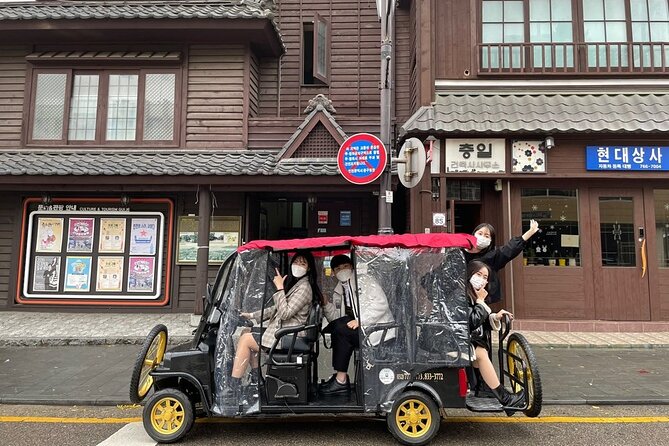
A tiny electric car makes port history move fast. This Incheon port history tour links the old open-port streets to real landmarks, using a 19th-century-style vehicle so you are always on the go instead of stuck in traffic. I especially like the small-group feel, where you can actually hear explanations while you pass buildings that explain Incheon’s foreign connections.
I also like how the route mixes big-picture port history with very specific places, from the red-brick Incheon Art Platform to the Jjajangmyeon Museum tied to the earliest Gonghwachun story. The one real drawback to plan around is communication and timing. In some cases, the commentary may be pre-recorded and English may be limited, and on at least one occasion the start went wrong, so you should confirm right before you go.
In This Review
- Key Things to Know Before You Ride
- Why This Old-Car Port Tour Works for First-Time Incheon
- Price and Time: A Half-Hour Mission in Disguise
- Getting Oriented: Meeting Point, Car Ride Pace, and What to Bring
- Stop-by-Stop: What Each Landmark Adds to the Story
- Incheon Art Platform: Red Bricks and the Open Port Setup
- Chinese and Japanese Buildings Around the Stairs: Jogye and Foreign Residence
- Haean Catholic Church: Overseas Chinese Roots in the 1960s
- Jjajangmyeon Museum: The Food History Thread You Can Actually Taste Later
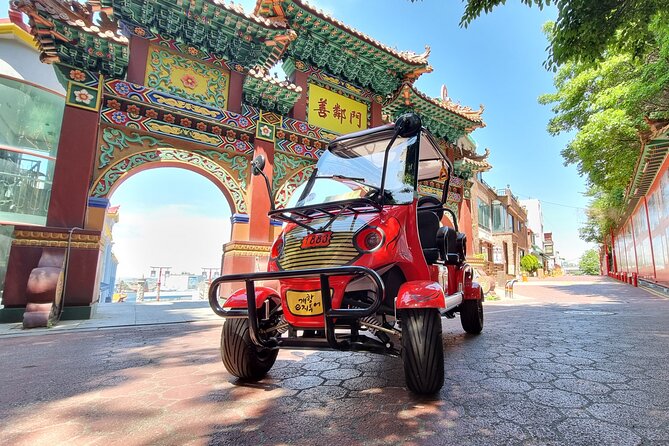
- Euiseon-dang in Chinatown: A Shrine Built by Immigrants
- Chohanji Mural Street and Three Kingdoms Mural Street: Novels Made Into Walkable Walls
- Jemulpo Club: A Foreign Social Hub You Can Picture in Your Head
- What the Electric Car and Small Group Do for Your Experience
- Language and Commentary: The Part You Should Plan Around
- Guide Quality: What Can Make or Break the Hour
- Weather and Comfort: A Short Tour, Still an Outdoor One
- Who This Tour Fits Best
- Should You Book the Incheon Port History Tour by 19th Century Electric Car?
- FAQ
- FAQ
- How long is the Incheon Port History Tour?
- How much does the tour cost?
- Where do I meet for the tour?
- Is the ticket mobile?
- What is included in the price?
- How large is the group?
- Does the tour run in any weather?
Key Things to Know Before You Ride
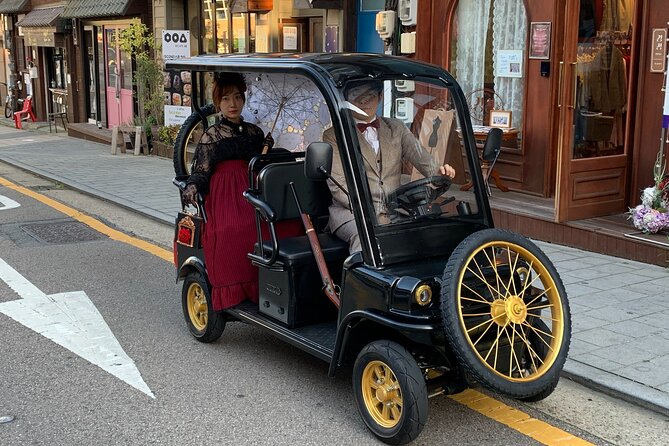
- 19th-century-style electric car keeps you moving while you learn
- 50 minutes is short enough for a layover, but long enough to connect the dots
- Small group (maximum 20) helps the guide keep control of the pace
- Stops cover Incheon Art Platform, Chinatown, murals, and Jemulpo Club
- You get a mobile ticket, so you can travel light
- The tour needs good weather, since it is an outdoor street route
More coast and port days near Incheon


Why This Old-Car Port Tour Works for First-Time Incheon
Incheon Port is one of those places where history shows up in layers. You see it in the streets, the stair areas, the way neighborhoods are shaped, and the odd mix of Korean, Chinese, and Japanese influences tied to trade and foreign residence. This tour’s biggest strength is that it turns that idea into a route you can actually follow in under an hour.
The ride itself matters. A small, old-style electric car slows the day down in a good way. You are not sprinting across a large city map. You are being guided along Incheon Open Port Street, so the story keeps flowing.
And if you are the type who hates tours where you stop, pose, and vanish, you will probably like the balance here. You get multiple “place stops” and enough context to understand why each one is there, not just what it looks like.
Price and Time: A Half-Hour Mission in Disguise
This is priced at $45 per group up to 3, which is a smart setup if you are traveling with family or friends who can share the cost. Since it is about 50 minutes, it also fits a tight schedule, like the time you need to stretch your legs without burning your whole day.
Where value can swing is how you personally feel about short guided routes. If you want a long sit-down history lesson or deep museum time, this might feel too quick. If you want a fast orientation plus a few memorable stops, the timing is a feature, not a flaw.
My practical take: you should treat this as a “port history quick scan.” You will leave with names, locations, and the reason foreign trade mattered here, then you can choose what to explore further on your own.
Getting Oriented: Meeting Point, Car Ride Pace, and What to Bring
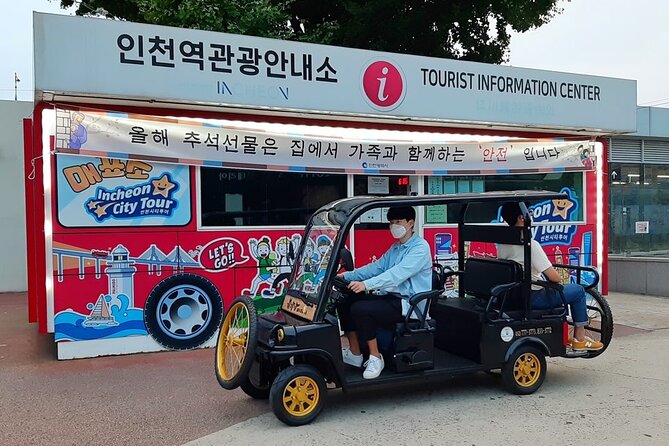
You meet at 266 Jemullyang-ro, Jung-gu, Incheon and the tour ends back at the meeting point. That loop design is helpful, especially if you are using public transportation and want minimal re-planning afterward.
Most people can join, and the max group size is set at 20. That matters because it often means the guide can manage questions and keep timing under control. Still, remember that this is a street route with stops, so wear shoes that handle light walking on sidewalks and stairs.
Bring a light layer. Even in warmer seasons, you may get exposed to wind around open areas and waterfront viewpoints. Also, consider charging your phone before you start. You use a mobile ticket, so you do not want to deal with dead battery stress mid-walk.
Stop-by-Stop: What Each Landmark Adds to the Story
- Private Arrival Transfer: Incheon International Airport to Hotel
★ 4.5 · 42 reviews - Incheon Airport Transfer Service private transport to/from Seoul
★ 5.0 · 40 reviews - Full-Day Seoul Top Attractions Tour for Incheon Cruise Guests
★ 4.5 · 34 reviews - Seoul Layover Private Incheon Cultural Odyssey from Airport
★ 5.0 · 33 reviews - Cruise Guests Layover Incheon Port Seoul Private Car Tour
★ 5.0 · 23 reviews
Incheon Art Platform: Red Bricks and the Open Port Setup
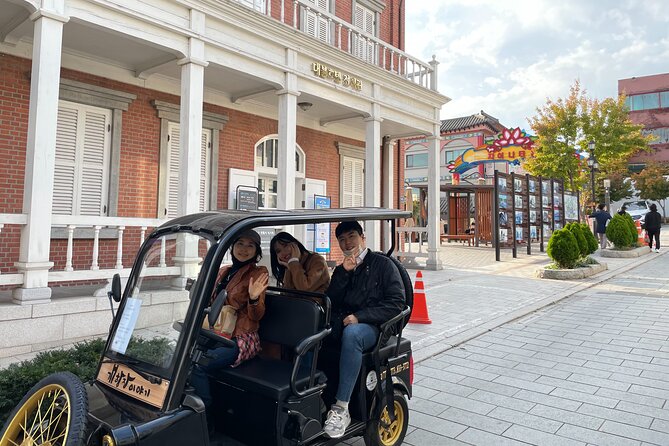
Your first major stop is the Incheon Art Platform, with its red-brick look. This is not just a pretty building. It is tied to the open port’s story and is used for exhibitions and performances across art, music, literature, and movies.
Why it works on this tour: you are learning history, but you are also seeing how the area keeps a creative pulse. The building’s purpose gives you a clue about how old port spaces stay relevant instead of turning into quiet ruins.
What to watch for: pay attention to how the guide connects the building to the idea of an open port. You will get more out of the stop if you listen for the “why this place matters” explanation instead of just snapping photos.
Chinese and Japanese Buildings Around the Stairs: Jogye and Foreign Residence
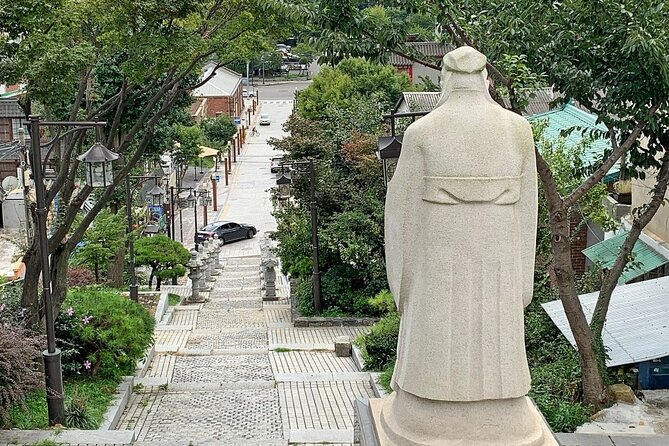
Next comes a section divided into Chinese and Japanese buildings around stairways. The area is tied to the term 조계 (Jogye), which refers to a defined area for foreign residents and trade. It is also connected to Jayu Park, and you can see the Incheon Sea from the area.
This is one of the most important story beats on the route because it turns an abstract term into something physical. You can stand where the old zoning idea happened. You can also imagine everyday life, not just the grand history headline.
Potential drawback: stairs and viewing points can be harder for anyone with mobility limitations. The tour does say most travelers can participate, but you should still be ready for some uneven walking and steps.
Haean Catholic Church: Overseas Chinese Roots in the 1960s
Then you visit Haean Catholic Church, described as significant for devoted Catholics among overseas Chinese, and created for that community in the 1960s.
I like this stop because it adds a human layer. Port history is often told as trade and politics, but it also produced communities, worship spaces, and long-term settlement needs. This church anchors that side of the story.
What you’ll likely appreciate: it helps you see how the foreign community timeline did not just end with the early open port. It continued decades later in new forms.
Jjajangmyeon Museum: The Food History Thread You Can Actually Taste Later
The Jjajangmyeon Museum is located where the first original Jjajangmyeon restaurant, Gonghwachun, used to be. The museum holds relics tied to Jjajangmyeon and to Gonghwachun.
This is a clever stop for two reasons. First, it connects port history to something everyday people care about: food and how cuisines travel. Second, it gives the tour a break from strict architecture and street zoning. If you are tired of “point and explain,” this part feels more playful.
Reality check: you may not spend long inside a small museum stop during a short tour, so lean into the context the guide gives. The food story is brief but memorable, and it sets you up to look for jjmjajangmyeon stories later in Incheon.
Euiseon-dang in Chinatown: A Shrine Built by Immigrants
Inside Chinatown, you see Euiseon-dang, described as a Chinese-style shrine built by Chinese immigrants who left their homeland seeking comfort from loneliness and difficulties of immigration.
This is the stop where you see the emotional reason behind the architecture. A shrine is not just decoration. It signals continuity, identity, and the need to keep traditions close during displacement.
If you care about details: listen for how the guide connects the shrine’s purpose to the wider Chinatown neighborhood. You get more than a landmark photo when you understand what the building meant to the people living nearby.
Chohanji Mural Street and Three Kingdoms Mural Street: Novels Made Into Walkable Walls
You then move to Chohanji Mural Street and Three Kingdoms Mural Street, where you see murals tied to Chinese historical novels, Chohanji and Three Kingdoms.
Why this is worth including on a port tour: literature and storytelling were part of how communities stayed connected. Murals turn those stories into public memory you can walk past slowly, and they add color to what would otherwise be an architecture-heavy route.
Practical note: murals are best enjoyed at eye level. So try not to rush through this part, even if your timing feels tight. A slow glance is all it takes to catch the story link.
Jemulpo Club: A Foreign Social Hub You Can Picture in Your Head
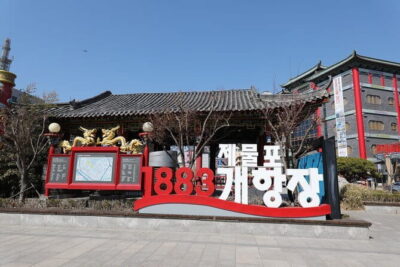
The tour includes a stop at Jemulpo Club. The building is described as having been operated in 1981 as a social club for foreigners living in Incheon. Inside, there is a social room, billiard room, and reading room. There is also a tennis court outside.
Later history is referenced around the early 1900s under Japanese colonial period, though the detail is brief. Even without a long lecture, this stop helps you picture day-to-day life for foreign residents. You see the club as a social infrastructure, not just a historical artifact.
Admission at this stop is noted as free, and the time is short, about five minutes. In a tour this length, that is fine. You are using Jemulpo Club as a “scene-setting location,” so the goal is to understand what it represented and why it would matter.
What the Electric Car and Small Group Do for Your Experience
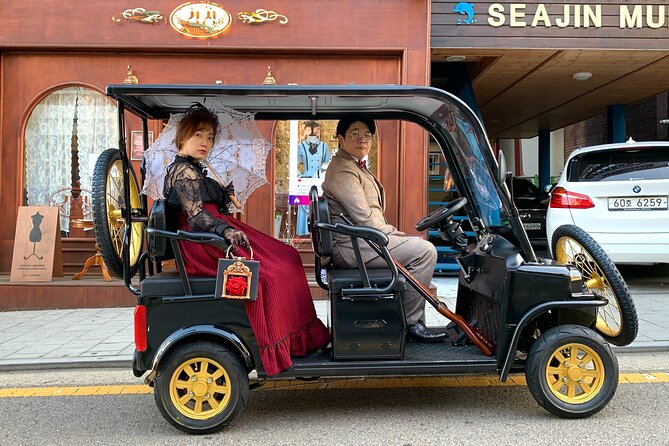
This kind of route works because it solves two common tour problems. You avoid long gaps between stops, and you do not have to interpret everything alone.
The electric car ride also gives you a moving viewpoint. You see how parts of the area relate to each other along the open port streets. That’s hard to do if you are walking without a plan.
Small-group size helps too. With up to 20 people, you are less likely to feel like a spectator watching your guide talk to a crowd. You are also more likely to get an answer if you ask something on the spot, though language can still be a factor.
Language and Commentary: The Part You Should Plan Around

One of the tradeoffs here is that English may not be guaranteed. In one situation, the driver was described as pleasant but speaking no English, with pre-recorded commentary used instead.
So here is what I suggest for smooth expectations. Go in ready to listen for place names and key story points, even if you get fewer spontaneous clarifications. If you are traveling with someone who needs explanations in English all the time, it is worth checking on the day for how the tour commentary will be handled.
Also, if you want to get the most out of it, take a quick look at the stop names ahead of time. When you arrive at Chinatown or the stair areas, you will connect the dots faster.
Guide Quality: What Can Make or Break the Hour
The quality of the guide seems to matter a lot. One highlighted guide named Sonie (spelling may vary) was praised for enthusiastic, patient explanations and accommodating a later time request.
That tells you something useful: this tour can feel like a real guided walk-through when the guide is engaged. It can also feel more surface-level when commentary is limited or stops are more “point and go” than “story and understanding.”
My advice: if you have any flexibility, choose a time slot when you can arrive early. That gives you buffer in case the day runs behind schedule.
Weather and Comfort: A Short Tour, Still an Outdoor One
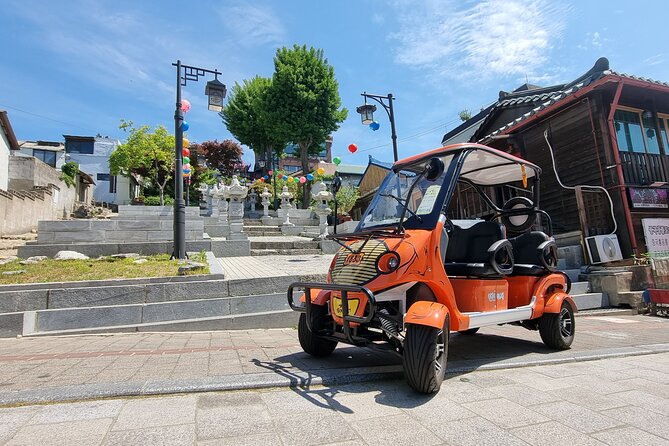
The tour requires good weather, so check conditions the day of. Since it is an outdoor street route, rain and strong wind can affect comfort and whether you get the planned route.
Even on nice days, Incheon can feel breezy near open areas. Plan for that, bring a light jacket, and keep water handy.
Who This Tour Fits Best
This Incheon port history tour is best for you if:
- you want an hour of port history without committing to a long day
- you like street-level context, not just museum walls
- you enjoy quirky stops like the Jjajangmyeon Museum and mural streets
- you are traveling in a small group and can split the $45 per group up to 3 price
It may be less ideal if:
- you want deep museum time or a longer guided lecture
- you need full English conversation throughout every stop
- you are very sensitive to start delays, since at least one experience reported a no-show type problem. Confirm the tour is actually operating before you relax into the plan.
Should You Book the Incheon Port History Tour by 19th Century Electric Car?
If your goal is a fast, memorable orientation to Incheon’s open-port era, I think this is worth booking. The electric car format is fun and efficient, and the lineup of stops gives you both the “place story” and the cultural threads, Chinatown, murals, and even the food history angle.
My call: book it if you have a short window and you like guided routes that stitch history together quickly. Skip it or plan a backup if you need guaranteed English discussion at every stop or you cannot risk delays on a tight connection.
FAQ
FAQ
How long is the Incheon Port History Tour?
The tour lasts about 50 minutes.
How much does the tour cost?
It is $45.00 per group, up to 3 people.
Where do I meet for the tour?
The meeting point is 266 Jemullyang-ro, Jung-gu, Incheon, South Korea.
Is the ticket mobile?
Yes, the tour includes a mobile ticket.
What is included in the price?
The tour includes the old-style electric car tour (50 minutes) and the tour guide fee.
How large is the group?
The tour has a maximum of 20 travelers.
Does the tour run in any weather?
The tour requires good weather. If canceled due to poor weather, you are offered a different date or a full refund.
Keep Browsing Incheon

More Incheon Write-Ups



More Around Incheon
Fresh on the Incheon pile
- Layover Tour from Incheon Airport to Seoul with a Tour Specialist★ 5.0 · 5 reviews
- Incheon Airport Pickup★ 4.5 · 7 reviews
- Layover Tour for essential Seoul City & Gourmet tour(Incl. Lunch)★ 5.0 · 8 reviews
- Incheon Port History Tour by 19th Century Electric Car, KTourTOP10★ 4.0 · 8 reviews
- Korea SIM Card with SKT Unlimited Local Data & Voice Calls★ 4.5 · 9 reviews
- Private Transfer Incheon Intl. Airport —>Seoul★ 4.5 · 9 reviews
Incheon & Ganghwa Island you might have missed.
 ★ 5.0Flexible Private Guided Tour in Seoul (Optional Incheon Layover)From $225323 reviews
 ★ 5.0Private Layover Tour from Incheon Airport to SeoulFrom $24078 reviews
 ★ 5.0Seoul Layover Private Tour from Incheon AirportFrom $23065 reviews
 ★ 4.5Full-Day Seoul Top Attractions Tour for Incheon Cruise GuestsFrom $8034 reviews
 ★ 5.0Seoul Layover Private Incheon Cultural Odyssey from AirportFrom $19033 reviews
 ★ 5.0Cruise Guests Layover Incheon Port Seoul Private Car TourFrom $42423 reviews
 ★ 5.0DMZ tour pick up & drop off at Incheon airportFrom $25017 reviews
 ★ 5.0Private DMZSPYTOUR from Incheon AirportFrom $23514 reviews
Where this tour also appears