
REVIEW · KOREA
Heart of Seoul
Seoul tastes better when you walk it. This is a 3-hour guided route designed around real Korean favorites, with about 10 different foods along the way, from market classics to Myeongdong snacks. You also get quick culture and history context as you move.
I love how the tour doesn’t try to force a Western-style tasting menu. It keeps things practical, so you can sample what people actually order. My guide, Veronica, was fun and clear, mixing food explanations with site notes so every bite felt connected to place.
One thing to consider: this is a walking tour. If you have leg problems, plan to come with a wheelchair and someone to help you.
In This Review
- Key things to know before you go
- The Heart of Seoul idea: food, culture, and what Koreans actually eat
- Price and what $115 really covers
- The 1:00 pm meet-up and how the 3-hour pace works
- Culture Station Seoul 284: your first stop and the “why this place” moment
- Seoullo 7017 walkways: a change of pace between food stops
- Namdaemun Market: where the tour turns serious with stall hopping
- Myeongdong Shopping Street: street food energy with a guided bite plan
- Myeongdong Underground Shopping Center: brand stores, a slower finish, and gelato
- Included tastings: what you’ll actually eat on the route
- Small group dynamics: 12 people max and why it feels smoother
- Who this tour is best for
- Should you book Heart of Seoul
- FAQ
- How long is the Heart of Seoul tour?
- What is included in the price?
- Is a ticket provided on a mobile device?
- Where do I meet the guide and where does the tour end?
- What time does the tour start?
- How many people are in the group?
- Is the tour mainly walking?
- What is the cancellation policy?
Key things to know before you go
- A Korean-designed route for real favorites: You’re tasting what locals truly go for, not a random list.
- About 10 tastings in 3 hours: It’s built to fit a full food hit without dragging into a whole day.
- Markets plus shopping districts: You’ll switch from Namdaemun Market energy to Myeongdong street and then to underground shopping.
- Small group size: Maximum of 12 people, which usually makes it easier to keep up and ask questions.
- Food plus context from the guide: With a guide like Veronica, explanations stay tied to what you’re eating and seeing.
- A gelato finish near Myeongdong Cathedral: The last stop includes time for a calmer sweet wrap-up.
Torn between options? The Seoul trips below held up best on our read.
The Heart of Seoul idea: food, culture, and what Koreans actually eat
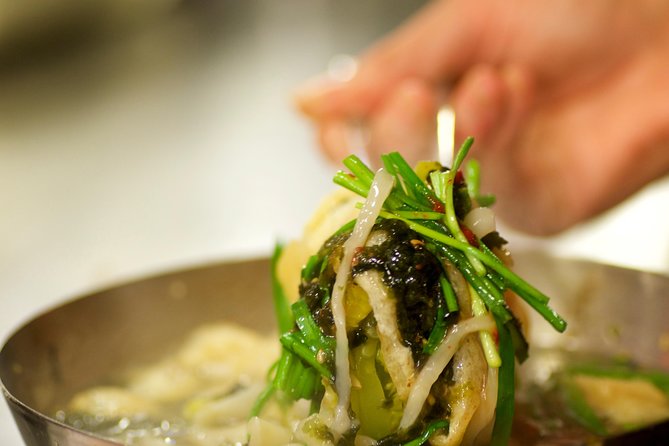
Korea does not really do the tasting-menu thing in the same way some Western countries do. So a “tasting tour” has to work differently. This one does it the smart way. Instead of one long menu, you hop between stops and taste separate dishes that fit together like a greatest-hits playlist.
You’re basically getting two wins at once. First, you eat your way through a side of Seoul that you’d probably skim on your own. Second, you get the quick background that helps the food make sense. Even a small note from the guide can turn tteokbokki or bibimbap from just something you tried into something you understand in context.
I also like that the food spread covers both tradition and what’s popular now. The included items span comforting staples and street-friendly picks. It feels less like a buffet line and more like a guided sampling of Seoul taste.
Price and what $115 really covers
At $115 per person for a roughly 3-hour walking tour, the big question is simple: does it replace what you’d otherwise spend just eating on your own? In my view, it can, because the package includes a set of tastings that adds up fast in Seoul.
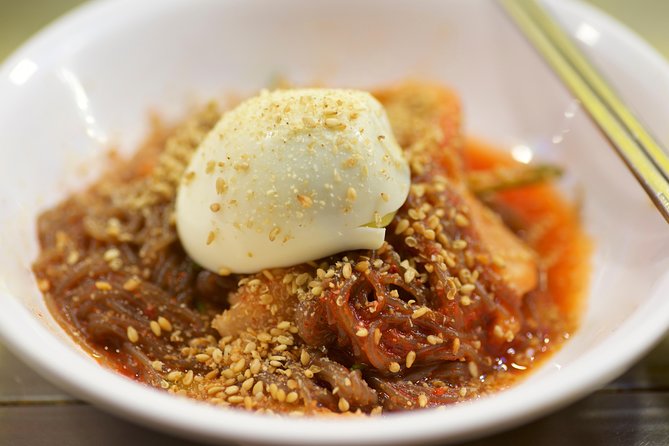
Here’s what’s listed as included: kalguksu, naengmyeon, bibimbap, tteokbokki, eomuk (fish cake), tongdak (crispy fried chicken), Korean local beer, mandoo (dumplings), and gelato. That’s not just one snack. It’s a full string of meal-style bites plus a sweet ending.
You should also notice one practical detail: you get a beer paired with the fried chicken, but extra beer and other drinks are paid separately. That keeps the included portion clear. If you’re planning to drink more, budget for it.
What makes the price feel reasonable is the structure. You’re paying for a guided route, not just food. The tour stitches together multiple zones of Seoul in one afternoon, and the guide handles the “where next” and “how to order” vibe. With only about 12 people in the group, you’re not lost in a crowd.
The 1:00 pm meet-up and how the 3-hour pace works
The tour starts at 1:00 pm. Your starting point is at 122-18 Bongnae-dong 2(i)-ga, Jung District, Seoul. The ending point is by Myeongdong Cathedral, 74 Myeongdong-gil, Jung District, Seoul. You’ll also have a mobile ticket, so you can keep things simple on your phone.
Duration is listed as about 3 hours. That matters because food tours can stretch. This one is built around a short walk cycle: a meet-up, a sequence of stops, and time to eat without turning it into an all-day marathon.
One more logistics tip: the tour is near public transportation. Even so, you’ll still want shoes that can handle walking and waiting. Most of the value is in how smoothly the tastings connect, so arriving a few minutes early helps you start calm rather than rushing.
Accessibility is straightforward but important. It’s a walking tour, and for leg problems you should come with a wheelchair and someone who can help you. If you don’t have that support, you’ll likely find the pace hard.
Culture Station Seoul 284: your first stop and the “why this place” moment
The tour begins with a meeting at Culture Station Seoul 284. The guide meets you at the entrance and explains the building. The stop is short, about 10 minutes, and admission is listed as free.
What I like about starting here is that it gets you oriented before you hit the bigger food zones. You’re not just wandering. Even a quick building note can help you understand how modern Seoul frames older spaces and public areas.
From a practical point of view, this first stop is also a settling-in moment. You can see the guide’s style, ask basic questions early, and get your group together before you start moving into busier areas.
- Best DMZ Tour Korea from Seoul (Red Suspension Bridge Optional)
★ 5.0 · 41,422 reviews - DMZ Tour: 3rd Tunnel, Option(Suspension Bridge, Boat) from Seoul
★ 5.0 · 21,373 reviews - DMZ tour south Korea from Seoul (NK experience hall, defector)
★ 5.0 · 20,599 reviews - Seoul: DMZ Tour with Optional Suspension Bridge
★ 4.8 · 5,277 reviews - Signature DMZ Tour: Exclusive Defector Talk & Suspension Bridge
★ 5.0 · 4,459 reviews
Seoullo 7017 walkways: a change of pace between food stops
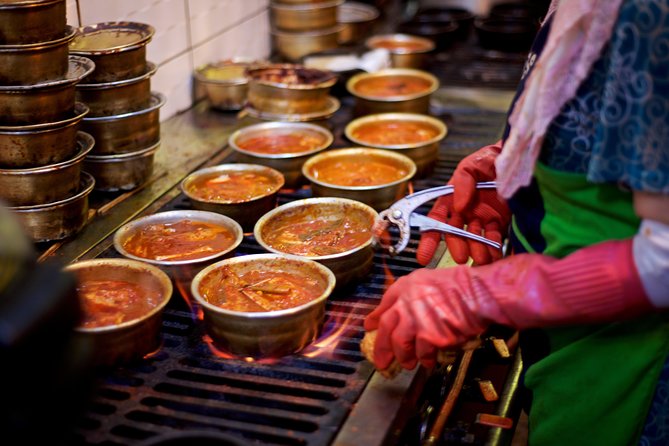
Next you’ll head to Seoullo 7017. The guide brings you up there and you walk through the walkway to the next spot. This stop is about 20 minutes, and admission is free.
Why this matters: it breaks up the day. If all you do is eat and crowd-hop, you burn out. A walkway section gives you a breather between tastings, and it keeps your energy up for Namdaemun Market and Myeongdong.
Also, this is where you get “movement time” that still feels part of the experience. Instead of standing in a line for every bite, you’re walking, listening, then eating again.
Namdaemun Market: where the tour turns serious with stall hopping
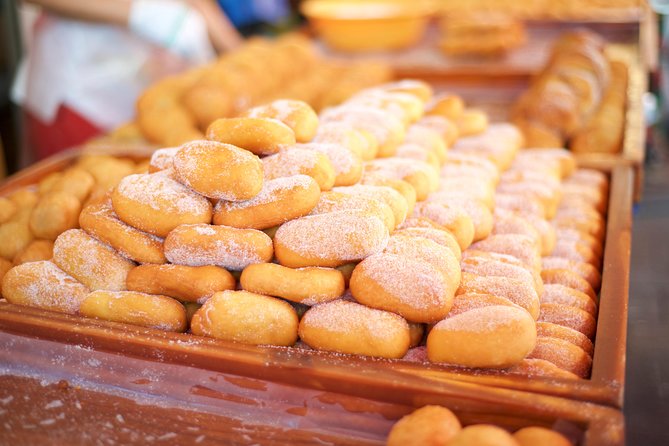
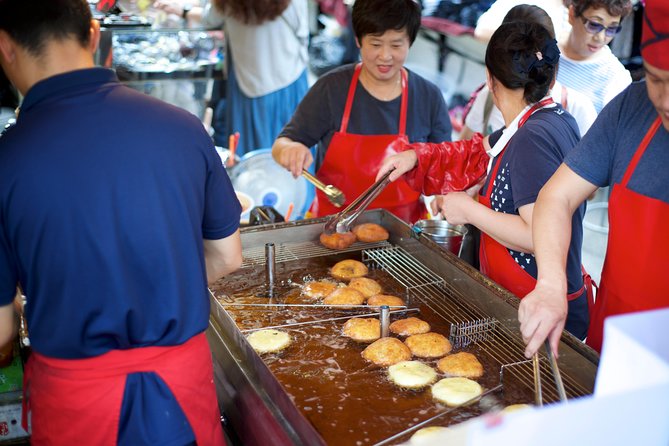
The third stop is Namdaemun Market, and it’s the first long food block at about 1 hour. Admission is listed as free.
Here’s what to expect: the guide explains the interesting food stalls and restaurants, then you taste food there. This is one of those stops where your guide really earns their keep. Markets can be confusing when you’re unsure what to choose. The guide’s job is to guide you through the options so you taste things that fit the tour plan.
This is also where the “about 10 foods” concept becomes real. The tastings tend to stack up during this portion of the route. Your stomach will get a workout, but it’s planned.
A practical note for you: because this is a market-style stop, you’ll likely want to keep your water handy. The tour includes multiple foods, plus a later beer pairing, so plan for thirst and don’t rely only on cravings.
Myeongdong Shopping Street: street food energy with a guided bite plan
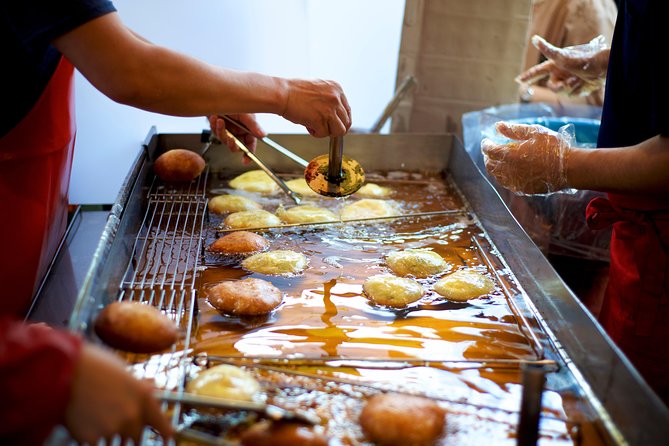
After Namdaemun, you move to Myeongdong Shopping Street. This stop is about 1 hour, and again admission is listed as free.
Myeongdong is described as one of the biggest and most popular areas for cosmetics and street foods in Korea. The tour focuses on both the atmosphere and the eating. The guide brings you to places to taste food here.
What makes this stop valuable is the contrast. Namdaemun is the classic market feel. Myeongdong is more consumer-facing and snack-forward. You get a Seoul that changes textures as you walk: what’s available, how people move, and how the food fits the vibe.
If you like street food, this part is where your cravings start to feel fun rather than stressful. You’re not guessing what’s good. You’re following a plan that keeps you tasting different categories.
One downside to consider: Myeongdong is known for shopping density, and that can mean more people in tighter areas. The group size (max 12) helps you stay together, but you should still expect to move through a busy zone.
Myeongdong Underground Shopping Center: brand stores, a slower finish, and gelato
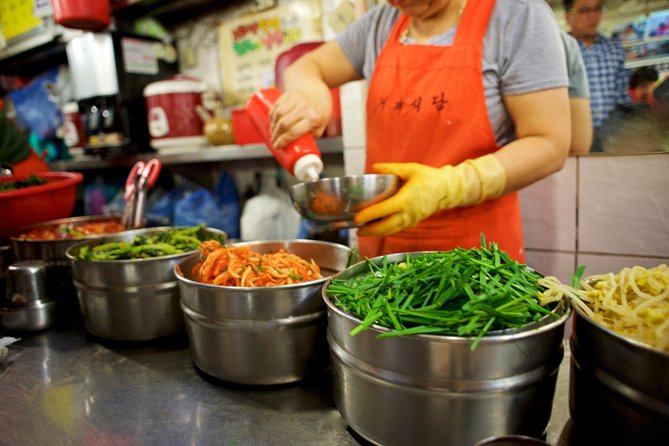
The final stop is Myeongdong Underground Shopping Center. This is listed as about 30 minutes, and admission is included.
The tour notes a key detail about this area: it features brand shops that many people trust and respect. It’s also described as the last stop, with time to spend more leisurely.
So you get a natural end to the day. You’ve eaten through markets and a street district, and now you slow down a bit. The group gets to reset, and you get the chance to look around without the same “find food now” pressure.
At the end, there’s also a gelato shop at the final spots, and gelato is included. That’s a smart finishing move. Something cool and sweet after multiple savory bites helps you feel satisfied instead of stuffed.
Included tastings: what you’ll actually eat on the route
This tour is built around eating, and the included list is packed. You’ll have tastes of:
- kalguksu
- naengmyeon
- bibimbap
- tteokbokki
- eomuk (fish cake)
- tongdak, old-styled crispy fried chicken
- Korean local beer (paired with the fried chicken)
- mandoo (Korean dumplings)
- local gelato
The tour description says you’ll taste 10 different foods, and the included list shows a full range of items that likely make up that set.
My advice: treat this as lunch. Don’t plan a big breakfast right before, and don’t stack a second meal after. You’ll likely feel your choices for the rest of the evening should be lighter.
Also, watch for the drink detail. A glass of beer is included with the fried chicken, but any additional beer or other drinks should be paid separately. If you like to drink, it’s wise to decide what you want before you get extra options coming at you.
Small group dynamics: 12 people max and why it feels smoother
The group size is maximum 12. That’s not a huge crowd, and it matters. In a small group, you typically spend more time eating and learning, less time waiting.
It also makes it easier for the guide to adjust. If someone wants the explanation for what they’re tasting, there’s time to ask. If your group needs a quick reset, the flow tends to stay manageable.
And from the review details tied to the guide experience, the big strength is how the guide ties food and sites together. Veronica was described as fantastic at explaining food, history, and sites, and that you’d enjoy tasting traditional foods while walking through markets. That kind of guide energy is exactly what makes a food tour feel worth it, even when the dishes are something you could technically find on your own.
Who this tour is best for
This is a good fit if you want a Seoul “hits list” that still feels local. You’ll get market food, street snacks, and a commercial zone finish. It’s also a great option if you’re traveling with limited time and want something structured rather than wandering hungry.
I’d especially recommend it if:
- you like trying many small dishes instead of committing to one restaurant
- you want food context, not just a list of what to eat
- you want to cover both traditional and more modern Korean food choices in one afternoon
It may not be the best choice if:
- you cannot handle walking for a multi-stop route
- you prefer total independence and do not want to follow a set tasting plan
- you want a long, slow museum-style pace rather than a food-first walk
Should you book Heart of Seoul
If you’re deciding whether this fits your trip, here’s the practical way to think about it. Book it if you want a guided route that reduces the guessing game around food, and you’re happy to spend about three hours walking while you eat.
I’d skip it if you’re sensitive to crowded shopping areas or you do not have support for the walking portion. Since it’s designed for a small group and includes multiple meal-style tastings plus gelato, it’s best treated as an organized lunch experience, not a casual snack stop.
Bottom line: for a single afternoon in Seoul, this is a strong value play. You pay a set price, you get a Korean-designed tasting flow, and you end with a sweet finish that feels like a proper wrap.
FAQ
How long is the Heart of Seoul tour?
It lasts about 3 hours.
What is included in the price?
The tour includes tastings such as kalguksu, naengmyeon, bibimbap, tteokbokki, eomuk, tongdak (old-styled crispy fried chicken), Korean local beer, mandoo (Korean dumplings), and local gelato.
Is a ticket provided on a mobile device?
Yes, the tour uses a mobile ticket.
Where do I meet the guide and where does the tour end?
You start at 122-18 Bongnae-dong 2(i)-ga, Jung District, Seoul. The tour ends at Myeongdong Cathedral, 74 Myeongdong-gil, Jung District, Seoul.
What time does the tour start?
The listed start time is 1:00 pm.
How many people are in the group?
The maximum group size is 12 travelers.
Is the tour mainly walking?
Yes, it is a walking tour. If you have leg problems, the note says you should bring a wheelchair and a helper.
What is the cancellation policy?
You can cancel for a full refund up to 24 hours in advance of the experience’s start time.
More Seoul Write-Ups
Fresh on the Seoul pile
- Unique Native Experience : Han River Picnic, Board game, BBQ★ 5.0 · 3 reviews
- 2-Hour Private Kayaking and Paddleboarding Experience in Hanriver★ 5.0 · 3 reviews
- Korean Folk Village & Suwon Hwaseong Fortress Private Tour★ 5.0 · 3 reviews
- Seoul Korean BBQ Dinner Experience with Secret Food Tours★ 5.0 · 3 reviews
- Seoul Highlights & Hidden Gems – Private Tour with Photo Service★ 5.0 · 3 reviews
- Night Food Tour in Seoul with Traditional and Modern Cuisine★ 5.0 · 3 reviews