
REVIEW · SEOUL ROYAL PALACES
Andong: UNESCO Sites, Mask Dance, and Secret Garden & Bridge
Andong turns a normal day into a cultural time machine. You start at Bongjeongsa Temple, then move through a Joseon-era Confucian academy, and end with Wolyeonggyo Bridge night views. If you like real Korea, not just photo stops, this one hits the right notes.
Two things I like a lot: the calm stop inside Bongjeongsa Temple and the chance to see the Hahoe mask dance tradition in the context of Hahoe Folk Village. The one catch is timing and walking, it is an 8 hour day with a lot of outdoor steps and, on Mondays, the mask dance is not performed.
In a private group (up to 5), you also get an English or Korean guide who handles the day smoothly. One repeat theme in the feedback I trust is how Greg keeps the details in order, including small comfort touches like water and snacks, so you are not scrambling all day.
In This Review
- Key points before you go
- How the Andong day flows, pickup through Wolyeonggyo Bridge
- Bongjeongsa Temple, one of Korea’s oldest wooden temples
- Byeongsan Seowon and the Joseon education tradition
- Buyongdae Observatory, where the Nakdong River resets your eyes
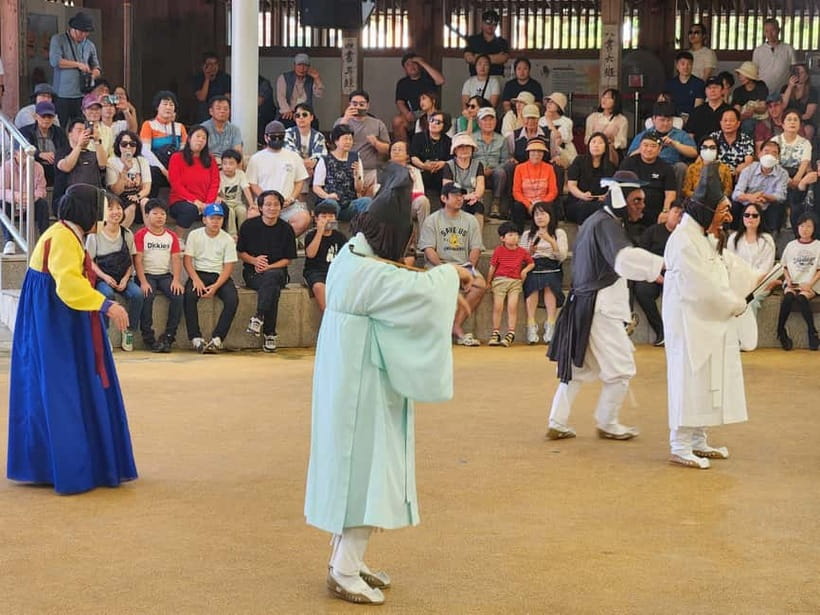
- Hahoe Folk Village and the Hahoe Byeolsin Gut Talnori mask dance
- The Seonyu Jullbul play, reservations and extra cost
- UNESCO sites around the village, including Okyeonjeongsa and Jingbirok
- Wolyeonggyo Bridge at night, Woni’s mother love story
- Price and value for $401 per group up to 5
- Practical tips so the day stays comfortable
- Who should book this, and who should skip it
- Final call, should you book?
- FAQ
- What is the duration of the Andong UNESCO Sites, Mask Dance, and Secret Garden & Bridge tour?
- How much does the tour cost?
- Where do you get picked up?
- Are you guaranteed a mask dance performance?
- Is the Seonyu Jullbul play included?
- What should I bring?
- What is not included in the tour?
Key points before you go
- Bongjeongsa Temple gives you a rare look at one of Korea’s oldest wooden temple settings
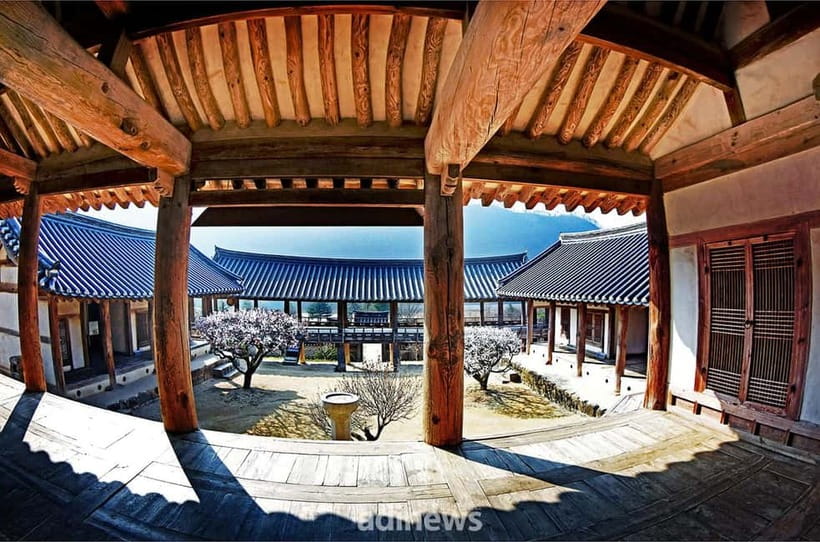
- Byeongsan Seowon connects Confucian learning to place, with artifacts and monuments in a serene outdoor setting
- Hahoe Folk Village pairs the Hahoe Byeolsin Gut Talnori mask dance with real village sights, street food, and a World Mask Museum visit
- Mask dance schedule matters: no Hahoe Byeolsin Gut performance on Mondays
- Wolyeonggyo Bridge is built for the love story of Woni’s mother, and you get night views when timing works
How the Andong day flows, pickup through Wolyeonggyo Bridge
This is an 8 hour, private-group outing built around Andong’s UNESCO sites and two atmosphere-heavy experiences: temple calm and night bridge views. Your day starts with pickup around Gyeongdong-ro, then you ride in a van between stops with time for photos and short walks.
A big value of doing it this way is transportation. Andong’s sites are not all clustered, so having a guide plus a vehicle saves you from piecing together buses, taxis, and tight timing. You also get a skip-the-ticket-line approach at the included sites, which matters when you are trying to keep the day moving.
The day is designed to end at Wolyeonggyo Bridge for sunset and dinner, but there is a practical limit on how late you can stay. If you want overtime viewing time, you should reserve in advance, because the tour cannot linger into the evening.
Bongjeongsa Temple, one of Korea’s oldest wooden temples
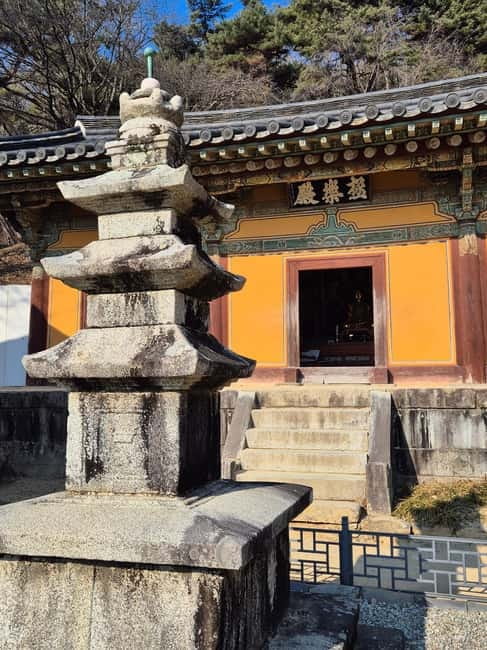
Your first real wow moment is Bongjeongsa Temple. This stop is known for its ancient wooden temple atmosphere, and you get the chance to see the architecture in a setting that feels much quieter than the typical quick stop. Expect a mix of guided explanation and quiet time to look at details and settle your pace.
The guide keeps it grounded in what you are seeing. You are not just taking in roofs and wooden beams, you are also learning how the temple setting supports Buddhist practice, including the idea of peaceful, observant visiting for both locals and devotees. That context changes how you walk around. Instead of rushing for the best angle, you start noticing how the place guides your attention.
Practical tip: wear shoes you can walk in for several hours. Even when the walking is not extreme, temples usually involve uneven ground and lots of stop-and-look moments.
Byeongsan Seowon and the Joseon education tradition
After Bongjeongsa, the day shifts gears to Byeongsan Seowon, a Confucian academy from the Joseon Dynasty. This is where Andong shows a different kind of cultural power: learning, moral teaching, and discipline tied to specific classrooms and monuments.
You get guided time plus a break, so you are not just herded from point to point. The best part is understanding what a seowon was for. It was not only about reading, it was about character and study as a way of life. As you look at historical artifacts and monuments, you get that sense of continuity with the past people who studied here.
If you like culture that explains how people lived, not just what they built, this is a strong stop. And because it is set in natural surroundings, it also makes a nice contrast to the temple atmosphere you saw earlier.
Buyongdae Observatory, where the Nakdong River resets your eyes
Next comes Buyongdae Observatory, with a short ride and a longer time slot than the typical “blink-and-you-miss-it” viewpoint. This is your chance to breathe and to swap mental gears from history facts to open views.
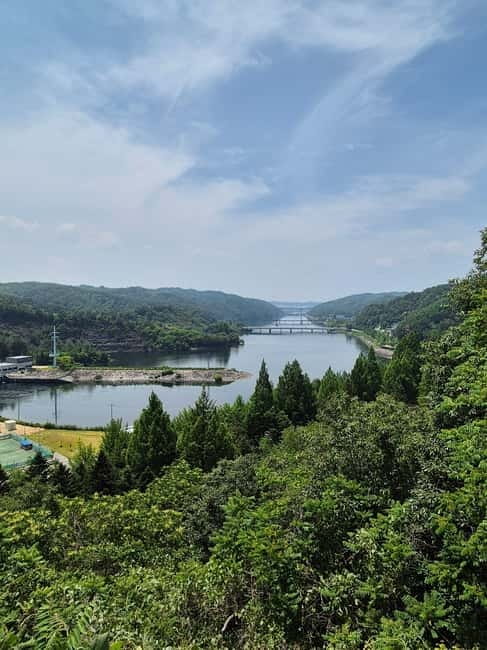
You will be overlooking the Nakdong River with surrounding mountains in the background. You get photos, guided comments, and free time, which is exactly what I want at a viewpoint. You can stand, wait for better light, and take in the scale without feeling rushed.
This stop also helps break up the day so you are not feeling locked into a lecture mode for the full 8 hours. If you are sensitive to long seating time, the observatory moment is a good reset.
Hahoe Folk Village and the Hahoe Byeolsin Gut Talnori mask dance
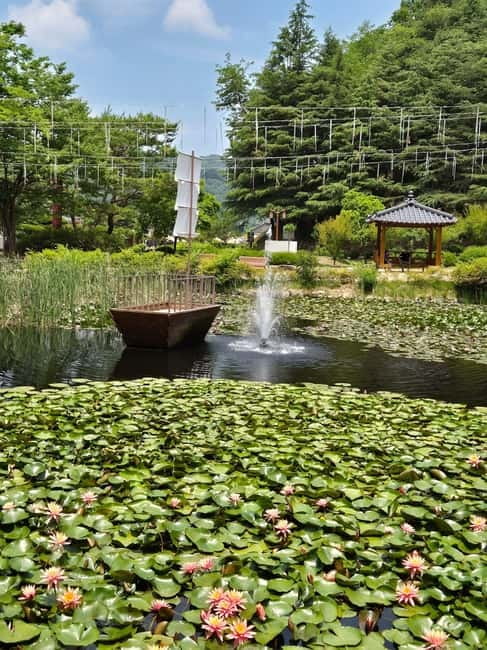
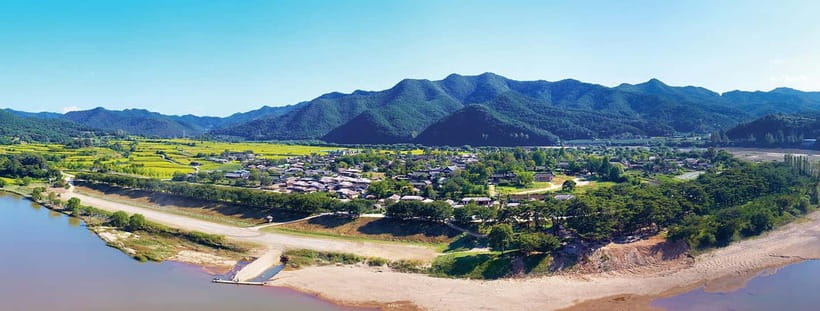
This is the part of the day that feels most alive. You head to Andong Hahoe Folk Village, where you tour key village sites and also get to connect them to Korea’s traditional mask dance ritual.
The performance is the Hahoe Byeolsin Gut Talnori, tied to shamanistic beliefs associated with Hahoe Village. You see dancers wearing elaborate masks and performing to traditional music, and the experience comes off more meaningful when you know it is connected to village belief systems, not just stage entertainment.
One key scheduling note you should plan around: there is no mask dance performance on Mondays. If your trip lands on a Monday, adjust expectations for this highlight and focus on the village tour and museum visit instead.
Village tour time is not just temples and statues. You also get time for street food, local snacks, shopping, and an arts and crafts market visit. That matters because Hahoe is a living place, and the food and crafts help you understand the day beyond the formal cultural spots.
The Seonyu Jullbul play, reservations and extra cost
Alongside the mask dance, the area also offers the Seonyu Jullbul play (linked to the noble class). It runs late into the evening, and if you want to see it, you need to make a reservation in advance and pay an additional fee.
This is not built into the standard included plan. So treat it as an add-on if you are the type who likes staying out late and building a fuller cultural evening. If you prefer an earlier finish, prioritize the included village tour and the main mask dance timing that matches your day.
UNESCO sites around the village, including Okyeonjeongsa and Jingbirok
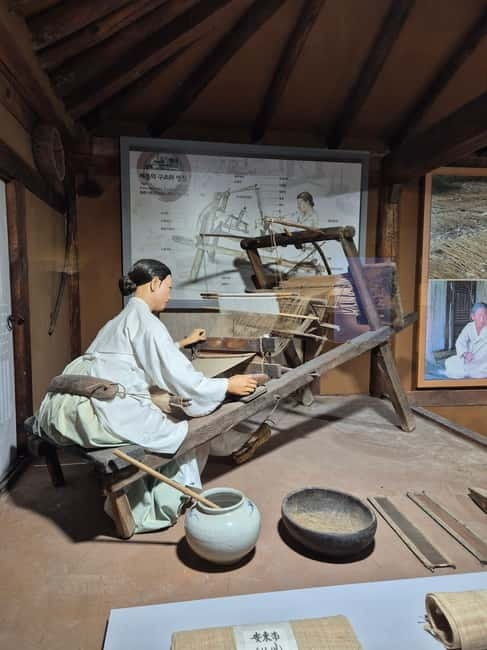
After the main village experience, your route also includes historical stops connected to Andong’s UNESCO heritage. Two names to remember here are Hwachun Seowon and Okyeonjeongsa.
The meaningful link is that the famous Jingbirok was written at Okyeonjeongsa. You do not need to be a Joseon literature expert to appreciate this. Knowing that a major text is tied to a specific site makes the whole day feel less like a checklist and more like a guided trail through ideas.
These stops also support what you are already learning at Byeongsan Seowon. They reinforce that Confucian education and scholarship were not abstract. They were tied to physical places where people gathered, taught, studied, and recorded.
Wolyeonggyo Bridge at night, Woni’s mother love story
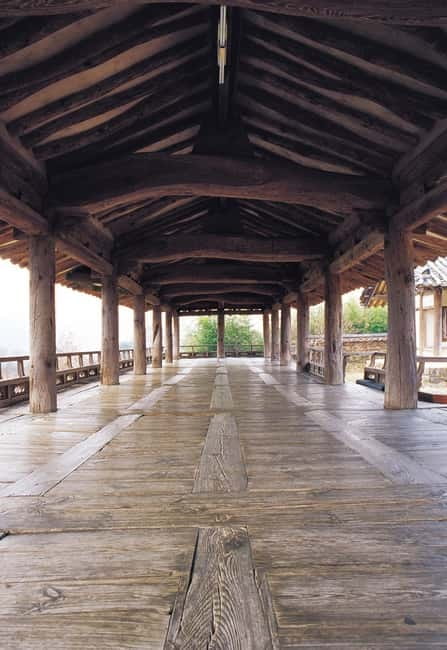
To finish, you head to Wolyeonggyo Bridge, famous for night views. The tour builds in time for photos, a guided visit, and then dinner with free time, sunset, and food tasting.
What makes this bridge stop more than a scenic photo is the story attached to it. Wolyeonggyo was built to commemorate the love of Woni’s mother. It gives the lights and river views an emotional anchor. You are not just looking at scenery, you are visiting a place shaped by a human story that people remembered well enough to build for.
Keep in mind: the tour cannot stay late into the evening. If you want extra time for overtime viewing, reserve in advance. If you do not, you can still enjoy the night vibe within the tour’s time window.
Price and value for $401 per group up to 5
The price is $401 per group up to 5, and the best way to judge it is by what is bundled. You are paying for transportation plus an English or Korean live guide, admission support (including skip-the-ticket-line where applicable), and a full-day route that connects multiple UNESCO heritage stops.
If you are traveling with a small group, this is where it starts to feel like value. Two people might still find it comparable to several private taxis plus paid guide time, but the added benefit is someone managing the flow, so you do not lose hours guessing how to connect everything.
What is not included is also clear. You will not get extras like traditional Korean tea, organic foot bath, or gua sha experience. If you want those add-ons, plan to pay separately.
From the feedback pattern, one more value angle shows up: the guide’s professionalism and attention to details. The day is meant to feel organized, not chaotic. That is hard to replicate when you self-plan a route across multiple sites in one day.
Practical tips so the day stays comfortable
Bring comfortable shoes, a camera, sunscreen, and water. This is not a sit-and-smile itinerary. Walking is part of it, including around temple grounds, seowon areas, and the village.
Dress for weather. A chunk of the experience is outdoors, and the day includes viewpoint time plus evening bridge viewing. If it is hot or sunny, sunscreen is not optional. If it is cool, you might want an extra layer for the late bridge segment.
Photography is allowed, but be respectful of cultural sites. That usually means slow down, avoid blocking walkways, and follow any on-site guidance from the guide and staff.
Also note rules that impact your day: no pets and no smoking. Those are simple, but they can affect plans if you are traveling with special gear or companions.
Who should book this, and who should skip it
This tour is a strong fit if you want Andong’s big cultural pillars in one shot: temple architecture at Bongjeongsa, Joseon Confucian learning at Byeongsan Seowon, and village tradition plus the Hahoe mask dance connected to shamanistic roots.
It is also a good pick if you appreciate a day that mixes formal heritage with normal-life moments like street food, local snacks, and crafts shopping at Hahoe Folk Village.
If you have mobility impairments, it is not suitable based on the tour notes. And if you are traveling with young kids, it is not suitable for children under 5.
Final call, should you book?
I’d book this if you like cultural depth without turning the day into a lecture. The route balances spiritual sites, Confucian education context, and a performance tied to village belief. The private group format up to 5 also means you get more attention and fewer bottlenecks.
I would think twice if your schedule puts you on a Monday, because the Hahoe Byeolsin Gut Talnori mask dance is not performed then. You can still have a great day with the village tour and the heritage stops, but the main spectacle depends on the day of week.
If night views at Wolyeonggyo Bridge are a priority, plan for the fact that the tour does not stay late by default. Reserve overtime viewing ahead if you want more time in that evening window.
FAQ
What is the duration of the Andong UNESCO Sites, Mask Dance, and Secret Garden & Bridge tour?
It runs for 8 hours.
How much does the tour cost?
The price is $401 per group, up to 5 people.
Where do you get picked up?
Pickup is included from Gyeongdong-ro, and your guide will hold a yellow hand-shaped sign at the Andong train station or Bus terminal, or in nearby hotel lobbies for travelers coming from Seoul, Busan, and Daegu.
Are you guaranteed a mask dance performance?
The Hahoe Byeolsin Gut Talnori mask dance is part of the experience, but there is no mask dance performance on Mondays.
Is the Seonyu Jullbul play included?
The Seonyu Jullbul play is not listed as included. It may be available late into the evening, but you must make a reservation in advance and pay an additional fee to attend.
What should I bring?
Bring comfortable shoes, a camera, sunscreen, and water.
What is not included in the tour?
Traditional Korean tea, organic foot bath, and gua sha experience are not included.
If you tell me your travel dates and day of week, I can help you sanity-check whether you’ll catch the mask dance and plan the evening timing around Wolyeonggyo Bridge.
Seoul Royal Palaces you might have missed.
 ★ 4.9Seoul: Gyeongbok Palace, Bukchon Village, and Gwangjang TourFrom $322,321 reviews
 ★ 5.0Best Seoul City Tour (Gyeongbokgung Palace,Insadong,Namsan Tower)From $581,647 reviews
 ★ 5.0Small-Group Royal Palace and Seoul City Tour (hotel pick-up)From $561,474 reviews
★ 5.0Seoul: Gyeongbok Palace, Bukchon Village, and Gwangjang TourFrom $321,044 reviews
★ 5.0Small-Group Royal Palace and Seoul City Tour (hotel pick-up)From $561,474 reviews
★ 5.0Seoul: Gyeongbok Palace, Bukchon Village, and Gwangjang TourFrom $321,044 reviews
 ★ 4.7Seoul Highlights: Gyeongbok Palace, Insadong & N Seoul TowerFrom $26726 reviews
 ★ 4.6Seoul: Hanbok Rental with Gyeongbokgung Palace EntryFrom $6611 reviews
 ★ 4.5Seoul City Half Day Tour-Gyeongbok Palace Guard Changing CeremonyFrom $38357 reviews
 ★ 4.5Seoul: Gyeongbok Palace with Gigibebe Hanbok RentalFrom $9289 reviews
Where this tour also appears